
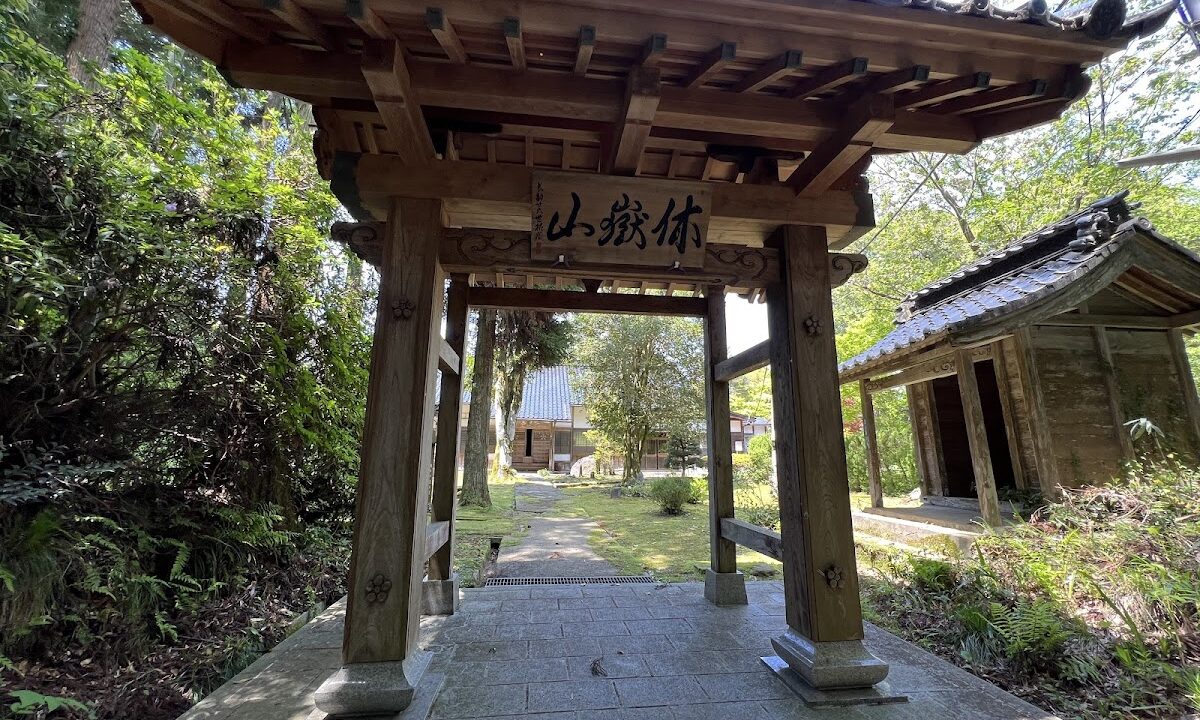
Complete Guide to Chōreiji Temple (Nanao City, Ishikawa Prefecture) | History and Highlights of a Famous Sōtō Zen Temple Associated with Maeda Toshiie
Chōreiji Temple, nestled in a cluster of mountain temples in Nanao City, Ishikawa Prefecture, is an ancient Sōtō Zen temple built by Maeda Toshiie, who laid the foundation for the Kaga domain of one million koku, to commemorate his parents. Since its founding in 1581, it boasts a history of over 440 years and houses valuable cultural assets, including a silk painting of Maeda Toshiharu, designated as a National Important Cultural Property.
This article provides detailed information you should know before visiting Chōreiji Temple, from its historical background to its highlights and access information.
History and Origins of Chōreiji Temple
Background of its Founding by Maeda Toshiie
The founding of Chōreiji Temple dates back to 1581. In this year, when Maeda Toshiie, who had been granted 230,000 koku of land in Noto Province by Oda Nobunaga, entered Nanao Castle as its lord, he invited Zen Master Daito Keijo of Hoenji Temple from his former territory of Takase in Echizen Province (present-day Takase, Echizen City, Fukui Prefecture) to establish the temple.
Maeda Toshiie decided to build Hoenji Temple in his new territory of Nanao to enshrine the memorial tablets of his parents, Maeda Toshiharu (Toshimasa) and the Takeno clan. This became the predecessor of Chōreiji Temple. Toshiie’s deep filial piety towards his parents was the driving force behind the founding of this temple.
Origin of the Mountain Name “Kyūgakuzan”
The mountain name of Chōreiji Temple is “Kyūgakuzan.” It is said that this mountain name embodies Maeda Toshiie’s wish for the souls of his parents to rest peacefully, a wish he had survived the turbulent Sengoku period. As a Soto Zen temple, a solemn atmosphere based on Zen teachings permeates the entire grounds.
Renaming from Hoenji to Choreiji
Originally established as “Hoenji,” the temple was later renamed “Choreiji.” While there are various theories regarding the timing and circumstances of this renaming, it is believed to reflect a wish for the prosperity and longevity of the Maeda family. The name “Chorei” (長齢) expresses a wish for a long life and lasting prosperity.
Deep Ties with the Maeda Family
Since its founding, Choreiji has played an important role as the Maeda family’s ancestral temple. Not only does it house the memorial tablets of Maeda Toshiie’s parents, but portraits and personal belongings of the Maeda family have been passed down through generations. These valuable cultural artifacts are still preserved at the temple today, conveying the deep bond between the Maeda family and Choreiji.
Cultural Properties and Treasures of Chōrei-ji Temple
Nationally Designated Important Cultural Property: Painted Portrait of Maeda Toshiharu on Silk
The most valuable cultural property held by Chōrei-ji Temple is the “Painted Portrait of Maeda Toshiharu on Silk,” designated as a National Important Cultural Property. Maeda Toshiharu was the father of Maeda Toshiie, and this portrait is a valuable historical document that conveys the appearance of a samurai warrior of the Sengoku period.
The portrait, painted on silk, is meticulously detailed and is an extremely important historical document for understanding the attire and appearance of samurai of that time. It is in excellent condition, and the vibrancy of the colors remains intact.
Collection of Portraits of the Maeda Family
In addition to the painted portrait of Maeda Toshiharu, the treasure hall also houses several portraits of members of the Maeda family. These portraits are a valuable collection that allows us to visually trace the history of the Maeda family and are important resources for studying Edo period painting techniques.
Items Associated with the Maeda Family
The treasure hall displays items used by Maeda Toshiie and his family. The diverse collection, including weapons, letters, and tea ceremony utensils, is invaluable for understanding the cultural aspects of the Maeda family. These items offer a glimpse into Maeda Toshiie’s character not only as a warrior but also as a man of culture.
Highlights of the Temple Grounds
Architectural Beauty of the Main Hall
The main hall of Chōrei-ji Temple exhibits a majestic presence typical of a Sōtō Zen temple. Its hip-and-gable roof and solid wooden construction create a simple yet powerful beauty characteristic of Zen temples. Inside the main hall is a memorial hall dedicated to the temple’s founder, Zen Master Daitō Keijo, and a serene atmosphere permeates the space.
The Dignity of the Temple Gate
The temple gate, the entrance to the temple grounds, is a symbolic structure representing the history of Chōrei-ji Temple. Passing through the imposing temple gate, one enters a world of tranquility. The gate’s construction reflects a unique blend of Sengoku period samurai culture and Zen Buddhist culture.
Seasonal Scenery of the Temple Grounds
The grounds of Chōrei-ji Temple display different expressions in each of the four seasons. Cherry blossoms bloom in spring, lush greenery covers the grounds in summer, the leaves turn vibrant colors in autumn, and the snowscape creates a serene beauty in winter. Especially during the autumn foliage season, the grounds are dyed in red and yellow, captivating visitors.
Gardens and Stone Structures
Within the temple grounds is a simple yet refined garden, typical of Zen Buddhist temples. Skillfully arranged stones and plants create a space for quiet meditation while appreciating the changing seasons. The stone lanterns and Buddha statues placed throughout the grounds are also valuable stone structures that evoke a long history.
Positioning within the Mountain Temple Cluster
What is the Mountain Temple Cluster?
The “Mountain Temple Cluster,” where Chōreiji Temple is located, is a collective name for 16 temples scattered around the Komaruyama Castle ruins in Nanao City. These temples were positioned to function as defensive strongholds for the castle when Maeda Toshiie became the lord of Nanao Castle. It is known as a unique cluster of temples that, while primarily religious facilities, also possesses strategic significance.
Major Temples in the Surrounding Area
Besides Chōreiji Temple, the Mountain Temple Cluster includes other historical temples such as Tokuōji Temple and Tōreiji Temple. Each temple has its own unique history and cultural assets, and visiting these temples allows for a deeper understanding of Nanao’s history. When visiting Chōreiji Temple, it is recommended to also visit the surrounding temples.
Role as a Defensive Stronghold
The Mountain Temple Cluster was not merely a religious site; it also served as an outer defensive line for Nanao Castle. Each temple was positioned on a small hill, and it is believed that warrior monks were stationed there to fortify the defenses in times of emergency. Chōrei-ji Temple also played a part in this defense network, and remnants of this can be seen in the layout of its grounds.
Access and Visiting Information for Chōrei-ji Temple
Access by Train
The nearest station is Nanao Station on the JR Nanao Line. Chōrei-ji Temple is approximately 1km northwest of Nanao Station, about a 15-minute walk. The walk from the station involves a gentle uphill slope, but other temples of the mountain temple complex are scattered along the way, making for an enjoyable stroll.
Access by Car
It is approximately 10 minutes from the Nanao Interchange on the Nōetsu Expressway. There is parking space for visitors on the temple grounds, but the number of spaces is limited, so caution is advised, especially during peak seasons such as autumn foliage season.
Basic Information
- Location: 52 Ribu, Kojima-machi, Nanao City, Ishikawa Prefecture
- Phone Number: 0767-53-7993
- Sect: Soto Zen
- Mountain Name: Kyugakuzan
- Founder: Zen Master Daito Keijo
- Established: Tensho 9 (1581)
Visiting Hours and Admission Fee
While visiting the temple grounds is generally free, it is recommended to check in advance regarding visits to the Treasure Hall. Advance reservations may be required to view valuable cultural properties such as the silk painting of Maeda Toshiharu, a nationally important cultural property.
Points to Note When Visiting Choreiji Temple
Recommended Time to Visit
Choreiji Temple offers beautiful scenery throughout the four seasons, but the spring cherry blossom season (early to mid-April) and the autumn foliage season (early to mid-November) are particularly recommended. During this time of year, the temple grounds are vibrantly colored, making it ideal for photography. Also, during the season of fresh greenery (May-June), you can enjoy the refreshing air in the tranquil grounds.
Photography Tips
The grounds of Chōreiji Temple are popular as photography spots. You can enjoy taking photos from various angles, such as the view of the main hall from the temple gate, the scenery of the grounds from the side of the main hall, and the stone arrangements in the garden. However, there may be restrictions on photography inside the treasure hall and the main hall, so be sure to check before taking pictures.
About Goshuin (Temple Seals)
You can receive a goshuin (temple seal) at Chōreiji Temple. The goshuin, with its powerful calligraphy characteristic of a Sōtō Zen temple, is popular as a memento of your visit. When receiving a goshuin, bring your goshuincho (stamp book) and ask politely.
Nearby Tourist Attractions
When visiting Chōreiji Temple, we recommend also visiting nearby tourist attractions. In addition to the other temples in the Yamano-dera group, Nanao City boasts numerous attractive tourist destinations, including the ruins of Nanao Castle, the Noto Food Festival Market, and Wakura Onsen. Wakura Onsen, in particular, is only about a 10-minute drive from Chōreiji Temple, allowing visitors to enjoy a hot spring bath after their visit.
Maeda Toshiie and the History of Nanao
Maeda Toshiie’s Entry into Nanao
In 1581, Maeda Toshiie was granted 230,000 koku of land in Noto by Oda Nobunaga, becoming the lord of Nanao Castle and governing the region. At this time, Toshiie was 33 years old. Having already distinguished himself as a senior retainer of the Oda family, the 230,000 koku of Noto represented a significant opportunity for advancement.
Governance in Nanao
As the lord of Nanao Castle, Maeda Toshiie devoted himself to the development and governance of his territory. The development of the Yamano-dera group was part of this effort, and he promoted a unique castle town development that utilized religious facilities as defensive strongholds. The founding of Chōrei-ji Temple was one of the important projects of this period.
Relocation to Kanazawa and the Role of Chōrei-ji Temple
In 1583 (Tenshō 11), Maeda Toshiie moved his base to Kanazawa Castle, but Nanao continued to be maintained as an important base for the Maeda family. Chōrei-ji Temple continued to play an important role as the Maeda family’s ancestral temple and as a symbol of the Maeda family in Nanao.
Religious Significance of the Sōtō Zen School and Chōrei-ji Temple
Teachings of the Sōtō Zen School
The Sōtō Zen School, to which Chōrei-ji Temple belongs, is a branch of Zen Buddhism and an important sect of Japanese Buddhism, founded by Zen Master Dōgen. It is characterized by its emphasis on seated meditation, known as “shikan taza,” and is a practical form of Buddhism that views daily life itself as practice.
Achievements of Zen Master Daitō Keijo
The founding abbot, Zen Master Daitō Keijo, was a high-ranking monk who trained at Hōen-ji Temple in Echizen. At the invitation of Maeda Toshiie, he traveled to Nanao and laid the foundation for Chōrei-ji Temple. The Zen master’s teachings formed the basis of Chōrei-ji Temple’s religious tradition.
The Role of Chōrei-ji Temple in Modern Times
Even today, Chōrei-ji Temple functions as a place of worship for the local community and as a training ground for transmitting the teachings of the Sōtō Zen sect. Regular Zen meditation sessions and Dharma talks are held, providing many people with opportunities to experience the teachings of Zen.
Preservation and Transmission of Chōrei-ji Temple to Future Generations
Efforts to Protect Cultural Properties
Chōrei-ji Temple is committed to preserving valuable cultural properties, including the nationally designated Important Cultural Property, the painted silk portrait of Maeda Toshiharu. These properties are stored under appropriate temperature and humidity control, and regular restoration work is carried out. Through these efforts, cultural properties with a history of over 440 years are being passed down to future generations.
Maintenance and Management of Buildings
Regular inspections and repairs are also carried out on buildings such as the main hall and the temple gate. Through restoration work using traditional architectural techniques, the temple has preserved its original appearance while maintaining its function as a modern temple.
Collaboration with the Community
As part of the Yamano-tera group of temples, Chōrei-ji Temple works in collaboration with Nanao City and local residents to preserve the historical landscape and utilize it as a tourist resource. It also contributes to the promotion of local culture through events held throughout the temple group and the implementation of guided tours.
Summary
Chōrei-ji Temple in Nanao City, Ishikawa Prefecture, is a historic Sōtō Zen temple built by Maeda Toshiie to commemorate his parents. Since its founding in 1581, it has played an important role for over 440 years as a temple associated with the Maeda family and as a place of worship for the community.
There are many points of interest, including valuable cultural assets such as the silk painting of Maeda Toshiharu, a nationally important cultural property, the magnificent main hall and temple gate, and the beautiful temple grounds that change with the seasons. Located in a corner of a mountain temple complex, Chōreiji Temple, when visited along with the surrounding temples, offers a deeper understanding of Nanao’s history and culture.
Its convenient location, just a 15-minute walk from JR Nanao Station, is another attractive feature. When visiting Ishikawa Prefecture, be sure to visit Chōreiji Temple and experience the charm of this historic temple, born from Maeda Toshiie’s filial piety towards his parents. The time spent in its tranquil grounds will be a precious moment that allows you to forget the hustle and bustle of modern life.


