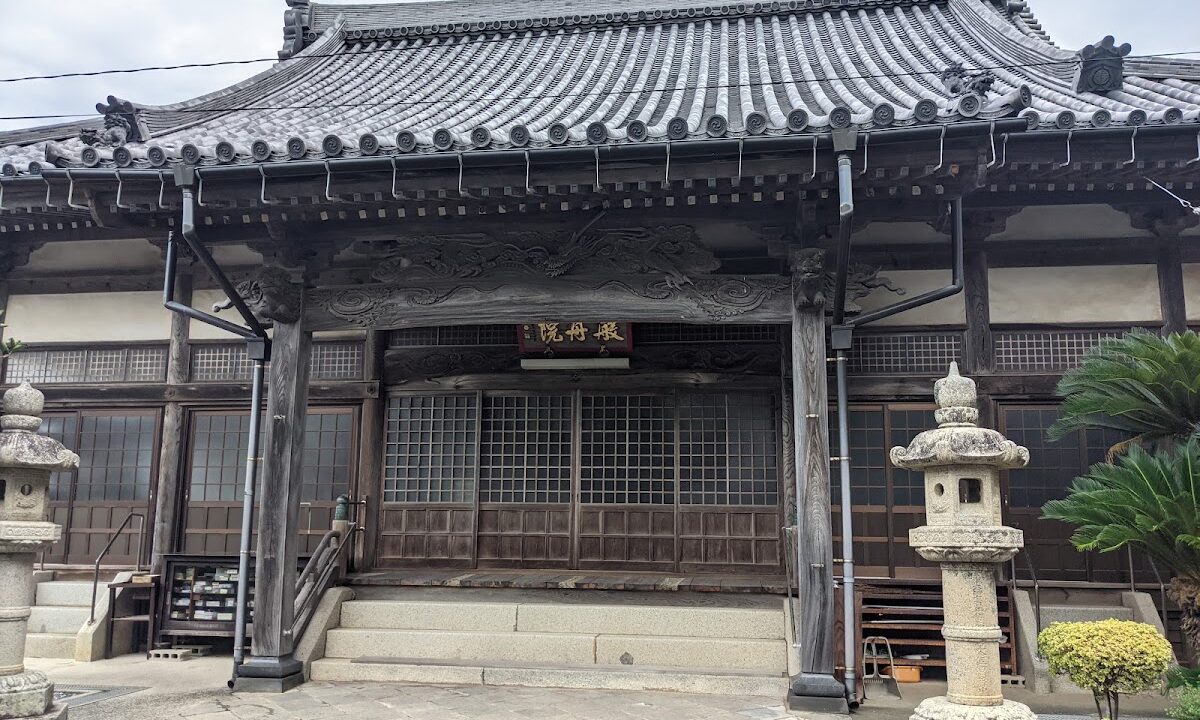
Complete Guide to Koganji Temple (Nagato City, Yamaguchi Prefecture): The History of Whaling Culture and Faith in the Edo Period as Told by Whale Memorial Tablets and Whale Records
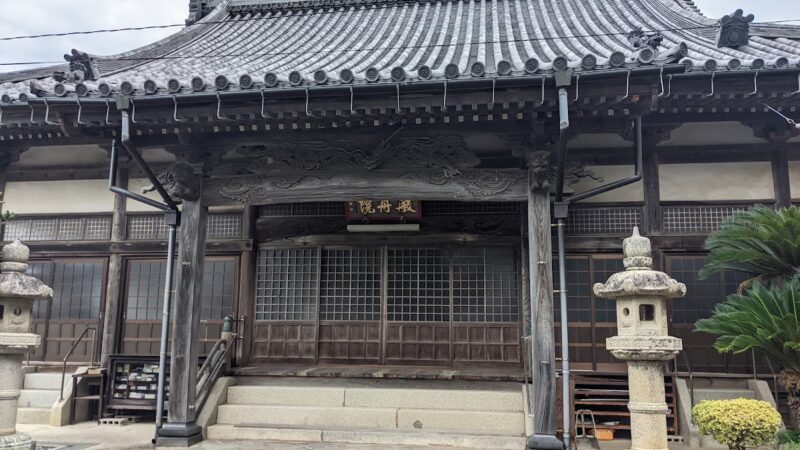
Koganji Temple, located in the Tsu district of Nagato City, Yamaguchi Prefecture, is a Jodo sect temple that holds an extremely important position in the history of Japanese whaling culture. This temple houses invaluable cultural artifacts, including “whale memorial tablets” and “whale record books,” which are unparalleled in Japan, and convey the history of whaling and whale memorial services in the Edo period. This article will introduce the charm of this special temple in its entirety, from its history and cultural artifacts to access methods and nearby tourist spots.
History and Origins of Koganji Temple
From Founding to Transition to a Jodo Sect Temple
Koganji Temple, with its mountain name Kaiunzan and temple name Hannyain, is a Jodo sect temple located at the 121st temple of the Yamaguchi diocese. Its history dates back to the Oei era (1394-1428). Originally founded as a Zen Buddhist temple called “Seifuku Zenji,” it was re-established as a Jodo sect temple in 1538 by Abbot Chuyo Eirin.
As a branch temple of Hagi Jōnenji, Kōganji Temple has developed as a center of faith in the Tōri district of Nagato City, fostering a unique religious culture while maintaining deep ties with the local shipping and whaling industries.
The 5th Abbot Sanyo Shunzui and the Beginning of Whale Memorial Services
A noteworthy aspect of Kōganji Temple’s history is the existence of its 5th abbot, Abbot Sanyo Shunzui. Also known as Abbot Sangen, this abbot was from a fishing family in the Tōri district and erected a groundbreaking “whale tomb” in 1692.
The construction of this whale tomb was more than just the establishment of a memorial tower; it embodied the deep faith and reverence for life of those involved in the whaling industry. The Whale Memorial Service, which has continued since Enpō 7 (1679), is still solemnly observed every year around April, and is a valuable religious event that has been passed down for over 300 years.
Founding of Saienji Temple and Contribution to the Community
San’yo Shunzui Shōnin founded Saienji Temple in Ōhibi in Genroku 9 (1696), making a significant contribution to the development of local Buddhist culture. Kōganji Temple has played an important role not only as an independent temple but also as the center of the local faith network.
Yamaguchi Prefecture Important Cultural Property: Whale Memorial Tablet and Whale Record Register
Details and Characteristics of the Whale Memorial Tablet
The whale memorial tablet owned by Kōganji Temple is an extremely valuable cultural property designated as a Yamaguchi Prefecture Important Cultural Property. This memorial tablet is quite large, measuring 77.5 centimeters in height, 22.4 centimeters in width, and 15.2 centimeters in depth at the base, boasting a presence that is clearly different from ordinary human memorial tablets.
The most distinctive feature of this memorial tablet is that a posthumous Buddhist name (kaimyo) is bestowed upon each whale fetus (whale calf) that was captured. During the Edo period, it was often confirmed that a calf was present in the womb of a captured mother whale during whaling. This memorial tablet embodies the sentiment of remembrance for the whale calves whose lives were unintentionally taken in the course of whaling.
Contents and Historical Value of the Whale Record Book
The Whale Record Book (Geigei Kakocho) is a record document created in a 34-fold folding book format, measuring 671.7 centimeters in length. This register contains detailed records of whale fetuses and their mother whales, recorded over approximately 33 years, from 1804 (Bunka 1) to 1837 (Tenpo 8).
The historical value of this register is immeasurable. Not only does it record specific data on the realities of whaling during the Edo period, such as catch numbers and timing, but it also serves as valuable evidence of the reverence people at the time held for the enormous life of the whale.
Religious Significance of Whale Memorial Services
The existence of whale memorial tablets and whale registers can be said to symbolize the Japanese view of nature and life. Whaling was an important industry for coastal fishing villages during the Edo period, but at the same time, there was a sense of guilt and awe towards the act of taking such a large life.
In particular, the act of bestowing a posthumous name upon each fetus lost along with its mother, and respectfully performing memorial services, vividly illustrates the spirituality of the people at the time, who sought to harmonize whaling as a livelihood with Buddhist compassion. This is an extremely unique religious practice within the world’s whaling cultures and serves as an important example illustrating the distinctive characteristics of Japanese whaling culture.
Whale Grave and Whale Memorial Service
Whale Grave Established in 1692
Within the grounds of Koganji Temple, a whale grave established in 1692 by the monk Sanyo Shunzui still remains. This whale grave was built to comfort the spirits of captured whales and, together with whale memorial tablets and whale memorial registers, constitutes a comprehensive whale memorial system.
The existence of the whale grave indicates that Koganji Temple is not merely a temple for humans, but a place where memorial services are also performed for non-human life. This can be seen as a practical expression of the Buddhist concept of “All sentient beings possess Buddha-nature” (all living beings have Buddha-nature).
Whale Memorial Service with Over 300 Years of History
The Whale Memorial Service, which began in 1679 (Enpo 7), is still solemnly held annually around April at Koganji Temple. This service has continued for over 340 years, boasting a remarkably long tradition among Japanese religious events.
During the service, sutras are chanted in front of the whale memorial tablets, and prayers are offered for the repose of the souls of the captured whales. This traditional event serves as an important opportunity to pass on the region’s history and culture to future generations and holds value as an intangible cultural heritage of Nagato City.
Nagato City’s Tsu District and Whaling in the Edo Period
History of Whaling in the Tsu District
The Tsu district of Nagato City, where Koganji Temple is located, was one of the thriving whaling bases during the Edo period. In this region facing the Sea of Japan, whaling using traditional whaling methods flourished and was an important pillar of the local economy.
The fishing boat owners in the Tsu district established an organized whaling system and developed techniques to utilize every part of the whale, including whale oil, meat, and bones. Whaling was a dangerous job, but the profits from a single whale were enormous, so much so that it was said, “One whale enriches seven villages.”
The Connection Between Whaling and Faith
For those engaged in dangerous whaling, faith was an essential source of spiritual support. Prayers for safety at sea and for a bountiful catch were important, as were memorial services for the whales they captured.
The fact that the fifth head priest of Koganji Temple came from a fishing boat family symbolizes the close relationship between the whaling industry and the temple. The fact that fishermen themselves became monks and attempted to integrate whaling as a livelihood with religious salvation is a characteristic feature of Japanese folk Buddhism.
Preservation and Public Access to Cultural Properties
Reasons for Non-Public Access and Cultural Property Protection
The whale memorial tablet and the whale register are designated as important cultural properties of Yamaguchi Prefecture. However, because they are “objects of worship,” they are not open to the public on a regular basis. This is due not only to cultural property protection but also to religious reasons.
Memorial tablets are sacred objects in Buddhism, symbolizing the spirits of the deceased, and the whale memorial tablet also functions as an object of memorial service. Balancing its value as a tourist resource with its religious value is a challenge faced by many temple cultural properties, but at Koganji Temple, its character as a place of worship is prioritized.
Special Public Access and Academic Research
However, they may be opened to the public for academic research or on special occasions. Research by researchers is ongoing, providing important data for whaling history research and religious folklore research.
Furthermore, replicas and detailed photographic panels are sometimes displayed at local cultural property exhibitions and special exhibitions, continuing efforts to indirectly convey the value of the cultural properties to a wider audience.
Basic Information and Access to Koganji Temple
Location and Contact Information
Official Name: Kaiunzan Hannyain Koganji Temple
Sect: Jodo Sect
Address: 936, 5-ku, Torimachi, Nagato City, Yamaguchi Prefecture 759-4107
Phone Number: 0837-28-0064
Chief Priest: Takasada Watano
Access by Public Transportation
Access to Koganji Temple by public transportation is as follows:
Nearest Stations:
- Approximately 5.3 kilometers from JR San’in Main Line “Nagato-Misumi Station”
- JR San’in Main Line “Ii Station”
- JR Mine Line “Senzaki Station”
Taxi or bus is convenient from the nearest stations. It is recommended to check the bus schedules for routes within Nagato City in advance. Public transportation is limited in rural areas of Yamaguchi Prefecture, so planning your trip carefully is necessary.
Access by Car
Access by car is the most convenient:
- Approximately 40 minutes from the Mine Interchange on the Chugoku Expressway via National Route 316 and National Route 191.
- If using the San’in Expressway, take National Route 191 from the nearest interchange.
Regarding parking, there is no large parking lot due to the size of the temple, but there is space available for visitors. It is recommended to check by phone in advance.
Notes on Visiting
Mukoganji Temple is an active temple and a place of worship for the local community. Please note the following points when visiting:
- The whale memorial tablets and whale register are not open to the public and cannot be viewed.
- Please take photographs respectfully within the temple grounds.
- If a memorial service or funeral is taking place, please refrain from visiting or behave quietly.
- Visits without prior notice are possible, but if you would like a detailed explanation, we recommend contacting us by phone.
Nearby Tourist Attractions
Aomijima Whale Cemetery
Located relatively close to Koganji Temple, the Aomijima Whale Cemetery is another important spot that conveys Nagato City’s whaling culture. Aomijima Island is a scenic spot also known as the “Maritime Alps,” where you can enjoy both the whale cemetery and the natural scenery.
The Aomijima Whale Cemetery has deep ties to the Tsu district, which was a whaling base during the Edo period. Visiting it in conjunction with the whale memorial service at Koganji Temple will allow you to gain a deeper understanding of Nagato City’s whaling culture.
Whale Museum (Nagato City Tsu Whale Culture Exchange Center)
Nagato City has a “Whale Museum” where you can learn in detail about the history and techniques of whaling, as well as the ecology of whales. After experiencing the spiritual and religious aspects at Koganji Temple, deepening your historical and scientific knowledge at the museum will allow you to comprehensively understand Nagato City’s whale culture.
The museum displays ancient whaling tools, whale skeletons, and illustrations depicting whaling, allowing you to visually understand the realities of whaling during the Edo period.
Hayakawa Family Residence
In the Tsu district of Nagato City, the residence of the Hayakawa family, wealthy merchants of the Edo period, is preserved. This residence is designated as a National Important Cultural Property and retains many characteristics of merchant architecture from that era.
As an architectural example of the economic power of the Tsu district, which prospered from whaling, visiting this residence together with Koganji Temple will allow you to truly appreciate the prosperity of the Tsu district during the Edo period.
Strolling Through the Tsu District with an Old Map
Nagato City is running an initiative called “Let’s Walk Through the Town with an Old Map “. By walking through the modern Tsu district while referring to Edo period maps, you can experience the historical changes in the townscape.
The walking course connecting historical spots in the Tsu district, such as Koganji Temple, the Hayakawa Family Residence, and the Whale Grave, can be leisurely explored over half a day to a full day.
Nature and Tourism in Nagato City
The Spectacular Scenery of Aoshima Island
If you visit Nagato City, you shouldn’t miss the natural beauty of Aoshima Island. The coastline, with its sea cliffs, caves, and rock pillars, presents a magnificent landscape worthy of its nickname, the “Alps of the Sea”.
The view of Aoshima Island from the sea on a sightseeing boat is breathtaking. Especially from spring to autumn, the sea is clear and you can enjoy the beautiful scenery.
Nagato Yumoto Onsen
Nagato City is home to Nagato Yumoto Onsen, one of Yamaguchi Prefecture’s leading hot spring resorts. This hot spring, with a history of approximately 600 years, is located about 30 minutes by car from Koganji Temple, allowing visitors to relax and enjoy the hot springs after sightseeing.
The hot spring town has recently been renovated, and facilities such as a riverside promenade and footbaths have been developed for enjoyable strolls.
Motonosumi Shrine
Motonosumi Shrine has recently become a popular tourist spot in Nagato City. The 123 red torii gates lined up facing the sea were selected as one of CNN’s “31 Most Beautiful Places in Japan.”
Located about 20 minutes by car from Koganji Temple, visitors can enjoy the contrast between the spectacular view of the Sea of Japan and the mystical torii gates.
Nagato City’s Whaling Culture and the Modern Era
Inheritance of Whaling Culture
In Nagato City, efforts continue to preserve the former whaling culture as a local historical heritage and pass it on to future generations. The whale memorial service at Koganji Temple is part of this effort, maintaining it not merely as a tourist attraction, but as a living culture.
In school education, whaling culture is incorporated into local history, providing children with opportunities to learn about their hometown’s history.
The Philosophy of Coexistence with Whales
As demonstrated by the whale memorial service at Koganji Temple, Japanese whaling culture is rooted in respect and gratitude for life, going beyond mere resource utilization. This offers insightful perspectives for contemporary discussions on environmental ethics and animal welfare.
Regardless of the morality of whaling itself, the sense of guilt associated with taking a life and the religious attempts to sublimate it can be considered an important cultural heritage for understanding the relationship between humans and nature.
Summary: Koganji Temple’s Transmission of Japanese Spiritual Culture
Koganji Temple in Nagato City, Yamaguchi Prefecture, is not merely a local temple. Possessing unique cultural artifacts such as whale memorial tablets and whale registers, and having continued whale memorial services for over 300 years, this temple symbolizes the Japanese view of nature, life, and religion.
The efforts of our ancestors to harmonize the Edo-period whaling profession with Buddhist compassion offer many lessons for us living today. The history of Koganji Temple provides insights into the challenges facing modern society, such as the balance between economic activity and environmental protection, and between resource utilization and respect for life.
When visiting Nagato City, be sure to stop by Koganji Temple and offer a quiet prayer. There, you will feel a glimpse of Japan’s rich spiritual culture. A journey that combines beautiful natural scenery and hot springs with exposure to history and culture will leave a deep impression on your heart.
The whale memorial service at Koganji Temple is both a legacy of the past and a living faith that continues today. While hoping that this tradition will be passed on to future generations, we too should cherish the history and culture of our region.