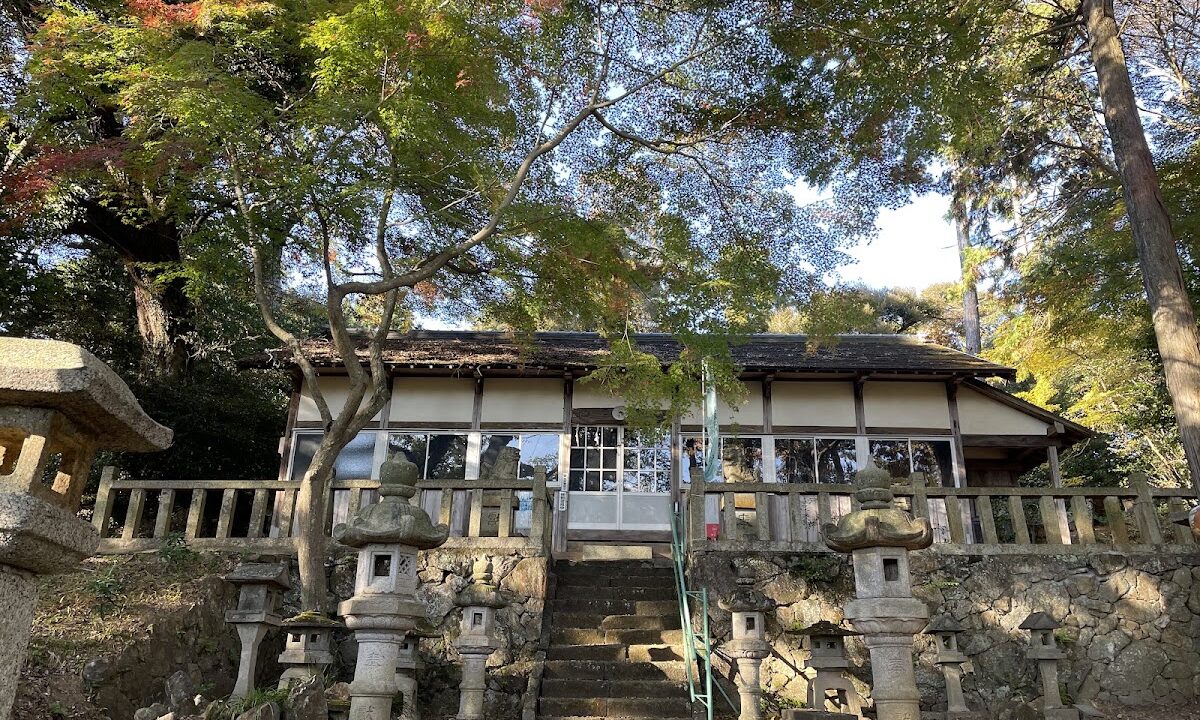
Complete Guide to Okisome Shrine (Tsu City, Mie Prefecture) | History and Highlights of the Engishiki-Listed Shrine Located in the Birthplace of the Ise Taira Clan
Okisome Shrine, located in Tsu City, Mie Prefecture, is a venerable Engishiki-listed shrine, mentioned in the Engishiki Jinmyocho, a historical record from the Heian period. In this region known as the birthplace of the Ise Taira clan, this ancient shrine, quietly situated on a small hill, is a valuable cultural heritage site that conveys the history of Japan to the present day.
Basic Information about Okisome Shrine
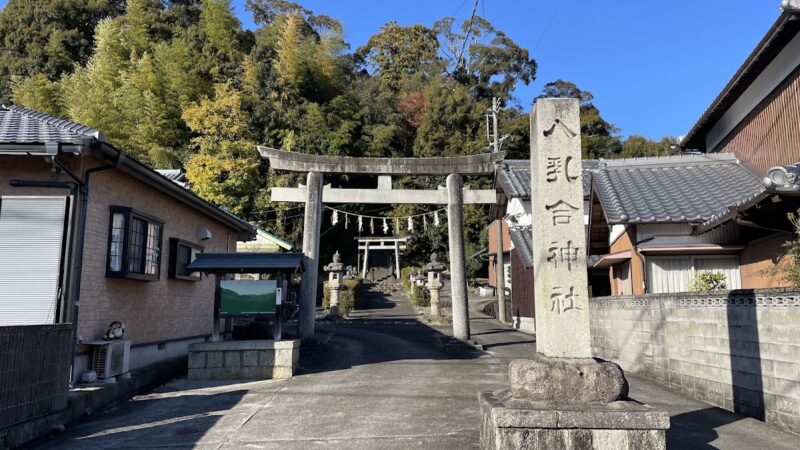
Name: Okisome Shrine
Address: 484 Sanshin, Tsu City, Mie Prefecture 514-0076
Shrine Rank: Engishiki-listed shrine (minor shrine), former village shrine
Affiliation: Association of Shinto Shrines, Mie Prefecture Shrine Association
Chief Priest: Yoshitaka Kazuyuki
Goshuin (Shrine Seal): Availability must be confirmed as there is no priest present
Okisome Shrine is located approximately 5.4 kilometers west of Tsu-Shinmachi Station on the Kintetsu Nagoya Line and has a history of belonging to Ano District, Ise Province. Currently, it is one of the 815 shrines belonging to the Mie Prefecture Shrine Association and attracts local faith.
Deities and Benefits of Okisome Shrine
Main Deity
There are several theories regarding the main deity of Okisome Shrine, but it is generally believed to enshrine Amaterasu Omikami. Amaterasu-Ōmikami is the supreme deity in Japanese mythology and the ancestral deity of the Imperial family, enshrined in the Inner Shrine of Ise Grand Shrine.
Given its location in Ise Province and its geographical proximity to Ise Grand Shrine, it is considered a natural progression for the shrine to enshrine Amaterasu-Ōmikami.
Role as a Local Deity and Clan Deity
Okizome Shrine has long served as the local deity (ubusunagami) of the Okizome region, acting as a guardian deity for the local residents. It has a particularly deep connection with the Ise Taira clan, and is believed to have been revered as the clan deity of the Taira family.
A local deity is a god who protects people born in a particular land throughout their lives, while a clan deity refers to a god who protects a specific clan or local community. Okizome Shrine possesses both of these characteristics, making it a very important shrine for the region.
Expected Benefits
- Family Safety: As a local guardian deity, it protects the peace and well-being of the community.
- Prosperity of Descendants: Its auspicious origins as the birthplace of the Ise Taira clan.
- Long-lasting Military Fortune: Its historical connection to the Taira clan.
- Protection of the Region: Its status as a Shikinaisha (shrine listed in the Engishiki) in Ano District.
Historical Value as an Engishiki Shrine
What is the Engishiki Jinmyocho (List of Shrines in the Engishiki)?
The Engishiki Jinmyocho is a list of shrines throughout Japan, compiled in the 5th year of the Engi era (927 AD) during the mid-Heian period, and recorded in volumes 9 and 10 of the Engishiki. It lists shrines that were considered particularly important by the imperial court at the time, and Okizome Shrine is recorded as “Okizome Shrine” under the section for “Ise Province, Ano District.”
Shrines listed in the Engishiki are called “Shikinaisha” and are considered evidence of their ancient history and status. Of the approximately 3,000 Shikinaisha shrines nationwide, Okizome Shrine is classified as a “minor shrine,” but it remains a valuable shrine with a history of over a thousand years.
Shikinaisha Shrines in Ano District
The Engishiki Jinmyocho (a list of shrines compiled in the Heian period) lists ten Shikinaisha shrines in Ano District, and Okizome Shrine is one of them. Ano District corresponds to the area from the western to central parts of present-day Tsu City and was an important region in ancient Ise Province.
Other historical shrines are also included among the Shikinaisha shrines in Ano District, indicating that this region was a center of faith from ancient times.
Identification and Current Status
“Identification” refers to the assumption that a shrine described in ancient documents is the same as an existing shrine. Okizome Shrine has been identified as the “Okizome Shrine” listed in the Engishiki Jinmyocho, indicating that a shrine has existed in this area for over a thousand years.
Under the modern shrine ranking system, it was ranked as a village shrine and positioned as a core shrine in the region. Currently, it is under the jurisdiction of the Association of Shinto Shrines and is properly managed through the Mie Prefecture Shrine Association.
Importance as the birthplace of the Ise Taira clan
What is the Ise Taira clan?
The Ise Taira clan was a branch of the Taira clan that flourished from the late Heian period to the early Kamakura period. Among the Taira clan, descendants of Emperor Kanmu, the branch based in Ise Province is specifically called the “Ise Taira clan.”
The Ise Taira clan expanded its power from the time of Taira no Masamori, reaching its peak during the time of his son, Taira no Tadamori, and grandson, Taira no Kiyomori. Taira no Kiyomori was the first samurai in Japanese history to become Grand Minister of State, and at one time wielded such power that it was said, “If you are not of the Taira clan, you are not human.”
Taira no Tadamori and the Sanpin Area
The Sanpin area of Tsu City, where Okizome Shrine is located, is considered the birthplace of Taira no Tadamori. It is said that Taira no Tadamori was born here around 1113 (Eikyu 1). Nearby, there is a bus stop named “Tadamori-zuka” (Tadamori Mound) and the remains of the “Ubuyu-ike” (birthing pond), believed to have been used when Taira no Tadamori was born.
Taira no Tadamori greatly contributed to the expansion of the Ise Taira clan’s power, further strengthening the foundation he inherited from his father, Taira no Masamori. He served Emperor Shirakawa and Emperor Toba, achieving an unusually high rank for a samurai, rising to the position of Junior Fourth Rank, Lower Grade, and Minister of Justice.
The Relationship Between Okizome Shrine and the Taira Clan
Okizome Shrine is located on a small hill and is believed to have been revered as the tutelary deity of the Ise Taira clan. A ujigami is a deity that protects a specific clan. The Taira clan, as they built their power base in this area, likely considered Okizome Shrine a spiritual anchor.
Considering the important role the Ise Taira clan played in Japanese history, Okizome Shrine, situated in their birthplace, holds historical significance beyond that of a mere local shrine.
Okizome Shrine Grounds and Highlights
Layout of the Grounds
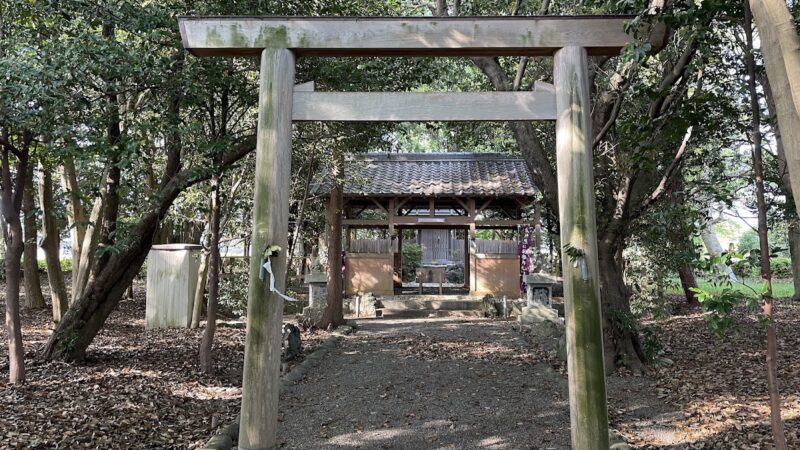
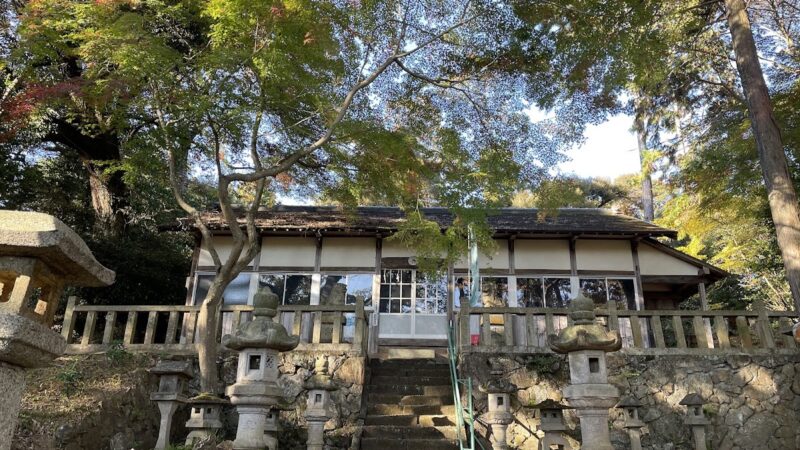
Okizome Shrine is situated on a small hill, enveloped in a quiet and peaceful atmosphere. While relatively small, the grounds exude a solemn air befitting an ancient shrine.
The shrine’s layout follows typical shrine architecture, with the worship hall (haiden) located along the approach, and the main sanctuary (honden) beyond it.
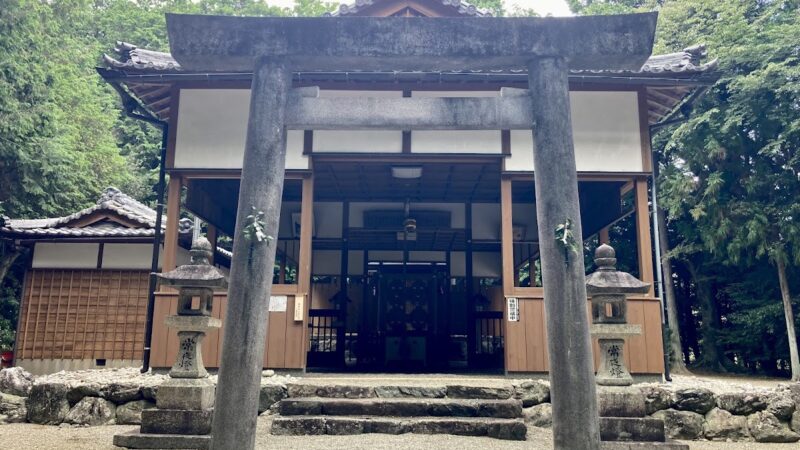
Worship Hall
The worship hall is where worshippers offer prayers to the deity. Okizome Shrine’s worship hall has a simple and warm design, typical of a local shrine, and its appearance evokes a long history.
Because there are no resident priests, the shrine is usually enveloped in silence, but it becomes bustling with many worshippers during local festivals.
Main Shrine
The main shrine is the most sacred place where the enshrined deity resides. Located behind the worship hall, general worshippers usually pray from the worship hall.
Surrounding Natural Environment
Due to its location on a small hill, the shrine grounds offer panoramic views of the surrounding area. In spring, cherry blossoms bloom beautifully, making it a place of relaxation for local residents. As the birthplace of the Ise Taira clan, it is a space where history and nature harmonize.
Annual Events and Festivals of Okizome Shrine
Palace Festival
Okizome Shrine holds the Palace Festival (Kyudensai) once a year. The Palace Festival was also held in 2025, attracting local residents and history enthusiasts.
The Palace Festival is one of the shrine’s most important festivals, a Shinto ritual to express gratitude to the enshrined deity and pray for peace and prosperity in the region. Normally a quiet shrine, it becomes bustling with many worshippers on this day.
Connection to the Community
Okizome Shrine, as the local tutelary deity, has long been closely intertwined with the lives of the local residents. During festivals, local people cooperate to perform the religious rites, and the faith is passed down through generations.
How to Access Okizome Shrine
Access by Public Transportation
Nearest Station: Kintetsu Nagoya Line “Tsu-Shinmachi Station” or “Tsu Station”
By Bus:
- Take a Mie Kotsu bus from Tsu-Shinmachi Station or Tsu Station
- Get off at the “Tadamorizuka” bus stop
- Approximately 10 minutes on foot from the bus stop
There is a convenience store near the Tadamorizuka bus stop, which is convenient for preparing or resting before visiting the shrine. The bus stop name itself is derived from Taira no Tadamori, reflecting the historical background of this area.
Access by Car
Address: 484 Sanshin, Tsu City, Mie Prefecture 514-0076
Entering the above address into your car navigation system will guide you to the vicinity of the shrine. However, since the shrine is located on a small hill, there are some narrow sections of road, so please drive carefully.
Regarding parking, given the size of the shrine, there may not be a dedicated large parking lot, so it is recommended to check before visiting.
Points to Note When Visiting
- Absence of Priests: Okizome Shrine does not usually have priests permanently stationed there. If you wish to receive a Goshuin (shrine stamp), it is recommended to inquire with the Mie Prefecture Shrine Association or related organizations in advance.
- Visiting Hours: There are no specific visiting hours, but it is preferable to visit during daylight hours.
- Attire: Please dress appropriately for visiting a shrine.
Historical Spots Around Okizome Shrine
Birthing Pond (Birthplace of Taira no Tadamori)
Near Okizome Shrine is the site of the bathing pond believed to have been used when Taira no Tadamori was born. While the pond itself may no longer exist, it is an important historical site marking the birthplace of the Ise Taira clan.
Around Tadamori Mound
The area around Tadamori Mound, which is also the name of a bus stop, is known as a place associated with Taira no Tadamori. In spring, the cherry blossoms bloom beautifully, making it a spot where you can enjoy both historical walks and nature appreciation.
Other Historical Spots in Tsu City
Tsu City has many other historical shrines and temples. Visiting Tsu Castle Ruins, Tsu Kannon (Great Gate), and Yuki Shrine, among others, if you have the time, will allow you to gain a deeper understanding of Tsu City’s history.
Shrine Culture in Mie Prefecture and Okizome Shrine
Relationship with Ise Grand Shrine
Mie Prefecture is one of the centers of Japanese shrine culture. Ise Grand Shrine, in particular, is the most prestigious shrine in Japan, dedicated to Amaterasu Omikami, the ancestral deity of the Imperial family.
Okizome Shrine is also located in Ise Province, and since its principal deity is Amaterasu Omikami, one can feel a spiritual connection to Ise Grand Shrine. From ancient times, Ise Province was considered sacred land, and many Shikinaisha (shrines listed in the Engishiki) were located there.
Role of the Mie Prefecture Shrine Association
The Mie Prefecture Shrine Association is comprised of 815 shrines within Mie Prefecture that are under the jurisdiction of the Association of Shinto Shrines. Okizome Shrine is a member of this association and receives the following support:
- Encouraging visits to Ise Grand Shrine
- Training and education of Shinto priests
- Appropriate management and preservation of shrines
- Promotion of shrine culture
Through this organizational support, even small shrines without resident priests are properly maintained, and local faith is preserved.
Shikinaisha in Mie Prefecture
Many Shikinaisha exist in Mie Prefecture. The Engishiki Jinmyocho (a list of shrines compiled in the Heian period) lists 253 shrines in Ise Province, a remarkably high number compared to the rest of Japan. This indicates that Ise Province was an important region for the imperial court from ancient times.
Okizome Shrine is one of these shrines, a precious cultural heritage site with a history of over a thousand years.
Significance of Visiting Okizome Shrine
A Historical Pilgrimage Experience
Visiting Okizome Shrine is not simply about paying respects to a deity, but also an experience that allows you to feel Japanese history firsthand.
- Heian Period: An ancient shrine listed in the Engishiki Jinmyocho
- Late Heian Period: The birthplace of the Ise Taira clan
- Kamakura Period: Continued to protect local faith even after the fall of the Taira clan
- Modern Era: Still revered as the local tutelary deity
Through this long flow of history, the existence of a shrine that has remained unchanged in the same place can truly be called “living history.”
Prayer in Silence
Because there are no resident priests, Okizome Shrine is usually enveloped in deep silence. This stillness enhances the sacred atmosphere, creating an environment suitable for quiet prayer.
Away from the hustle and bustle of the city, spending time praying atop a small hill while contemplating history will be a precious time of spiritual healing for modern people.
Learning about Local History
By visiting Okizome Shrine, you can learn a great deal about the history of the Ise Taira clan, the significance of its status as an Engishiki-listed shrine, and the shrine culture of Mie Prefecture. Knowing that the roots of Taira no Kiyomori and the Taira clan, who appear in Japanese history textbooks, lie in this area will make history feel much closer.
Summary: The Charm of Okizome Shrine
Located in Tsu City, Mie Prefecture, Okizome Shrine is a shrine with three major characteristics: its status as an Engishiki-listed shrine, its historical importance as the birthplace of the Ise Taira clan, and its role as the local tutelary deity.
Despite its small size, Okizome Shrine boasts a history of over a thousand years and has been revered as the tutelary shrine of the Ise Taira clan, descendants of Taira no Tadamori and Taira no Kiyomori. It is a valuable cultural heritage site that conveys the history of Japan to the present day.
While it lacks the splendor and bustle of a typical shrine due to the absence of resident priests, it possesses a quiet and solemn atmosphere, making it a place where one can slowly appreciate history and offer prayers.
When visiting Mie Prefecture, visiting not only famous shrines like Ise Grand Shrine but also these locally rooted historical shrines will allow you to gain a deeper understanding of Japanese shrine culture and history.
Okizome Shrine is a fascinating, little-known shrine where Japanese history, shrine culture, and local beliefs intersect.