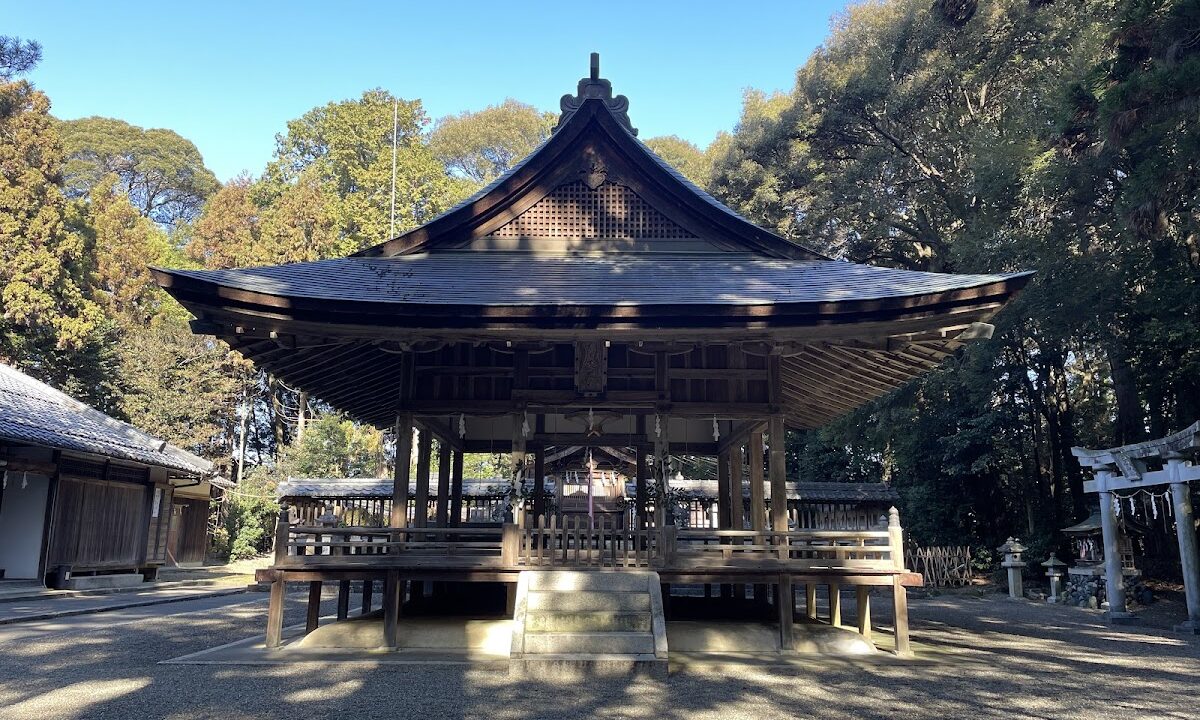
Sugino-ki Shrine (Ryuo-cho, Shiga Prefecture) Complete Guide | History, Deities, Access, and Goshuin Information
Located in Yamanoe, Ryuo-cho, Gamo-gun, Shiga Prefecture, Sugino-ki Shrine is a historical shrine founded in 947 AD. Formerly known as “Yamagami Tenno-sha,” this shrine, with its deep connection to Kyoto’s Gion Kanshin-in, has been revered as a guardian deity of the region for over a thousand years. This article provides a detailed overview of Sugino-ki Shrine, including its history, enshrined deities, highlights within the grounds, access methods, and goshuin (shrine stamp) information.
Basic Information on Sugino-ki Shrine
Location and Access
Address: 3560 Yamanoe, Ryuo-cho, Gamo-gun, Shiga Prefecture
Sugino-ki Shrine is located in the Yamanoe settlement of Ryuo-cho, and is a beloved local shrine nestled amidst a rural landscape. Due to its distance from the nearest station, access by car is recommended.
Access by Train:
- Approximately 15 minutes by car from JR Biwako Line “Omihachiman Station”
- Approximately 25 minutes on foot (approx. 2km) from Omi Railway “Sakuragawa Station”
Access by Car:
- Approximately 10 minutes from Meishin Expressway “Ryuo IC”
- Accessible from National Route 8
Parking is available in available spaces around the shrine, but please be considerate of local residents when visiting.
Visiting Hours
The shrine grounds are generally open for free visits. Since there is no permanent shrine office, it is recommended to check in advance if you wish to receive a Goshuin (shrine stamp).
History of Suginoki Shrine
Founding in Tenryaku 1 (947 AD)
The history of Suginoki Shrine dates back to Tenryaku 1 (947 AD). It is believed to have originated in the mid-Heian period when it was enshrined as the guardian deity of the five areas surrounding the four boundaries of Homankyo-ji Temple (now a ruined temple) located in this area. Hōmankyōji Temple was an important temple in this region at the time, and Sugino-ki Shrine played a crucial role as its guardian deity.
History as “Yamagami Tennō Shrine”
In 1098 (Jōtoku 2), a major turning point occurred in the history of Sugino-ki Shrine. In this year, the Yamagami region, along with the neighboring Miyagawa Village (present-day Miyagawa-chō, Higashiōmi City), became part of the territory of Kyoto’s Gion Kanshin-in (present-day Yasaka Shrine).
Following this, a divided spirit of Gozu Tennō was enshrined, and Sugino-ki Shrine came to be known as “Yamagami Tennō Shrine,” while Yasaka Shrine in Miyagawa became known as “Gozu Tennō Shrine.” These two shrines were called “the two Tennō of Kawanishi, Ankichi-gō,” and were revered as the center of local faith.
Separation of Shinto and Buddhism and the Modern Era
With the Meiji-era decree separating Shinto and Buddhism, the worship of Gozu Tennō changed to the worship of Susanoo-no-Mikoto, but Sugino-ki Shrine continued to play its role as the guardian deity of the region. Even today, it remains the guardian shrine of the Yamanoe settlement, attracting the faith of local residents.
Deity and Divine Virtues
Main Deity
The main deity enshrined at Sugino-ki Shrine is Susanoo-no-Mikoto. Susanoo-no-Mikoto is an important deity in Japanese mythology and is known for possessing various divine virtues.
Divine Virtues
Sugino-ki Shrine, which enshrines Susanoo-no-Mikoto, is believed to possess the following divine virtues:
Protection from Misfortune and Disaster: From the myth of Susanoo-no-Mikoto slaying the Yamata no Orochi (eight-headed serpent), he is believed to have the power to ward off misfortune.
Protection from Epidemics: Due to the lingering belief in him as Gozu Tenno (Ox-Headed Heavenly King), he is believed to have the divine virtue of warding off epidemics.
Abundant Harvest: He is also worshipped as a guardian deity of agriculture, and worshippers visit to pray for a bountiful harvest.
Matchmaking and Family Safety: Due to its association with the gods of Izumo, many visitors pray for successful relationships and the safety of their families.
Highlights of the Shrine Grounds
The Sacred Grove
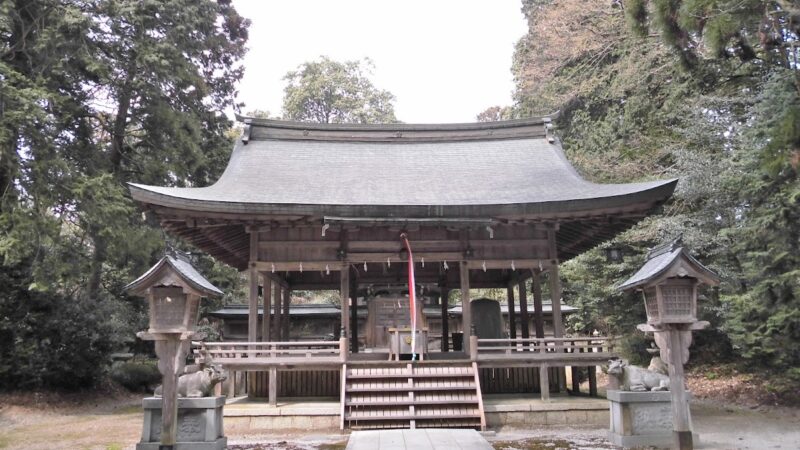
The most distinctive feature of Suginoki Shrine is the magnificent sacred grove that spreads out beside the village. The lush forest stands out against the surrounding rural landscape, making the shrine easily identifiable from afar. This grove has preserved its natural beauty as a sacred area since ancient times, allowing visitors to enjoy its changing scenery throughout the seasons.
Shrine Buildings
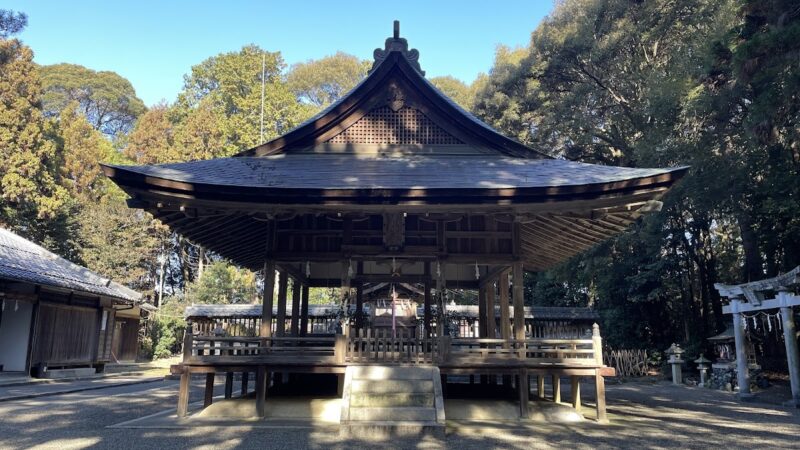
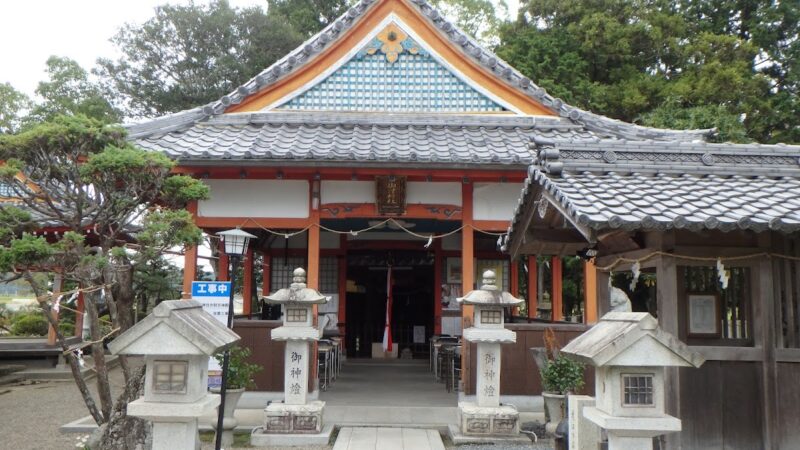
A surprisingly impressive shrine building welcomes visitors. While not large in scale, it is meticulously maintained, reflecting the deep faith of the local people. The main hall maintains a traditional shrine architectural style, conveying a sense of historical weight.
Atmosphere of the Shrine Grounds
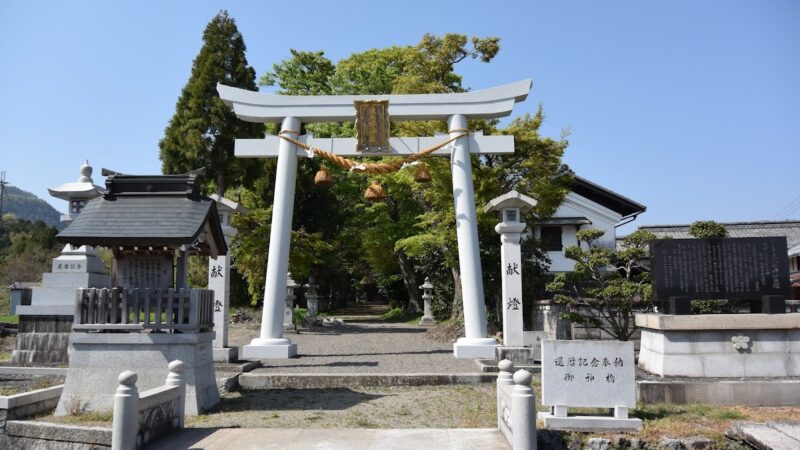
The shrine grounds are enveloped in a tranquil atmosphere, offering a healing space far removed from the hustle and bustle of the city. Walking along the approach, the light filtering through the trees creates a mystical atmosphere. The sight of locals regularly visiting the shrine demonstrates its deep-rooted religious significance.
About Goshuin (Shrine Seals)
Regarding Goshuin at Suginoki Shrine, please note that obtaining them may be difficult under normal circumstances due to the lack of a permanently staffed shrine office. Those wishing to receive a Goshuin should note the following:
- We recommend contacting the Shiga Prefectural Shrine Association or a nearby shrine in advance.
- They may be available on special days such as annual festivals.
- Recording your visit date yourself is also a good way to document your visit.
Regardless of whether or not you receive a Goshuin, please remember that the act of visiting the shrine itself is valuable, and visit with reverence.
Annual Events and Festivals
Annual Festival
Sugino-ki Shrine holds annual festivals based on local traditions. For detailed dates, please check with locals or contact the Shiga Prefectural Shrine Association.
Connection with the Community
As the guardian shrine of the Yamanoe settlement, Suginoki Shrine plays a central role in the local community. During the festival, local residents participate wholeheartedly in the preparations and operation, creating a place for intergenerational exchange.
Nearby Attractions
Tourist Spots in Ryuo Town
When visiting Suginoki Shrine, why not explore other tourist spots in Ryuo Town?
Ryuo Town Historical and Folk Museum: This facility allows you to learn about the history and culture of Ryuo Town. Exhibits include materials from ancient to modern times, providing a deep understanding of the historical background of Suginoki Shrine.
Naemura Shrine: A representative ancient shrine of Ryuo Town, it houses the National Treasure West Main Hall. Visiting both Suginoki Shrine and Naemura Shrine will give you a deeper appreciation of the history of faith in this region.
Nearby “Two Heavenly Kings” Related Sites
We also recommend visiting Yasaka Shrine (formerly Gozu Tenno Shrine) in Miyagawa-cho, Higashiomi City, which is the other of the “Two Heavenly Kings of Kawanishi, Ankigo.” Visiting both shrines will allow you to experience the historical connection dating back to the second year of the Jōtoku era.
Manners and Precautions When Visiting a Shrine
Basic Manners for Visiting a Shrine
- Bow at the Torii Gate: Bow before passing through the torii gate to show respect for entering the sacred area.
- Walking Along the Path: The center of the path is considered the path of the gods, so walk along the sides.
- Procedure for Washing Hands: If there is a water basin, wash your left hand, then your right hand, then your mouth.
- Procedure for Worship: The basic procedure is two bows, two claps, and one bow.
Consideration for the Community
Since Sugino-ki Shrine is adjacent to a residential area, please be mindful of the following:
- Please refrain from loud conversations.
- When parking, please do not obstruct the passage of residents.
- Please take all your trash with you.
- Please be considerate of privacy when taking photographs.
The Charm of Sugino-ki Shrine
Layers of History
The greatest charm of Sugino-ki Shrine lies in its layered history of over a thousand years. Beginning as the guardian deity of Homankyo-ji Temple, influenced by Gion faith, and continuing through the separation of Shinto and Buddhism to the present day, it embodies the evolution of Japanese religious history.
Community-Rooted Faith
Another charm is that it remains a place of faith rooted in the community, not a tourist destination. The sight of local people regularly visiting and carefully preserving the shrine gives a sense of its true essence.
Tranquil Environment
The quiet environment, away from the hustle and bustle of the city, is another appealing aspect, allowing for a peaceful visit. The shrine grounds, surrounded by a sacred grove, are an ideal place to calm the mind and reflect on oneself.
Shrines related to cedar trees in Shiga Prefecture
Besides Suginoki Shrine, there are other shrines in Shiga Prefecture that have a deep connection to cedar trees.
Oisugi Shrine (Kusatsu City)
Located in Shimokasa-cho, Kusatsu City, Oisugi Shrine is said to have originated in 704 AD (Keiun 1st year of Emperor Monmu’s reign) when a divine spirit descended upon the Hiramori Great Cedar. The enshrined deity is Susanoo-no-Mikoto, the same deity as Suginoki Shrine. Located approximately 3 km northwest of JR Kusatsu Station, along the Hamakaido road, it has been worshipped as the guardian deity of the eastern and western districts.
The sacred cedar tree of Okuishi Shrine (Maibara City)
Okuishi Shrine, located within the “Oiso Forest” which has been celebrated in waka poetry since the Manyo period, boasts a magnificent sacred cedar tree. The main shrine building is designated as a National Important Cultural Property and is also known as a scenic spot along the old Nakasendo road.
Visiting these shrines allows you to understand the deep connection between cedar trees and faith in Shiga Prefecture.
Significance of Visiting Suginoki Shrine
Learning History
Visiting Suginoki Shrine is not merely sightseeing; it’s an opportunity to learn about Japanese religious and local history. You can experience firsthand many historical elements, such as the form of faith that has continued since the Heian period, cultural connections with Kyoto, and the effects of syncretism and separation of Shinto and Buddhism.
Finding Peace of Mind
You can escape the stresses of modern society and calm your mind in a quiet environment. Taking deep breaths in the sacred grove and listening to the sounds of nature can refresh your mind and body.
Understanding Local Culture
Visiting a place of faith rooted in the community deepens your understanding of the local culture and the lives of its people. Because it is a shrine that has not been commercialized for tourism, you can experience authentic local culture.
Summary
Suginoki Shrine is a historic shrine located in Ryuo-cho, Gamo-gun, Shiga Prefecture. Since its founding in 947 AD, it has been revered as the guardian deity of the region for over a thousand years. Its history, including becoming part of the territory of Kyoto’s Gion Kanshin-in in 1098 AD and being counted as one of the “Two Tenno Shrines of Kawanishi, Anki-go,” speaks to the shrine’s importance.
The enshrined deity, Susanoo-no-Mikoto, is believed to bestow blessings such as protection from misfortune, eradication of disease, and abundant harvests, and continues to receive fervent devotion from local residents. Surrounded by a magnificent sacred grove, the shrine grounds are enveloped in a tranquil atmosphere, making it an ideal place for visitors seeking peace of mind.
While access by car is convenient, it is also within walking distance from Sakuragawa Station on the Ohmi Railway. While prior confirmation is necessary regarding the availability of Goshuin (shrine stamps), the visit itself is of great value. Visiting Suginoki Shrine along with other shrines and temples in Ryuo Town and the surrounding area will provide a deeper understanding of history and a more fulfilling pilgrimage experience.
For those who want to escape the hustle and bustle of the city, connect with history and nature, and experience authentic local faith, we wholeheartedly recommend a visit to Suginoki Shrine.