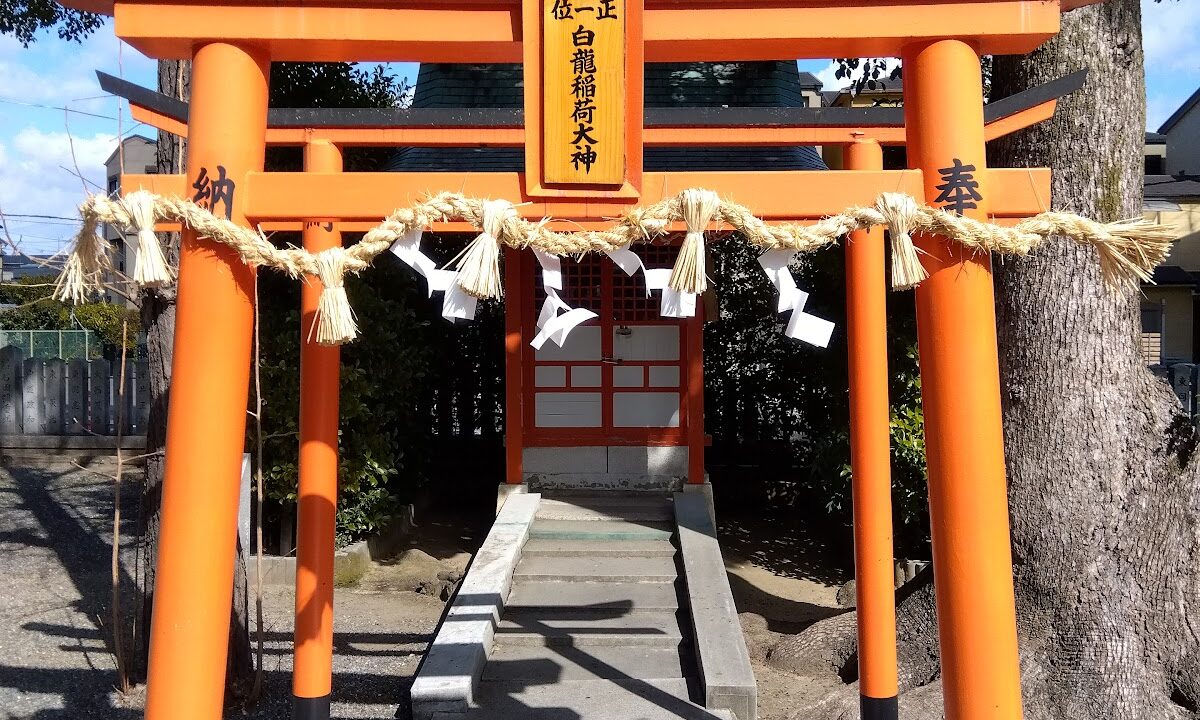
Tsushimabe Shrine (Moriguchi City, Osaka Prefecture) Complete Guide | History and Goshuin Information of an Engishiki-Listed Shrine
Tsushimabe Shrine, located in Kaneda-cho, Moriguchi City, Osaka Prefecture, is a historically significant shrine listed in the Engishiki Jinmyocho (a list of shrines compiled in the early Heian period). Affectionately known locally as “Kurohara no Miya-san,” it continues to attract the faith of local residents. This article provides a detailed introduction to Tsushimabe Shrine, including its history, enshrined deities, highlights of the grounds, and information on its goshuin (shrine stamps).
What is Tsushimabe Shrine?
Tsushimabe Shrine is located at 6-15-6 Kaneda-cho, Moriguchi City, Osaka Prefecture. It is an ancient shrine listed in the Engishiki Jinmyocho from the early Heian period as “Kawachi Province, Ibarada District, Tsushimabe Shrine, Kuwayuki.” While the exact founding date is unknown, it is believed to have a history of at least 1200 years.
Under the modern shrine ranking system, it was ranked as a local shrine and is known as a prestigious shrine with the title of Ichinomiya (first shrine) of the former Ibaraki County. Currently, it belongs to the Third Branch of the Osaka Prefectural Shrine Association and is revered as the local guardian deity.
About the Deities Enshrined
Three deities are enshrined at Tsushimabe Shrine.
Main Deity:
- Tsushimame-no-Okami – The main deity of this shrine, a goddess considered the ancestral deity of the Tsushimabe clan.
Enshrined Deities:
- Susanoo-no-Mikoto – God of protection against misfortune and disease.
- Sugawara-no-Michizane – God of learning.
There are various theories regarding Tsushimame-no-Okami, but the most likely theory is that it evolved from the clan name “Tsushimabe” to “Tsushima-no-Megami” (Tsushima Goddess). This deity is believed to have been worshipped as the ancestral god by the Tsushimabe clan, an immigrant clan involved in flood control of the Yodo River system.
History of Tsushimabe Shrine
Ancient Times: Founding and Appearance in Documents
The founding date of Tsushimabe Shrine is unclear, but it was already recognized as an important shrine in the early Heian period. The “Nihon Montoku Tenno Jitsuroku,” one of the Six National Histories, contains an entry for December 15, 850 (Kashō 3), stating “Tsushimabe Shrine in Kawachi Province, Junior Fifth Rank, Lower Grade,” which is considered the oldest record concerning the shrine. This record indicates that by the mid-9th century, the shrine already possessed the status to be granted a divine rank by the imperial court.
Furthermore, the “Engishiki Jinmyōchō,” compiled in 927 (Enchō 5), lists it as “Tsushimabe Shrine, Kuwayuki, Ibarada District, Kawachi Province,” establishing its status as a Shikinaisha (a shrine listed in the Engishiki). “Kuwayuki” indicates a shrine of high status, having received offerings of hoes and quivers (tools for holding arrows) from the Imperial Court.
Medieval to Early Modern Period: Renaming to Omiya Hachimangu Shrine
In 1633 (Kanei 10), when Nagai Shinano-no-kami Naomasa, the lord of Yodo Castle, took control of the area, he enshrined Sugawara no Michizane alongside the existing deities. It is said that at this time, he donated 500 koku of land to the shrine, renamed it “Omiya Hachimangu Shrine,” and showed deep reverence. During this period, the shrine’s status greatly improved, solidifying its position as a center of faith in the region.
Modern Period and Beyond: Ranking as a Gosha (Village Shrine)
Under the modern shrine ranking system of the Meiji era, it was ranked as a Gosha (Village Shrine), maintaining its position as the Ichinomiya (first-ranked shrine) of the former Ibaraki County and a central shrine in the region. After World War II, it became a religious corporation, which it remains to this day.
The History of Tsushimabe Shrine and its Relationship with Immigrant Clans
The Tsushimabe Clan and Tsushimae
The founding of Tsushimabe Shrine is believed to be deeply connected to the Tsushimabe clan, an immigrant clan. It is thought that a group of immigrant engineers involved in flood control projects of the Yodo River system resided in the area surrounding Tsushimae Village, where the shrine is believed to have originally been located.
The place name Tsushimae itself suggests a connection to Tsushima Island on the Korean Peninsula, indicating that many immigrants lived in this region. The Tsushimabe clan is presumed to have been one of these immigrant clans, serving the Yamato court with their flood control and civil engineering skills.
Connection to the Manda Embankment
The Manda district (also known as Matta-gun) was a region plagued by flooding of the Yodo River since ancient times. The Nihon Shoki (Chronicles of Japan), in the entry for the 11th year of Emperor Nintoku’s reign, mentions the construction of the Manda Embankment. It is highly probable that the Tsushimabe clan was involved in such flood control projects, and it is believed that their contributions led to their settlement in the area, and the establishment of the Tsushimabe Shrine, where they enshrined their ancestral deity, is the origin of the shrine.
Highlights of the Shrine Grounds
Osaka Prefecture’s Oldest Stone Komainu (Guardian Lion-Dog)
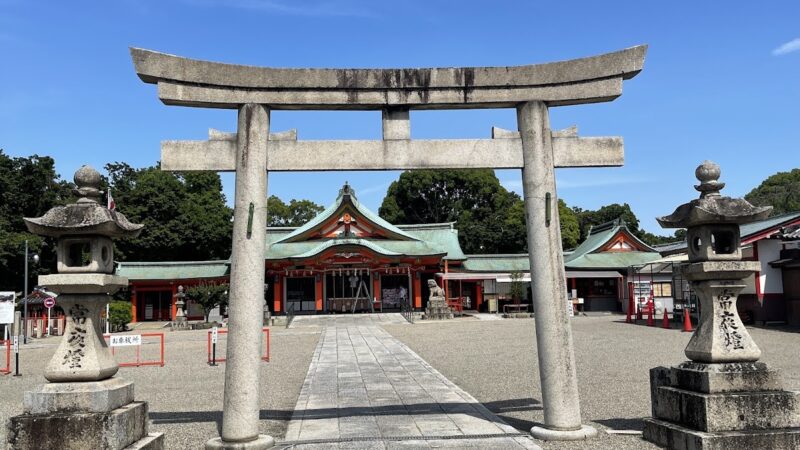
The most noteworthy feature of the Tsushimabe Shrine grounds is the stone komainu, said to be the oldest in Osaka Prefecture. These komainu are valuable cultural assets that preserve ancient traditions, and the weathering marks from the long years convey a sense of historical weight. A must-see for komainu researchers and those interested in stone art.
Atmosphere of the Shrine and Grounds
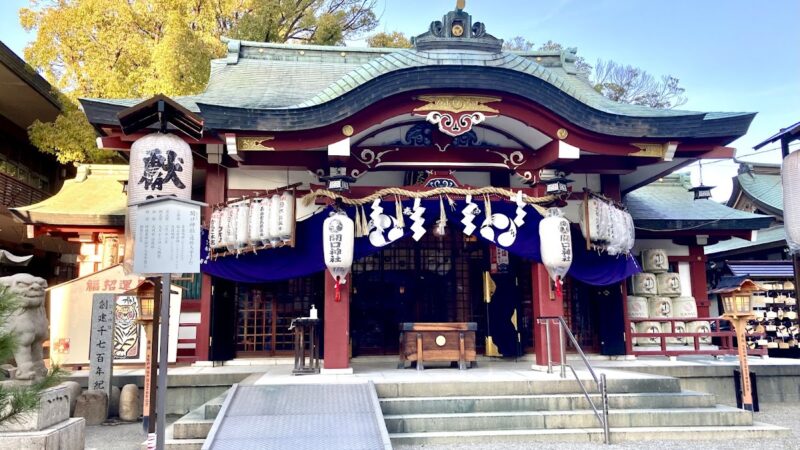
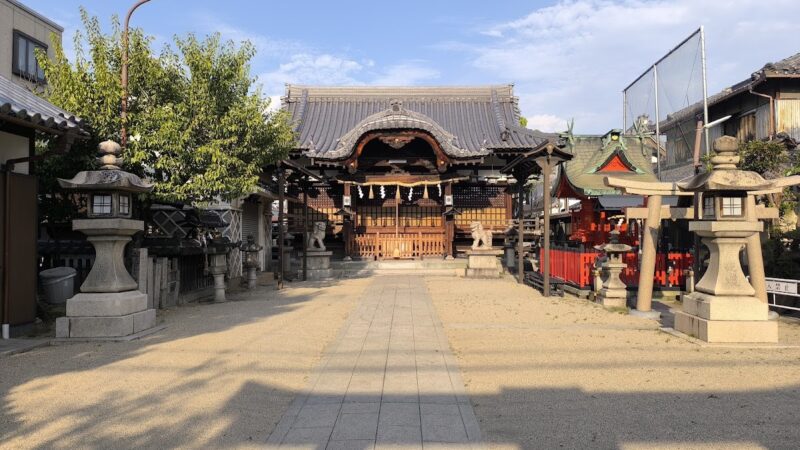
The current shrine buildings were constructed after the Edo period and maintain the traditional shrine architectural style centered on the main hall and worship hall. Despite being located in an urban area, the grounds maintain a tranquil atmosphere, providing peace to visitors.
Ancient trees line the grounds, allowing visitors to experience the changing seasons. The shrine is particularly lively during the autumn festival, attracting many local people.
History of Former Location and Relocation
Tsushimabe Shrine was originally located in Tsushimae Village, approximately 500 meters northeast of its current location, but was later relocated to its current location in Kaneda-cho. While detailed records of this relocation are lacking, it is presumed to have been due to flooding of the Yodo River and changes resulting from regional development.
Annual Events of Tsushimabe Shrine
Annual Festival (Autumn Festival)
The most important festival of Tsushimabe Shrine is the annual festival (Autumn Festival), held on the third Sunday of October each year. On this day, many worshippers from the local community visit the shrine, and a procession of the portable shrine and dedication ceremonies take place. It remains a cherished event, deepening the bonds of the local community.
Other Annual Events
- New Year’s Festival – January 1st, a festival celebrating the New Year
- Setsubun Festival – February (Setsubun), a prayer for protection against evil and for good fortune
- Summer Purification Ceremony – June 30th, a Shinto ritual to purify oneself of the impurities accumulated over the past six months
- Year-End Purification Ceremony – December 31st, a Shinto ritual to purify oneself of the impurities accumulated over the past year
These events are held with the participation of parishioners and local residents, ensuring the continuation of tradition.
Goshuin (Shrine Seal) Information
Tsushimabe Shrine offers Goshuin. Goshuin are popular among worshippers as proof of their visit to the shrine and as a memento of their shrine pilgrimage.
Regarding the Issuance of Goshuin (Shrine Seals)
Goshuin are available during the shrine office’s opening hours. However, there may not always be a resident priest, so if you definitely want a goshuin, we recommend contacting the shrine in advance. Please bring your goshuincho (seal book) and respectfully offer your prayers before requesting one.
Goshuin Design
The goshuin of Tsushimabe Shrine features the shrine’s name, “Tsushimabe Shrine,” written in ink, and stamped with the shrine’s seal. The simple yet dignified design reflects its history as a Shikinaisha (a shrine listed in the Engishiki, an ancient Japanese legal code).
Parishioner Area and Seven Villages
Tsushimabe Shrine was formerly revered as the tutelary shrine of the following seven villages in the Okubo Manor.
- Kaneda Village – Present-day Kaneda-cho, Moriguchi City
- Kita Village – Present-day northern area of Moriguchi City
- Kaji Village – Present-day Kaji-cho, Moriguchi City
- Higashi Village – Present-day eastern area of Moriguchi City
- Fujita Village – Present-day Fujita-cho, Moriguchi City
- Kurohara Village – Present-day Kurohara, Neyagawa City
- Tsushimae Village – Present-day Tsushimae, Neyagawa City
These villages are now divided between Moriguchi City and Neyagawa City, but many people still revere Tsushimabe Shrine as their tutelary deity. The common name “Kurohara no Miya-san” indicates a deep connection with Kurohara Village.
Access Information
Location
Address: 6-15-6 Kaneda-cho, Moriguchi City, Osaka Prefecture 570-0012
Access by Public Transportation
- Keihan Railway Approximately 2.2km west from Neyagawa-shi Station, about 25 minutes on foot
- Keihan Bus A few minutes’ walk from the nearest bus stop
- Osaka Metro Tanimachi Line Approximately 20 minutes’ walk from Dainichi Station
Access by Car
- Accessible from National Route 163 (Outer Ring Road)
- We recommend checking parking availability in advance.
Visiting Hours
While the shrine grounds are generally open for free visits, the office hours may be limited. We recommend contacting the shrine in advance if you wish to receive a Goshuin (shrine stamp) or prayer.
Nearby Attractions
Other Shrines and Temples in Moriguchi City
There are many other historical temples and shrines scattered throughout Moriguchi City. When visiting Tsushimabe Shrine, you can also enjoy visiting the surrounding temples and shrines.
Nature and History of the Yodo River
The history of Tsushimabe Shrine is deeply intertwined with flood control of the Yodo River. Along the Yodo River embankment, you can enjoy a stroll while feeling the remnants of the former flood plain.
Cultural Value of Tsushimabe Shrine
Value as a Shikinaisha Shrine
There are approximately 3,000 Shikinaisha shrines listed in the Engishiki Jinmyocho (a list of shrines compiled in the Heian period) throughout Japan, but many of them have been abandoned or their whereabouts have become unknown over the long course of history. Tsushimabe Shrine is one of the valuable Shikinaisha shrines that has been reliably preserved to this day.
Importance in Regional History Research
Tsushimabe Shrine provides important clues in the study of the regional history of ancient Kawachi Province, particularly the history of flood control in the Yodo River system and the history of immigrant clans. The place name Tsushimae and the existence of the Tsushimabe clan are valuable resources for considering ancient exchanges with the continent and the transmission of technology.
Komainu (Guardian Lion-Dogs) as Stone Art
These stone guardian lion-dogs, said to be the oldest in Osaka Prefecture, are important examples for understanding the evolution of stone art from the medieval to the early modern period. Although weathered, they are valuable cultural assets that convey an ancient style to the present day.
Manners and Points for Visiting a Shrine
Basic Worship Etiquette
- Bow before passing through the torii gate – As a courtesy before entering the sacred area.
- Purify your body and mind at the water basin – Purify your left hand, right hand, and mouth in that order.
- Etiquette in front of the main hall – The basic procedure is two bows, two claps, and one bow.
- Maintain silence within the shrine grounds – Be mindful that this is a sacred place.
Precautions When Receiving a Goshuin (Shrine Seal)
A Goshuin is proof of your visit, not a stamp rally. First, pray respectfully, and then request a Goshuin. Bringing your Goshuincho (stamp book) and having the offering fee (usually around 300 yen) ready will make the process smoother.
The Future and Preservation of Tsushimabe Shrine
Tsushimabe Shrine is an ancient shrine with a history of over 1200 years, but its environment has changed significantly in the increasingly urbanized city of Moriguchi. It faces challenges common to many local shrines, such as a decline in parishioners and the aging of its buildings.
However, thanks to the fervent faith of the local people and the support of researchers and enthusiasts who recognize its historical value, its traditions are still preserved. It is our responsibility as modern people to pass on this valuable cultural heritage, a shrine listed in the Engishiki (an ancient Japanese legal code), to future generations.
Summary
Tsushimabe Shrine, located in Moriguchi City, Osaka Prefecture, is an ancient shrine boasting a history of over 1200 years as a shrine listed in the Engishiki. It possesses many points of interest and historical value, including its connection to the immigrant clan Tsushimabe-omi, its history in flood control of the Yodo River, its status as the Ichinomiya (first-ranked shrine) of Ibaraki County, and the oldest stone guardian lion-dogs in Osaka Prefecture.
Locally known affectionately as “Kurohara no Miya-san,” this shrine continues to be revered as the guardian deity of the region. Despite its urban location, the shrine grounds maintain a tranquil atmosphere, making it a worthwhile destination for historical walks, collecting Goshuin (shrine stamps), and daily worship.
For those interested in Osaka’s history, or in ancient Japanese history and immigrant cultures, Tsushimabe Shrine is a must-see historical site. When visiting Moriguchi City, be sure to pay a visit.