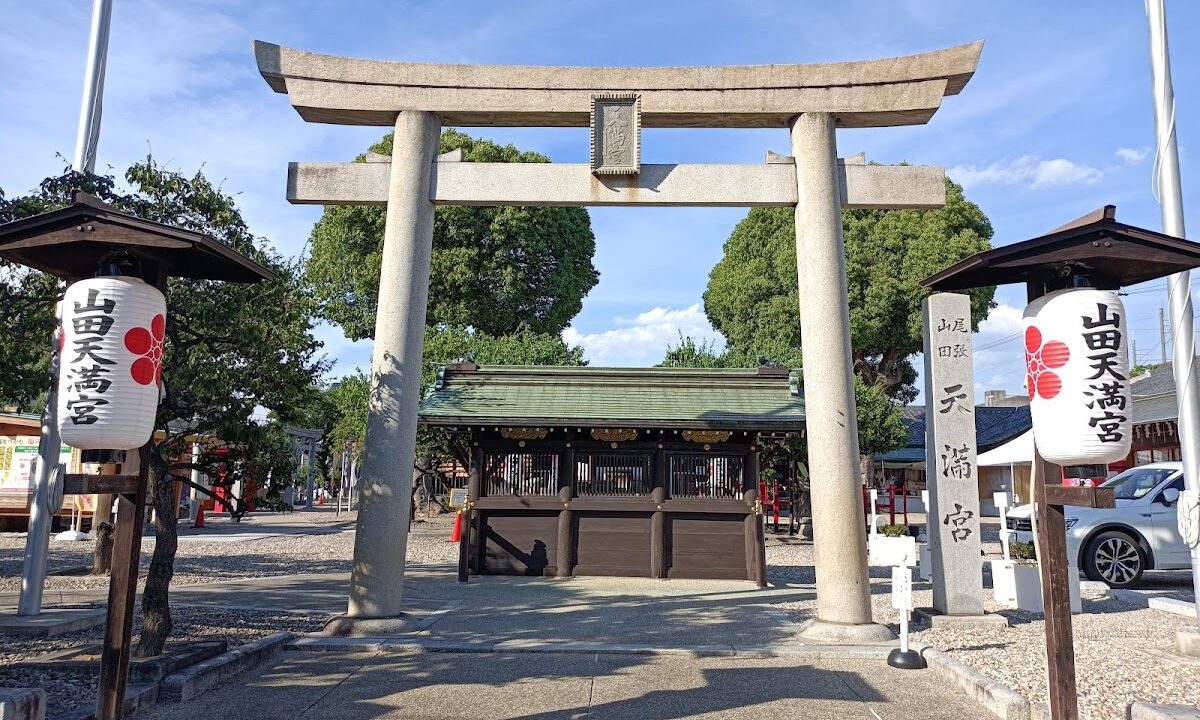
Yamada Tenmangu Shrine (Aichi Prefecture) Complete Guide | Goshuin (Shrine Seal), Blessings, Access, and Parking Information
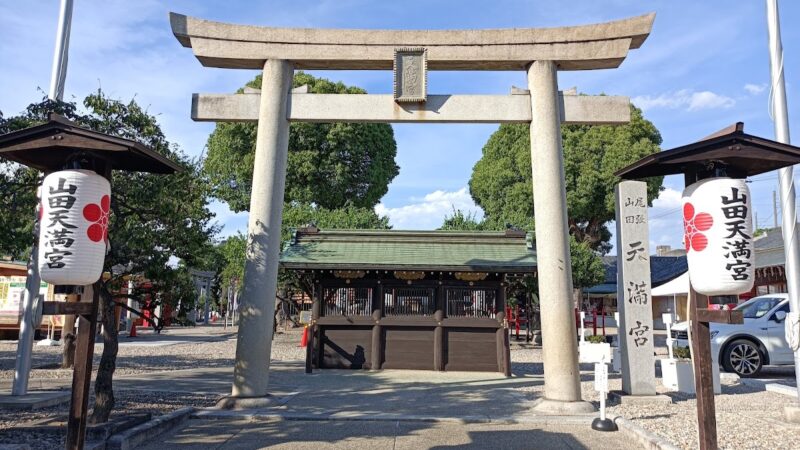
Located in Kita-ku, Nagoya City, Aichi Prefecture, Yamada Tenmangu Shrine is a historic shrine dedicated to Sugawara no Michizane, known as the god of learning. Affectionately known locally as “Yamada no Tenjin-sama,” it is bustling with worshippers during exam season. This article provides a detailed overview of Yamada Tenmangu Shrine, including its history, blessings, highlights within the grounds, goshuin information, and access methods.
What is Yamada Tenmangu Shrine?
Yamada Tenmangu Shrine is a historic shrine founded in 1672 (Kanbun 12). It was established by Tokugawa Mitsutomo, the second lord of the Owari Domain, who invited a divided spirit of Sugawara no Michizane from Dazaifu Tenmangu Shrine to pray for protection from evil influences at Nagoya Castle and for academic advancement.
Deities and Blessings
Main Deity: Sugawara no Michizane
Sugawara no Michizane was a scholar and politician of the Heian period, known for his outstanding talent and knowledge. After his death, he was revered throughout Japan as the “God of Learning.”
Main Blessings:
- Academic Success and Passing Exams
- Improvement in Academics
- Improvement in Calligraphy and Performing Arts
- Protection from Evil and Disaster
- Family Safety
- Business Prosperity
Especially during exam season (January to March), students preparing for university and high school entrance exams, and their families, visit to pray for success.
History of Yamada Tenmangu Shrine
Circumstances of Founding
In 1672 (Kanbun 12), Tokugawa Mitsutomo, the second lord of the Owari Domain, decided to build a Tenmangu shrine in the northeast (demon’s gate) of Nagoya Castle. At the time, Lord Mitsutomo, who valued the promotion of learning and the education of his people, invited a divided spirit of Sugawara no Michizane from Dazaifu Tenmangu Shrine and founded Yamada Tenmangu Shrine.
Development during the Edo Period
Throughout the Edo period, Yamada Tenmangu Shrine received the patronage of the Owari Domain, and as terakoya (private temple school) education flourished, it became a center of faith for the common people as the god of learning. Many scholars and literary figures also visited the shrine, making it a center of academic worship in Nagoya.
Modern Era
Even after the Meiji era, it continued to be revered as the local guardian deity, surviving the ravages of war and continuing to the present day. Even as times changed from Showa to Heisei to Reiwa, the faith in it as the god of learning remained unchanged, and many students still visit today to pray for success in their exams.
Highlights of the Shrine Grounds
Main Hall and Worship Hall
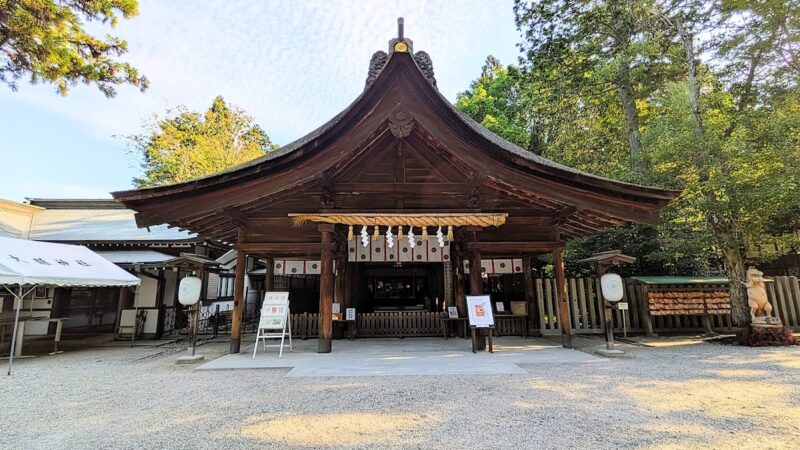
The beautiful vermilion-lacquered main hall exudes a solemn atmosphere befitting a Tenmangu shrine. At the main hall, you can receive prayers for passing exams and achieving academic success.
Nadeushi (Petting Cow)
The “Nadeushi” (Petting Cow), an essential element of Tenmangu shrines, sits atop the grounds. Due to the deep connection between Sugawara no Michizane and cows, a statue of a cow is always found at Tenmangu shrines. There is a belief that stroking the same part of the cow’s body as the part of your own body that is ailing will bring healing, and many worshippers stroke it. It is especially popular among students taking exams, as stroking the cow’s head is believed to improve intelligence.
Kogane Shrine
The Kogane Shrine is located within the grounds of Yamada Tenmangu Shrine. It enshrines Ebisu and Daikoku, and is believed to bring good fortune and increased wealth.
Features of Kin Shrine:
- Washing money in the sacred water of the money-washing area is believed to increase one’s financial luck.
- Famous for praying for lottery winnings.
- Benefits for business prosperity and success.
Ontake Shrine
Another shrine within the grounds, Ontake Shrine enshrines Kunitokotachi-no-Mikoto and is believed to bring blessings for matchmaking and successful relationships.
Features of Ontake Shrine:
- Yorisoi-ishi (Two Stones Narrowing Together): The appearance of two stones leaning against each other is believed to bring blessings for matchmaking.
- Prayers for successful love and good relationships.
- Harmonious marriage and family life.
Sansha-mairi (Three Shrine Pilgrimage)
Visiting the three shrines of Yamada Tenmangu, Kin Shrine, and Ontake Shrine, known as “Sansha-mairi,” is popular. It is believed that one can receive three blessings at once: academic success, increased financial luck, and successful relationships.
Goshuin (Shrine Seal) Information
Goshuin of Yamada Tenmangu Shrine
Yamada Tenmangu Shrine offers beautiful goshuin.
Types of Goshuin:
- Yamada Tenmangu Shrine Goshuin: Features the words “Yamada Tenmangu” in calligraphy in the center.
- Kin Shrine Goshuin: A symbolic design representing good fortune and wealth.
- Ontake Shrine Goshuin: A goshuin representing matchmaking.
Offering Fee: 300-500 yen each (may vary depending on the season)
Reception Hours: 9:00-17:00 (may vary depending on the season)
Goshuincho (Shrine Seal Book)
Original goshuincho are also available, featuring plum blossoms and designs characteristic of Tenmangu shrines. The offering fee is approximately 1,500-2,000 yen.
Limited Edition Goshuin (Temple Seals)
During New Year’s, plum blossom season, and exam season, special limited-edition goshuin (temple seals) are sometimes offered. Please check official information for details.
Annual Events and Festivals
Hatsumode (First Shrine Visit of the New Year) (January 1st-3rd)
Many worshippers visit the shrine for Hatsumode to pray for happiness in the new year. Many students can be seen offering ema (votive tablets) praying for success in exams.
Needle Memorial Service (February 8th)
This is a traditional event to express gratitude for used needles and pray for improvement in sewing skills.
Plum Blossom Festival (Late February – Early March)
The Plum Blossom Festival is held to coincide with the blooming of the plum blossoms on the shrine grounds. Due to the deep connection between Sugawara no Michizane and plums, plum trees are planted at Tenmangu Shrine.
Annual Grand Festival (around October 25th)
This is the most important festival at Yamada Tenmangu Shrine, featuring the offering of a portable shrine and sacred dances.
Shichi-Go-San Festival (November)
Shichi-Go-San ceremonies, praying for the healthy growth of children, are also held.
Prayer for Success in Exams/Academics
Prayer Services
At Yamada Tenmangu Shrine, you can receive prayer services for success in exams, both individually and as a group.
Prayer Ceremony Procedure:
- Register at the shrine office (no reservation required, same-day registration accepted)
- Fill out the application form with the necessary information
- Pay the offering fee (from 5,000 yen)
- Receive the prayer ceremony in the main hall (approximately 20 minutes)
- Receive amulets and charms
Prayer Ceremony Reception Hours: 9:00 AM – 4:30 PM (may vary depending on the season)
Amulets and Items for Passing Exams
Main Amulets:
- Academic Achievement Amulet: Prayers for overall academic improvement
- Passing Exam Amulet: Prayers for passing exams
- Academic Pencil: A blessed pencil, for use in exams
- Passing Exam Ema: Write your wish and dedicate it
- Academic Amulet: A type that can be attached to a school bag or backpack
Offering Fee: Approximately 500 yen – 1,000 yen
Proper Etiquette for Visiting Shrines for Passing Exams
- 1. Bow before passing through the torii gate.
- Purify your body and mind at the water basin.
- Bow twice, clap twice, and bow once in front of the main hall.
- Stroke the head of the Nadeushi (stroking cow) statue.
- Write your wish on an ema (votive tablet) and dedicate it.
- Receive a protective amulet.
Access Information
Location
Address: 3-25 Yamada-cho, Kita-ku, Nagoya City, Aichi Prefecture 462-0813
Phone: 052-981-5695
Access by Train
From JR Chuo Main Line/Meijo Subway Line “Ozone Station”:
- Approximately 7 minutes on foot
- Exit the north exit and head northwest.
From Meitetsu Seto Line “Morishita Station”:
- Approximately 10 minutes on foot
From Meijo Subway Line “Heian-dori Station”:
- Approximately 12 minutes on foot
Access from Ozone Station is the most convenient. From Nagoya Station, it takes about 15 minutes by subway to reach Ozone Station, and from Sakae Station, it takes about 10 minutes.
Access by Car
From Nagoya Expressway “Kurokawa Exit”:
- Approximately 5 minutes
From Nagoya Expressway “Higashikataha Exit”:
- Approximately 10 minutes
From Nagoya Station area:
- Approximately 20 minutes via National Route 19
Parking Information
Yamada Tenmangu Shrine Dedicated Parking Lot:
- Capacity: Approximately 20 cars
- Fee: Free
- Hours: 9:00 AM – 5:00 PM
Notes:
- Expect congestion during the first three days of the New Year and during exam season
- If the parking lot is full, please use nearby coin-operated parking lots
- There are several coin-operated parking lots around Ozone Station (approximately 200 yen for 30 minutes)
Access by Bus
Get off at the Nagoya City Bus “Yamada-cho” bus stop, approximately 3 minutes on foot
Visiting Hours and Admission Fee
Visiting Hours: Grounds are freely accessible (24-hour worship).
Shrine Office Hours: 9:00 AM – 5:00 PM
Admission Fee: Free
Prayer Service Hours: 9:00 AM – 4:30 PM
Nearby Tourist Attractions
Nagoya Dome
Home stadium of the Chunichi Dragons, approximately a 15-minute walk away. Enjoy baseball games and events.
Oosone Shopping Street
Experience the local atmosphere in this old-fashioned shopping street.
Tokugawa Garden
Approximately a 10-minute drive away. A Japanese garden associated with the Owari Tokugawa family, offering beautiful scenery throughout the seasons.
Kenchuji Temple
Approximately a 20-minute walk away. The family temple of the Owari Tokugawa family, with many historical buildings remaining.
Manners and Precautions for Visiting a Shrine
Basic Manners for Visiting a Shrine
- Attire: There are no specific rules, but please dress neatly.
- Photography: Please refrain from taking photographs inside the main hall.
- Quietness: Please pray quietly on the shrine grounds.
- Pets: Please carry your pet or keep it in a cage.
Proper Procedure for Washing Hands
- Hold the ladle in your right hand and wash your left hand.
- Switch the ladle to your left hand and wash your right hand.
- Switch the ladle back to your right hand, receive water in your left hand, and rinse your mouth.
- Wash your left hand once more.
- Stand the ladle upright to wash the handle and return it to its original position.
Proper Procedure for Bowing
- Place your offering in the offering box.
- Ring the bell (if present).
- Bow twice (bowing deeply twice).
- Clap your hands twice.
- One deep bow (one bow)
Frequently Asked Questions
Q: Do I need to make a reservation for a prayer?
A: Reservations are not required for individual prayers; you can register on the day. However, if you wish to have a prayer for a group (10 or more people), please contact us by phone in advance for a smoother process.
Q: Can I bring my amulet on the day of the exam?
A: Yes, you can bring your amulet to the exam venue. Keep it in your bag or pocket and feel its power as you take the exam.
Q: When should I visit the shrine to express my gratitude after passing the exam?
A: Please visit the shrine to express your gratitude at your convenience after the announcement of the results. You can return your amulet and talisman to the shrine with your gratitude.
Q: Is it possible to visit the shrine in a wheelchair?
A: The shrine grounds are relatively flat, but there are some steps. With assistance, it is possible to visit the shrine. If you have any concerns, please contact the shrine office in advance.
Q: Is there a specific order for visiting the Kin Shrine and Ontake Shrine?
A: There is no specific rule, but generally, many people visit the main shrine, Yamada Tenmangu, first, followed by Kin Shrine and then Ontake Shrine.
Summary of the Charms of Yamada Tenmangu
Yamada Tenmangu is a venerable shrine with a history of over 350 years, yet it remains popular with many people today. Its greatest appeal is that you can receive the blessings of three shrines at once: the main shrine dedicated to Sugawara no Michizane, the god of learning; Kin Shrine, for financial luck; and Ontake Shrine, for matchmaking.
It is easily accessible within Nagoya City, and many students visit during exam season to pray for success. The shrine grounds are enveloped in a tranquil atmosphere, making it an ideal place to calm your mind and pray.
Yamada Tenmangu Shrine is visited by people with various wishes, including those preparing for exams, students hoping for academic success, those seeking increased wealth, and those seeking good relationships. When visiting Nagoya, why not pay a visit?
Best Season to Visit
Plum Blossom Season (Late February to Early March)
The shrine grounds are beautifully adorned with plum blossoms, which have a deep connection to Sugawara no Michizane. A plum blossom festival is also held, attracting many visitors.
Exam Season (January to March)
The period around the National Center Test for University Admissions (Common Test for University Admissions) and high school entrance exams is the busiest time for visitors praying for success. You can feel the enthusiasm of students with the same goal.
New Year’s Visit (January 1st to 3rd)
New Year’s visits, praying for happiness and academic success, are also popular. However, crowds are expected during this period.
Shichi-Go-San (November)
The Shichi-Go-San festival, celebrating children’s growth, is a time when the area is bustling with families.
Recommended After Visiting the Shrine
Dining Around Ozone
After visiting the shrine, enjoying a meal around Ozone Station is recommended. There are many restaurants serving Nagoya cuisine.
Events at Nagoya Dome
During baseball season, you can enjoy watching a Chunichi Dragons game at Nagoya Dome.
Strolling Through Tokugawa Garden
If you have time, a visit to Tokugawa Garden, about a 10-minute drive away, and a stroll through the beautiful Japanese garden is recommended.
Planning a Visit to Yamada Tenmangu Shrine
Yamada Tenmangu Shrine is one of the most easily accessible Tenmangu shrines in Nagoya. It’s conveniently located a 7-minute walk from Ozone Station, making it easily accessible by train. Parking is also available, so you can visit by car.
While it may be crowded during exam season, this is also a testament to the shrine’s popularity and the faith it commands. Let’s strive to achieve our goals with the blessings of the god of learning.
When visiting the shrines, please observe the etiquette outlined in this article and offer your prayers with sincerity. A visit to Yamada Tenmangu Shrine, Kin Shrine, and Ontake Shrine will bring blessings for academic success, increased wealth, and successful relationships.
We sincerely pray that all your wishes will come true.