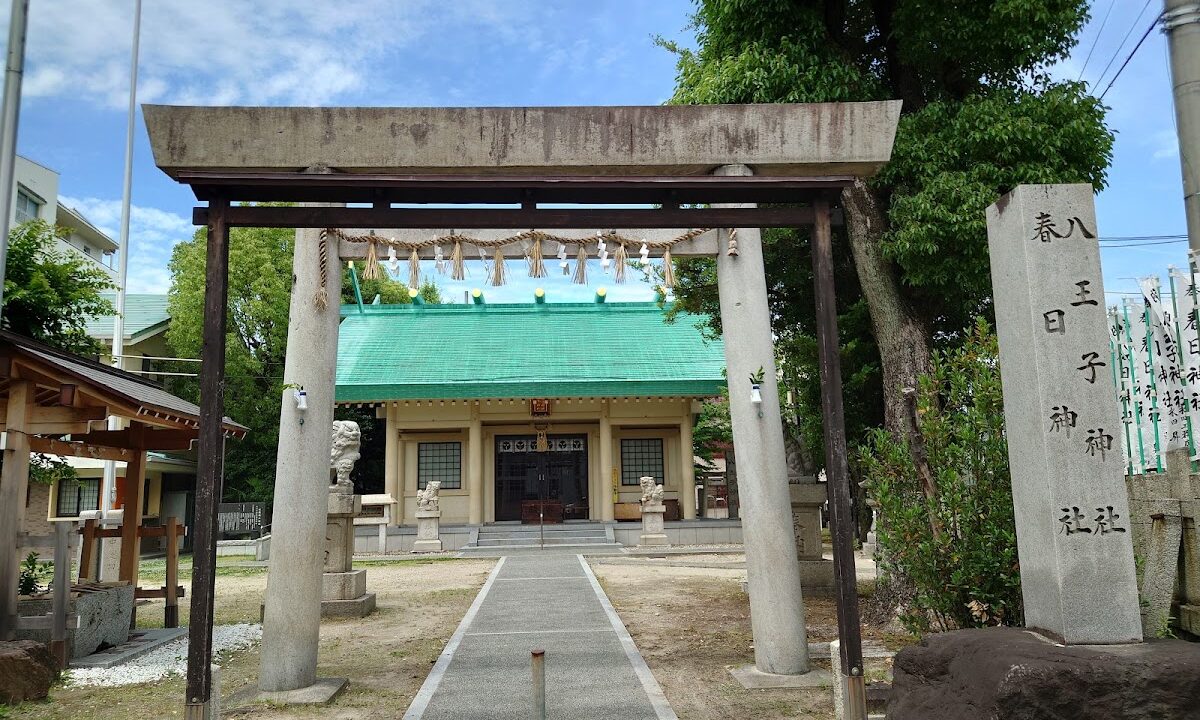
Hachioji Shrine (Kibuki-cho, Kasugai City) Complete Guide | History, Goshuin (Shrine Seal), and Access Information
Hachioji Shrine, located in Kibuki-cho, Kasugai City, Aichi Prefecture, is a historical shrine that has been revered as the guardian deity of the region since the early Edo period. Despite its easily accessible location near Kozoji Station, this shrine maintains a tranquil atmosphere. This guide provides detailed information on its history, origins, highlights within the grounds, goshuin information, and surrounding shrines and temples.
Basic Information on Hachioji Shrine
Location and Access
Location: 2-18-3 Kibuki-cho, Kasugai City, Aichi Prefecture
Nearest Station: JR Chuo Main Line/Aichi Loop Railway “Kozoji Station”
Located approximately 15 minutes on foot from Kozoji Station, it quietly stands in a residential area in the northern part of Kasugai City. Access by car is also possible, and there is parking available for visitors around the shrine.
Deities and Divine Virtues
The deities enshrined at Hachioji Shrine are based on the Hachioji faith, with Gozu Tenno as the principal deity. Hachioji refers to the eight princes of Gozu Tenno, and they are believed to have the divine virtues of warding off disease, protecting against misfortune, and ensuring family safety.
The shrine is affectionately known as “Kibuki no Hachioji-sama” by local residents and has been revered as a guardian deity of the region for many years.
History and Origins of Hachioji Shrine
History of Founding
The exact founding date of Hachioji Shrine is unknown, but the oldest existing ridge beam inscription bears the date Manji 3 (1660). This inscription is a valuable historical document from the early Edo period, conveying the long history of the shrine.
Manji 3 was the time when Tokugawa Ietsuna ruled as the fourth shogun of the Edo shogunate, suggesting that the shrine was already functioning as a center of local faith at that time. It has been suggested that the actual founding may be even older, and it is believed to have been established in conjunction with regional development from the late Sengoku period to the early Edo period.
Historical Background of Kibuki-cho
The place name Kibuki is deeply connected to the history of this region. The northern part of Kasugai City has long been a crucial transportation hub connecting Owari and Mikawa, and developed as a side road of the Nakasendo. Hachioji Shrine played an important role as a spiritual pillar for the residents alongside the development of this region.
Throughout the Edo period, it attracted the faith of the villagers as the guardian shrine of Kibuki village, and after the Meiji-era separation of Shinto and Buddhism, it reached its current form.
Enshrined Deities
Several subsidiary shrines and stone monuments can be seen within the shrine grounds, suggesting a high possibility that smaller shrines from the surrounding area were enshrined here. This reflects the impact of the Meiji-era shrine consolidation policy and the changes in the local community.
Highlights and Cultural Assets within the Shrine Grounds
Worship Hall and Main Sanctuary
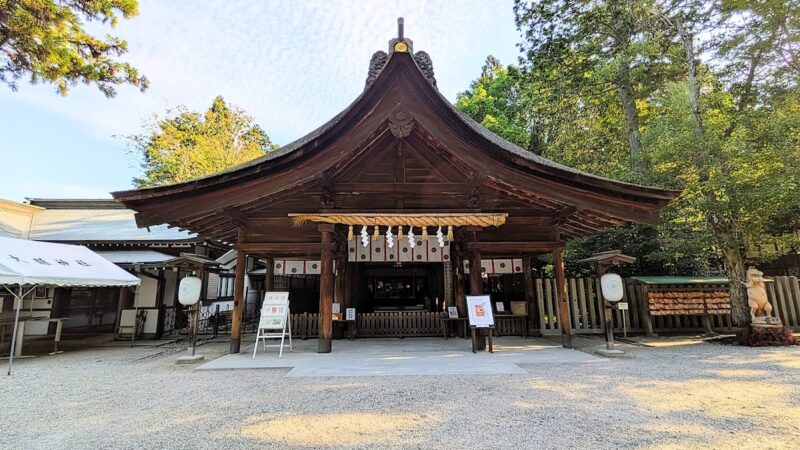
The worship hall of Hachioji Shrine maintains traditional shrine architectural styles while reflecting local characteristics. The worship hall, welcoming visitors, is of a moderate size and possesses a friendly, community-oriented feel.
The main sanctuary is located behind the worship hall and is carefully preserved as a sacred space where the deity is enshrined. Regular repairs are carried out to maintain its excellent condition.
Approach and Torii Gate
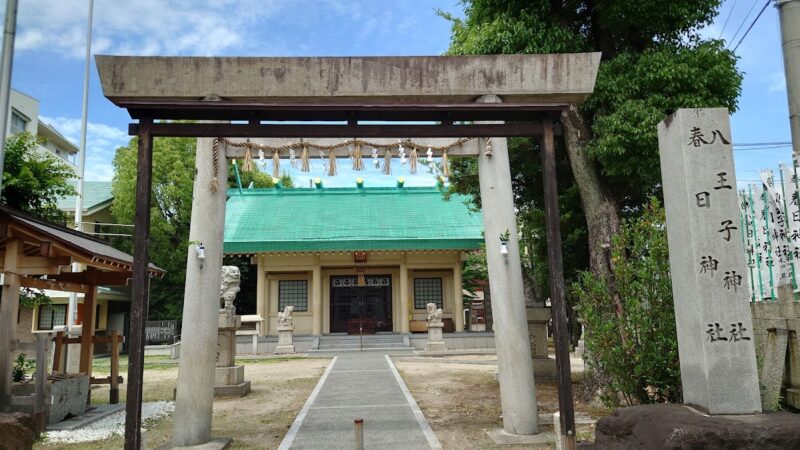
A torii gate stands at the entrance to the shrine, and a well-maintained approach leads from there to the worship hall. The approach is paved with cobblestones and gravel, lined with trees on both sides, creating a space where one can feel nature despite being in an urban area.
Walking along the approach helps to shift one’s awareness from everyday life to a sacred space, fostering an atmosphere conducive to peaceful worship.
Water Basin
The water basin, where worshippers purify themselves before praying, is located along the approach. Following traditional customs, you can purify your hands and mouth before proceeding to the main hall.
The water basin at the purification fountain is always filled with clean water, ensuring a pleasant experience for visitors.
Ontakesan Daigongen and Shrines within the Precincts
Within the precincts, there are stone monuments and shrines dedicated to Ontakesan Daigongen, showing the influence of mountain worship. Ontake worship spread among the common people from the late Edo period to the Meiji era, indicating the presence of devout believers in this region.
In addition, there are several other objects of worship within the precincts, including spiritual deity monuments and stone monuments dedicated to moon gods. These demonstrate the diversity of local beliefs and how various beliefs have merged over a long history.
Stone Monuments within the Precincts
Several stone monuments from different periods are erected within the precincts, each serving as valuable historical material that conveys the history and evolution of beliefs in the region. Some of these monuments date from the late Edo period to the Meiji era, providing clues to the state of worship at that time.
Goshuin (Shrine Seal) Information
Regarding the Issuance of Goshuin
Regarding the issuance of goshuin at Hachioji Shrine, due to the size and management system of the shrine, it may not always be possible to provide them. We recommend checking in advance when planning your visit.
Many shrines in Aichi Prefecture have priests who serve multiple shrines, and Hachioji Shrine may be in a similar situation.
Points for Goshuin Pilgrimage
Numerous shrines and temples are scattered around Kasugai City, making it enjoyable for goshuin pilgrimages. We recommend creating a route starting from Hachioji Shrine and visiting surrounding shrines.
Annual Events and Festivals
Annual Festival
Hachioji Shrine holds community-based festivals throughout the year. The autumn annual festival, in particular, is an important event where local residents gather.
New Year’s Visit and Milestone Pilgrimages
For the New Year’s visit, local worshippers come to pray for good health and protection from illness throughout the year. It is also used as a place for worship at milestones in life, such as Shichi-Go-San (a traditional rite of passage for children) and for warding off evil during unlucky years.
Nearby Shrines and Temples
Major Shrines in Kasugai City
Besides Hachioji Shrine, Kasugai City has many other historical shrines.
Utsutsu Shrine: A representative ancient shrine of Kasugai City, known as the second-ranked shrine of Owari Province.
Mitsuzoin Temple: An ancient Shingon Buddhist temple famous for prayers for safe childbirth.
Hachioji Shrine and Kasuga Shrine in Kita Ward, Nagoya City
There is also a shrine called “Hachioji Shrine and Kasuga Shrine” in Kita Ward, Nagoya City. This is a shrine where Hachioji Shrine and Kasuga Shrine are enshrined together, and is a different shrine from the Hachioji Shrine in Kasugai City.
There are several shrines named “Hachioji Shrine” within Aichi Prefecture, so it’s important to confirm the exact location when planning your visit.
Hachioji Shrine in Seto City
There is also a Hachioji Shrine in the neighboring city of Seto, and each has its own history intertwined with the region’s history. Seto City is known as a center for ceramics production, and the shrine is deeply connected to the development of the pottery industry.
Manners and Etiquette for Shrine Visits
Basic Shrine Visit Etiquette
By observing basic shrine visit etiquette, you can have a more heartfelt visit.
- Bow before passing through the torii gate: This is a courtesy before entering the sacred area.
- Avoid walking in the center of the approach: The center is considered the path of the gods.
- Purify yourself at the water basin: Purify your left hand, right hand, and mouth in that order.
- Worship at the main hall: Two bows, two claps, and one bow is the basic ritual.
- Visit the subsidiary shrines: If you have time, pay your respects to the other gods within the shrine grounds.
Regarding Photography
Photography is generally permitted within the shrine grounds, but please refrain from taking pictures inside the main hall or in sacred areas. Also, please be considerate of other worshippers.
History and Culture of Kasugai City
Origins of Kasugai City
Kasugai City is located northeast of Nagoya City and has developed as an important region in the Owari area since ancient times. The name “Kasugai,” from which the city derives its name, is said to be related to an ancient spring, indicating that the land was blessed with abundant water resources.
Kozoji New Town
The Kozoji district, where Hachioji Shrine is located, is known as Kozoji New Town, which was developed from the 1960s. While the population has increased due to large-scale housing development, historical shrines like Hachioji Shrine remain important in preserving the region’s historical identity.
Access Details
Access by Train
Using the JR Chuo Main Line:
- Approximately 30 minutes from Nagoya Station to Kozoji Station
- Approximately 20 minutes from Tajimi Station to Kozoji Station
Using the Aichi Loop Railway:
- Approximately 50 minutes from Okazaki Station to Kozoji Station
The shrine is approximately a 15-minute walk from Kozoji Station. The easiest route is to exit from the north exit of the station and head towards National Route 155.
Access by Car
From Nagoya:
- Take National Route 19 (Nagoya-Tajimi Line)
- Approximately 20 minutes from the Tomei Expressway “Kasugai IC”
Parking:
There are a few parking spaces around the shrine, but it may get crowded during festivals.
Access by Bus
Meitetsu Bus and Kasugai City Bus routes pass through the area, but the number of services is limited, so it is recommended to check the timetable in advance.
Best Time and Season for Visiting
Recommended Time to Visit
Spring (March-May): Cherry blossoms and fresh greenery are beautiful, and the weather is pleasant.
Autumn (September-November): Autumn leaves can be seen, and the annual festival is held.
New Year’s Visit (January 1st-3rd): The shrine is bustling with New Year’s visitors.
Visiting Hours
While the shrine grounds are generally open all day, the shrine office has limited operating hours. If you wish to obtain a Goshuin (shrine stamp) or amulet, please check in advance.
Visiting in the early morning or evening is recommended, as it allows for a quiet and peaceful atmosphere.
About Hachioji Faith
Origin of Hachioji Faith
Hachioji faith is a belief system that enshrines Gozu Tenno (Ox-Headed Heavenly King) as the main deity, along with his eight princely deities. Gozu Tenno is considered the guardian deity of Jetavana Monastery in India and has been revered in Japan as a god who wards off epidemics.
Hachioji Shrines Nationwide
Numerous shrines bearing the name “Hachioji” exist throughout Japan, each developing alongside the history of its region. The name of Hachioji City in Tokyo is also said to originate from this faith.
In Aichi Prefecture alone, Hachioji Shrines are located in multiple areas, including Kasugai City, Nagoya City, and Seto City, indicating the widespread prevalence of this faith.
Connection with the Community
Center of the Local Community
Hachioji Shrine has functioned not only as a place of worship but also as a center of the local community. Through festivals and cleaning activities, it serves as a place for residents to interact.
Parishioners’ Organization
A parishioners’ organization supports the shrine, handling daily maintenance and the operation of festivals. Despite facing challenges such as an aging population and declining birthrate, efforts continue to preserve local traditions.
Points to Note When Visiting
Regarding Attire
There are no specific dress code regulations, but modest attire that reflects the sacred nature of the place is desirable.
Regarding Pets
Policies regarding pets on the shrine grounds vary by shrine. It is important to observe proper etiquette and be considerate of other visitors.
Eating and Drinking on the Shrine Grounds
Eating and drinking on the shrine grounds should generally be avoided. Please rehydrate outside the shrine grounds.
Nearby Tourist Attractions
Kozoji New Town
As one of Japan’s first large-scale new towns, you can learn about the history of urban planning.
Kasugai City Urban Greening Botanical Garden (Greenpia Kasugai)
A botanical garden where you can enjoy flowers of all seasons, a popular spot for families.
Uchiuchi Shrine
A representative ancient shrine of Kasugai City, it is recommended to visit it along with Hachioji Shrine.
Summary
Hachioji Shrine, located in Kibuki-cho, Kasugai City, Aichi Prefecture, is a historical shrine with a ridge beam inscription dating back to Manji 3 (1660). Despite its convenient location within walking distance of Kozoji Station, it maintains a quiet and peaceful atmosphere, continuing to attract the faith of local residents.
Within the shrine grounds are multiple objects of worship, including Ontakeyama Daigongen, a memorial stone, and the Moon God, showing how various beliefs have been syncretized over its long history.
When visiting Kasugai City, be sure to stop by Hachioji Shrine and experience the local history and culture. You can find peace of mind in the tranquil grounds and escape the hustle and bustle of everyday life.
We recommend checking information about Goshuin (shrine stamps) and festivals in advance. Visiting other nearby shrines and temples along with Hachioji Shrine will make for a more fulfilling pilgrimage experience.