Ajima Shrine (Aichi Prefecture) Complete Guide | Goshuin (Shrine Seal), History, and Access Information
Ajima Shrine, located in Kusunoki Ajima, Kita-ku, Nagoya City, Aichi Prefecture, is a historically significant shrine listed in the Engishiki Jinmyocho (a list of shrines compiled in the Heian period). Known as an ancient shrine associated with the Mononobe clan, it has a history of performing Yabusame (mounted archery) rituals. This article comprehensively introduces information useful for visiting Ajima Shrine, including information on its goshuin, detailed history, highlights within the shrine grounds, and access methods.
Basic Information about Ajima Shrine
Location: 2-736 Kusunoki Ajima, Kita-ku, Nagoya City, Aichi Prefecture
Phone Number: 052-902-0038
Nearest Station:
- Approximately 13 minutes on foot (approx. 1.1 km) from Ajima Station on the Meitetsu Komaki Line
- Approximately 15 minutes on foot from Ajimi Station on the Meitetsu Komaki Line
Main Deity:
- Umashimaji-no-mikoto
- Ajinigita-no-mikoto
Enshrined Deities:
- Amaterasu-Omikami
- Amenokoyane-no-mikoto
- Takemikazuchi-no-mikoto
- Futsunushi-no-Mikoto
Ajima Shrine enshrines six deities, and during the Edo period, it was also known as “Rokushō Myōjin” or “Rokushō Gongen.”
History of Ajima Shrine
From Ancient to Medieval Times
While the exact founding date of Ajima Shrine is unclear, its listing in the Engishiki Jinmyōchō (compiled in 927) as “Ajima Shrine in Kasuga District, Owari Province” confirms that it was an ancient shrine existing before the Heian period.
The main deity, Umashimaji-no-Mikoto, is known as the ancestral deity of the Mononobe clan. Ajinota-no-Mikoto is considered his son, and it is believed that the shrine originated when a branch of the Mononobe clan, who held power in this region, enshrined their ancestral deity. The Mononobe clan was a powerful clan in ancient Japan that oversaw military affairs and religious rituals, and Ajima Shrine is a valuable shrine that preserves traces of that history.
The Beginning of the Yabusame Ritual
In 1093 (Kanji 7), the Ajima Shrine began a horse racing ritual. This ritual involved racing horses in front of the shrine as an offering, and later developed into the Yabusame ritual. This Yabusame ritual, the most distinctive festival of Ajima Shrine, was continuously passed down until the early Showa period.
The Onin War and Reconstruction
During the Muromachi period, the Ajima Shrine’s main buildings were destroyed by fire during the Onin War (1467-1477). During this period of conflict, the shrine temporarily became a subsidiary shrine of Atsuta Shrine, surviving under its protection. After the war subsided, the shrine buildings were rebuilt through the efforts of the local people, and it began its journey once again as an independent shrine.
Prosperity in the Edo Period
During the Edo period, the shrine, known as Rokushō Myōjin, attracted local devotion, and its shrine buildings were renovated. It is said that the Yabusame (mounted archery) ritual was grandly performed during this time, attracting many worshippers. It also received patronage from the Owari Domain, establishing its position as an important shrine in the region.
Modern Era
Due to the Meiji-era separation of Shinto and Buddhism, the relationship with Gokokuin, the temple previously attached to the shrine, was severed. While the Yabusame ritual was performed annually until the early Showa period, changes in social conditions after the war led to the actual Yabusame being discontinued. However, to pass on this tradition to future generations, a statue of Yabusame is erected on the shrine grounds, allowing visitors to imagine its magnificent appearance in its heyday.
About Goshuin (Shrine Seals) and Goshuincho (Shrine Seal Books)
Information on Goshuin Issuance
Goshuin are available at Ajima Shrine, but please note that the issuance dates and times are limited.
Issuance Dates: 1st and 15th of each month
Issuance Hours: 8:30 AM – 12:00 PM
The goshuin (temple/shrine stamp) will be written directly into your goshuincho (stamp book). Since it is only issued twice a month, it is recommended to check the dates before planning your visit.
Features of the Goshuin
The goshuin of Ajima Shrine sometimes includes the words “Engishiki-nai” (listed in the Engishiki) along with the shrine’s name. This indicates that it is a historically significant shrine listed in the Engishiki Jinmyocho (a list of shrines compiled in the Heian period), giving the goshuin a sense of historical weight.
Receiving a goshuin as a memento of your visit and as proof of your connection to the shrine will be a meaningful experience. However, remember that the goshuin is not merely a stamp rally, but proof of your visit; it is important to first offer your prayers with sincerity.
Highlights of the Shrine Grounds
Torii Gate and Approach
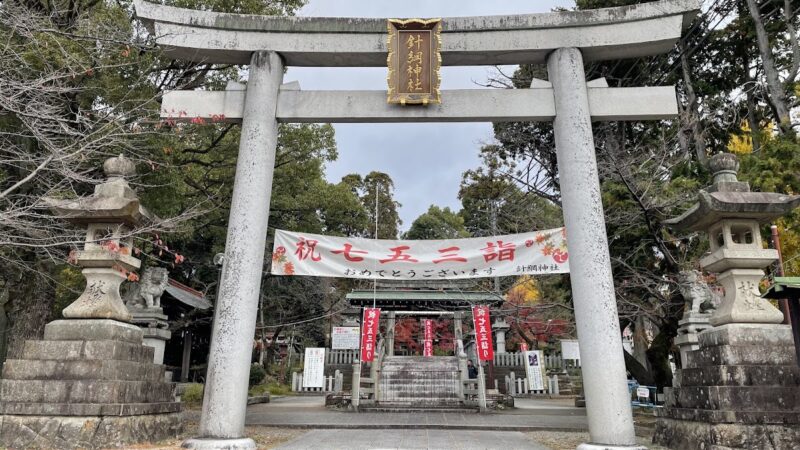
Upon entering the grounds of Ajima Shrine, a magnificent torii gate welcomes visitors. As you pass through the torii gate and proceed along the approach to the shrine, a quiet and solemn atmosphere permeates the air. Despite being located in an urban area, the shrine grounds are surrounded by greenery, maintaining a tranquil space.
Banpei (Banpei Wall)
As you proceed along the approach, you will come across a unique structure called a banpei. A banpei is a type of building unique to the Owari region, a wall-like structure placed in front of the worship hall. It serves to block outside views and maintain the sacredness of the shrine grounds. The banpei at Ajima Shrine is an important element that demonstrates the characteristics of Owari shrine architecture.
Temizuya (Water Basin)
A temizuya (water basin) for purifying oneself before worship is also located on the shrine grounds. When worshipping, please purify your hands and mouth here before proceeding to the worship hall.
Haiden (Worship Hall) and Honden (Main Shrine)
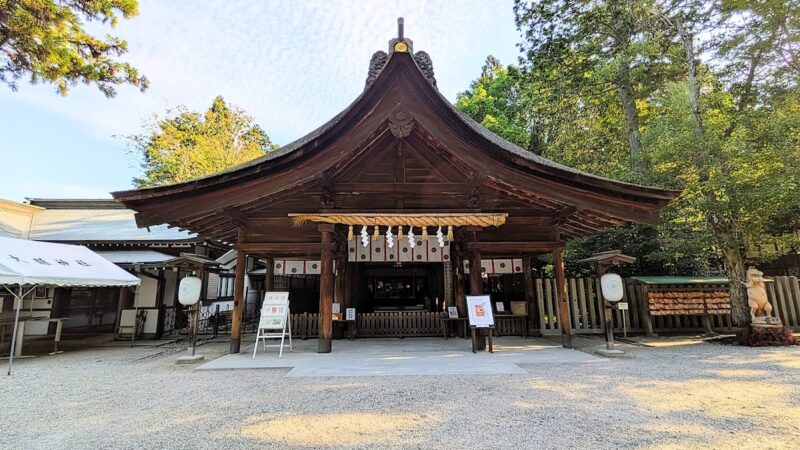
The haiden is where worshippers offer their prayers, and the honden (main shrine) sits behind it. The shrine buildings have a historical appearance, maintaining the dignity of a shrine dedicated to the ancestral deity of the Mononobe clan. The main shrine is protected by a protective structure, preserving its valuable architectural style.
Yabusame Statue
Of particular note within the shrine grounds is the Yabusame memorial statue. This statue was erected to pass on the tradition of the Yabusame ritual, which was performed until the early Showa period, to future generations. It depicts the valiant figure of an archer shooting a target from a galloping horse. Viewing it while imagining the ritual that once took place on these grounds evokes a sense of historical romance.
Subsidiary Shrines
Several subsidiary shrines are enshrined around the main shrine. These small shrines also embody the faith of the local people, demonstrating the widespread devotion to Ajima Shrine.
Annual Festival and Rituals
Annual Festival
Ajima Shrine holds its annual festival every year. The annual festival is the most important event for the shrine, bringing together local people to express gratitude and offer prayers to the gods.
History of the Yabusame Ritual
As mentioned above, the horse racing ritual, which began in 1093 (Kanji 7), has been a long-standing traditional ritual of Ajima Shrine. Yabusame is a magnificent ritual in which archers shoot at targets from horseback while galloping, and it embodies the meaning of training in martial arts and praying for a bountiful harvest.
It is said that Yabusame was actually performed until the early Showa period, attracting many spectators. While actual Yabusame is no longer performed, the Yabusame statue on the shrine grounds continues to convey this tradition.
Monthly Festival
The monthly festival is held on the 1st and 15th of each month. This is a regular monthly festival to offer thanks to the gods, and the granting of Goshuin (shrine seals) is also conducted on these days.
Access Methods
Access by Train
From Meitetsu Komaki Line “Ajima Station”
- Approximately 13 minutes on foot (approx. 1.1 km)
- Exit the station and head northeast. The shrine will arrive after passing through a residential area.
From Meitetsu Komaki Line “Ajimi Station”
- Approximately 15 minutes on foot
- This route offers a different approach from the route from Ajima Station.
Access by Car
From Nagoya Expressway “Kurokawa Interchange”
- Approximately 10 minutes
- Accessible via National Route 41.
Parking
- There is parking space for visitors on the shrine grounds.
- Due to limited spaces, using public transportation is recommended during busy times.
Landmarks in the Surrounding Area
Ajima Shrine is located in a residential area of Kita Ward, Nagoya City, but it is a well-known shrine in the region. The Shonai River flows nearby, and a rich natural environment remains.
Divine Virtues of Ajima Shrine
Significance of Enshrining the Ancestral Deity of the Mononobe Clan
Umashimaji-no-Mikoto, as the ancestral deity of the Mononobe clan, is believed to bestow blessings such as lasting military fortune, national peace and security, and industrial development. Because the shrine enshrines the ancestral deity of the Mononobe clan, who presided over military affairs and religious rituals in ancient times, many worshippers visit to pray for improved luck in competitions and careers.
Protection of Six Deities
Ajima Shrine enshrines six deities, and worshippers can receive the divine blessings of each deity. Amaterasu-Omikami, as the ancestral deity of the Imperial Family, is believed to bring national peace and security; Amenokoyane-no-Mikoto is believed to bring blessings related to religious rituals and learning; and Takemikazuchi-no-Mikoto and Futsunushi-no-Mikoto are believed to bring blessings related to military fortune and success in competitions, among other diverse blessings.
As a Guardian Deity of the Region
With its long history, Ajima Shrine has watched over the lives of people as the guardian deity of the region. This shrine is said to grant various wishes related to daily life, such as family safety, business prosperity, and traffic safety.
Manners and Precautions for Visiting a Shrine
Basic Worship Etiquette
- When passing through the torii gate: Bow before entering the shrine grounds.
- Walking along the approach: Walk along the edge of the approach, as the center is considered the path for the gods.
- Washing your hands: Take the ladle with your right hand, wash your left hand, switch it to your left hand and wash your right hand, switch it back to your right hand, receive water in your left hand, rinse your mouth, and finally wash the handle by holding the ladle upright.
- Etiquette at the main hall: Two bows, two claps, one bow (bowing deeply twice, clapping twice, bowing deeply once).
Precautions when receiving a Goshuin (shrine stamp):
- Goshuin are only available on the 1st and 15th of each month from 8:30 to 12:00.
- Please complete your worship first before receiving a Goshuin.
- It is recommended to bring your Goshuincho (stamp book).
- Waiting times may occur during peak hours.
Regarding Photography
Photography is generally permitted within the shrine grounds, but please refrain from taking photos in sacred areas such as the main hall. Please also be considerate of other visitors.
Nearby Attractions
Shonai River
The Shonai River flows near Ajima Shrine, and the riverbank is ideal for strolling. You can enjoy nature and relax.
Other Shrines and Temples in Nagoya
Nagoya City has many historical shrines and temples. After visiting Ajima Shrine, a tour of other shrines and temples such as Atsuta Shrine, Osu Kannon Temple, and Nagoya Castle is also recommended.
Summary of Ajima Shrine’s Charms
Ajima Shrine is a prestigious shrine with over 1000 years of history, listed in the Engishiki Jinmyocho (a list of shrines compiled in the Heian period). It enshrines the ancestral deity of the Mononobe clan and has a tradition of Yabusame (mounted archery) rituals, making it a shrine of high historical and cultural value.
Despite its urban location, the tranquil grounds of this shrine offer a perfect escape from the hustle and bustle of everyday life, providing a peaceful retreat. You can also see unique features of the Owari region, such as the traditional wall and the Yabusame (mounted archery) statue, making it especially recommended for those interested in history and culture.
While the shrine’s Goshuin (stamped seal) is only available twice a month, this exclusivity only adds to its special value. Consider planning your visit for the 1st or 15th of the month to enjoy a peaceful time at this historic shrine.
When visiting Aichi Prefecture, or when touring shrines in Nagoya, be sure to visit Ajima Shrine and experience the breath of history that has continued since ancient times. We hope you will enjoy a peaceful moment of worship at this shrine, watched over by the ancestral deity of the Mononobe clan.