Kiji Shrine (Shinagawa Ward, Tokyo) Complete Guide | A Gotanda Shrine Blending the Legend of the White Pheasant Associated with Tokugawa Iemitsu with Modern Architecture
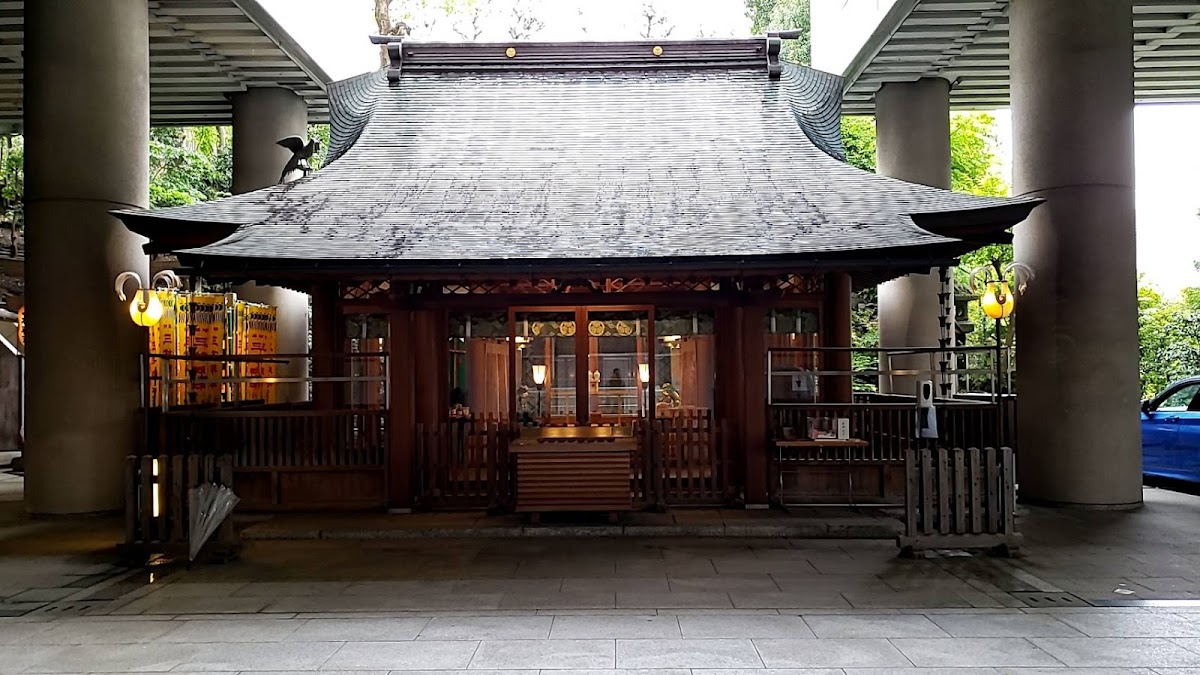
Kiji Shrine, located in Higashi-Gotanda, Shinagawa Ward, Tokyo, is a historic shrine said to have been named by Tokugawa Iemitsu, the third shogun, during the Edo period. Despite its central location just a 5-minute walk from Gotanda Station, it boasts a modern form, with its shrine building located on the first floor of a white building, making it a unique shrine where tradition and innovation are beautifully harmonized.
This article comprehensively introduces all the information you need to know before visiting Kiji Shrine, including its detailed history, enshrined deities, highlights of the grounds, information on goshuin (shrine stamps), and access methods.
Table of Contents
- Basic Information about Kiji Shrine
- The Origin and History of Kiji Shrine
- The Legend of the White Pheasant: The Story of Tokugawa Iemitsu and the Naming of “Kijinomiya”
- About the Enshrined Deities
- Highlights of the Shrine Grounds
- Harmony with Modern Architecture: The Shrine Integrated with the Hakuchiko Building
- Information on Goshuin (Shrine Seals) and Goshuincho (Shrine Seal Books)
- Access and Visiting Information
- Nearby Shrines and Tourist Spots
Basic Information about Kiji Shrine
Official Name: Kiji Shrine
Former Name: Ebara-no-miya, Otori Myojin, Yamagami-no-yashiro, Kijinomiya
Location: 1-2-33 Higashi-Gotanda, Shinagawa-ku, Tokyo
Shrine Rank: Former Village Shrine Deities Enshrined: Yamato Takeru no Mikoto, Ame no Tachikarao no Mikoto, Oyamatsumi no Mikoto
Parish Area: Former Kami-Osaki Village, Former Shimo-Osaki Village, Former Taniyama Village (Currently all of Kami-Osaki, all of Higashi-Gotanda, and all of Nishi-Gotanda 1, 2, and 3-chome)
Annual Festival Date: September
Telephone: 03-3449-3689
History and Origins of Kijishi Shrine
From Founding to the Edo Period
Kijishi Shrine is said to have been founded during the Bunmei era (1469-1487). During this period, which corresponds to the late Muromachi period, it is believed to have begun when villagers enshrined Otori Myojin based on a spiritual dream.
The shrine’s name was formerly known as Ebara-no-Miya, and during the Bunmei era, it was also called Ootori Myojin and Yamagami-no-Yashiro. The place name Ebara originates from the fact that this area once belonged to Ebara County.
Naming of “Kijinomiya” by Tokugawa Iemitsu
The shrine’s name became the current “Kijijinja” during the Keicho era (1596-1615) in the early Edo period. During this time, when Tokugawa Iemitsu, the third shogun, visited the area for falconry, a white pheasant flew into the shrine grounds.
Iemitsu considered the appearance of the white pheasant in front of the shrine to be “a truly miraculous and auspicious sign,” and bestowed the words, “From now on, it shall be called Kijinomiya.” From this point onward, the shrine, known as “Kijinomiya,” was listed among the famous shrines and temples of Edo, and its divine power grew ever more dazzling, attracting widespread reverence.
Changes After the Meiji Era
With the establishment of the shrine system in the Meiji era, it was ranked as a village shrine. In 1910 (Meiji 43), the Mishima Shrine, located in Kami-Osaki Village, was merged with it, resulting in its current form.
Even after the war, it continued to be revered as the guardian shrine of the region, but in 1994 (Heisei 6), it underwent a major transformation in terms of effective use of the shrine grounds. The Hakuchiji Building was constructed on the grounds, and the shrine building was remodeled into the first floor of the building, a rare form nationwide.
The Legend of the White Pheasant: The Story of Tokugawa Iemitsu and the Naming of “Kijinomiya”
The most famous legend of Kijinomiya Shrine is the Legend of the White Pheasant, which is the origin of the name given by Tokugawa Iemitsu.
One day during the Keicho era, Tokugawa Iemitsu, the third shogun, was enjoying falconry in this area. Falconry was an important military training exercise for samurai during the Edo period, and also a way to demonstrate the shogun’s authority.
During the hunt, a white pheasant appeared, flew past Iemitsu, and escaped into the grounds of this shrine. When Iemitsu pursued it and visited the shrine, the white pheasant vanished without a trace.
White pheasants have long been considered auspicious omens, and white animals in particular have been regarded as sacred. The Nihon Shoki (Chronicles of Japan) also records that the era name was changed to “Hakuchi” (White Pheasant) after a white pheasant appeared. Iemitsu was greatly pleased with this event and bestowed the name “Kiji-gu” (Pheasant Shrine) upon the shrine.
This legend was not merely a coincidence, but rather a manifestation of the shrine’s sacredness and divine power, and since then, Kiji-jinja (Pheasant Shrine) has become widely known among the common people of Edo. ## About the Deities Enshrined
Three deities are enshrined at Kijijinja Shrine.
Yamato Takeru no Mikoto
A heroic deity in Japanese mythology, and the son of Emperor Keiko, the 12th emperor. He is known as a god of martial prowess who pacified various regions, including the eastern provinces and the Kumaso people. He is believed to bestow blessings such as long-lasting military fortune, good fortune, and protection from evil.
It is thought that Yamato Takeru no Mikoto was the principal deity enshrined here from the time when it was worshipped as Otori Myojin. There is also a legend that Yamato Takeru no Mikoto passed through this area during his pacification of the eastern provinces, and he is enshrined in many shrines in the Kanto region.
Ame no Tachikarao no Mikoto
In the myth of Ama-no-Iwato, he is the god of strength who opened the rock cave where Amaterasu Omikami hid. Known as a god of unparalleled strength, he is believed to bestow blessings such as improvement in sports and arts, good fortune, and protection from evil.
Oyamatsumi-no-Mikoto
A deity widely worshipped as the god of mountains and the sea. He bestows divine blessings such as protection of forests, maritime safety, business prosperity, and family safety. It is presumed that he was enshrined during a time when the shrine was also known as the “Shrine of the Mountain God.”
These three deities, each possessing different characteristics such as martial prowess, strength, and mountain protection, have been revered together as guardian deities of the region.
Highlights of the Shrine Grounds
Shrine Building and Atrium Structure
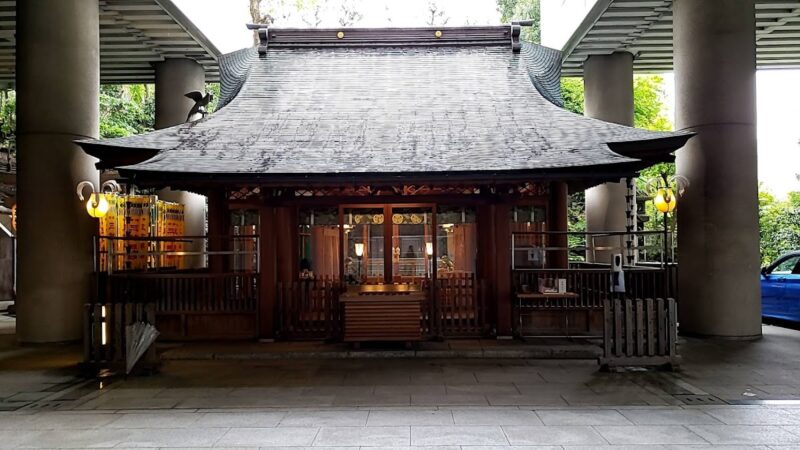
The most distinctive feature of Kijishi Shrine is that, despite the shrine building being located on the first floor of the Shirakiji Building, a sense of openness is maintained by a U-shaped atrium structure. The upper part of the shrine building is designed to allow views of the sky, creating a sacred space bathed in natural light, despite being a shrine in the heart of the city.
The shrine building is made of wood, maintaining a traditional style, while incorporating elements such as glass on the walls of the worship hall, harmonizing with modern architecture. This unique architectural style is attracting attention as a prime example of how Shinto shrines should function in modern cities, demonstrating both efficient land use and the preservation of a place of worship.
Pheasant Statue on the Roof of the Worship Hall
A pheasant statue, created by the renowned sculptor Katsuzo Entsuba, is enshrined on the roof of the worship hall. Katsuzo Entsuba is a sculptor from Hiroshima Prefecture and is also known as a recipient of the Order of Culture. This pheasant statue welcomes worshippers as a symbol that conveys the legend of Tokugawa Iemitsu’s white pheasant.
Stone Torii Gate and Plantings
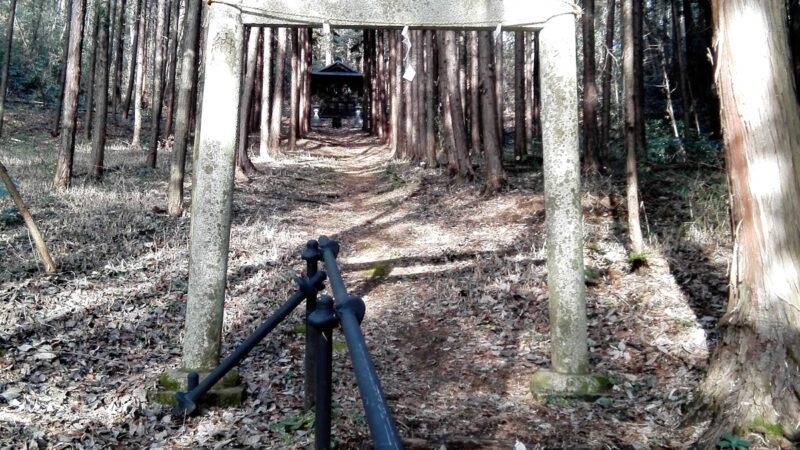
An old stone torii gate stands at the entrance facing Sakurada-dori Street. Plantings surround it, clearly marking the boundary of the sacred area even amidst the city’s skyscrapers. Passing through this torii gate, one enters a tranquil space far removed from the hustle and bustle.
Shrine within the Precincts
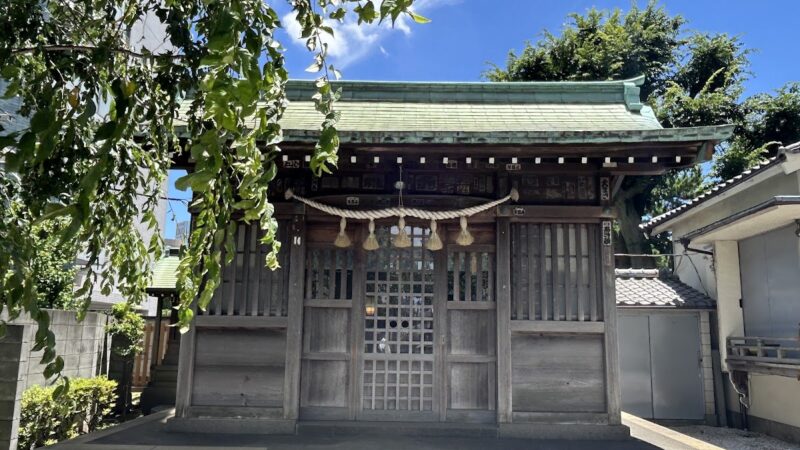
A small shrine remains on the precincts as a remnant of the Mishima Shrine, which was merged with this shrine in 1910 (Meiji 43). The Mishima Shrine was dedicated to Oyamatsumi-no-Mikoto, and the merger resulted in the current three enshrined deities.
Harmony with Modern Architecture: Integrated Shrine Building within the Shirakiji Building
The integrated shrine building with the Shirakiji Building, realized in 1994 (Heisei 6), became a major topic of discussion as a new form of shrine in an urban area.
Construction History
Since the period of rapid economic growth, many shrines have struggled to maintain their precincts due to soaring land prices in urban areas. Kiji Shrine was no exception, facing the challenge of protecting its place of worship while effectively utilizing its limited land.
The solution chosen was to construct a rental building on the shrine grounds and place the shrine building on the first floor. This plan was carefully executed, with meticulous attention paid to details such as the adoption of an open atrium structure and the preservation of the wooden shrine building, to avoid compromising the dignity of the shrine.
Architectural Evaluation
The combination of the completed Shirakiji Building and the shrine building has been highly praised from an architectural standpoint. The U-shaped atrium allows natural light and air to flow through, creating an open and spacious worship area. Furthermore, the effective use of glass adds a modern transparency to the traditional wooden architecture, creating a harmony between old and new.
This endeavor is attracting attention from other shrines as one solution to the contemporary challenge of coexistence between cities and shrines.
Goshuin (Shrine Seal) and Goshuincho (Shrine Seal Book) Information
Goshuin (Shrine Seal)
Kiji Shrine offers goshuin to visitors. The goshuin features the calligraphy and red seal of “Kiji Shrine,” serving as a memento of your visit.
Offering Fee: Usually around 300-500 yen
Reception Hours: During the hours the shrine office is open (prior phone confirmation is recommended)
Notes: The chief priest may be absent, so if you want to be sure to receive a goshuin (shrine stamp), it is advisable to contact them in advance.
Goshuin Book
Regarding the Kijishi Shrine’s original goshuin book, stock levels fluctuate, so it is recommended to check in advance.
Goshuin of Other Shrines
The chief priest of Kijishi Shrine also serves several other shrines in the surrounding area. The main shrines he serves include:
- Tanjou Hachiman Shrine (Shinagawa Ward)
- Sodegasaki Shrine (Shinagawa Ward)
Goshuin for these shrines may also be available at Kijishi Shrine.
Access and Visiting Information
Access by Train
Kijishi Shrine is within walking distance of Gotanda Station and is very easily accessible.
Nearest Stations:
- JR Yamanote Line Gotanda Station: Approximately 5 minutes on foot from the East Exit
- Toei Asakusa Line Gotanda Station: Approximately 5 minutes on foot from Exit A2
- Tokyu Ikegami Line Gotanda Station: Approximately 5 minutes on foot
Walking Route
Exit Gotanda Station East Exit and proceed along Sakurada-dori towards Meguro/Shinagawa (southwest). After walking along Sakurada-dori for about 5 minutes, you will see the white Shirakiji Building on your right. The entrance to the shrine is on the first floor of the building, marked by a stone torii gate.
Access by Car
Address: 1-2-33 Higashi-Gotanda, Shinagawa-ku, Tokyo
Although located along Sakurada-dori, there is no dedicated parking lot for visitors. If you are visiting by car, you will need to use a nearby coin-operated parking lot. There are several hourly parking lots around Gotanda Station.
Visiting Hours
While the shrine grounds are generally open for free worship, the shrine office has limited operating hours. If you wish to receive a Goshuin (shrine stamp) or prayers, it is recommended to confirm by phone in advance.
Phone Number: 03-3449-3689
Nearby Shrines and Tourist Spots
There are several other historical shrines and tourist spots scattered around Kijishi Shrine.
Tanjo Hachiman Shrine
Located in Kami-Osaki, Shinagawa Ward, this shrine is one of the shrines managed by Kijishi Shrine. It is known as a historical shrine with legends of Minamoto no Yoritomo.
Sodegasaki Shrine
Located in Higashi-Gotanda, Shinagawa Ward, this shrine is also managed by Kijishi Shrine. It is a beloved local guardian shrine.
Meguro Gajoen
A wedding venue and hotel within walking distance of Kijishi Shrine, showcasing the architectural beauty of the early Showa period. Visitors can admire culturally significant buildings such as the Hyakudan Kaidan (Hundred Steps Staircase). ### Gotanda TOC
A commercial complex that serves as a landmark in Gotanda. Enjoy shopping and dining here.
Sakurada-dori Street
Sakurada-dori Street, facing Kijijinja Shrine, is a major highway from the Edo period and remains an important arterial road connecting central Tokyo and Shinagawa.
Annual Events of Kijijinja Shrine
Grand Festival
The Grand Festival is held every September. Many worshippers from the parish area visit, and traditional events such as the portable shrine procession take place.
New Year’s Visit
During the first three days of the New Year, the shrine is bustling with worshippers praying for safety and prosperity in the new year. Due to its convenient location in the city center, many business people also visit before starting work.
Monthly Festival
A monthly festival is held regularly each month, praying for the safety and prosperity of the parish area.
Divine Virtues of Kijijinja Shrine
The main divine virtues believed to be obtained by visiting Kijijinja Shrine are as follows:
- Good Fortune and Prosperity: Believed to bring good fortune, in reference to the auspicious sign of a white pheasant.
- Business Prosperity: As it is located in a business district, many visitors pray for business success.
- Long-lasting Military Fortune and Luck in Competition: Benefiting from the martial prowess of Yamato Takeru.
- Protection from Evil: Repelling evil spirits through the strength of Ame-no-Tajikarao-no-Mikoto.
- Family Safety: Safety of the family through the protection of Oyamatsumi-no-Mikoto.
- Improvement in Skills and Arts: Divine virtue of Ame-no-Tajikarao-no-Mikoto.
Manners and Points for Visiting the Shrine
Basic Visiting Etiquette
- Bow before passing through the torii gate.
- Purify your body and mind at the water basin (if available).
- Offer your donation in front of the main hall.
- Pray using the ritual of two bows, two claps, and one bow.
- Bow once at the torii gate when leaving.
Regarding Photography
Photography is generally permitted on the shrine grounds, but consideration must be given to avoid disturbing other worshippers. There may be restrictions on photography inside the shrine building, so please check with the shrine office if you have any questions.
Points to Note Due to its Unique Location in a Building
Due to its unique location on the first floor of a building, consideration must be given to the building’s operating hours and management regulations. It is also important to be considerate of the surrounding area, such as refraining from visiting late at night or early in the morning.
The Charm of Kijijinja Shrine: A Fusion of Tradition and Modernity
The greatest charm of Kijijinja Shrine lies in the harmonious blend of its over 500-year-old tradition with 21st-century urban architecture.
While possessing the historical episode of the legend of Tokugawa Iemitsu’s white pheasant, the bold attempt to construct the shrine within a modern building overturns the preconceived notion that “shrines remain unchanged.” However, at the same time, the essence of the shrine is preserved, such as the sense of openness created by the atrium structure and the maintenance of the wooden shrine building.
This appearance can be said to be a symbolic example of how traditional culture can coexist with modernity in Tokyo, a city undergoing rapid urbanization. Located in Gotanda, a business district in the heart of Tokyo, Kijijinja Shrine continues to provide worshippers with a tranquil space for prayer, making it truly one of the representative shrines of modern Tokyo.
Summary
Kijijja Shrine has been revered as the guardian deity of the area in Higashi-Gotanda, Shinagawa Ward, since its founding during the Bunmei era. It has a historical episode of being named “Kijino-miya” by Tokugawa Iemitsu, and is a venerable shrine that enshrines three deities: Yamato Takeru, Ame-no-Tajikarao-no-Mikoto, and Oyamatsumi-no-Mikoto.
In the Heisei era, it realized an innovative form with an integrated shrine building with the Shirakiji Building, demonstrating a new way of being a shrine that harmonizes tradition and modernity. Located just a 5-minute walk from Gotanda Station, this shrine welcomes a wide range of visitors, from business people to tourists.
Nearby, nestled amongst a white building along Sakurada-dori, stands a quiet wooden shrine. Here, a spirit of faith that has remained unchanged for over 500 years coexists with a flexibility that adapts to the times. When you visit Tokyo, be sure to visit this unique shrine and experience a new relationship between the city and tradition.