Complete Guide to Mimeguri Shrine (Sumida Ward, Tokyo) | History, Goshuin (Shrine Seals), and Deep Connections with the Mitsui Family
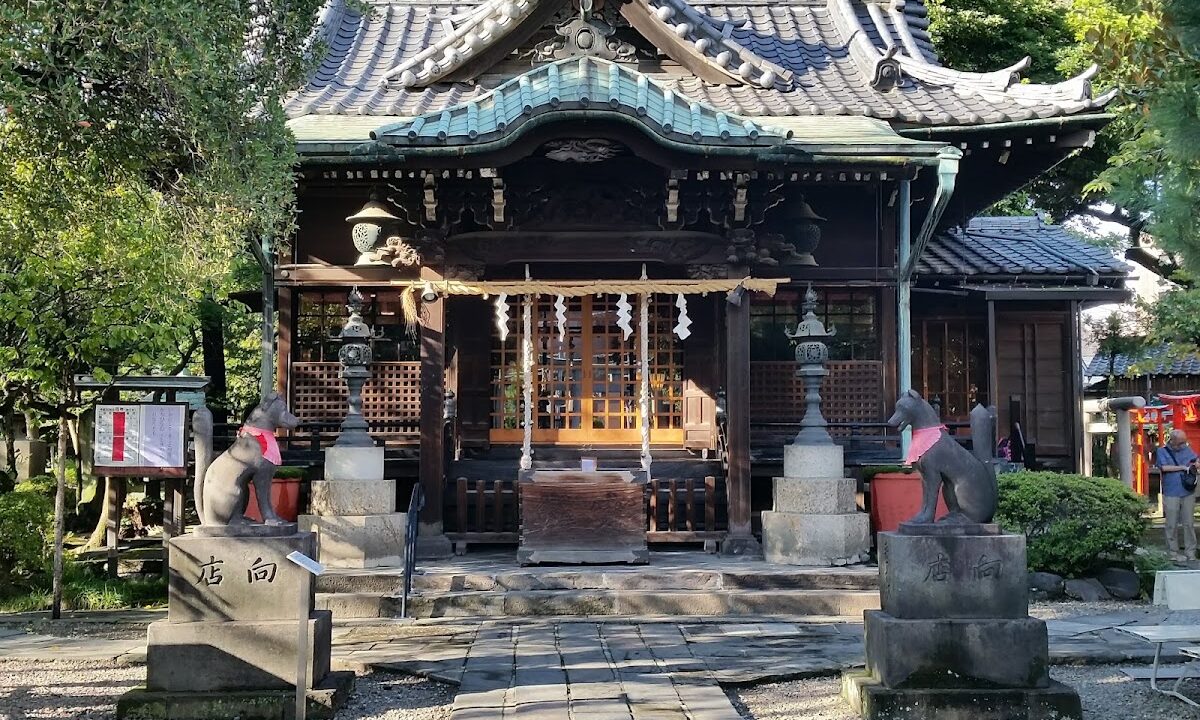
Located in Mukojima, Sumida Ward, Tokyo, Mimeguri Shrine is a historic shrine that has been revered as the guardian shrine of the Mitsui family and the Mitsui Group since the Edo period. It enshrines Ebisu and Daikokuten, two of the Seven Lucky Gods of the Sumida River, and its grounds are dotted with unique cultural artifacts not found in other shrines, such as a rare triangular stone torii gate and lion statues.
This article provides detailed information you should know before visiting, from the history of Mimeguri Shrine to visiting information, highlights, and access methods.
Basic Information about Mimeguri Shrine
Official Name: Mimeguri Shrine (三圍神社)
Reading: Mimeguri Jinja
Location: 2-5-17 Mukojima, Sumida-ku, Tokyo 131-0033
Main Deity: Ukanomitama-no-Mikoto
Former Shrine Rank: Village Shrine (Guardian shrine of the former Koume Village)
Annual Festival Date: Early April
Visiting Hours: Open all day (Please check the reception hours of the shrine office)
Admission Fee: Free
Jurisdiction: Tokyo Metropolitan Shrine Association
Mimeguri Shrine is officially written with the old characters “三圍神社,” but it is now often written as “三囲神社.” It was formerly also called “Mimeguri Inari.”
History and Origins of Mimeguri Shrine
Founding and Origin of the Name
Mimeguri Shrine is said to have been founded in 835 AD (Jōwa 2), and it is believed that Kūkai, the founder of Shingon Buddhism, invited the deity to the shrine. However, it later fell into disrepair and was restored in 1351 AD (Bunwa 2) by a traveling monk from Mii-dera Temple (Onjō-ji Temple) in Ōmi Province.
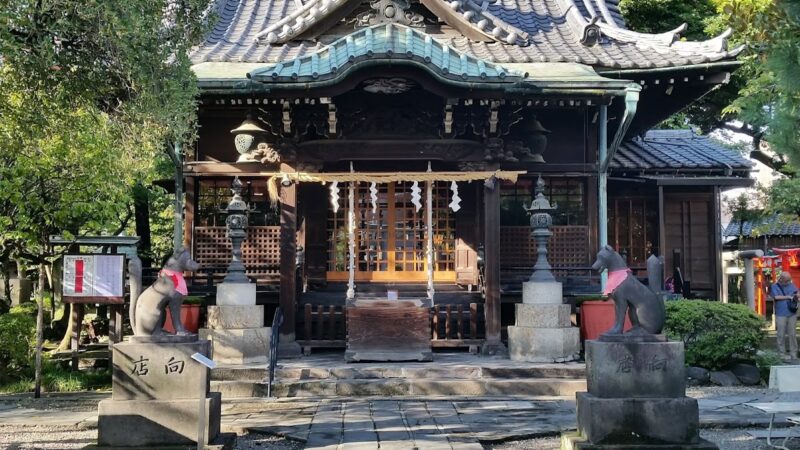
During the restoration, a pot was unearthed from beneath the shrine building, and a divine image was discovered inside. Legend says that a white fox suddenly appeared and circled the image three times. It is believed that the shrine’s name, “Mimeguri,” originated from this “three-circle” event.
Deep Connection with the Mitsui Family
Mimeguri Shrine became particularly famous during the Edo period when it was revered as the guardian shrine of the Mitsui family. The character “囲” (kai), used in the shrine’s name, resembles the character “井” (i) in the Mitsui family’s name, surrounded by a wall for protection. Because of this auspicious appearance, the Mitsui family deeply revered this shrine.
Even today, the shrine is revered by the Mitsui family and various Mitsui Group companies, and numerous offerings related to the Mitsui Group can be seen on the shrine grounds. A branch shrine of Mimeguri Shrine is also enshrined on the rooftop of the Nihonbashi Mitsukoshi department store, housing a statue of “Active Daikokuten” created by Takamura Koun.
Takarai Kikaku and the Rain-Praying Haiku
During the great drought of 1693 (Genroku 6), the haiku poet Takarai Kikaku composed a rain-praying haiku at Mimeguri Shrine, making the shrine widely known to the citizens of Edo. Kikaku was a prominent Edo cultural figure known as a leading disciple of Matsuo Basho, and his haiku dramatically increased the shrine’s reputation.
This anecdote about praying for rain demonstrates that Mimeguri Shrine is not merely an Inari shrine, but a shrine deeply intertwined with Edo culture.
Deities and Blessings
Main Deity: Ukanomitama-no-Mikoto
The main deity of Mimeguri Shrine is Ukanomitama-no-Mikoto. This deity is also the main deity of Fushimi Inari Taisha in Kyoto and is widely worshipped as a central deity of Inari faith.
Ukanomitama-no-Mikoto is the deity who presides over grains and food, and is believed to bring blessings of abundant harvests, business prosperity, and industrial development.
Ebisu and Daikokuten of the Sumida River Seven Lucky Gods
Mimeguri Shrine is one of the pilgrimage sites for the Sumida River Seven Lucky Gods, and enshrines two deities: Ebisu and Daikokuten (Daikokuten). This is extremely rare; it is special to find two of the Seven Lucky Gods enshrined in a single shrine.
Ebisu (God of Commerce and Industry): Blessings of business prosperity and abundant catches in fishing.
Daikokujin (God of Commerce and Industry): Blessings of abundant harvests, matchmaking, and perfect happiness and virtue.
The Sumida River Seven Lucky Gods Pilgrimage is a popular pilgrimage route visiting seven temples and shrines in the Mukojima and Sumida areas, and is especially crowded with worshippers during the New Year.
Expected Blessings
- Business Prosperity
- Abundant Harvests
- Industrial Development
- Family Safety
- Perfect Happiness and Virtue
- Good Fortune and Prosperity
- Matchmaking
Because the Mitsui family worshipped this shrine as their guardian deity, many worshippers visit, especially those praying for business prosperity and success in their ventures.
Highlights of the Shrine Grounds
The grounds of Mimeguri Shrine are not particularly large, but they are packed with interesting sights, allowing visitors to enjoy various cultural assets and historical sites in addition to worship.
Triangular Stone Torii Gate (Three-Pillar Torii)
At the back of the shrine grounds is a rare triangular torii gate made up of three torii gates. This is also called a “Three-Pillar Torii” (Mihashira Torii), and its shape is extremely unusual, forming an equilateral triangle when viewed from above.
This triangular stone torii gate is a valuable cultural asset that preserves an ancient form of worship, similar to those found at Kijima Shrine (Kono-sha) in Kyoto and Omiwa Shrine in Nara. The triangular torii gate at Mimeguri Shrine is also said to symbolize the shrine’s connection to the Mitsui family.
Lion Statue (Mitsukoshi Lion Statue)
Within the shrine grounds is a lion statue identical to the one at the entrance of the Nihonbashi Mitsukoshi department store. This is a symbolic offering demonstrating the deep relationship between the Mitsui Group and Mimeguri Shrine.
The Mitsukoshi lion statue was modeled after the lion statues in Trafalgar Square in England and is cherished as the guardian deity of Mitsukoshi. Similarly, the lion statue at Mimeguri Shrine is cherished as a symbol of business prosperity and protection.
Numerous Stone Monuments and Memorials
The shrine grounds are densely packed with stone monuments and memorials. These were donated by the Mitsui family and devotees from the Edo period to the Showa era, testifying to the shrine’s long history and the depth of faith.
There are many historically valuable stone monuments, including haiku monuments related to Takarai Kikaku and monuments donated by members of the Mitsui family.
Concrete Shrine Building
The current shrine building was rebuilt after the Great Kanto Earthquake and wartime damage, and is constructed of concrete. While it differs from traditional shrine architecture, this modern construction is an interesting feature and part of Mimeguri Shrine’s history.
Subsidiary and Auxiliary Shrines
Several subsidiary and auxiliary shrines are enshrined within the grounds, and visitors can pay their respects at each. Despite its small size, the presence of various deities is one of Mimeguri Shrine’s charms.
Goshuin (Shrine Seal) Information
Goshuin (shrine seals) are available at Mimeguri Shrine.
Reception Location: Shrine Office
Reception Hours: Approximately 9:00 AM to 5:00 PM (subject to change depending on circumstances)
Offering Fee: Approximately 300-500 yen
Special Goshuin (Shrine Seal): Limited edition goshuin may be available during New Year’s and the annual festival.
There are also special paper scrolls and goshuin notebooks for the Sumida River Seven Lucky Gods pilgrimage, and many people visit as part of the Seven Lucky Gods pilgrimage.
The shrine office may be unattended, so if you want to be sure to receive a goshuin, it is recommended to call ahead to confirm.
Access Methods
Access by Train
Nearest Station and Travel Time:
- Tobu Skytree Line “Tokyo Skytree Station”
- Approximately 12 minutes on foot (approx. 600m)
- Closest station
- Toei Asakusa Line “Honjo-Azumabashi Station”
- Approximately 7 minutes on foot
- Convenient access
- Tobu Skytree Line, Tokyo Metro Hanzomon Line, Toei Asakusa Line “Oshiage (Skytree Mae) Station”
- Approximately 15 minutes on foot
- Tobu Skytree Line “Hikifune Station”
- Approximately 15 minutes on foot
Access by Bus
You can use Toei buses, Sumida Ward’s community bus “Sumida Hyakkei Sumimaru-kun,” etc. The nearest bus stops are “Mukojima 2-chome” or “Mukojima.”
Access by Car and Parking
There is no dedicated parking lot at Mimeguri Shrine. There are several coin-operated parking lots nearby, but their number is limited, so we recommend using public transportation.
Especially during New Year’s and festival seasons, congestion is expected, so taking the train or bus is convenient.
Nearby Tourist Attractions
Sumida Ward has several tourist attractions scattered around Mimeguri Shrine.
Tokyo Skytree
Within walking distance, Tokyo Skytree is famous as the world’s tallest freestanding radio tower. From the observation deck, you can enjoy a panoramic view of the Kanto Plain, and on clear days, you can even see Mount Fuji. It’s perfect to visit in conjunction with a visit to Mimeguri Shrine.
Sumida River Promenade
A beautiful promenade lined with cherry trees runs along the nearby Sumida River. In spring, it’s a popular spot for cherry blossom viewing and attracts many visitors.
Mukojima Hyakkaen Garden
This metropolitan park, built during the Edo period, allows visitors to enjoy seasonal flowers and plants. It’s about a 10-minute walk from Mimeguri Shrine.
Other Temples and Shrines on the Sumida River Seven Lucky Gods Pilgrimage
Mimeguri Shrine is one of the temples on the Sumida River Seven Lucky Gods Pilgrimage. Since the other temples are within walking distance, it’s recommended to complete the pilgrimage if you have the time.
- Mukojima Hyakkaen Garden (Fukurokuju)
- Chomeiji Temple (Benzaiten)
- Kofukuji Temple (Hotei)
- Shirahige Shrine (Jurojin)
- Tamonji Temple (Bishamonten)
Annual Events and Festivals
Annual Festival (Early April)
The most important festival at Mimeguri Shrine is the annual festival held in early April each year. Special rituals are performed on this day, attracting more visitors than usual.
First Shrine Visit of the New Year (First Three Days of January)
The shrine is bustling with visitors for their first shrine visit of the New Year. Many people visit as part of the Sumida River Seven Lucky Gods Pilgrimage, and crowds are expected from January 1st to the third day of the New Year.
Monthly Festival
A monthly festival is held regularly each month, attended by parishioners and devotees.
Manners and Etiquette for Worship
Basic Worship Etiquette
- Bow before passing through the torii gate.
- Purify yourself at the water basin.
- Hold the ladle in your right hand and purify your left hand.
- Switch the ladle to your left hand and purify your right hand.
- Switch the ladle back to your right hand, receive water in your left hand, and rinse your mouth.
- Finally, hold the ladle upright to purify the handle.
- Worship in front of the main hall.
- Place your offering.
- Bow twice, clap twice, and bow once.
- Worship at the subsidiary shrines within the grounds.
- Bow at the torii gate when leaving.
Regarding Photography
Photography is generally permitted within the shrine grounds, but please be considerate and avoid disturbing other worshippers or those during religious ceremonies. Photography inside the shrine buildings may be prohibited; please check with the shrine office if you have any questions.
The Relationship Between Mimeguri Shrine and the Mitsui Group
The relationship between Mimeguri Shrine and the Mitsui Group is a deep connection that goes beyond mere faith.
The Rooftop Shrine of Nihonbashi Mitsukoshi Main Store
A branch shrine of Mimeguri Shrine is enshrined on the rooftop of the Nihonbashi Mitsukoshi Main Store. Here, the “Active Daikokuten” statue, created by Takamura Koun, is cherished as the guardian deity of Mitsukoshi.
The “Active Daikokuten” is characterized by its active posture, standing on bales of rice, stepping forward with its right foot, and raising its magic mallet, truly depicting a figure ready to bestow good fortune. It is a masterpiece that beautifully expresses both a compassionate expression and a powerful stance.
The Role as the Guardian Shrine of the Mitsui Family
From the Edo period to the present day, the Mitsui family and the various companies of the Mitsui Group have continued to revere Mimeguri Shrine as their guardian shrine. It is said that many group members visit the shrine on important occasions and at the start of the new year.
The deep faith of the people associated with the Mitsui family is evident from the fact that many of the offerings on the shrine grounds are from them.
Frequently Asked Questions (FAQ)
How do you pronounce Mimeguri Shrine?
It is pronounced “Mimeguri Jinja.” The reading “Mimeguri” for “Mimeguri” comes from the legend that a white fox circled the divine statue three times.
How long does it take to visit the shrine?
The shrine grounds are compact, so a typical visit takes about 15-20 minutes. If you want to take your time looking at the stone monuments and cultural artifacts, you should allow 30 minutes to an hour.
Can I get a Goshuin (shrine stamp) anytime?
You can get one during the hours the shrine office is open (generally 9:00 AM to 5:00 PM), but they may be closed due to religious ceremonies or events. It is recommended to check in advance if you want to be sure to get one.
Are pets allowed to visit the shrine?
Bringing pets, such as small dogs, to shrines is often permitted as long as they are kept on a leash and considerate of other visitors, but policies vary by shrine. If you are concerned, please check in advance.
Is it possible to visit in a wheelchair?
While much of the shrine grounds are flat, there are some areas with stone pavements and steps. Visiting is possible with assistance, but it is recommended to consult with the shrine office in advance.
Summary
Located in Mukojima, Sumida Ward, Tokyo, Mimeguri Shrine boasts a history of nearly 1200 years and holds a special position as the guardian shrine of the Mitsui family and the Mitsui Group. As an Inari shrine dedicated to the main deity Ukanomitama-no-Mikoto, it is believed to bring good fortune in business, and also enshrines Ebisu and Daikokuten, two of the Seven Lucky Gods of the Sumida River.
The shrine grounds offer many attractions, including a unique triangular stone torii gate, lion statues, and numerous stone monuments, providing enjoyment beyond just worship. Easily accessible on foot from Tokyo Skytree Station and Honjo-Azumabashi Station, it’s perfectly located for a visit in conjunction with a stroll along the Sumida River and a visit to Tokyo Skytree.
Mimeguri Shrine, where Edo history and culture intersect with modern corporate culture, is a hidden gem of Tokyo sightseeing that you should definitely visit.