Complete Guide to Oiwa Inari Tamiya Shrine (Tokyo) | History and Goshuin Information for the Two Shrines in Shinjuku and Chuo Wards
There are two shrines in Tokyo named “Oiwa Inari Tamiya Shrine.” One is located in Samoncho, Shinjuku Ward, and the other in Shinkawa, Chuo Ward. Both are known as shrines associated with Oiwa, famous from the “Tokaido Yotsuya Kaidan” (The Ghost Story of Yotsuya on the Tokaido Road). This article provides detailed information necessary for visiting both shrines, including their history, access methods, goshuin information, and blessings.
What is Oiwa Inari Tamiya Shrine? | The Reason for the Existence of Two Shrines
Oiwa Inari Tamiya Shrine is a shrine dedicated to a woman named Tamiya Oiwa, who lived in the early Edo period. The reason why there are two shrines with the same name in Shinjuku and Chuo Wards today is due to a historical background involving a fire in the Meiji era and reconstruction after World War II.
Origins as the Guardian Deity of the Tamiya Family
Originally, the Oiwa Inari Tamiya Shrine originated from a shrine dedicated to Inari, the guardian deity of the Tamiya family, who had a residence in Yotsuya Samoncho (present-day Samoncho, Shinjuku Ward) during the Edo period. Legend has it that a woman named Oiwa, who married into the Tamiya family, brought prosperity to the family through her fervent devotion to this Inari deity.
It is said that Oiwa and her husband devoutly worshipped Inari, and as a result, the Tamiya family greatly prospered. After Oiwa’s death, many people came to worship her, drawn by her virtues, and Oiwa herself came to be worshipped as a deity.
Fire in the Meiji Era and Relocation to Chuo Ward
In 1879 (Meiji 12), the Oiwa Inari Tamiya Shrine in Yotsuya Samoncho was destroyed by fire. Following this fire, the head of the Tamiya family relocated the shrine to another Tamiya property in Echizenbori, Kyobashi Ward, Tokyo City (present-day Shinkawa, Chuo Ward, Tokyo). This is the present-day Oiwa Inari Tamiya Shrine located in Shinkawa, Chuo Ward.
From the Meiji era to the early Showa era, the shrine in Chuo Ward gained widespread devotion, particularly among Kabuki performers and those in the geisha world. Especially when performing “Tokaido Yotsuya Kaidan,” it became customary for actors to visit the shrine.
Reconstruction in Shinjuku Ward after the War
In 1952 (Showa 27), after World War II, the Oiwa Inari Tamiya Shrine was rebuilt on the original site in Yotsuya Samoncho. This is the present-day Oiwa Inari Tamiya Shrine located in Samoncho, Shinjuku Ward.
The Tokyo Metropolitan Government has designated the site in Yotsuya Samoncho as a metropolitan historical site, indicating that this is the birthplace of the Oiwa Inari faith.
Oiwa Inari Tamiya Shrine in Shinjuku Ward | Basic Information and Access
Location and Deities
Address: 17 Samoncho, Shinjuku-ku, Tokyo
Deities:
- Toyouke-hime no Okami
- Tamiya Oiwa no Mikoto
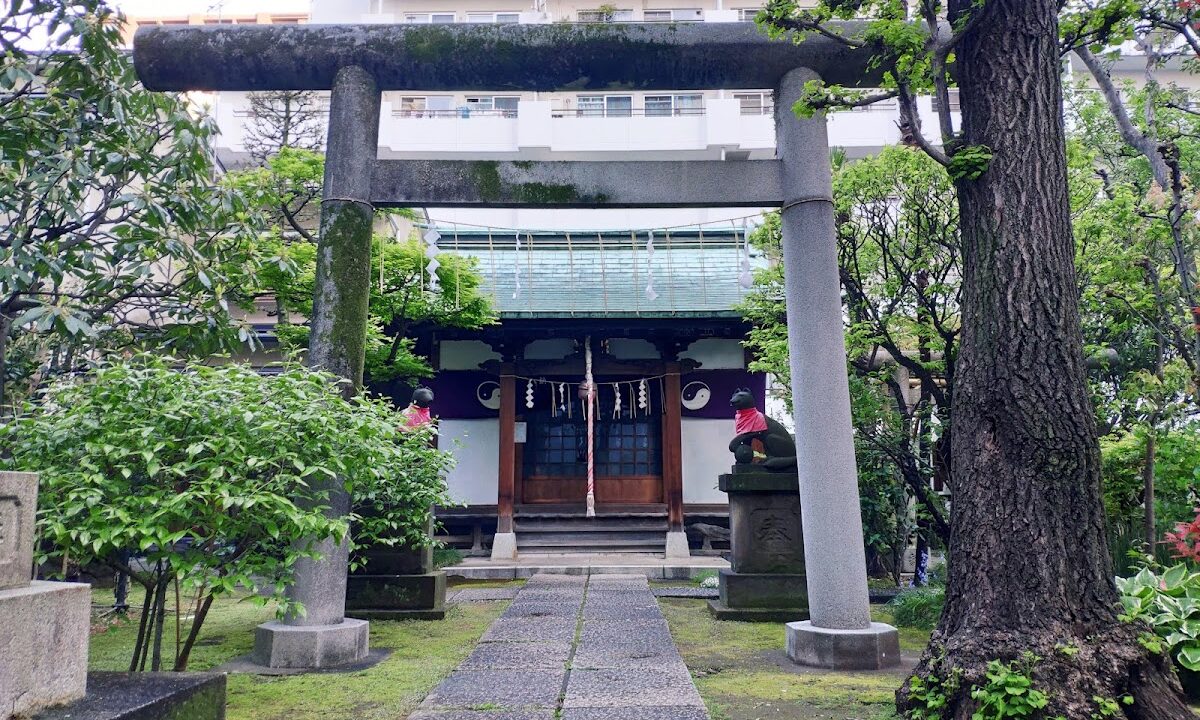
Oiwa Inari Tamiya Shrine in Shinjuku Ward is a shrine rebuilt on the site of the original Tamiya family residence, and can be considered the origin of the Oiwa faith. It is a small shrine quietly nestled in a residential area, but it attracts fervent devotion from locals and those involved in Kabuki.
Access Method
Access by Train:
- Approximately 5 minutes on foot from Yotsuya-sanchome Station on the Tokyo Metro Marunouchi Line
- Approximately 8 minutes on foot from Akebonobashi Station on the Toei Shinjuku Line
From Yotsuya-sanchome Station, walk a short distance along Shinjuku Street towards Shinjuku, and you will see the shrine as you enter the residential area of Samoncho. It is located in a relatively easily accessible location.
Opening Hours and Points to Note When Visiting
Opening Hours: 6:30 AM to 7:00 PM (Hours may vary depending on the season, so it is recommended to check before visiting.)
Since shrines in Shinjuku Ward are located in residential areas, please be considerate of the neighbors when visiting. Especially when visiting in the early morning or evening, it is important to pray quietly.
Highlights of the Shrine Grounds
Oiwa Inari Tamiya Shrine in Shinjuku Ward is small, but it has grounds that evoke a sense of history and charm.
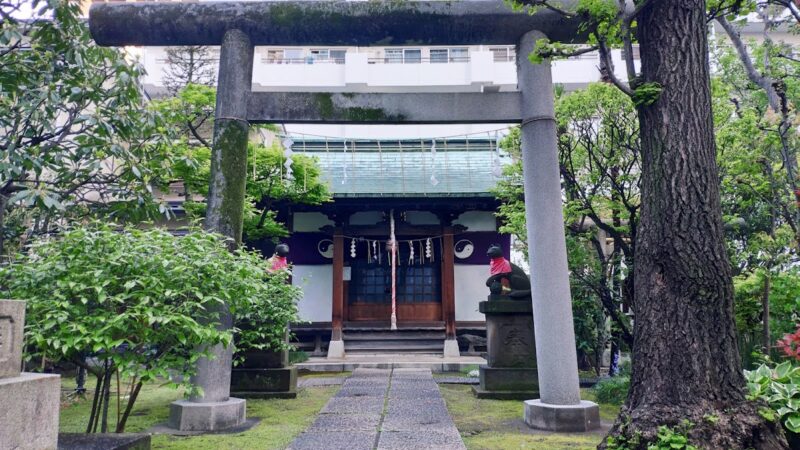
Torii Gate and Shrine Building: Although the grounds are compact, the vermilion torii gate and shrine building are neatly arranged. The shrine building was rebuilt after the war, but it follows the traditional style of shrine architecture.
Tokyo Metropolitan Government Designated Historic Site Monument: Within or around the shrine grounds, there is a monument designated by the Tokyo Metropolitan Government as the “Tamiya Inari Shrine Site,” indicating that this is the birthplace of the Oiwa faith.
The Legend of Oiwa: Within the shrine grounds, there are information boards explaining the history of Oiwa and the Tamiya family, allowing visitors to learn about the origins of the Oiwa Inari faith.
Oiwa Inari Tamiya Shrine in Chuo Ward | Basic Information and Access
Location and Deities
Address: 2-25-11 Shinkawa, Chuo-ku, Tokyo
Deities:
- Toyouke-hime no Okami
- Tamiya Oiwa no Mikoto
Oiwa Inari Tamiya Shrine in Chuo Ward is a shrine that relocated after a fire in 1879 (Meiji 12), and is known for its strong ties to the Kabuki world and other performing arts figures.
Access Information
Access by Train:
- Approximately 7 minutes on foot from Kayabacho Station on the Tokyo Metro Hibiya Line and Tozai Line
- Approximately 8 minutes on foot from Hatchobori Station on the Tokyo Metro Hibiya Line
- Approximately 10 minutes on foot from Hatchobori Station on the JR Keiyo Line
Shinkawa in Chuo Ward is an area where office buildings and residences coexist. The shrine is nestled in a back alley, offering a quiet atmosphere away from the hustle and bustle of the city.
Features of the Shrine Grounds
Although small in scale, Oiwa Inari Tamiya Shrine in Chuo Ward possesses a historical presence that dates back to the Meiji era.
Shrine Building: After being relocated during the Meiji era, the shrine building underwent several renovations and functions as a place of worship within the limited space of the city center.
Relationship with Kabuki: Items donated by Kabuki actors and other performing arts figures can sometimes be seen on the shrine grounds, strongly retaining its character as a deity of performing arts.
Information on Goshuin (Shrine Seals) at Oiwa Inari Tamiya Shrine
Goshuin at Shrines in Shinjuku Ward
Goshuin are available at Oiwa Inari Tamiya Shrine in Shinjuku Ward. However, since there may not always be a resident priest, it is recommended to check in advance if you wish to receive a goshuin.
Features of the Goshuin:
- Calligraphy of “Oiwa Inari Tamiya Shrine”
- Shrine seal
- Simple yet dignified calligraphy
While direct writing in your goshuin book may be possible, pre-printed goshuin may also be available. Since the availability may vary depending on the time of day and season, it is recommended to contact the shrine in advance if you wish to be sure to receive a goshuin.
Goshuin at Shrines in Chuo Ward
Goshuin are also available at Oiwa Inari Tamiya Shrine in Chuo Ward. Again, there may be times when there is no resident priest, so prior confirmation is necessary if you wish to receive a goshuin.
Features of the Goshuin (Shrine Seal):
- Similar to the shrine in Shinjuku Ward, it features the calligraphy “Oiwa Inari Tamiya Shrine.”
- The goshuin of both shrines have a similar style.
Many visitors collect the goshuin from both shrines, and it’s possible to enjoy a “Oiwa Inari Pilgrimage” visiting both shrines.
About Goshuincho (Shrine Seal Books)
It is recommended to check during your visit whether original goshuincho are available. Because it is a small shrine, original goshuincho may not be available year-round.
Items Offered and Amulets
Items Offered at the Shinjuku Ward Shrine
The following items are available at Oiwa Inari Tamiya Shrine in Shinjuku Ward (may vary depending on the season).
Amulets:
- Exorcism Amulet: An amulet that harnesses the power of Oiwa-san’s exorcism.
- Business Prosperity Amulet: An amulet that bestows the blessings of Inari-sama.
- Matchmaking Amulet: An amulet for finding a good partner.
Talismans: Talismans for family safety and business prosperity are available.
Items Offered at Shrines in Chuo Ward
Similar items are available at Oiwa Inari Tamiya Shrine in Chuo Ward. They often have a particularly extensive selection of items for those in the entertainment industry.
Items for the Entertainment Industry:
- Skill Improvement Amulet: An amulet for improving one’s skills in the entertainment industry.
- Stage Success Amulet: An amulet for praying for the success of a performance.
The types and availability of items vary depending on the time of year, so it is recommended to check in advance if you wish to obtain a specific item.
Characteristics of Benefits and Faith
Benefits of Oiwa Inari
Oiwa Inari Tamiya Shrine is said to offer the following benefits:
Protection from Misfortune and Disaster: Oiwa was actually a virtuous wife who protected and brought prosperity to her family. Therefore, she is believed to offer protection from disaster and safeguard the home.
Business Prosperity: As the shrine enshrines Inari, the god of rice and food, it is strongly believed to bring business prosperity and attracts the faith of merchants and business owners.
Matchmaking: Based on the legend of Oiwa and her husband, Tamiya Iemon (the real Iemon was a loving husband who cherished Oiwa), the shrine is believed to bring good fortune in relationships and marital harmony.
Improvement in Performing Arts: Due to its connection to the Kabuki play “Tokaido Yotsuya Kaidan,” it is deeply revered by those in the performing arts and is believed to bring improvement in artistic skills and success on stage.
Deep Connections with the Kabuki World
Oiwa Inari Tamiya Shrine, especially the shrine in Chuo Ward, has deep ties to the Kabuki world. When performing Tsuruya Nanboku’s Kabuki play “Tokaido Yotsuya Kaidan,” it is customary for the performers to visit the shrine.
This is a sign of respect for the story of Oiwa and a prayer for the success of the performance. Because of this custom, Oiwa Inari Shrine has become widely recognized as a deity of performing arts.
The Truth About Tokaido Yotsuya Kaidan and Oiwa
The Story of the Kabuki Play “Tokaido Yotsuya Kaidan”
Written in 1825 by Tsuruya Nanboku, the Kabuki play “Tokaido Yotsuya Kaidan” is known as one of Japan’s most representative ghost stories. The story depicts Oiwa, whose face is disfigured after being poisoned by her husband, Iemon, and who becomes a vengeful ghost seeking revenge.
However, this is purely fictional and differs significantly from the actual Tamiya Oiwa.
The Real Tamiya Oiwa
Tamiya Oiwa, a real person who lived in the early Edo period, was a virtuous and devout woman. She and her husband, Iemon, were deeply devoted to Inari, and it is said that as a result, the Tamiya family prospered greatly.
After Oiwa’s death, many people came to worship her, drawn by her virtue, and eventually, Oiwa herself came to be worshipped as a deity. In other words, the real Oiwa was not a vengeful spirit, but rather a goddess of fortune who brought prosperity to the family.
The Relationship Between Ghost Stories and Faith
When Tsuruya Nanboku wrote “Tokaido Yotsuya Kaidan,” he borrowed the name of the real Tamiya Oiwa because Oiwa Inari was already known as a highly revered shrine at the time. It is believed that he used the name of a famous shrine to enhance the work’s prestige.
Ironically, this ghost story further increased the fame of Oiwa Inari, attracting many worshippers. Even today, some people visit the shrine with the image of the “frightening Oiwa-san” in mind, but in reality, it is a shrine where people pray for family safety and business prosperity.
The Relationship Between Oiwa Inari Tamiya Shrine and Yōunji Temple
When researching Oiwa Inari Tamiya Shrine, the name of a temple called “Yōunji Temple” often comes up. Yōunji Temple is a Nichiren Buddhist temple located in Samon-cho, Shinjuku-ku, very close to Oiwa Inari Tamiya Shrine.
Yōunji Temple and Oiwa-san
Yōunji Temple is said to have the grave of “Oiwa-sama,” and many visitors come to pray there. However, this grave is not the actual grave of Tamiya Oiwa, but was built in later times in connection with the Kabuki play “Tōkaidō Yotsuya Kaidan” (The Ghost Story of Yotsuya on the Tōkaidō).
Yōunji Temple is known as “Oiwa-san’s Temple” and, together with Oiwa Inari Tamiya Shrine, is a central place of Oiwa-san worship in Yotsuya.
Differences between Shrines and Temples
Oiwa Inari Tamiya Shrine is a Shinto shrine, enshrining Inari-sama and Oiwa-san as deities. On the other hand, Youunji Temple is a Buddhist temple, where Oiwa-san is worshipped as a Buddha.
Many people visiting Yotsuya visit both Oiwa Inari Tamiya Shrine and Youunji Temple, each expressing their devotion to Oiwa-san in different ways.
Manners and Precautions for Visiting
Basic Manners for Visiting
When visiting Oiwa Inari Tamiya Shrine, please observe the following basic manners:
- Bow when passing through the torii gate: The torii gate is the entrance to the sacred area. Bow before passing through.
- Procedure for purifying hands: If there is a purification fountain, purify your left hand, right hand, and mouth in that order.
- Procedure for worship: Two bows, two claps, and one bow are the basic rituals. After placing your offering and ringing the bell, bow twice, clap your hands twice, and finally bow once more.
- Photography: Photography is generally permitted on the shrine grounds, but please be considerate of those inside the shrine and other worshippers.
Considerations in a Residential Area
Oiwa Inari Tamiya Shrine in Shinjuku Ward is located in a residential area. Please observe the following points when visiting:
- Refrain from loud conversations
- Be especially quiet when visiting early in the morning or late at night
- Avoid street parking
- Always take your trash with you
Misunderstandings about Oiwa
Some people visit with the image of “the scary Oiwa,” but in reality, Oiwa is a goddess of fortune who brought prosperity to families. There is no need to fear her; rather, it is important to visit with the intention of praying for family safety and business prosperity.
Kabuki performers always visit this shrine not out of fear of Oiwa, but to show respect and pray for improvement in their art and success in their performances.
Nearby Attractions and Tourist Spots
Shinjuku Ward Area
Yōunji Temple: A Nichiren Buddhist temple located a few minutes’ walk from Oiwa Inari Tamiya Shrine. Known for its connection to Oiwa.
Suga Shrine: A shrine near Yotsuya-Sanchome Station. Famous as a pilgrimage site for the movie “Your Name.”
Shinjuku Gyoen National Garden: A vast garden within walking distance of Yotsuya-Sanchome Station. Enjoy the beauty of nature throughout the seasons.
Yotsuya Arakicho: A restaurant district that retains the atmosphere of a former geisha district. Its charming alleyways are a major draw.
Chuo Ward Area
Teppozu Inari Shrine: A representative Inari shrine in Chuo Ward. Within walking distance of Oiwa Inari Tamiya Shrine.
Sumida River Terrace: A riverside promenade, perfect for a stroll.
Tsukiji Outer Market: A market offering fresh seafood and other ingredients, also popular as a gourmet spot.
Hama-rikyu Gardens: A daimyo garden from the Edo period, cherished as an oasis in the heart of the city.
Planning a Visit to Oiwa Inari Tamiya Shrine
Recommended Visiting Plans
Yotsuya Area Focused Plan:
- Get off at Yotsuya-Sanchome Station on the Tokyo Metro Marunouchi Line
- Visit Oiwa Inari Tamiya Shrine (Shinjuku Ward) (Estimated time: 15 minutes)
- Visit Younji Temple (Estimated time: 15 minutes)
- Visit Suga Shrine (Estimated time: 20 minutes)
- Enjoy a meal or coffee in Yotsuya Arakicho
Two Shrines Visiting Plan:
- Visit Oiwa Inari Tamiya Shrine in Shinjuku Ward
- Travel by train (approx. 30 minutes)
- Visit Oiwa Inari Tamiya Shrine in Chuo Ward
- Enjoy gourmet food at Tsukiji Outer Market
Best Time to Visit
Oiwa Inari Tamiya Shrine is open for visits throughout the year, but the following times are especially recommended.
New Year’s Visit (January 1st-3rd): Visiting shrines for the New Year. Crowds are expected.
Annual Festival Days: Varies by shrine, but a special atmosphere can be experienced during annual festivals.
Spring/Autumn: The weather is pleasant, and you can enjoy strolling around the surrounding area.
During Kabuki Performances: During performances of “Tokaido Yotsuya Kaidan,” you may encounter Kabuki performers visiting the shrine.
Estimated Time Required
- Oiwa Inari Tamiya Shrine (Shinjuku Ward) only: 30 minutes to 1 hour (including waiting time for Goshuin stamps)
- Oiwa Inari Tamiya Shrine (Chuo Ward) only: 30 minutes to 1 hour
- Visiting both shrines: Half a day to a full day (including travel time and sightseeing in the surrounding area)
Summary | The Charm of Oiwa Inari Tamiya Shrine
Oiwa Inari Tamiya Shrine is associated with Oiwa-san, famous from the Kabuki play “Tokaido Yotsuya Kaidan,” but it is not actually a shrine that enshrines a vengeful spirit. Instead, it is a shrine that enshrines a god of fortune, offering blessings for family safety, business prosperity, matchmaking, and improvement in performing arts.
The two shrines in Shinjuku Ward and Chuo Ward, while having different historical backgrounds, inherit the same lineage of faith. Their history of relocation due to a fire in the Meiji era and reconstruction after the war tells the story of how the shrine has walked hand in hand with the urban transformation of Tokyo.
Though small in scale, Oiwa Inari Tamiya Shrine enjoys fervent devotion from locals and those involved in Kabuki theater. When sightseeing in Tokyo, be sure to visit both shrines to experience the true story of Oiwa and the history of faith that has continued since the Edo period.
A visit to Oiwa Inari Tamiya Shrine, quietly nestled amidst the hustle and bustle of the city, will surely be a memorable experience. For those collecting Goshuin (shrine stamps), a “Oiwa Inari Pilgrimage” visiting both shrines is also recommended. Enjoy a leisurely visit, soaking in the unique atmosphere and history of each shrine.