
Complete Guide to Shirayama Hime Shrine | The Charm and Blessings of Kaga Province’s Ichinomiya with a 2100-Year History
What is Shirayama Hime Shrine?
Shirayama Hime Shrine is a shrine located in Sannomiya-cho, Hakusan City, Ishikawa Prefecture, and is the center of the Hakusan faith, which worships the sacred Mount Hakusan as its divine body. It is the head shrine of approximately 3000 Hakusan shrines nationwide and has long been revered as the Ichinomiya of Kaga Province. Locally, it is affectionately called “Shirayama-san,” and even today, many worshippers visit it as a major shrine protecting the Hokuriku region.
It is a Shikinaisha (a high-ranking shrine listed in the Engishiki Jinmyocho), formerly a National Shrine of the second rank, and is currently designated as a Special Shrine by the Association of Shinto Shrines. Mount Hakusan (elevation 2702m), one of Japan’s three most famous mountains, has been a mountain of reverence for the people of the capital since ancient times, known as the “Seat of the White Gods.” Hakusan Hime Shrine, situated in a location from which to worship Mount Hakusan from afar, can be considered the most important sacred site in Hakusan worship.
History of Hakusan Hime Shrine
Founding and Ancient History
Hakusan Hime Shrine is said to have been founded in the 7th year of Emperor Sujin’s reign (91 BC), boasting a history of over 2100 years. It began in ancient times with the enshrinement of Hakusan Hime-no-Okami, the ancestral deity of all living things, revered as the sacred mountain of Mount Hakusan.
In ancient times, it was called “Shimo-Hakusan” and functioned as the “Hon-gu” (main shrine) in contrast to the “Oku-miya” (inner shrine) at the summit of Mount Hakusan. Mount Hakusan also developed as a sacred site for Shugendo (mountain asceticism), and it is said that the mountain was opened by Taicho Daishi in the first year of the Yoro era (717 AD) during the Nara period. Following this opening, the Hakusan faith spread throughout Japan, and Hakusan Hime Shrine flourished as an important base for pilgrimages to Mount Hakusan.
Development from the Medieval to the Early Modern Period
During the Heian period, it was listed in the Engishiki Jinmyocho (a list of shrines compiled in the Heian period) and received deep reverence from the imperial court as the Ichinomiya (first-ranked shrine) of Kaga Province. In the medieval period, Hakusan Shugendo reached its peak, and many ascetics and pilgrims visited Hakusan Hime Shrine. The Hakusan faith took on a form of syncretism of Shinto and Buddhism, and came to be worshipped as Hakusan Gongen.
During the Sengoku period (Warring States period), despite the effects of war, it was maintained under the patronage of the Maeda family, the lords of the Kaga domain. During the Edo period, under the protection of the Kaga domain, the shrine buildings were improved, and the current main hall is believed to have been built in the mid-Edo period.
Modern Era
Following the Meiji-era decree separating Shinto and Buddhism, the shrine was renamed from Hakusan Gongen to Hakusan Hime Shrine, clearly establishing its form as a Shinto shrine. In 1871 (Meiji 4), it was ranked as a National Shrine of the second rank, receiving national protection.
After World War II, it became a special shrine of the Association of Shinto Shrines, and to this day, it plays an important role as the head shrine of all Hakusan shrines nationwide and as a spiritual pillar of the Hokuriku region. In recent years, it has attracted attention as one of Ishikawa Prefecture’s leading power spots, and many worshippers from both within Japan and abroad visit it.
Deities and Benefits
Main Deity: Hakusan Hime Okami
The main deity of Hakusan Hime Shrine is Hakusan Hime Okami, also known as Kukuri Hime no Kami. This deity appears in one version of the Nihon Shoki (Chronicles of Japan) and is known as the god who mediated a dispute between the divine couple Izanagi-no-Mikoto and Izanami-no-Mikoto in the underworld.
From this myth, Kukuri-hime-no-Kami is associated with the word “kukuru” (to tie/bind) and is worshipped as a goddess of tying bonds and harmony. Hakusan-hime-no-Okami has been revered as the source of life, the goddess who governs the creation and development of all things, and as the guardian deity of agriculture, fishing, and navigation.
Enshrined Deities
Along with Hakusan-hime-no-Okami, Izanagi-no-Mikoto and Izanami-no-Mikoto are also enshrined. These three deities together are also known as the Hakusan Sansho Gongen (Three Hakusan Deities).
Benefits of Hakusan Hime Shrine
Hakusan Hime Shrine is believed to offer the following benefits:
- Matchmaking and Successful Relationships: Due to the myth of Kukuri-hime no Kami’s mediation, many worshippers visit seeking success in love and good relationships.
- Marital Harmony and Family Safety: As a goddess of harmony, she deepens the bonds between spouses and families.
- Business Prosperity: As a guardian deity of livelihoods, worshippers pray for the development of their businesses.
- Abundant Harvest: As a goddess of agriculture, worshippers pray for bountiful harvests.
- Safe Voyages: The shrine enjoys strong faith from those involved in the fishing industry in the Hokuriku region.
- Physical and Mental Health: As the ancestral deity of life, worshippers pray for health and longevity.
- Protection from Misfortune and Bringing Good Fortune: The shrine wards off misfortune and brings good fortune.
It is particularly known for its benefits in matchmaking, and is constantly visited by young women seeking good relationships and couples praying for marital harmony.
Highlights of the Shrine Grounds
Main Approach and Natural Environment
The grounds of Hakusan Hime Shrine are located on a hill in the alluvial fan of the Tedori River, surrounded by abundant nature. The main approach is designated as a scenic spot by Hakusan City, and a row of cedar trees hundreds of years old welcomes visitors. Simply walking along the approach allows you to feel the solemn atmosphere of the sacred area.
On both sides of the approach stand ancient cedar and large zelkova trees, designated as natural monuments by the city, creating a sacred atmosphere along with the dignity of an ancient shrine. It is especially beautiful during the seasons of fresh greenery and autumn leaves, when the natural beauty combines to create a particularly special atmosphere.
Main Hall (Ishikawa Prefecture Designated Tangible Cultural Property)
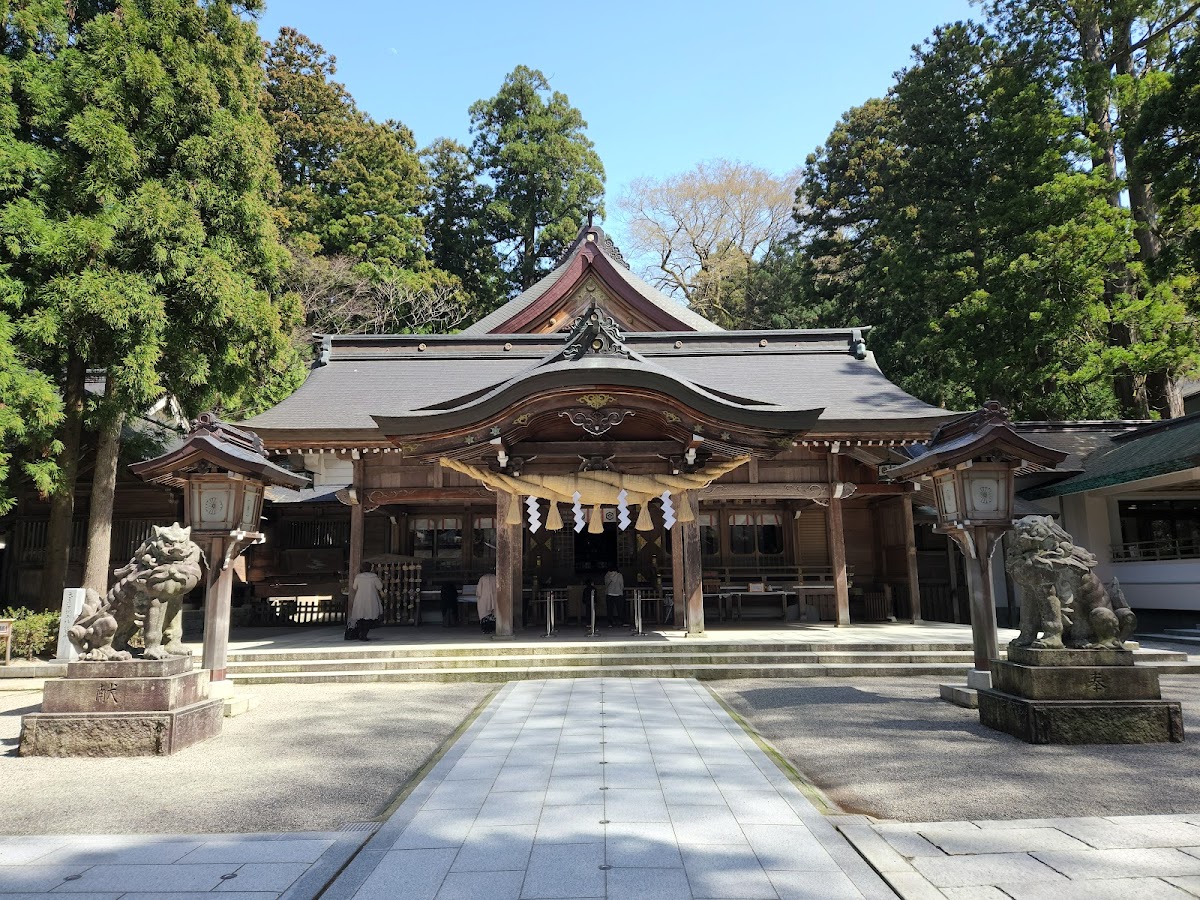
The current main hall is believed to have been built in the mid-Edo period and is designated as an Ishikawa Prefecture Designated Tangible Cultural Property. Its majestic architectural style is befitting of the center of Hakusan worship, and it is adorned with elaborate carvings and decorations. The cypress bark roof and vermilion-painted pillars are beautiful, and it is a building that embodies the essence of traditional shrine architecture. While worshippers typically approach the main shrine from the worship hall, its presence evokes a sense of long history and the weight of faith.
Worship Hall and Shrine Gate
The worship hall is where worshippers offer their prayers and is built in front of the main shrine. A large offering box is placed there, and it is bustling with many worshippers. The shrine gate is a magnificent gate standing at the entrance to the shrine grounds, signifying the status of Hakusan Hime Shrine.
Hakusan Okumiya Remote Worship Site
Within the shrine grounds is a remote worship site for worshipping the Okumiya (inner shrine) at the summit of Mt. Hakusan. On clear days, one can see Mt. Hakusan, making it a precious place to directly worship the sacred mountain. Many worshippers visit here, especially those who cannot climb Mt. Hakusan or those who wish to worship Mt. Hakusan when it is covered in snow during winter.
Water Basin and Sacred Pond
At the water basin along the approach to the shrine, one can purify their mind and body with pure water from the underground springs of Mt. Hakusan. The shrine grounds also feature a sacred pond, reflecting the changing seasons and the beauty of nature.
Shrine Office and Gift Shop
The shrine office offers Goshuin (shrine stamps) and accepts requests for various prayers. The gift shop offers a variety of amulets and talismans, with the amulet for matchmaking being particularly popular.
Subsidiary Shrines
Several subsidiary shrines are located within and around the grounds of Hakusan Hime Shrine.
Aragozen Shrine
This subsidiary shrine, located near the main hall, enshrines the Aratama (fierce spirit) of Hakusan Hime Okami. The Aratama represents the fierce aspect of the deity and is believed to possess greater divine power.
Other Subsidiary Shrines
There are several other subsidiary shrines within the grounds, each with its own history. Visiting these shrines will allow for a deeper religious experience.
Festivals and Annual Events
Hakusan Hime Shrine holds various festivals and events throughout the year.
Main Festivals
- New Year’s Day Festival (January 1st): A festival celebrating the New Year, attracting many visitors for their first shrine visit of the year.
- Setsubun Festival (February 3rd): Bean-throwing ceremony held, praying for protection from evil and good fortune.
- Spring Grand Festival (April): An important festival celebrating the arrival of spring.
- Summer Purification Ceremony (June 30th): A Shinto ritual to cleanse away the sins and impurities accumulated over the past six months.
- Autumn Grand Festival (September): One of the most important festivals to give thanks for the harvest.
- Niiname-sai Festival (November 23rd): A festival to offer new grain to the gods and give thanks for the harvest.
- Year-End Purification Ceremony (December 31st): A Shinto ritual to cleanse away the sins and impurities accumulated over the year.
Monthly Festivals
Monthly festivals are held on the 1st and 15th of each month, with local worshippers in attendance. These regular ceremonies maintain the connection between the shrine and the community.
Special Events
During the opening of Mount Hakusan (July), a Shinto ritual is held to pray for the safety of climbers. Prayers for life’s milestones, such as Shichi-Go-San (a traditional rite of passage for children) and Hatsumiyamairi (a first shrine visit for newborns), are also accepted at any time.
Cultural Assets
Hakusan Hime Shrine preserves numerous valuable cultural assets that tell the story of its long history.
Ishikawa Prefecture Designated Tangible Cultural Property
- Main Hall: A valuable building that conveys the architectural style of the mid-Edo period.
Hakusan City Designated Cultural Property
- Main Approach: An approach protected as a city-designated scenic spot.
- Old Cedar: A giant tree designated as a city-designated natural monument.
- Large Zelkova: An ancient tree designated as a city-designated natural monument.
These cultural properties demonstrate the historical value of Hakusan Hime Shrine and are important elements that shape the solemn atmosphere of the shrine grounds.
Other Cultural Properties
Numerous ancient documents, sacred treasures, and offerings are preserved as shrine treasures, providing valuable materials for studying the history of Hakusan faith.
Access and Local Information
Location
Address: 105-1, Sannomiya-cho Ni, Hakusan City, Ishikawa Prefecture
Phone: 076-272-0680
Visiting Hours
While the shrine grounds are generally open all day, the shrine office is usually open from 9:00 AM to 4:00 PM. The issuance of Goshuin (shrine stamps), amulets, and prayer requests are only available during the shrine office’s opening hours.
Access by Public Transportation
Using the Hokuriku Railway Ishikawa Line
- From Kanazawa Station:
- Approximately 30 minutes to Tsurugi Station on the Hokuriku Railway Ishikawa Line
- Take the Kaga Hakusan Bus bound for Ichinomiya from Tsurugi Station, get off at the Ichinomiya bus stop, and walk for approximately 10 minutes.
- Alternatively, take a taxi from Tsurugi Station for approximately 10 minutes.
- Bicycle Rental:
- Bicycle rentals are available at Tsurugi Station; approximately 15-20 minutes by bicycle.
By Bus
- Direct buses may operate from Kanazawa Station (may vary depending on the season).
- For details, please contact Hokuriku Railway or the Hakusan City Tourism Association.
Access by Car
Using Expressways
- Approximately 10 minutes from Hakusan IC on the Hokuriku Expressway
- Approximately 15 minutes from Mikawa IC on the Hokuriku Expressway
- Approximately 30 minutes from downtown Kanazawa via National Route 157.
Car Navigation Settings
Please search using the phone number “076-272-0680” or “105-1, Sannomiya-cho, Hakusan City, Ishikawa Prefecture”.
Parking
Free parking is available on the temple grounds and in the surrounding area. There are approximately 200 parking spaces for regular cars, but congestion is expected during the first three days of the New Year and during festivals. Temporary parking lots will be set up during peak seasons, but please also consider using public transportation.
Precautions When Visiting the Shrine
- The shrine grounds are a sacred place, so please visit with reverence.
- Photography is permitted, but there are areas where photography is prohibited, such as inside the main hall.
- The main approach has stairs and slopes, so we recommend wearing comfortable shoes.
- In winter, there is snow, so please take precautions against the cold and wear non-slip shoes.
Nearby Tourist Attractions
The following tourist attractions are located around Hakusan Hime Shrine:
- Nature of the Hakusan Foothills: Abundant nature including the Tedorigawa Valley and Hakusan National Park
- Tsurugi Townscape: A historic town that flourished as a temple town for Hakusan worship
- Hot Spring Facilities: There are several hot spring resorts at the foot of Mt. Hakusan
- Roadside Station: Facilities where you can purchase local specialties
You can enjoy the nature and culture of the Hakusan foothills along with your visit to the shrine.
The Charm of Hakusan Hime Shrine
Charm as a Power Spot
Hakusan Hime Shrine is known as one of Ishikawa Prefecture’s leading power spots. The location, which receives the energy of the sacred Mount Hakusan, the sacred grounds steeped in over 2100 years of history, and the rich natural environment combine to provide visitors with deep healing and vitality.
In particular, the experience of walking along the cedar-lined approach to the shrine offers a precious time to escape the hustle and bustle of everyday life and calm the mind. Many visitors say that breathing in the pure air of the shrine grounds and paying homage to Mount Hakusan from afar refreshes both mind and body.
Connections with Hakusan Shrines Nationwide
Hakusan Hime Shrine is the head shrine of approximately 3000 Hakusan shrines nationwide, and the center of Hakusan worship throughout Japan. From Hokkaido in the north to Kyushu in the south, Hakusan shrines are distributed throughout the country, and are affectionately known as “Hakusan-san” in each region.
These Hakusan shrines were established as Hakusan worship spread, and they all revere Hakusan Hime Shrine as their head shrine. Some believers undertake the “Hakusan Pilgrimage,” visiting Hakusan Shrines throughout Japan, with the ultimate goal of visiting the head shrine, Hakusan Hime Shrine.
Beauty in Every Season
The grounds of Hakusan Hime Shrine display different expressions in each of the four seasons.
- Spring: A season of beautiful fresh greenery, where you can feel the breath of life.
- Summer: Surrounded by deep green, the cool air is refreshing.
- Autumn: The autumn leaves color the grounds, making it one of the most beautiful seasons.
- Winter: The shrine buildings amidst the snowscape are fantastical, creating a tranquil atmosphere.
Especially during the autumn foliage season, many tourists visit, and you can see them with cameras. The snow-covered grounds in winter are also exceptionally beautiful.
A Faith Rooted in the Local Community
Hakusan Hime Shrine, affectionately known as “Shirayama-san,” is deeply rooted in the lives of the local people. Many families visit Hakusan Hime Shrine at significant life events such as their child’s first shrine visit, Shichi-Go-San (a traditional rite of passage for children), exorcisms, and weddings, making it a spiritual pillar of the community.
The monthly festivals bring together local worshippers, strengthening community bonds. Furthermore, active donations and cleaning activities by local businesses and organizations maintain a strong connection between the shrine and the community.
Manners and Etiquette for Visiting a Shrine
Basic Etiquette for Visiting a Shrine
- Bow before passing through the torii gate: Bow before entering the sacred area to show respect.
- Walk along the edge of the path: The center of the path is considered the path of the gods.
- Purify yourself at the water basin:
- Take the ladle with your right hand and purify your left hand.
- Switch the ladle to your left hand and purify your right hand.
- Switch the ladle back to your right hand, receive water in your left hand, and rinse your mouth.
- Finally, stand the ladle upright and purify the handle.
- Worship at the main hall:
- Place your offering in the offering box.
- Ring the bell.
- Bow twice, clap twice, and bow once (bowing deeply twice, clapping twice, bowing deeply once).
- Bow again at the torii gate when leaving: Turn around and bow once when leaving the shrine grounds.
About Goshuin (Shrine Seals)
Hakusan Hime Shrine offers Goshuin. Present your Goshuincho (seal book) at the shrine office and pay the offering fee (usually 300-500 yen). Goshuin are proof of your visit; cherish them as a record of your faith, not as a collection.
Amulets and Talismans
Various amulets and talismans are available at the shrine office. You can choose an amulet according to your purpose, such as for matchmaking, protection from evil, traffic safety, or academic success. It is customary to replace your amulet with a new one approximately every year and return the old one to the shrine.
Summary
Hakusan Hime Shrine is the head shrine of all Hakusan shrines nationwide, with a history of over 2100 years. It is a major shrine protecting the Hokuriku region, with Mount Hakusan, a sacred mountain, as its divine object of worship. It has long been revered as the Ichinomiya (first-ranked shrine) of Kaga Province and remains one of Ishikawa Prefecture’s representative shrines, attracting many visitors today.
Amulets and Talismans Hakusan Hime Shrine, known for its blessings of matchmaking and marital harmony, and also attracting attention as a power spot, is a place where you can heal your mind and body and gain new vitality amidst abundant nature. It boasts numerous attractions, including the main hall, a designated tangible cultural property of Ishikawa Prefecture, the Omotesando (main approach), a designated scenic spot of the city, and ancient cedar and zelkova trees designated as natural monuments.
Its easy accessibility, just about 30 minutes from Kanazawa, is another attractive feature, making it a must-visit spot for sightseeing in the Hokuriku region. Why not spend some special time in this sacred area steeped in 2100 years of history, while enjoying the beauty of the four seasons? Hakusan Hime Shrine, affectionately known as “Shirayama-san,” is sure to leave a deep impression on your heart.


