Complete Guide to Konsenji Temple | History, Goshuin (Temple Seal), and Access Information for the 3rd Temple of the Shikoku Pilgrimage
Konsenji Temple is a Shingon Buddhist temple located in Itano-cho, Itano-gun, Tokushima Prefecture. As the 3rd temple of the Shikoku 88 Temple Pilgrimage, it is a historic temple visited by many pilgrims. Its formal name is Kamekozan Shakain, and it boasts numerous attractions, including a sacred well said to have been dug by Kobo Daishi and legends associated with Minamoto no Yoshitsune. This article provides a thorough guide to the charm of this historic temple, covering its history, highlights within the grounds, visiting information, and access methods.
History and Origins of Konsenji Temple
Founding and Beginning as an Imperial Temple of Emperor Shomu
The founding of Konsenji Temple dates back to the Nara period. It is said to have been founded by the high-ranking priest Gyoki Bodhisattva at the request of Emperor Shomu (reigned 724-749). Initially named “Kinmyo-ji,” the temple housed a statue of Shakyamuni Buddha, approximately 91 centimeters tall, as its principal image. It is said that Gyoki founded the temple by placing statues of Amida Buddha and Yakushi Buddha on either side of this Shakyamuni Buddha, creating a triad arrangement.
During the reign of Emperor Shomu, the protection of the nation through Buddhism was highly valued, and provincial temples (Kokubun-ji) were established throughout the country. Kinzen-ji Temple, within this context of the flourishing of Buddhism, appears to have been positioned as an important temple in Awa Province.
The Legend of Kobo Daishi and the Sacred Water
The origin of Kinzen-ji Temple’s name stems from an event during the Konin era (810-824) when Kobo Daishi Kukai visited this area. At that time, the region was suffering from a severe drought, and the villagers were struggling with a water shortage. Seeing the villagers’ plight, Kobo Daishi struck the ground with his staff and dug a well.
Immediately, pure, sacred water gushed forth, and this water came to be known as the “Golden Well.” This sacred water gained a reputation as “water that brings longevity,” and since then, the temple’s name was changed from “Kinmyo-ji” to “Kinzen-ji.” This well still remains on the temple grounds and is an important spot visited by worshippers.
The Legend of Minamoto no Yoshitsune and Benkei
Kinzen-ji Temple has an interesting legend related to Minamoto no Yoshitsune, a warrior from the late Heian period. It is said that Yoshitsune, on his way to Yashima in Sanuki Province after receiving orders to pursue the Taira clan, stopped at Kinzen-ji Temple to pray for victory.
At this time, Musashibo Benkei, a loyal retainer of Yoshitsune, accompanied him, and there is an anecdote that they tested their strength on the temple grounds. The “Benkei’s Strength Stone,” which Benkei is said to have lifted, still remains on the temple grounds and attracts the attention of visitors. This stone is quite heavy and is carefully preserved as an artifact that tells the story of Benkei’s superhuman strength.
The Main Image and Attendant Deities of Kinzenji Temple
Seated Shakyamuni Buddha Statue
The main image of Kinzenji Temple is a seated statue of Shakyamuni Buddha. The original statue, said to have been created by Gyoki Bodhisattva, was approximately 91 centimeters tall, but the current main image is thought to have been created in a later period. Shakyamuni Buddha is the founder of Buddhism and represents the Buddha himself, who attained enlightenment.
At Kinzenji Temple, this Shakyamuni Buddha is enshrined in a three-figure arrangement, and visitors can quietly offer their prayers in the main hall. While the main image is not a hidden Buddha, it is carefully enshrined in a shrine, and its majestic appearance deeply impresses visitors.
Yakushi Nyorai and Amida Nyorai
Flanking the main image of Shakyamuni Buddha are Yakushi Nyorai and Amida Nyorai, enshrined as attendant deities. Yakushi Nyorai (Medicine Buddha) is revered as the Buddha who presides over healing illnesses and promoting health and longevity, while Amida Nyorai (Amitabha Buddha) is revered as the Buddha who guides people to paradise.
This triad arrangement is also interpreted as symbolizing the past, present, and future, with some theories suggesting Amida Nyorai represents the past, Shakyamuni Buddha the present, and Yakushi Nyorai the future. It is also considered a manifestation of popular faith, expressing the simultaneous wish for health in this life and peace in the next.
Highlights of the Temple Grounds
Main Hall and Daishi Hall
Kinzenji Temple’s main hall is a magnificent building with a hipped roof. The principal image, the Shakyamuni Buddha triad, is enshrined here, and worshippers chant sutras and offer sutras in front of the main hall. The interior of the main hall is enveloped in a solemn atmosphere and is maintained as a space for quiet prayer.
The Daishi Hall houses a statue of Kobo Daishi (Kukai), and is considered a must-visit place along with the main hall for those on the Shikoku Pilgrimage. Visiting the Daishido Hall is an important ritual that embodies the spirit of pilgrimage, walking alongside Kobo Daishi. Many worshippers recite the Heart Sutra and the sacred name “Namu Daishi Henjo Kongo” in front of the Daishido Hall.
The Golden Well (Kobo Daishi’s Sacred Water)
One of the most noteworthy sights on the temple grounds is the “Golden Well,” said to have been dug by Kobo Daishi. This well still holds clear water, and worshippers can draw this sacred water with a ladle.
According to legend, drinking this water grants longevity, and many worshippers take the sacred water home in water bottles or plastic containers. The area around the well is well-maintained, and the beautiful stone frame of the well conveys its original appearance. The sight of clear water gushing forth regardless of the season is a valuable relic that conveys the spiritual power of Kobo Daishi.
Benkei’s Strength Stone
The “Benkei’s Strength Stone,” said to have been lifted by Musashibo Benkei, a retainer of Minamoto no Yoshitsune, is located in a corner of the temple grounds. This stone is quite heavy and is known as a legendary stone that speaks of Benkei’s superhuman strength.
Currently, it is believed that touching this stone will grant strength, and it has become a popular spot for many visitors to take commemorative photos. In particular, students preparing for exams and athletes—those who need strength and perseverance—often visit hoping to benefit from Benkei’s power.
Kannon Hall and Thousand-Armed Kannon
Within the grounds of Kinzenji Temple is the Kannon Hall, where a Thousand-Armed Kannon Bodhisattva is enshrined. The Thousand-Armed Kannon is a compassionate bodhisattva said to save all people with its thousand arms.
Kannon worship is widespread in Japan, and Kannon has been particularly revered as the guardian deity of women and children. The Thousand-Armed Kannon at Kinzenji Temple also attracts the faith of local people, and visitors come with various wishes. The Kannon Hall is located beside the main hall, offering a tranquil setting for worship.
Atmosphere of the Temple Gate and Grounds
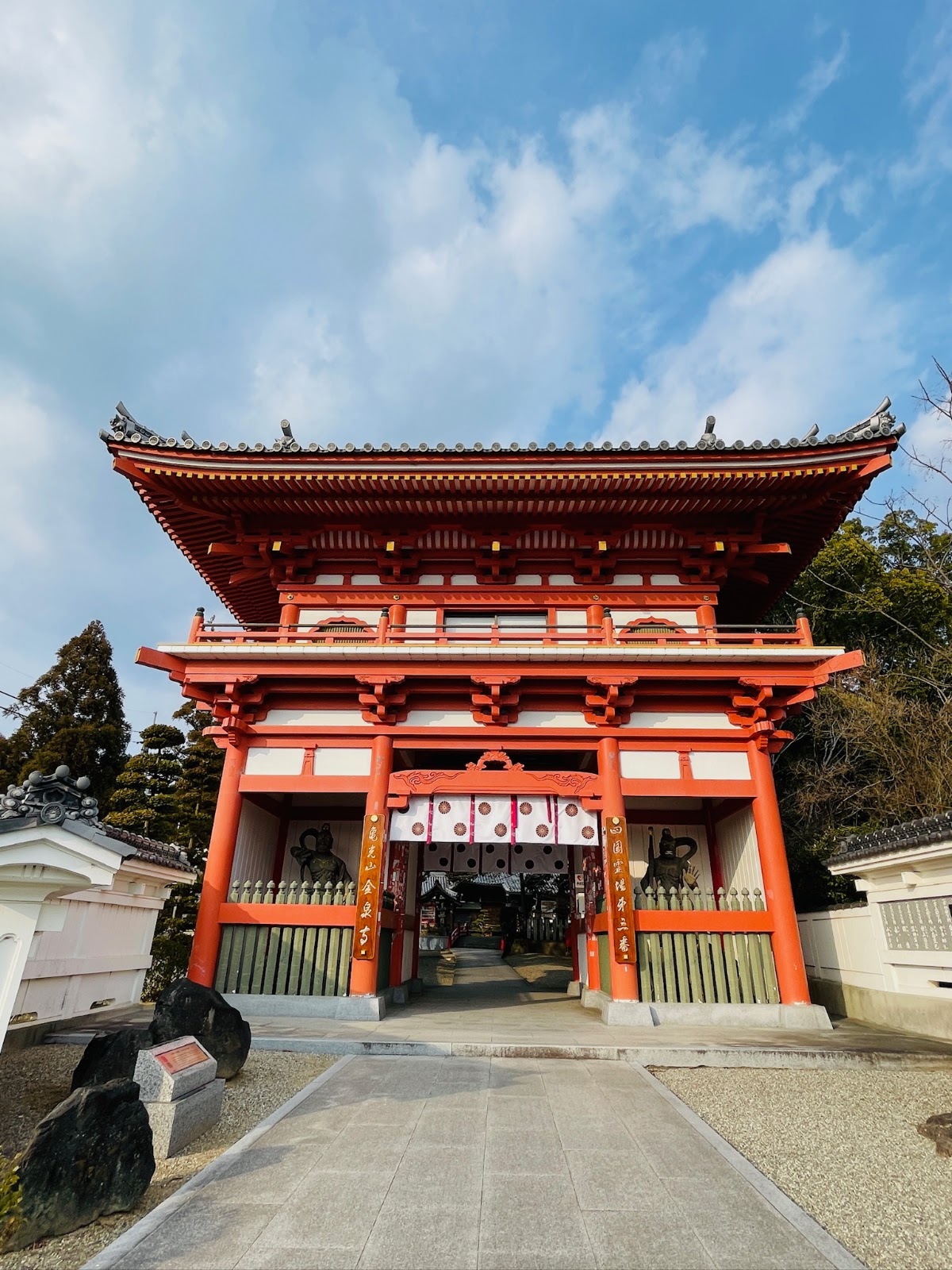
Kinzenji Temple’s temple gate is built in a dignified style befitting a Shikoku pilgrimage site, welcoming visitors. Beyond the gate lies a well-maintained temple ground, displaying different expressions with each season.
In spring, cherry blossoms bloom; in early summer, the fresh greenery is beautiful; and in autumn, the autumn leaves color the grounds. The temple grounds, enveloped in the silence of winter, also have a unique charm, making it worthwhile to visit throughout the year. The grounds are relatively compact, and a leisurely visit can be completed in about 30 minutes.
Kinzenji Temple as the 3rd Temple of the Shikoku 88 Temple Pilgrimage
Positioning on the Shikoku Pilgrimage
Kinzenji Temple is the 3rd temple of the Shikoku 88 Temple Pilgrimage, an important temple located early in the pilgrimage. Following the first temple, Ryōzenji, and the second temple, Gokurakuji, Kinzenji is a temple visited by many pilgrims in this order.
The temples within Tokushima Prefecture are called “dojos of aspiration,” symbolizing the beginning of the pilgrimage. Among them, Kinzenji Temple leaves a deep impression on pilgrims with its rich history and stories, including the legend of Kōbō Daishi’s sacred water and the legend of Minamoto no Yoshitsune.
Waka Poem and Goshuin (Temple Seal)
The waka poem of Kinzenji Temple is as follows:
“Think of the treasure pond of paradise, where only the golden spring swiftly holds its pristine water.”
This waka poem likens the pure, sacred water gushing from the golden well dug by Kōbō Daishi to the treasure pond of paradise. It conveys the meaning that the pure water purifies the heart and guides one to the teachings of Buddha.
The goshuin (temple seal) can be received at the temple office. The inscription “Shakyamuni Buddha” and “Kamekozan” are written in ink, and a red seal is stamped. If you bring your goshuincho (stamp book), they will write directly on it, and you will also receive a sacred image (osugata) in exchange for your offering slip.
Pilgrimage Route and the Next Temple
The distance from Kinzenji Temple to the next temple, No. 4, Dainichiji Temple, is approximately 5.5 kilometers. For those walking the pilgrimage, it takes about 1.5 to 2 hours. Along the way, you can walk through peaceful rural landscapes and residential areas, experiencing the local culture of Tokushima.
For those traveling by car, it takes about 15 minutes using national and prefectural roads. Signposts and information boards are installed along the pilgrimage route, so even first-time pilgrims can proceed without getting lost.
How to Access Kinzenji Temple
Access by Public Transportation
By Train/Bus
- Get off at Itano Station on the JR Kotoku Line, approximately 10 minutes on foot.
- Approximately 20 minutes from Tokushima Station on the JR Kotoku Line to Itano Station.
- Kinzenji Temple is approximately 800 meters from Itano Station, about a 10-minute walk.
Itano Station is an unmanned station, but there are signs directing you to Kinzenji Temple from the station front, making it a relatively easy route. The path from the station to the temple is flat and easy to walk.
Access by Car
By Car
- Approximately 5 minutes from Itano IC on the Takamatsu Expressway.
- Approximately 10 minutes from Aizumi IC on the Tokushima Expressway.
- Approximately 20 minutes from central Tokushima City via National Route 11.
Kinzenji Temple has a free parking lot for visitors, accommodating approximately 20 regular cars. There is also space for large buses, accommodating group visits. The temple grounds are just a short walk from the parking lot.
For those walking the pilgrimage
- Approximately 2.5 kilometers from Temple No. 2, Gokuraku-ji, about 40 minutes on foot
- Approximately 5.5 kilometers from Temple No. 4, Dainichi-ji, about 1 hour 30 minutes on foot
The pilgrimage route is relatively flat and easy to walk, making it manageable even for beginners. There are pilgrim rest areas and convenience stores along the way where you can rest and replenish supplies.
Etiquette for Visiting the Temple and Information on Receiving Sutra Copying
Basic Flow of Visiting the Temple
- Bow at the Temple Gate: Bow before passing through the temple gate to compose yourself.
- Purify at the Water Basin: Purify your hands and mouth.
- Ring the Bell at the Bell Tower: Ring the bell before visiting the temple (do not ring it on your way out).
- Visiting the Main Hall: Offer candles and incense, place your votive slip, put in your offering money, clasp your hands together in prayer, and recite the main deity’s mantra and the Heart Sutra.
- Visiting the Daishi Hall: Visit the Daishi Hall in the same way as the main hall.
- Receive your Goshuin (temple stamp) at the Sutra Copying Office: Receive your Goshuin at the Sutra Copying Office after visiting the temple.
Information on the Sutra Copying Office
- Reception Hours: 7:00~17:00 (may vary depending on the season)
- Temple Offering Fee: 300 yen for the temple stamp, 200 yen for the image of the deity. Hanging scrolls and white robes are charged separately.
- Closed Days: Generally open year-round.
The temple office sells not only temple stamps but also amulets, prayer beads, and pilgrimage supplies. They also provide thorough guidance for first-time pilgrims, and you can easily ask questions if you have any.
Main Deity Mantra and Waka Poem
Main Deity Mantra (Shakyamuni Buddha)
“Nōmaku Sanmanda Bodanan Baku” (chant 7 times)
Waka Poem
“Imagine the treasure pond of paradise, a golden spring shining brightly.”
Reciting these during your visit will allow you to worship with deeper faith.
Nearby Attractions and Tourist Information
Nearby Temples
Visiting the temples before and after Kinzenji Temple will make for a more fulfilling pilgrimage experience.
- Temple No. 2, Gokuraku-ji: Approximately 2.5 kilometers from Kinzen-ji, a temple with Amida Buddha as its principal image.
- Temple No. 4, Dainichi-ji: Approximately 5.5 kilometers from Kinzen-ji, a temple with Dainichi Nyorai as its principal image.
- Temple No. 1, Ryozen-ji: The starting point of the Shikoku Pilgrimage, bustling with many pilgrims.
Tourist Attractions in Itano Town
Itano Town has attractions other than Kinzen-ji.
- Astamuland Tokushima: A large park with a science museum and playground equipment for children.
- Itano Town Historical and Cultural Park: A park with ancient burial mounds and a historical museum.
- Local Restaurants: Numerous restaurants serving Tokushima ramen and Awa regional cuisine are scattered throughout the area.
Accommodation
There are pilgrim lodgings, guesthouses, and business hotels around Kinzen-ji. If you venture to Tokushima City, you can choose from a wider range of accommodations. If you are walking the pilgrimage route, it is recommended that you book accommodation in advance.
Annual Events at Kinzenji Temple
Main Ceremonies and Events
Kinzenji Temple holds various ceremonies and events throughout the year.
- Shōshō-e Ceremony: A ceremony to welcome the New Year (January)
- Spring Equinox Ceremony: A memorial service for ancestors held during the spring equinox (March)
- Founder’s Memorial Service: A ceremony to commemorate the temple’s founder, Gyōki Bodhisattva (Spring)
- Obon Segaki Ceremony: A memorial service for hungry ghosts held during the Obon period (August)
- Autumn Equinox Ceremony: A ceremony held during the autumn equinox (September)
These ceremonies may be open not only to temple parishioners but also to general visitors. Please contact the temple directly for detailed dates and times.
Seasonal Highlights
Kinzenji Temple is a temple where you can enjoy the natural beauty of each season.
- Spring (March-May): Cherry blossoms and fresh greenery are beautiful, and the pleasant weather makes it ideal for visiting.
- Early Summer (June): It’s the rainy season, but the temple grounds, wet with rain, also have a certain charm.
- Summer (July-August): The greenery is lush, and the sound of cicadas fills the air, creating a summery atmosphere.
- Autumn (September-November): The autumn leaves are beautiful, making it the best season for pilgrims.
- Winter (December-February): You can offer a solemn visit in the temple grounds enveloped in silence.
Notes and Manners for Visiting
Clothing and Items to Bring
The formal attire for pilgrims is a white robe, straw hat, and walking stick, but for general visitors, everyday clothes are acceptable. However, please avoid revealing or flashy clothing, and aim for calm and appropriate attire for a temple. The following items are recommended:
- Goshuincho (stamp book)
- Nomefuda (votive slips)
- Candles and incense
- Lighter and matches
- Prayer beads
- Sutra book
Regarding Photography
Photography is generally permitted on the temple grounds, but photography inside the main hall and of Buddha statues may be prohibited. Please check before taking photos, or ask at the sutra office if unsure. Please also be considerate of other visitors.
Other Manners
- Please be quiet on the temple grounds and refrain from loud conversations.
- Smoking is prohibited except in designated areas.
- Pets are generally not allowed.
- Please take all your trash with you.
- The parking lot is for visitors only. Please avoid parking for extended periods.
Cultural Properties and Treasures of Kinzenji Temple
Kinzenji Temple possesses cultural properties and treasures that have been preserved and passed down through its long history. The main image of Shakyamuni Buddha and the attendant images of Yakushi Nyorai and Amida Nyorai are all historically valuable Buddhist statues.
Furthermore, historical sites such as the well said to have been dug by Kobo Daishi and Benkei’s power stone are protected as important cultural heritage of the temple. These cultural assets demonstrate that Kinzenji Temple is not merely a place of worship, but plays an important role in conveying the history and culture of the region.
Summary: The Significance of Visiting Kinzenji Temple
Kinzenji Temple, as the third temple on the Shikoku 88 Temple Pilgrimage, is a temple with a rich history and legends. It boasts many attractions, including the sacred well dug by Kobo Daishi, the legend of Minamoto no Yoshitsune and Benkei, and the main image of Shakyamuni Buddha in a three-figure arrangement.
Located early in the Shikoku pilgrimage, this temple serves as a “dojo of awakening” for pilgrims, a place to renew their faith. For general visitors, it also offers a precious time to calm the mind in its tranquil grounds, away from the hustle and bustle of everyday life, and to reflect on oneself. When you visit Tokushima Prefecture, be sure to stop by Kinzenji Temple and experience the charm of this ancient temple with over a thousand years of history. By offering your prayers at the sacred water of Kobo Daishi and chanting the temple’s hymns, you will experience a cleansing of both mind and body.
We hope that your visit to Kinzenji Temple will be a wonderful and memorable experience.