Enpuku-ji Temple (Aichi Prefecture, Atsuta Ward) Complete Guide | History, Cultural Properties, Goshuin (Temple Seal), and Access Information
Enpuku-ji Temple, located in Kambe-cho, Atsuta Ward, Nagoya City, Aichi Prefecture, is an ancient temple of the Jishu sect with a history of over 800 years. Its official name is “Kameizan Enpuku-ji,” and it has played an important role as a central temple of the Shijo branch of the Jishu sect. This article provides a detailed introduction to Enpuku-ji Temple, including its history, cultural properties, points of interest within the temple grounds, goshuin information, and access methods.
Overview of Enpuku-ji Temple
Enpuku-ji Temple is a Jishu sect temple located at 301 Kambe-cho, Atsuta Ward, Nagoya City, Aichi Prefecture. Its mountain name is Kameizan, and as a branch temple of Kinren-ji Temple, which is the head temple of the Shijo branch of the Jishu sect, it was one of the “Four Main Temples of the Shijo Branch,” along with Joshin-ji, Injo-ji, and Zentsu-ji.
Known as a rare Jishu sect temple in Nagoya City, and situated near Atsuta Shrine, it has flourished since ancient times as a temple visited by many pilgrims. Even today, it stands quietly in a residential area, possessing grounds that evoke a sense of history.
Basic Information
- Official Name: Kameizan Enpukuji
- Sect: Jishu Shijo-ha
- Principal Image: Amida Buddha
- Location: 301 Kambe-cho, Atsuta-ku, Nagoya City, Aichi Prefecture
- Chief Priest: Ashikaga Toshio
- Founding: Early Heian period (tradition)
- Founder: Saicho (tradition)
- Conversion to Jishu: Early 14th century (Nanboku-cho period)
History and Development of Enpukuji Temple
Founding and Tendai Sect Era
The origins of Enpukuji Temple date back to the early Heian period. According to tradition, the temple’s origins lie in the fact that Saichō, the founder of the Tendai sect, enshrined a statue of Bishamonten (Vaiśravaṇa) in this location during a pilgrimage to Atsuta Shrine. Initially, it was founded as a Tendai sect temple and had close ties to Atsuta Shrine.
Conversion to the Jishū Sect and the Abbot Gon’a
The most important turning point in Enpuku-ji Temple’s history occurred during the Nanboku-chō period (Northern and Southern Courts period) in the first half of the 14th century. During this time, the Abbot Gon’a, believed to be a member of the Ashikaga family, became deeply devoted to the Jishū sect and converted Enpuku-ji Temple into a Jishū temple.
The Abbot Gon’a held a strong faith in the teachings of the Jishū sect and developed Enpuku-ji Temple as an important base for the Shijō branch of the Jishū sect. This conversion established Enpuku-ji Temple’s position as a central temple of the Shijō branch of the Jishū sect, overseeing many branch temples.
From the Sengoku Period to the Edo Period
During the Sengoku period, following the eras of Oda Nobunaga and Toyotomi Hideyoshi, and with the construction of Nagoya Castle by Tokugawa Ieyasu, the area around Atsuta developed into an important transportation hub. Enpuku-ji Temple, located near Atsuta Shrine, flourished as a temple visited by many samurai and merchants.
During the Edo period, it also functioned as a venue for cultural activities such as renga (linked verse) gatherings, becoming a gathering place for literati and artists. A renga poem written on paper from Eikyo 4 (1432) still exists today, conveying the cultural activities of that time.
History from the Modern Era Onward
Despite the impact of the anti-Buddhist movement of the Meiji era, Enpuku-ji Temple survived as a center of local faith. However, during the Nagoya air raids of World War II, many of its buildings were destroyed.
After the war, with the support of local residents, it was rebuilt, and the current temple complex was constructed. Since the Heisei era, it has continued to operate as an open temple, focusing on the preservation of cultural properties and interaction with the local community.
Cultural Properties of Enpuku-ji Temple
Aichi Prefecture Designated Cultural Property
Eikyo 4th Year Renga Kaishi (Composed Poems)
The most important cultural property held by Enpuku-ji Temple is the “Eikyo 4th Year Renga Kaishi,” an Aichi Prefecture Designated Cultural Property. This is a record of a renga (linked verse) gathering held at Enpuku-ji Temple in Eikyo 4 (1432), and is a valuable historical document for understanding cultural activities during the Muromachi period.
This renga kaishi contains renga composed by cultural figures of the time, making it an important resource for studying the literary and cultural history of the Muromachi period. It is usually not open to the public, but may be viewable on special occasions.
Other Temple Treasures
In addition to the Eikyo 4th Year Renga Kaishi, Enpuku-ji Temple also possesses Buddhist statues, Buddhist paintings, and ancient documents collected by successive chief priests. These temple treasures are carefully preserved as important materials that convey the history of the Jishu sect and the culture of the Atsuta region.
Highlights of the Temple Grounds
Main Hall
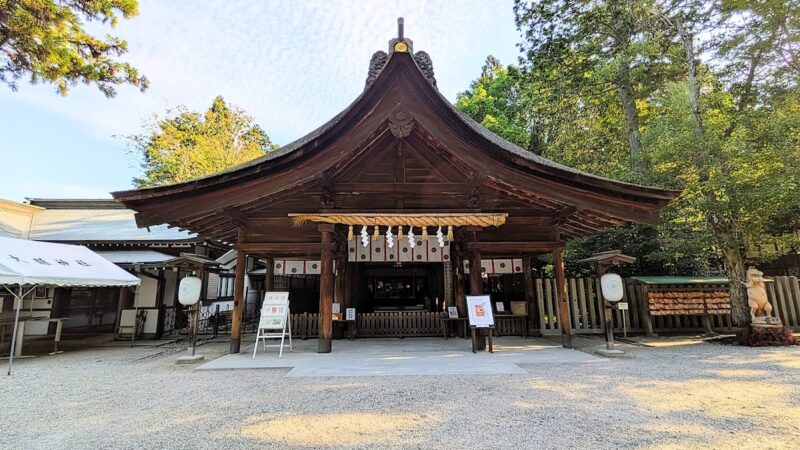
Enpuku-ji Temple’s main hall, rebuilt after the war, is a magnificent building that follows the traditional style of temple architecture. The principal image, Amida Buddha, is enshrined inside, quietly welcoming visitors.
Regular Buddhist services are held in the main hall, continuing the tradition of the Jishu sect’s Nembutsu practice.
The Legend of Kamei and the Well
The origin of Enpuku-ji Temple’s mountain name, “Kamei-yama,” comes from a legendary well that once stood on the temple grounds. According to tradition, a turtle shell was found floating in the well, hence the name “Kamei” (turtle well), which became the temple’s mountain name.
The legend surrounding this well is intertwined with ancient local folk beliefs, adding color to the history of Enpuku-ji Temple. While the well’s remains are no longer clearly visible, it is believed that a trace of it remains in a corner of the temple grounds.
Atmosphere of the Temple Grounds
Despite being located in the heart of Atsuta city, Enpuku-ji Temple’s grounds offer a tranquil and peaceful atmosphere. Surrounded by trees, the grounds display different expressions throughout the seasons, offering particularly beautiful scenery during the cherry blossom season in spring and the autumn foliage season.
Passing through the temple gate, a well-maintained path leads to the main hall, lined with stone Buddha statues and monuments on either side. These stone structures, donated over a long history, testify to the deep faith of the local people.
About the Jishu Sect
Teachings and Characteristics of the Jishu Sect
The Jishu sect, to which Enpuku-ji Temple belongs, is a branch of Pure Land Buddhism founded by Ippen Shonin in the mid-Kamakura period. It preaches that anyone can attain rebirth in paradise by chanting “Namu Amida Butsu,” and is known for its dancing nenbutsu (chanting of Amida Buddha’s name).
A key characteristic of the Jishu sect is its egalitarian philosophy, which holds that the path to salvation is open to all people, regardless of social status or wealth. Ippen Shonin traveled throughout Japan, spreading the teachings of Nembutsu (recitation of Amida Buddha’s name) and gaining the support of many people.
The Shijo Branch of the Jishu Sect and the Position of Enpuku-ji Temple
The Jishu sect has several branches, and Enpuku-ji Temple belongs to the Shijo branch. The head temple of the Shijo branch is Kinren-ji Temple, and while Enpuku-ji Temple is a branch temple, it held the position of a “Chuhon-ji” (intermediate head temple) along with Joshin-ji, Injo-ji, and Zentsu-ji Temples, collectively known as the “Four Temples of the Shijo Branch.”
A Chuhon-ji is a temple located between the head temple and branch temples, playing a role in overseeing multiple branch temples. Enpuku-ji Temple also once had many former branch temples and held an important position within the Shijo branch of the Jishu sect.
Goshuin (Temple Seal) Information
Features of the Goshuin
Enpuku-ji Temple offers Goshuin to visitors. The Goshuin features the mountain name “Kamei-yama” and the temple name “Enpuku-ji” written in ink, and is stamped with the temple seal. The calligraphy is characterized by its simple yet powerful style, typical of a Jishu sect temple.
Goshuin (temple stamps) are cherished as proof of worship and as a way to forge a connection with the temple. If you bring your goshuincho (stamp book), you can have it written directly on your stamp book.
Regarding Goshuin Reception
Goshuin are generally accepted at the temple office. However, they may not be able to accommodate requests if the head priest is absent or during religious services. Therefore, if you want to be sure to receive a goshuin, it is recommended to call ahead to confirm.
The offering fee (for the goshuin) is similar to that of most temples, approximately 300 to 500 yen. It’s best to prepare the exact amount to avoid needing change.
Access and Transportation Information
Location
Address: 301 Kambe-cho, Atsuta-ku, Nagoya City, Aichi Prefecture 456-0002
Access by Train
Enpuku-ji Temple is easily accessible by public transportation.
By Subway Meijo Line
- Get off at Tenmacho Station: Approximately 5 minutes on foot (nearest station, approximately 381m)
- Get off at Jingū-Nishi Station: Approximately 8 minutes on foot (approximately 607m)
By Meitetsu Nagoya Main Line
- Get off at Jingūmae Station: Approximately 9 minutes on foot (approximately 698m)
Directions from the nearest station
From Tenmacho Subway Station:
- Exit from Exit 1 of Tenmacho Station
- Go straight north and turn left at the first intersection
- Continue along the road and you will see the main gate of Enpuku-ji Temple on your right
Access by Car
Using Nagoya Expressway:
- Approximately 5 minutes from Horita Exit
- Approximately 7 minutes from Yobitsugi Exit
Parking: There are a few parking spaces for visitors on the temple grounds, but the number is limited. If the parking lot is full, please use a nearby coin-operated parking lot.
Nearby Tourist Attractions
The following tourist attractions are located near Enpuku-ji Temple:
- Atsuta Shrine: Approximately 15 minutes on foot. A representative Nagoya shrine that enshrines the Kusanagi-no-Tsurugi, one of the Three Sacred Treasures of Japan.
- Atsuta Horai-ken: Approximately 5 minutes on foot. A famous restaurant serving Nagoya’s specialty, Hitsumabushi (eel rice bowl).
- Shiratori Garden: Approximately 10 minutes by car. One of the largest Japanese gardens in the Chubu region.
Information for Visitors
Visiting Hours
Visiting the temple grounds is generally possible during daytime hours. However, viewing the main hall and receiving Goshuin (temple stamps) are limited to the hours the temple office is open.
General Visiting Hours:
- Temple Grounds Visiting: Approximately 9:00 AM to 5:00 PM
- Temple Office Reception: Approximately 9:00 AM to 4:00 PM
*Hours may change during religious services and events.
Temple Visiting Etiquette
Please observe basic temple visiting etiquette:
- Bow when passing through the temple gate.
- Be quiet within the temple grounds.
- Take photographs only in designated areas.
- Perform a gassho (palms together in prayer) and bow in the main hall.
- Take your trash with you.
Annual Events
Enpuku-ji Temple holds annual events based on the traditions of the Jishu sect:
- Shōshō-e (January): New Year’s service
- Shunki Higan-e (March)
- Segaki-e (August)
- Autumn Higan-e (September)
- Kaisan-ki: Memorial service for Abbot Gen’a
These events are mainly held for temple parishioners and local believers, but general visitors may also be able to participate.
Enpuku-ji Temple and the Local Community
Connections with the Community
Enpuku-ji Temple has had deep ties with the local community of Atsuta throughout its long history. During the post-war reconstruction period, the temple was rebuilt with the support of local residents, and it continues to function as a spiritual center for the community.
It also cooperates with local cultural and educational activities, and sometimes provides its grounds as a venue for community events, contributing to the community as an open temple.
Preservation and Public Access to Cultural Properties
Enpuku-ji Temple strives to properly preserve its cultural properties and makes them available to the public whenever possible. The Eikyo 4th Year Renga Kaishi (a linked verse paper) designated as an Aichi Prefecture cultural property is regularly exhibited, allowing many people to learn about the culture of the Muromachi period.
These efforts embody the modern role of a temple: not merely preserving cultural properties, but also giving back their value to society at large.
Characteristics of Enpuku-ji Temple as a Jishu Sect Temple
Practice of Nembutsu Faith
At Enpuku-ji Temple, a Jishu sect temple, faith centered on the Nembutsu chanting of “Namu Amida Butsu” is practiced. The teachings of “rebirth through chanting the Buddha’s name,” expounded by Ippen Shonin, continue to be a source of spiritual support for many people today.
The Jishu sect’s characteristic philosophy of “everyone being saved equally” holds universal value in modern society, and Enpuku-ji Temple continues to uphold this teaching.
The Tradition of the Shijo Branch
Enpuku-ji Temple belongs to the Shijo branch of the Jishu sect, a branch with its own unique traditions. As one of the four main temples of the Shijo branch, Enpuku-ji Temple has played a role in spreading the teachings of the Jishu sect throughout the region.
Even today, as a branch temple of the Shijo branch with Kinren-ji Temple as its head temple, it continues to inherit and pass on the traditions of the Jishu sect to future generations.
Points to Note When Visiting Enpuku-ji Temple
Recommended Time to Visit
Enpuku-ji Temple is open year-round, but the best times to visit are:
- Spring (late March to early April): The cherry blossoms in the temple grounds are at their most beautiful.
- Autumn (mid to late November): The autumn leaves color the temple grounds.
- Autumn Equinox Period: Visiting during the spring and autumn equinoxes allows you to experience the atmosphere of the Buddhist services.
Time Required
A visit to Enpuku-ji Temple takes approximately 20-30 minutes if you simply look around the grounds. If you want to stroll around the grounds at a leisurely pace or collect a temple stamp, allow 40 minutes to an hour.
If you plan to visit Enpuku-ji Temple in conjunction with Atsuta Shrine or other nearby tourist attractions, we recommend planning a half-day to full-day trip.
Combining with Nearby Facilities
Enpuku-ji Temple is within walking distance of Atsuta Shrine, making it efficient to visit in conjunction with a visit to Atsuta Shrine. You can also enjoy Nagoya’s famous Hitsumabushi at Atsuta Horaiken.
Recommended Course Example:
- Arrive at Tenmacho Subway Station
- Visit Enpuku-ji Temple (30 minutes)
- Lunch at Atsuta Horaiken (1 hour)
- Visit Atsuta Jingu Shrine (1-2 hours)
- Visit Shiratori Garden (1 hour)
The Role of Enpuku-ji Temple in Modern Times
Response to COVID-19
In response to the recent spread of COVID-19, Enpuku-ji Temple has implemented infection prevention measures. To fulfill its role as a temple while protecting the health and safety of visitors, the following measures are being taken:
- Thorough ventilation of the main hall
- Installation of hand sanitizer
- Limiting the number of participants in religious services
- Recommendation of mask-wearing
We ask for the cooperation of all visitors in taking basic infection prevention measures.
Temple Activities in the Digital Age
Enpuku-ji Temple has launched an official website (https://kameizan.com/) to disseminate information such as the temple’s history and event schedules. Through the internet, we are working to let more people know about the charm of Enpuku-ji Temple.
While utilizing digital technology, we value face-to-face interaction and the experience of actually visiting the temple, aiming for temple management that maintains a balance between tradition and innovation.
Summary
Located in Atsuta Ward, Nagoya City, Aichi Prefecture, Enpuku-ji Temple is a historical temple with a tradition of being founded by Saicho and converted to the Jishu sect in the 14th century. It plays an important role as the head temple of the Shijo branch of the Jishu sect and possesses valuable cultural assets, including a linked verse paper from Eikyo 4 (1437), which is an Aichi Prefecture designated cultural property.
Enpuku-ji Temple has many attractions, including the legendary well that gave rise to the temple’s mountain name, Kameiyama, the tranquil temple grounds, and the tradition of Jishu sect’s Nembutsu faith. It is conveniently located a 5-minute walk from Tenmacho Subway Station, making it easily accessible in conjunction with a visit to Atsuta Jingu Shrine. Enpuku-ji Temple, with a history spanning over 800 years, continues to cherish its connection with the local community and operates as an open temple even today. When you visit Nagoya, why not pay a visit? You can spend a peaceful moment in this place of faith that has been passed down through the ages.