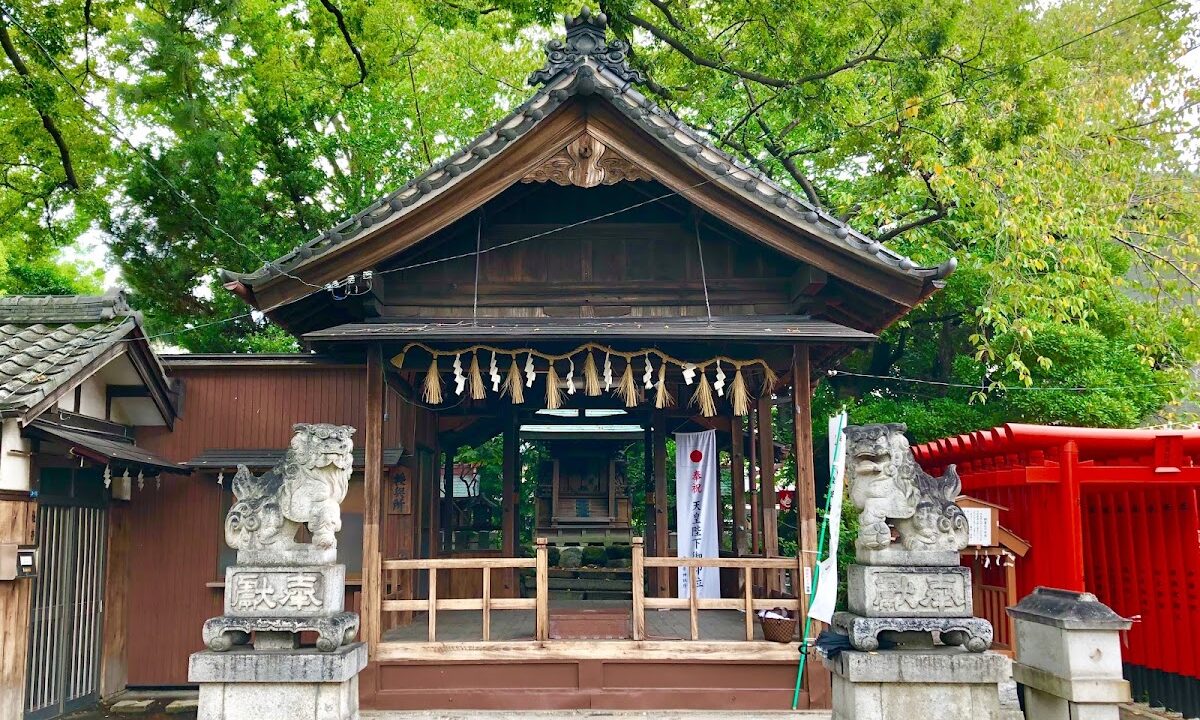
Fukashima Shrine (Kita Ward, Nagoya City, Aichi Prefecture) Complete Guide | History, Deities, and Access Information
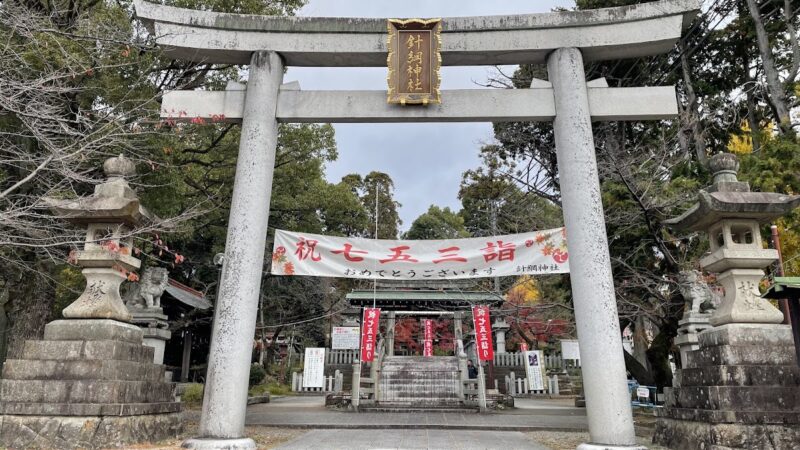
Fukashima Shrine, located in Yanagihara, Kita Ward, Nagoya City, is a historic shrine that existed even before the construction of Nagoya Castle. It was revered by the Tokugawa family, the lords of the Owari Domain, and played an important role as a guardian against evil influences for Nagoya Castle. This article provides a detailed explanation of Fukashima Shrine’s history, enshrined deities, highlights within the grounds, and access information.
Basic Information about Fukashima Shrine
Location: 2-3 Yanagihara, Kita-ku, Nagoya City, Aichi Prefecture
Nearest Station: Approximately 10 minutes on foot from Meijo-Koen Station on the Nagoya Municipal Subway Meijo Line
Main Deity: Tagorihime-no-Mikoto
Shrine Rank: Former Village Shrine
Founded: Before the Keicho era (1596-1614)
Fukashima Shrine is one of the shrines that existed in Nagoyano Village before Nagoya Castle was built in 1610. It is located at the northern end of the Atsuta Plateau (Nagoyano Plateau), below the plateau, and was formerly situated in a location facing the inlet.
History and Origins of Fukashima Shrine
History Before Nagoya Castle
The exact founding date of Fukashima Shrine is not clearly recorded, but it is believed to have already existed during the Keicho era (1596-1614). An old map of Nagoya Village confirms that the current location of the shrine is almost the same as its original position.
Before the construction of Nagoya Castle, this area was a low-lying wetland near the mouth of the Shonai River, influenced by the sea. The name of the shrine, Fukashima, may also originate from the topography that once resembled an island.
Deep Connection with the Owari Domain Lords
During the Keicho era, when Nagoya Castle was built, Fukashima Shrine, located in the northeast (the “demon’s gate”) of Nagoya Castle, received special reverence from Tokugawa Yoshinao (Genkei-ko), the founder of the Owari Domain.
Yoshinao established the Aragami Shrine and Ishigami Shrine as guardian deities of the northeast of Nagoya Castle and enshrined them together within the grounds of Fukashima Shrine. As a result, Fukashima Shrine acquired the characteristics of a guardian deity of the Owari Domain, in addition to being merely a local tutelary shrine.
It continued to be revered by successive lords of the domain, from the second lord Tokugawa Mitsutomo onward, and remained under the domain’s protection throughout the Edo period.
Deities Enshrined and Shrine Structure
Deities Enshrined in the Main Hall
The main hall of Fukashima Shrine enshrines Tagorihime-no-Mikoto. Tagorihime-no-Mikoto is one of the three Munakata goddesses and is known as the goddess of the sea and safe voyages.
The three Munakata goddesses consist of the following three goddesses:
- Tagorihime-no-Mikoto
- Tagitsuhime-no-Mikoto
- Ichikishimahime-no-Mikoto
There are various theories as to why Fukashima Shrine enshrines Tagorihime-no-Mikoto, but all are thought to be related to the fact that she is a deity enshrined at Munakata Shrines and the shrine’s location near the sea.
Four Enshrined Deities
The following four deities are enshrined together at Fukashima Shrine:
1. Inari Shrine (Fukashima Inari Okami)
Matsudaira Fujima, the sixth son of Tokugawa Munekatsu, the eighth lord of the domain, invited the deity from Edo and built a shrine within the Yanagihara Palace in February of the 6th year of the Hōreki era (1756). It is worshipped as a god of business prosperity and abundant harvests.
2. Gozu Tenno Shrine (East Shrine)
Gozu Tenno was widely worshipped as a god who wards off epidemics. Enshrined in the East Shrine, it is believed to bring blessings for health and protection from evil. In Aichi Prefecture, the Gozu Tenno faith, with Tsushima Shrine as its head shrine, is deeply rooted, and the Gozu Tenno Shrine at Fukashima Shrine follows this tradition.
3. Ishi Shrine (West Shrine)
This shrine enshrines Iwatsuchihiko-no-kami and Iwasuhime-no-kami. They are revered as gods of stones and land, and are believed to bring blessings for ground pacification and safety in civil engineering projects.
4. Ara Shrine
This shrine enshrines Ara-jin, worshipped as the god of fire and hearths. It offers blessings for household safety and protection from fire.
The merging of these four shrines makes Fukashima Shrine a comprehensive shrine offering diverse blessings.
Faith as a Benten Shrine
Fukashima Shrine is also known locally as the “Benten Shrine.” Ichikishimahime-no-mikoto is often syncretized with Benzaiten, and Tagorihime-no-mikoto, one of the three Munakata goddesses, is similarly thought to be associated with Benten worship.
Benzaiten is widely worshipped as the goddess of performing arts, learning, and wealth, and was particularly popular among common people during the Edo period. The fact that Fukashima Shrine has been affectionately known as Benzaiten-sama demonstrates its deep connection with the local community.
Highlights of the Shrine Grounds
Layout of the Shrine Buildings
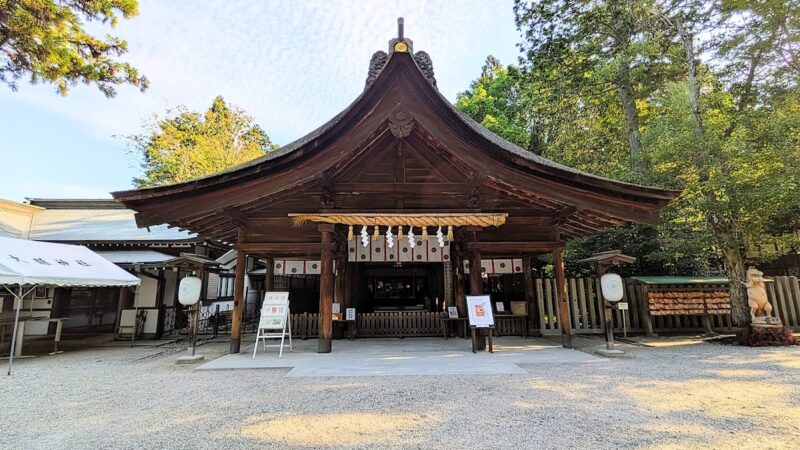
The grounds of Fukashima Shrine are arranged with the main shrine building at the center, surrounded by the East Shrine (Gozu Tenno Shrine) and the West Shrine (Ishi Shrine). The compact yet orderly grounds are well-maintained, maintaining a tranquil atmosphere.
Stone Monument and Historical Records
Within the grounds, there is a stone monument detailing the history of Fukashima Shrine, allowing visitors to learn about the shrine’s origins. Explanations of the various shrines enshrined within are also posted, aiding visitors in understanding the history.
Subsidiary Shrine: Fukashima Inari Okami
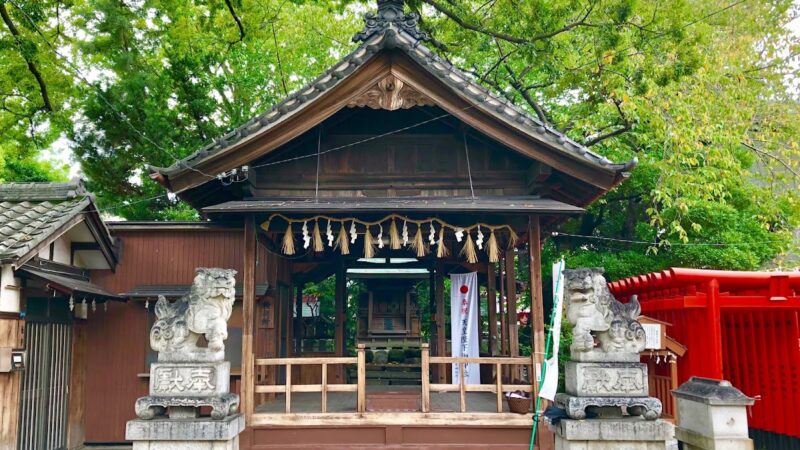
Within the grounds, Fukashima Inari Okami is enshrined as a subsidiary shrine, its vermilion torii gate being particularly striking. Inari worship is popular among people praying for business prosperity, and many worshippers visit the shrine.
Historical Background of the Surrounding Area
History of the Yanagihara Area
The Yanagihara area, where Fukashima Shrine is located, was a district lined with samurai residences during the Edo period. There was also a villa for the feudal lord called Yanagihara Goten, and it was known as a high-status area.
Even today, there are many temples and shrines that evoke a sense of history scattered around, and Munakata Shrine is just a 2-3 minute walk away. A stroll visiting these shrines is recommended for history buffs.
Role as Guardian of Nagoya Castle’s Demon’s Gate
Because Fukashima Shrine is located in the demon’s gate (northeast) of Nagoya Castle, it has played a role as a guardian deity of the castle. In Onmyodo (Japanese esoteric cosmology), the demon’s gate is considered a direction from which evil spirits easily enter, and by placing the shrine here, prayers were offered for the safety of the castle.
Other temples and shrines that ward off evil spirits are also located around Nagoya Castle, and Fukashima Shrine occupies an important position among them.
How to Access Fukashima Shrine
Access by Train
The nearest station is Meijo-Koen Station on the Nagoya Municipal Subway Meijo Line.
- Approximately 10 minutes on foot northeast from Exit 2 of Meijo-Koen Station.
- From Nagoya Station, take the Higashiyama Line to Sakae Station, transfer to the Meijo Line, and get off at Meijo-Koen Station.
It is also within walking distance from Kurokawa Station on the Nagoya Municipal Subway Meijo Line.
- Approximately 12 minutes on foot southeast from Exit 1 of Kurokawa Station.
Access by Bus
Get off at the Yanagihara-dori bus stop (Nagoya Municipal Bus), approximately 3 minutes on foot.
Access by Car
Approximately 5 minutes from the Kurokawa Exit of the Nagoya Expressway Inner Ring Road.
Parking: There is no dedicated parking lot on the shrine grounds; please use nearby coin-operated parking lots.
Detailed Map Information
The exact location of Fukashima Shrine is as follows:
- Address: 2-3 Yanagihara, Kita-ku, Nagoya City, Aichi Prefecture
- Latitude/Longitude: 35.19063231°N, 136.90708457°E
- Map Code: 4 379 426*83
- Elevation: Approximately 5 meters
You can find the exact location by searching for “Fukashima Shrine, Kita-ku, Nagoya City” in your smartphone’s map app.
Etiquette and Manners for Visiting a Shrine
Basic Etiquette for Visiting a Shrine
- Bow before passing through the torii gate: This is a courtesy before entering the sacred area.
- Purify yourself at the water basin: Purify your left hand, right hand, and mouth in that order.
- Bow twice, clap twice, and bow once in front of the main hall: This is a basic Shinto ritual.
- Visit the other shrines enshrined together: If you have time, visit the other shrines within the grounds.
Points to Note When Visiting a Shrine
- Visit the shrine quietly and with respect.
- Photography is permitted, but please be considerate of other visitors.
- If you wish to receive a Goshuin (shrine stamp), it is recommended to check in advance.
Annual Events at Fukashima Shrine
Fukashima Shrine holds various Shinto rituals throughout the year. The main annual events include the following:
Main Festivals
- New Year’s Day Festival (January 1st): Prayers for happiness in the new year
- Setsubun Festival (around February 3rd): A festival to ward off evil and invite good fortune
- Annual Grand Festival (Autumn): The shrine’s most important festival
We recommend checking specific dates and details before your visit.
Benefits of Visiting Fukashima Shrine
Fukashima Shrine enshrines a variety of deities, and is therefore believed to offer various benefits:
Main Benefits
- Safety at Sea and Traffic (Tagorihime-no-Mikoto)
- Business Prosperity and Abundant Harvest (Fukashima Inari Okami)
- Protection from Disease, Protection from Evil, and Prayer for Good Health (Gozu Tenno)
- Groundbreaking Ceremony and Safety in Civil Engineering (Ishi Shrine)
- Protection from Fire and Family Safety (Ara Shrine)
- Improvement in Performing Arts, Academic Achievement, and Wealth (Benten Faith)
Especially due to its history of being revered as a guardian against evil influences from the northeast of Nagoya Castle, it is believed to offer strong benefits in terms of protection from evil and protection from negative directions.
Nearby Tourist Spots
When visiting Fukashima Shrine, we recommend also visiting the nearby historical sites.
Munakata Shrine
This shrine is located a 2-3 minute walk from Fukashima Shrine. This shrine also enshrines the three Munakata goddesses, and many people visit it along with Fukashima Shrine.
Meijo Park
This is a vast park adjacent to Nagoya Castle. It’s perfect for strolling and enjoying the changing seasons. It’s about a 15-minute walk from Fukashima Shrine.
Nagoya Castle
Nagoya Castle is, of course, a symbol of Nagoya. Visiting Nagoya Castle, which Fukashima Shrine protected against evil influences, will give you a deeper understanding of the shrine’s historical significance.
Summary: The Charm of Fukashima Shrine
Fukashima Shrine is a historical shrine located in Yanagihara, Kita-ku, Nagoya City. It existed even before the construction of Nagoya Castle and has a history of being revered by the Tokugawa family, the lords of the Owari domain.
With Tagorihime-no-Mikoto as its main deity, and by enshrining four other shrines—Inari Shrine, Gozu Tenno Shrine, Ishi Shrine, and Kojin Shrine—it has become a comprehensive shrine offering diverse blessings. Known affectionately as “Benten-sama’s Shrine,” it continues to attract many worshippers.
With its important role as a guardian against evil influences from Nagoya Castle, its compact yet orderly grounds, and its convenient location, it’s a recommended spot to visit during your Nagoya sightseeing.
When visiting Kita Ward in Nagoya City, be sure to stop by Fukashima Shrine and experience its history and tranquil atmosphere. A precious space awaits you, where you can escape the hustle and bustle of the city and pray in peace.