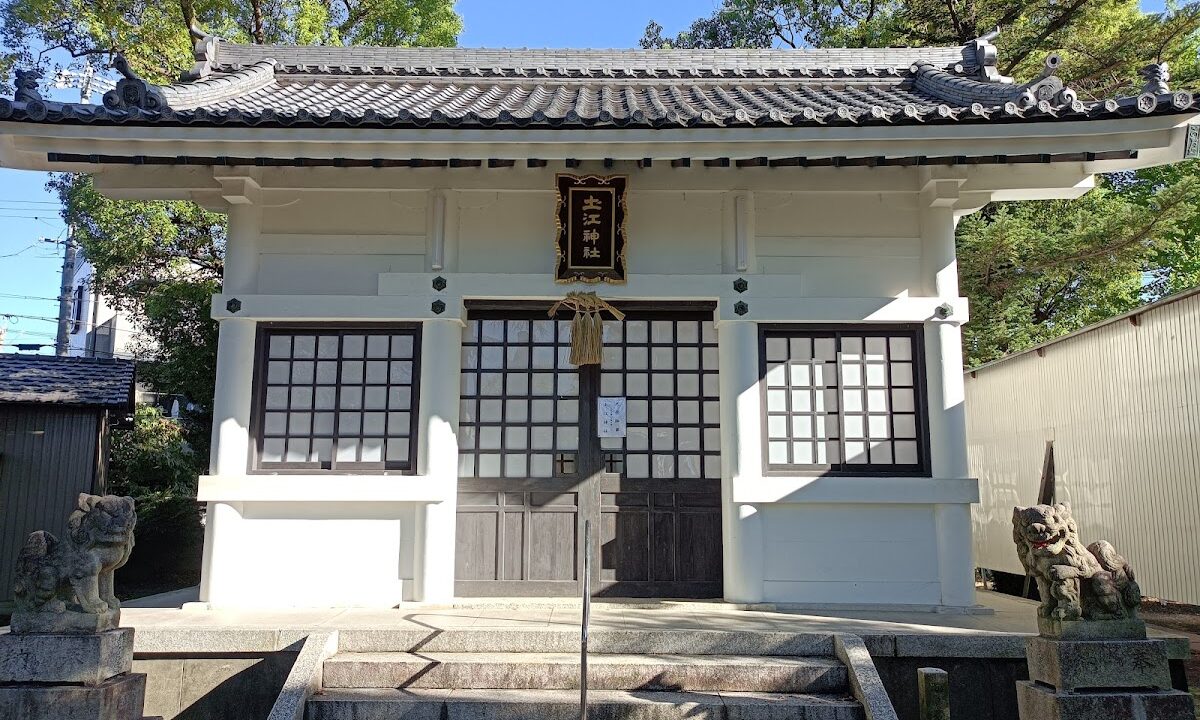
Hijie Shrine (Nakamura Ward, Nagoya City, Aichi Prefecture) Complete Guide | History, Goshuin (Shrine Seal), and Access Information
Hijie Shrine, located in Nakamura Ward, Nagoya City, Aichi Prefecture, is a historical shrine that has been cherished by the local community for centuries. Its unique name, written as “土江” but pronounced “Hijie,” reflects the region’s past topography and environment, making it an important shrine for understanding Nagoya’s history.
This article comprehensively introduces information useful for visiting Hijie Shrine, including its history, the divine virtues of its enshrined deities, goshuin information, detailed access methods, and nearby attractions.
What is Hijie Shrine? | Basic Information
Hijie Shrine is located in Shioike-cho, Nakamura Ward, Nagoya City. It was formerly a village shrine, ranked 12th in the local hierarchy. Currently, its shrine buildings are located within Shioike Park, and it is revered as the local guardian deity.
Basic Information
- Location: 2-6-17 Shioike-cho, Nakamura-ku, Nagoya City, Aichi Prefecture (also written as 2-85)
- Deity Enshrined: Sukunahikona-no-Mikoto
- Former Shrine Rank: Gosha (village shrine)
- Rank: Twelfth Rank
- Annual Festival Date: October 3rd and 4th
- Shrine Emblem: Tortoise shell with hemp leaf
- Nearest Station: Sakae Station, Meitetsu Nagoya Main Line
Origin and Pronunciation of the Name of Hijie Shrine
The name of Hijie Shrine is pronounced “Hijie Jinja”. This unique pronunciation is deeply connected to the history of the region.
Meaning of “Hijie”
“Hijie” means “mud”. In fact, there are records indicating that this shrine was once written as “Doroe Shrine”. This indicates that this area was once a wetland or muddy area, and it is thought that the topographical features were reflected in the shrine’s name.
Three Shrines in Nagoya with “E” in Their Names
There are three shrines in Nagoya City with “E” in their names:
- Tsuchie Shrine (Nakamura Ward) – Originally “Doroe”
- Doroe Shrine (Naka Ward)
- Aburae Shrine (Nakagawa Ward)
All of these shrines have place names related to Nagoya’s low-lying wetlands, and it is presumed that they were deeply connected to the region’s water resources and land characteristics. These three shrines are valuable for understanding Nagoya’s topographical and historical changes.
History of Tsuchie Shrine
Founding and Ancient Records
The founding date of Tsuchie Shrine is not clearly recorded, but it is certain that it has existed since ancient times. It is listed as “Jusanmi Tsuchie Tenjin” in the “Honkoku Jinmeicho” (a list of shrines in this province), indicating that it was already recognized as a shrine of considerable rank during the Heian period. The highest rank of Junior Third Rank indicates the shrine’s high status and speaks to its long history as an important center of local faith.
History as a Village Shrine
Under the Meiji era’s shrine ranking system, Tsuchie Shrine was classified as a village shrine. A village shrine is a shrine revered as the guardian deity of a village (multiple villages), and is ranked higher than a village shrine.
It is said that the former Tsuchie Shrine had a dense forest, and its grounds were larger than they are today. This suggests that before urbanization, Tsuchie Shrine was a sacred area surrounded by abundant nature.
Modern Tsuchie Shrine
The current Tsuchie Shrine is located north of Shioike Park. A shrine name marker stands at the southern entrance of the park, and the shrine blends seamlessly into the community as an integral part of the park. Although the size of the grounds has shrunk due to urbanization, it is still carefully preserved as the local tutelary deity.
Deity Enshrined | The Divine Virtues of Sukunahikona-no-Mikoto
The enshrined deity of Tsuchie Shrine is Sukunahikona-no-Mikoto.
About Sukunahikona-no-Mikoto
Sukunahikona-no-Mikoto is a deity appearing in Japanese mythology, known for his role in nation-building alongside Okuninushi-no-Mikoto. In the Kojiki and Nihon Shoki, he is depicted as a small, highly intelligent god possessing knowledge of medicine, hot springs, and incantations.
Divine Virtues
According to the history of Tsuchie Shrine, Sukunahikona-no-Mikoto “in ancient times, he ruled the land together with Okuninushi-no-Mikoto and established methods for curing illnesses for the people.”
Main Divine Virtues:
- Healing of Illness: As the god of medicine, possessing the power to heal illnesses
- Healthy Longevity: Protecting physical and mental health
- Academic Achievement: Aspect as the god of wisdom
- Industrial Development: Divine virtue as the god of nation-building
- Protection from Evil: Power as the god of protection and exorcism
While there are many shrines throughout Japan dedicated to Sukunahikona-no-Mikoto, this shrine is particularly characterized by its strong emphasis on medicine and health.
Shrine Grounds
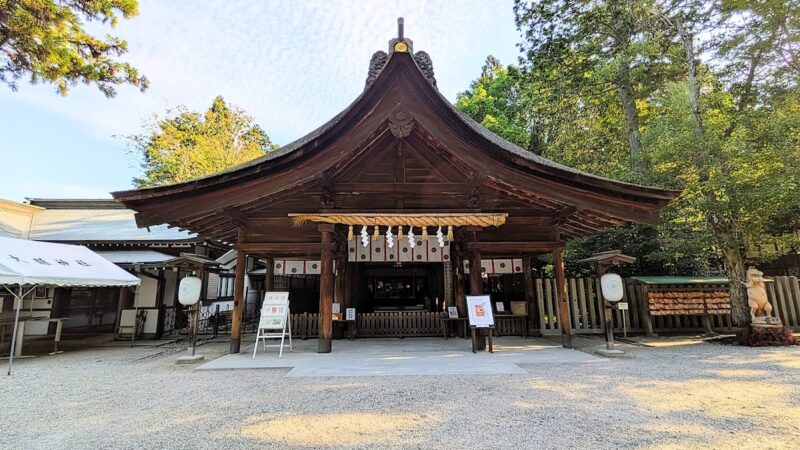
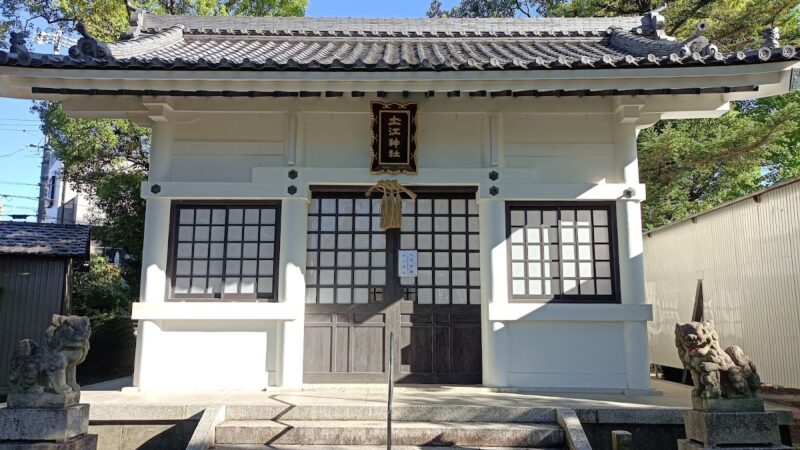
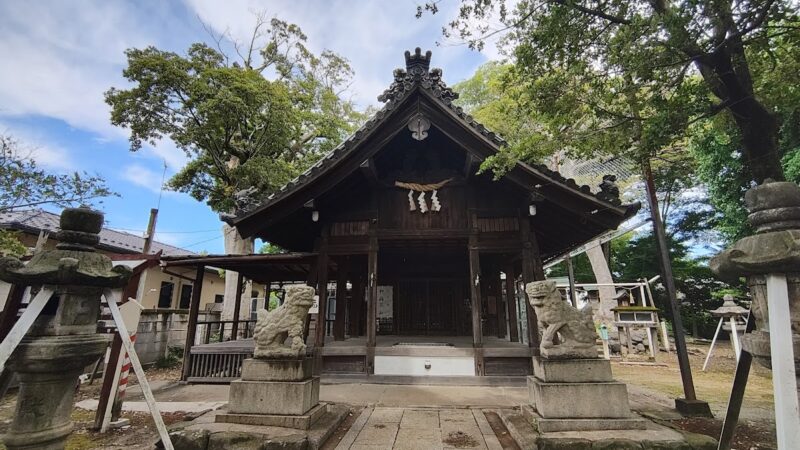
Shrine Building and Grounds Layout
The grounds of Tsuchie Shrine are located on the north side of Shioike Park. Its unique layout, integrated with the park, means that visitors access the shrine through the park.
- Shrine Name Marker: Erected at the south entrance of the park
- Main Shrine: Located on the north side of the park
- Worship Hall: Located in front of the main shrine
The current shrine grounds are compact for an urban shrine, but they are neatly maintained, and it is clear that they are cherished as a place of worship for the local people.
Shrine Emblem: “Tortoise Shell and Hemp Leaf”
The shrine emblem of Tsuchie Shrine is “tortoise shell and hemp leaf.” The tortoise shell symbolizes longevity, and the hemp leaf symbolizes growth and protection against evil; these are auspicious patterns that resonate with the divine virtues of the enshrined deity.
Goshuin (Shrine Seal) Information
Information regarding Goshuin at Tsuchie Shrine is limited, but some visitors may wish to receive one as a memento of their visit.
Regarding the Issuance of Goshuin
Tsuchie Shrine is a relatively small shrine, and the shrine office may not be open all the time. If you wish to receive a Goshuin, it is recommended that you check in advance.
In some shrines within Nagoya City, priests may also serve at neighboring shrines, so please check the notices and information posted on the shrine grounds when visiting.
Regarding Photography
Photography is permitted on the shrine grounds, provided you observe general etiquette. However, please note the following:
- Refrain from photographing inside the main hall
- Be considerate of other worshippers
- Maintain silence
- Avoid entering private property
Access
Access by Train
The nearest station to Tsuchie Shrine is Sakae Station on the Meitetsu Nagoya Main Line.
From Sakae Station on the Meitetsu Nagoya Main Line
- Approximately 5-10 minutes on foot
- Sakae Station is one stop (approximately 2 minutes) from Meitetsu Nagoya Station
- Head north from the station towards Shioike Park
It is also within walking distance (approximately 15-20 minutes) from Nagoya Station, so you can easily visit while sightseeing in Nagoya.
Access by Car
Nagoya Expressway Inner Ring Road
- Approximately 5 minutes from Nishikibashi Exit
- Approximately 7 minutes from Marunouchi Exit
Parking
Please check in advance regarding the availability of dedicated parking. While it is adjacent to Shioike Park, please check the park’s parking regulations. Using nearby coin-operated parking lots is also recommended.
Address and Map
2-6-17 Shioike-cho, Nakamura-ku, Nagoya City, Aichi Prefecture 453-0835
Shioike Park is a good landmark. Please search for “Tsuchie Shrine” or “Shioike Park” on your car navigation system or smartphone map app.
Annual Festivals and Events
Annual Festival (Autumn Festival)
The annual festival of Tsuchie Shrine is held every year on October 3rd and 4th. As a festival for the local guardian deity, it is an important event where local people gather to offer thanks to the gods.
During the annual festival, in addition to Shinto rituals, there may be offerings and other ceremonies by local residents. We recommend checking the details of the festival when you visit.
Other Annual Events
The following are some typical annual events at Shinto shrines:
- Hatsumode (January 1st-3rd)
- Setsubun-sai (Around February 3rd)
- Natsukoshi no Harae (Around June 30th)
- Shichi-Go-San (November)
- Toshikoshi no Harae (December 31st)
We recommend checking directly with Tsuchie Shrine regarding the implementation of these events.
Nearby Shrines and Temples
Several historical shrines and temples are scattered around Tsuchie Shrine.
Major Shrines in Nakamura Ward
Toyokuni Shrine
- A shrine dedicated to Toyotomi Hideyoshi
- Located within Nakamura Park
- Approximately 2km from Tsuchie Shrine
Nakamura Hiyoshi Shrine
- The guardian shrine of Nakamura Ward
- Near the birthplace of Toyotomi Hideyoshi
Susanoo Shrine
- An ancient shrine known for warding off evil
- An important shrine in Nakamura Ward
A Tour of Shrines in Nagoya with “E” in Their Names
As mentioned above, there are three shrines in Nagoya with “E” in their names. Those interested in history and geography might find a “E tour” of these three shrines interesting.
- Tsuchie Shrine (Shioike-cho, Nakamura Ward)
- Doroe Shrine (Nishiki, Naka Ward) – Located in the heart of Nagoya
- Aburae Shrine (Nakagawa Ward) – The guardian shrine of Nakagawa Ward
Visiting these shrines allows you to experience Nagoya’s historical background as a low-lying wetland area.
Points to Note When Visiting Tsuchie Shrine
Shrine Visit Etiquette
Please observe basic shrine visit etiquette:
- Bow at the Torii Gate: Bow before passing through the torii gate.
- Procedure for Purifying Hands: Cleanse your body and mind at the purification fountain.
- Walking Path: Avoid walking in the center.
- Procedure for Worship: Two bows, two claps, one bow.
Recommended Visiting Time
Tsuchie Shrine is located in a residential area, so visiting during the quiet hours of early morning or evening is recommended. Because it is integrated with Shioike Park, it also has a lively atmosphere during the daytime when park users are present.
Seasonal Highlights
- Spring: Cherry blossoms in the park (Shioike Park)
- Summer: Lush greenery of the shrine grounds
- Autumn: Festival season, autumn leaves
- Winter: Serene atmosphere, New Year’s visit
Cultural Properties and Treasures of Tsuchie Shrine
Regarding the specific cultural property designations of Tsuchie Shrine, widely known information is currently limited. However, given its history as a former village shrine, it is possible that old records and offerings are preserved.
Important materials for understanding the historical value of the shrine include:
- Listing in the “Honkoku Jinmeicho” (Register of Shrines in this Province)
- Records concerning the former shrine rank
- Local historical documents
and others.
Connection with the Community
Integration with Shioike Park
A major characteristic of Tsuchie Shrine is its integration with Shioike Park. The arrangement, with the shrine building on the north side of the park and the shrine name marker at the south entrance, demonstrates the close relationship between the shrine and the local community.
The park serves as a place of relaxation for local residents, and the shrine functions as its spiritual center. This form can be considered a model for the role of shrines in modern urban areas.
Role as a Guardian Deity
Tsuchie Shrine is revered as the guardian deity of the Shioike-cho area, attracting the faith of local people. A guardian deity is a god who protects the people living in a particular area, and is the object of prayer for the safety and prosperity of the community.
Points to Note When Visiting Tsuchie Shrine
Shrine Office Opening Hours
As it is a small shrine, the shrine office is not always open. If you wish to receive a Goshuin (shrine stamp) or prayers, it is strongly recommended that you check in advance.
Parking
The availability of a dedicated parking lot is unclear. Using public transportation is convenient, but if you are visiting by car, please use a nearby coin-operated parking lot or check in advance.
Photography Etiquette
Photography is generally permitted on the shrine grounds, but please be considerate of other worshippers and nearby residents. Especially since it is adjacent to a residential area, consideration for privacy is necessary.
Summary | The Charm of Hijie Shrine
Hijie Shrine is a historic shrine located in Nakamura Ward, Nagoya City. Its unique name, “Hijie,” reflects the former topography and is a valuable resource for understanding Nagoya’s history.
Main Features of Hijie Shrine:
- A dignified history as a former village shrine
- Dedicates Sukunahikona-no-Mikoto, the god of medicine
- One of Nagoya’s three shrines with “E” in its name
- Unique layout integrated with Shioike Park
- Convenient access within walking distance of Sakae Station
In the rapidly urbanizing city of Nagoya, Hijie Shrine remains a cherished local guardian shrine. Within its tranquil atmosphere, one can feel the history of faith that has continued since ancient times.
When visiting Nagoya, or strolling around Nakamura Ward, be sure to stop by Hijie Shrine. Why not receive the divine blessings of Sukunahikona-no-Mikoto and pray for physical and mental health and happiness?
—
Summary of Basic Information about Tsuchie Shrine
| Item | Content |
|——|——|
| Location | 2-6-17 Shioike-cho, Nakamura-ku, Nagoya City, Aichi Prefecture |
| Deity Enshrined | Sukunahikona-no-Mikoto |
| Former Shrine Rank | Gosha (Village Shrine) |
| Annual Festival Dates | October 3rd and 4th |
| Nearest Station | Meitetsu Nagoya Main Line, Sakae Station (5-10 minute walk) |
| Shrine Emblem | Tortoise Shell and Hemp Leaf |
| Main Divine Blessings | Healing from Illness, Health and Longevity, Academic Success |
May your visit to Tsuchie Shrine be fruitful.