Complete Guide to Shiroyama Hachimangu Shrine (Aichi Prefecture) | A Historical and Powerful Spot for Romantic Success Located on the Site of Suemori Castle
About Shiroyama Hachimangu Shrine
Shiroyama Hachimangu Shrine is a historic shrine located in Shiroyama-cho, Chikusa-ku, Nagoya City, Aichi Prefecture. It is a historical site situated on the grounds of Suemori Castle, built by Oda Nobuhide, the father of Oda Nobunaga, during the Sengoku period. Castle remains, such as dry moats, still exist today.
The shrine enshrines Emperor Ojin as its main deity and has long been known as a power spot attracting many worshippers from not only Nagoya but also the entire Tokai region, offering blessings for military success, victory in competitions, protection from evil, and matchmaking.
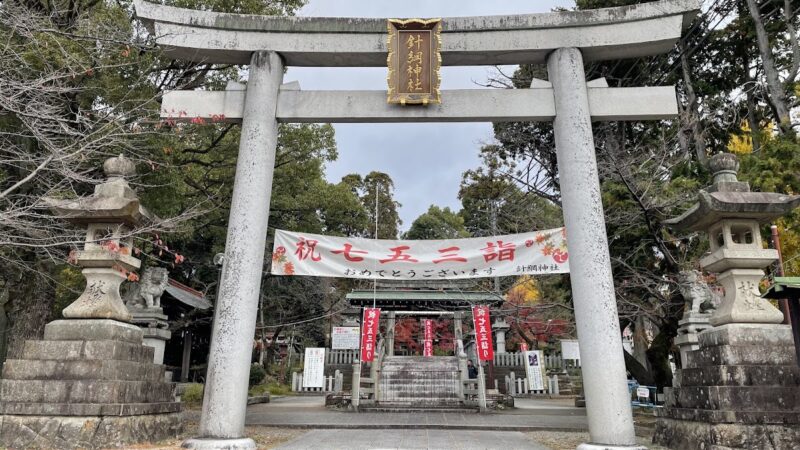
The main hall is located on the side of a small hill, and the view from the first torii gate is magnificent. The opportunity to stroll through the lush grounds while climbing the stairs is also one of its charms.
History of Shiroyama Hachimangu Shrine
Construction of Suemori Castle and the Oda Clan
The site where Shiroyama Hachimangu Shrine stands was originally the site of Suemori Castle, built in 1547 (Tenbun 16) during the Sengoku period by Oda Nobuhide. Oda Nobuhide was a samurai known as the father of Oda Nobunaga, and he was a powerful daimyo in Owari Province who was expanding his influence.
Suemori Castle functioned as a subsidiary castle of Nagoya Castle (the area around present-day Nagoya Castle) and was an important base for strengthening defenses from the east. After Nobuhide’s death, his second son, Oda Nobuyuki (Nobukatsu), inherited the castle, but he lost the succession dispute with his older brother, Oda Nobunaga, and Suemori Castle was abandoned after only about 10 years.
Founding as a Shrine
It is said that Hachimangu Shrine was invited to this site after the abandonment of Suemori Castle, but there are various theories about the exact founding date, and it is not clear. During the Edo period, it was already revered as the local guardian deity and is said to have received the patronage of the Owari Domain.
After the Meiji era, it continued to develop as a guardian deity of the region, and today it is one of the most visited shrines in Nagoya City. It is especially crowded during New Year’s, Shichi-Go-San (a traditional rite of passage for children), and the period of exorcism.
Deities and Benefits
Main Deity
The main deity of Shiroyama Hachimangu Shrine is Emperor Ojin. Emperor Ojin was the 15th Emperor of Japan and is enshrined as Hachiman-sama in Hachiman shrines throughout Japan. He has long been revered by samurai as the god of military fortune and victory.
Main Benefits
Shiroyama Hachimangu Shrine is said to offer the following benefits:
- Exorcism and Purification: Purifying oneself from misfortunes at life’s turning points
- Matchmaking and Romantic Success: The intertwined trees on the shrine grounds are a symbol of matchmaking
- Long-lasting Military Fortune and Good Luck in Competitions: Prayers for success in exams, job hunting, business, etc.
- Good Health and Protection from Illness: Prayers for good health through passing through a ring of reeds
- Family Safety: Peace and prosperity for the family
- Traffic Safety: We also offer blessings for cars
Highlights of the Shrine Grounds
First Torii Gate and Approach
The main approach to Shiroyama Hachimangu Shrine begins at the first torii gate at the bottom of the stairs. The view looking up from in front of the torii gate is breathtaking, and the stone steps surrounded by trees lead to the main shrine. Climbing this approach allows you to shift your mindset from everyday life to a sacred place.
Main Shrine
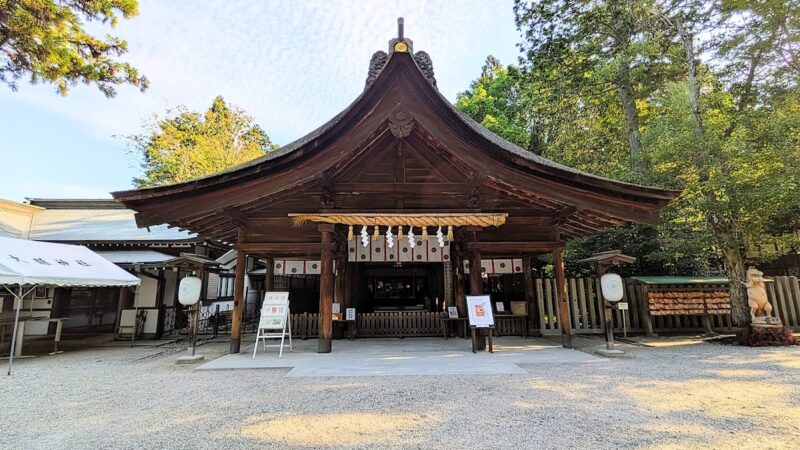
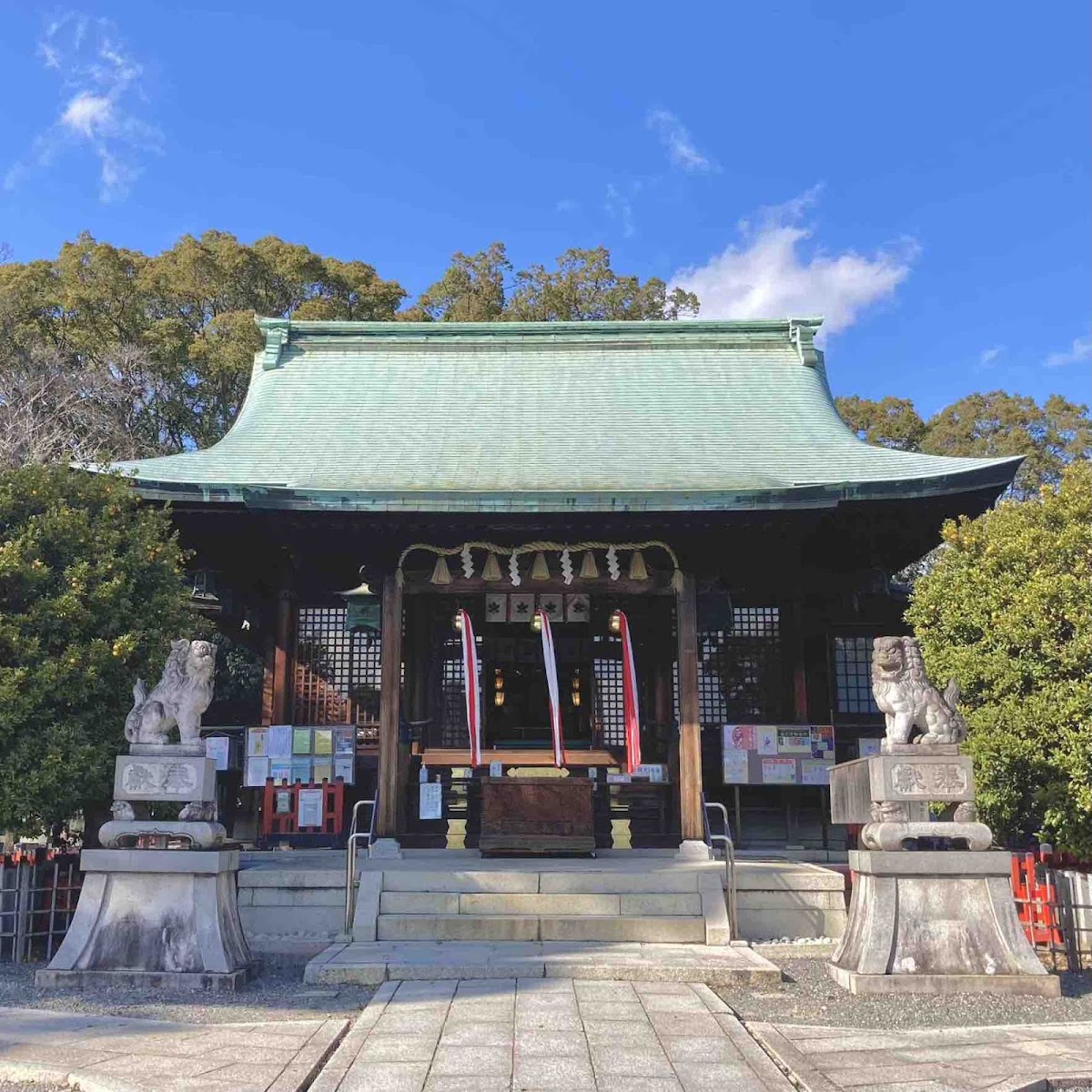
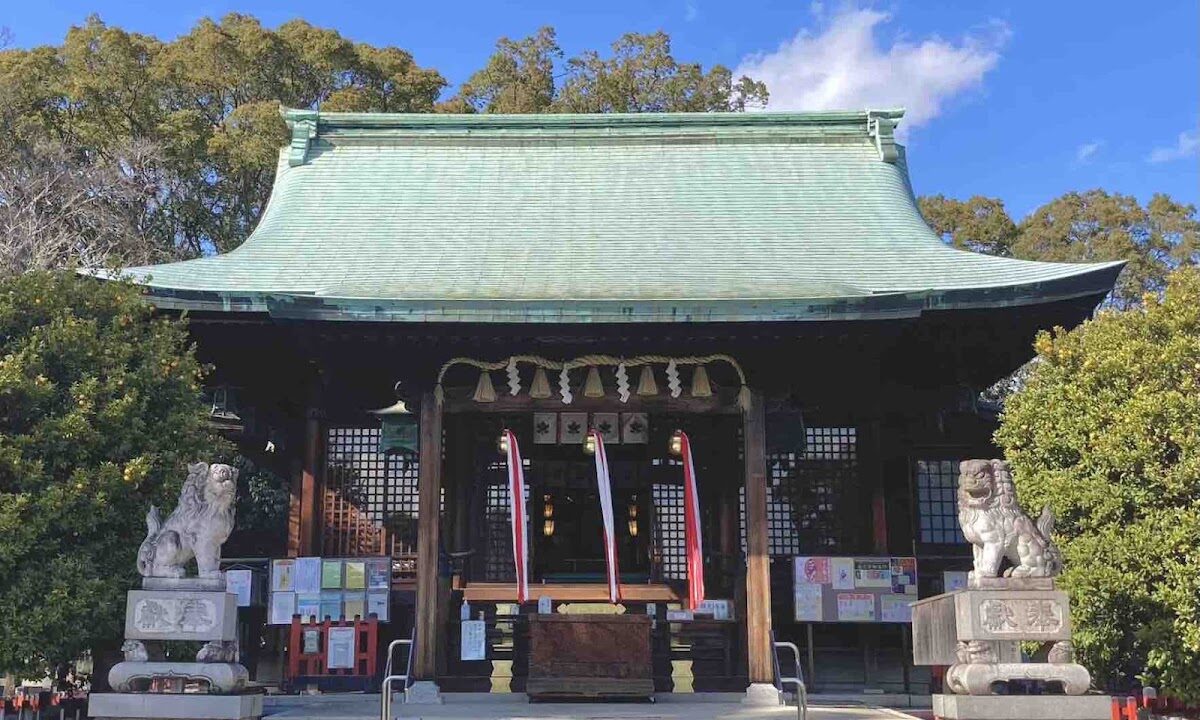
Located on the side of a small hill, the main shrine is built in the traditional style of shrine architecture, creating a solemn atmosphere. Visitors offer prayers and make wishes in front of the main shrine.
Remains of Suemori Castle
The remains of Suemori Castle from the Sengoku period (Warring States period) still exist within the shrine grounds. The dry moat, in particular, retains its original appearance well, making it a must-see for history buffs. Its historical value as a castle site is high, and visiting the shrine allows you to experience the atmosphere of the Sengoku period.
Renriboku (Twin Trees)
Within the shrine grounds is a sacred tree called “Renriboku,” where two trees have grown close together. This Renriboku is considered a symbol of “Hiyoku Renri no Chigiri” (a vow of love and harmony), and is particularly popular among female visitors as a power spot for romantic fulfillment and marital harmony.
It is also known as one of the “Three Shrines of Love,” and it is said that visiting Takamu Shrine, Shiroyama Hachimangu Shrine, and Yamada Tenmangu Shrine will improve your luck in love.
Tea Room “Senshinken”
Within the shrine grounds is the tea room “Senshinken,” where you can experience the traditions of Japanese culture. Tea ceremonies are sometimes held during special events, offering a tranquil space to calm the mind.
Annual Events and Festivals
Chinowa Shinto Ritual
The most famous ritual at Shiroyama Hachimangu Shrine is the “Chinowa Shinto Ritual,” held every July. Passing through a large ring made of reeds three times while chanting “Those who perform the summer purification ritual in the month of Minazuki (June) will have their lives extended by a thousand years” is believed to bring good health, protection from misfortune, and longevity.
While the Chinowa ritual is a traditional ritual performed at shrines throughout Japan, the Chinowa at Shiroyama Hachimangu Shrine is particularly large and impressive, attracting many visitors.
New Year’s Visit
For New Year’s visits, the shrine boasts one of the highest numbers of visitors in Aichi Prefecture. From New Year’s Day to the third day, the shrine grounds are bustling with many people praying for happiness in the new year. Food stalls are set up, creating a festive atmosphere befitting the New Year.
Shichi-Go-San
During the autumn Shichi-Go-San season, the shrine grounds are adorned with children in their finest attire and their families. Shiroyama Hachimangu Shrine accepts Shichi-Go-San prayers, and many families visit to pray for their children’s healthy growth.
Setsubun Festival
The Setsubun Festival is held in February, featuring events such as bean-throwing. Many worshippers receive prayers for protection against evil, praying for safety in the new year.
Prayers, Amulets, and Goshuin (Shrine Seals)
About Prayers
Shiroyama Hachimangu Shrine accepts various prayers, including those for protection against evil, warding off misfortune, family safety, business prosperity, traffic safety, and success in examinations. Prayers do not require advance reservations; same-day registration is available.
Prayer fees (offerings) vary depending on the prayer requested; please contact the shrine directly for details. After the prayer ceremony, amulets and talismans are given out.
Amulets and Items
At the shrine’s office, various amulets, talismans, and votive tablets are available. The amulet for matchmaking, in particular, is popular as it is related to the Renriki tree. Other amulets are available for various purposes, such as protection from evil, academic success, and traffic safety.
Goshuin (Shrine Seals)
Shiroyama Hachimangu Shrine offers Goshuin (shrine seals). Goshuin are popular among many visitors as proof of worship and as a memento of their shrine visits. If you bring your Goshuincho (seal book), it will be carefully inscribed in ink. This shrine is also recommended for those who enjoy collecting Goshuin.
Access and Visiting Information
Location
Address: 2-88 Shiroyama-cho, Chikusa-ku, Nagoya City, Aichi Prefecture 464-0045
Transportation Access
Access by Train
- Approximately 6 minutes on foot from Motoyama Station on the Nagoya Municipal Subway Higashiyama Line
- The nearest exit is Exit 2 of Motoyama Station on the Nagoya Municipal Subway Higashiyama Line and Meijo Line
Access by Car
- Approximately 5 minutes from the Fukiage-Higashi Exit of the Nagoya Expressway
- Free parking available for visitors on the shrine grounds (approximately 30 spaces)
Visiting Hours
While visiting the shrine grounds is generally free, the reception hours for receiving amulets and prayers are generally from 9:00 to 17:00. For detailed hours and changes due to special events, please contact the shrine in advance.
Closed Days
Generally open all year round. However, please note that the reception area and shrine office may be closed at certain times. If you wish to receive prayers or a Goshuin (shrine stamp), we recommend visiting during the daytime.
Precautions for Visiting
- The shrine grounds are a sacred place; please visit in silence.
- Photography is permitted, but please be considerate of other visitors.
- If you bring a pet, please keep it on a leash and observe proper etiquette.
- There are stairs; please watch your step.
Nearby Tourist Attractions
Higashiyama Zoo and Botanical Gardens
Located about 10 minutes by car from Shiroyama Hachimangu Shrine, Higashiyama Zoo and Botanical Gardens is a representative tourist attraction in Nagoya City. Its vast grounds include a zoo, botanical garden, and amusement park, making it popular with families.
Kakuozan Nittaiji Temple
Near Motoyama Station is Kakuozan Nittaiji Temple, known as the only non-denominational temple in Japan that houses Buddhist relics gifted from the Kingdom of Thailand. The approach to the temple is lined with unique cafes and shops, making it a pleasant place to stroll.
Nagoya University
Near Shiroyama Hachimangu Shrine is the Nagoya University campus, offering an academic atmosphere. Some areas within the campus are open to the public.
Chikusa/Imaike Area
A few subway stops away, you can access the bustling Chikusa and Imaike areas. These areas boast numerous restaurants and shopping facilities, making them convenient for meals and shopping after visiting the shrine.
Nagoya/Aichi Hotel Information
For those visiting Shiroyama Hachimangu Shrine from afar, staying at a hotel in Nagoya city or Aichi prefecture is recommended.
Hotels near Nagoya Station
Numerous hotels, from business hotels to luxury hotels, are concentrated around Nagoya Station. With excellent access to Shinkansen and local train lines, it’s an ideal base for sightseeing. Shiroyama Hachimangu Shrine is approximately 15 minutes from Nagoya Station via the Higashiyama Subway Line.
Sakae/Fushimi Area Hotels
The Sakae area, Nagoya’s bustling downtown, also has many hotels. Recommended for those who want to enjoy shopping and dining. Direct subway access to Motoyama Station is available. ### Accommodation in the Motoyama/Kakuozan Area
There are small hotels and guesthouses in the Motoyama and Kakuozan areas, close to Shiroyama Hachimangu Shrine. These are ideal for those seeking a quiet stay in a peaceful residential area.
Summary of Shiroyama Hachimangu Shrine’s Charms
Shiroyama Hachimangu Shrine is a multifaceted shrine with a rich history, being the site of Suemori Castle built by Oda Nobuhide. In modern times, it’s also popular as a power spot for romantic fulfillment.
Despite its convenient location within Nagoya city, its tranquil atmosphere is maintained on a small hill, allowing visitors to escape the hustle and bustle of the city and find peace of mind. There are plenty of sights to see, including the Chino-wa Kuguri (a ritual involving passing through a ring of reeds), the Renriki tree, and the remains of Suemori Castle.
Visitors come from all over the Tokai region and even nationwide, seeking various blessings such as protection from evil, matchmaking, and good fortune in competitions. When sightseeing in Nagoya, be sure to visit Shiroyama Hachimangu Shrine. The shrine grounds, steeped in history and energy, will warmly welcome visitors.
Frequently Asked Questions (Q&A)
What is the address of Shiroyama Hachimangu Shrine?
2-88 Shiroyama-cho, Chikusa-ku, Nagoya City, Aichi Prefecture.
What are the opening hours of Shiroyama Hachimangu Shrine?
While entry to the shrine grounds is generally free, the reception for receiving amulets and prayers is generally from 9:00 to 17:00. Please contact the shrine for details.
What are the closing days of Shiroyama Hachimangu Shrine?
Generally, it is open all year round. However, the opening hours for the amulet and shrine office are limited.
Is there parking?
Yes, there is a free parking lot for visitors (approximately 30 spaces). It can get full during busy times, so using public transportation is recommended.
Can I get a Goshuin (shrine stamp)?
Yes, Goshuin are available at the reception. Please bring your Goshuincho (stamp book).
What is the Three Shrines of Love Pilgrimage?
This is a pilgrimage route visiting three shrines in Nagoya City: Takamu Shrine, Shiroyama Hachimangu Shrine, and Yamada Tenmangu Shrine, believed to bring good fortune in finding love. The intertwined trees at Shiroyama Hachimangu Shrine are known as a symbol of successful love.
When is the Chino-wa Kuguri (passing through the straw ring) ceremony held?
It is held every July as part of the Chino-wa Shinto ritual. Passing through the large straw ring three times is believed to bring good health, protection from illness, and longevity.
What is the nearest station?
The nearest station is Motoyama Station on the Nagoya Municipal Subway Higashiyama Line and Meijo Line, approximately a 6-minute walk from Exit 2.