Ubusuna Shrine (Ichinomiya City, Aichi Prefecture) Complete Guide | History and Goshuin Information of a Shikinaisha (Shrine Listed in the Engishiki)
Ubusuna Shrine, located in Satokomaki, Kisogawa-cho, Ichinomiya City, Aichi Prefecture, is a historical shrine known as a candidate for the Shikinaisha “Ubusuna Shrine” of Haguri District, Owari Province. Its name is deeply connected to the worship of local guardian deities, and it has long been revered as the tutelary deity of the region. This article provides a detailed introduction to Ubusuna Shrine, including its history, highlights within the grounds, goshuin information, and access methods.
Basic Information about Ubusuna Shrine
Location: 83 Sunagoshi, Satokomaki, Kisogawa-cho, Ichinomiya City, Aichi Prefecture 493-0005
Main Deity: Ubusuna-no-Okami (the guardian deity of the local area)
Shrine Rank: Shikinaisha (a shrine listed in the Engishiki), Former Village Shrine
Nearest Station: Approximately 20 minutes on foot from Kuroda Station on the Meitetsu Inuyama Line, approximately 19 minutes on foot from Kisogawa-Tsutsumi Station
Ubusuna Shrine is located near the Kiso River embankment, nestled in a quiet environment surrounded by rural landscapes. It is affectionately known as “Ubusuna-san” by locals and serves as the guardian deity of the region.
Ubusuna Shrine as a Candidate for a Shikinaisha
What is the Shikinaisha “Ubusuna Shrine”?
Ubusuna Shrine is a candidate for the Shikinaisha “Ubusuna Shrine” in Haguri District, Owari Province, which is listed in the “Engishiki Jinmyocho” (a list of shrines compiled during the Heian period). A Shikinaisha is a shrine listed in the Engishiki Jinmyocho, completed in 927 AD, and refers to a prestigious shrine recognized by the imperial court at the time.
While several Shikinaisha existed in Haguri District, Owari Province, the name “Ubusuna Shrine” is rare, and it is noteworthy as a name that directly expresses the belief in “ubusuna” (a local guardian deity).
About Candidate Shrines
A Shikinaisha candidate shrine is a term used when there are multiple candidates for which existing shrine corresponds to an ancient shrine. Ubusuna Shrine is considered a strong candidate for the original “Ubusuna Shrine,” and its name appears in Edo period geographical records such as the *Owari-shi*.
The *Owari-shi* states, “Ubusuna Shrine is located in Shimamura and is now called Gongen. The *Engishiki Jinmyocho* lists Ubusuna Shrine in Haguri District, and the *Honkocho* records it as Junior Third Rank Ubusuna Tenjin,” indicating that it was once revered as a Gongen shrine.
History of Ubusuna Shrine
Founding and the Aoki-no-miya Era
The founding date of Ubusuna Shrine is unclear, but it is believed to have been located in this area since ancient times. In ancient times, the shrine was called “Aoki-no-miya” and was located in the village of Aoki. To the southwest of the current Kiso River Junior High School, the place names Minami-Aoki, Naka-Aoki, and Kita-Aoki remain, and until recently, a small hill said to be the site of Aoki-no-miya existed.
The place name Aoki is said to originate from the fact that this area was once covered with lush green trees, or it may be related to an ancient powerful clan. During the time when it was revered as Aoki-gu Shrine, the shrine played an important role as a spiritual pillar of the community.
Relocation to the Kiso River Embankment
Aoki-gu Shrine was later moved to the Kiso River embankment. The Kiso River is a major river flowing through the Owari region, and has a long history of battling floods. It is believed that the shrine was relocated to a location closer to its current site along with the construction of the embankment.
Relocation in the Second Year of Shoho
In the second year of Shoho (1645), Ubusuna Shrine was relocated to its current location. This relocation in the early Edo period meant the shrine was established in the present-day Satokomaki area, and since then it has been revered as the tutelary deity of the local residents.
After the Meiji Era
In the fifth year of Meiji (1872), Ubusuna Shrine was ranked as a village shrine. Under the Meiji era’s shrine system, it was officially recognized as an important local shrine. Since then, it has continued to be revered by residents as the center of local rituals and as the tutelary deity of the land.
The “Ubusuna” Belief and Ubusuna Shrine
What is an Ubusuna Deity?
An Ubusuna deity (ubusuna-gami) refers to the guardian deity of the land where a person is born. In Japanese Shinto, there is a belief that people are protected and nurtured by the god of their birthplace, and the Ubusuna deity is considered a god who protects an individual throughout their life.
On the other hand, an Ujigami (ujigami) refers to the guardian deity of the land where one currently lives. The difference is that while an Ubusuna deity is the “land god of one’s birthplace,” an Ujigami is the “land god of the place where one currently lives.”
The Meaning of the Shrine Name Ubusuna
The name of Ubusuna Shrine, “Ubusuna,” has the same pronunciation as “Ubusuna.” This is an extremely rare name for a shrine, and it is noteworthy as a name that directly expresses the belief in tutelary deities.
Interestingly, among the shrines listed in the Engishiki Jinmyocho (a list of shrines compiled in the Heian period), this Ubusuna Shrine (or a candidate for it) is said to be the only one with the reading “Ubusuna.” This suggests that this shrine has held a special position as a center of tutelary deity belief since ancient times.
Local tutelary deity belief
Ubusuna Shrine, as the tutelary deity of the Satokomaki district of Kisogawa Town, has been deeply involved in important milestones in the lives of local residents. It is visited during important rites of passage such as the first shrine visit for a newborn, Shichi-Go-San (a traditional rite of passage for children), coming-of-age ceremonies, and weddings, and serves as a spiritual pillar for the people of the region.
Highlights of the Shrine Grounds
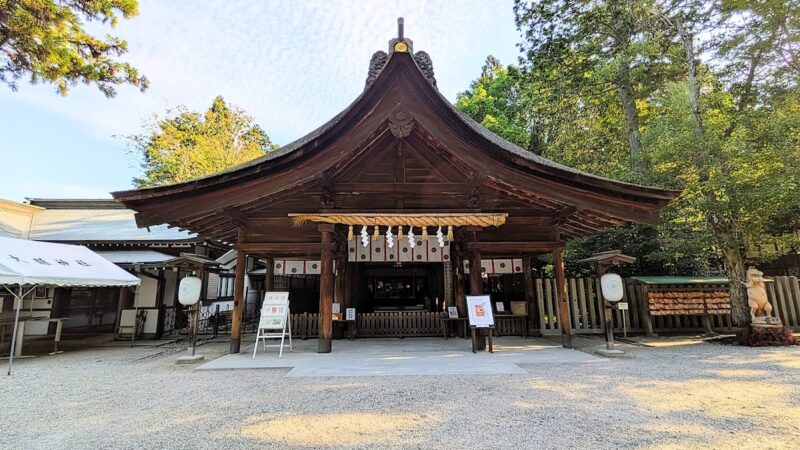
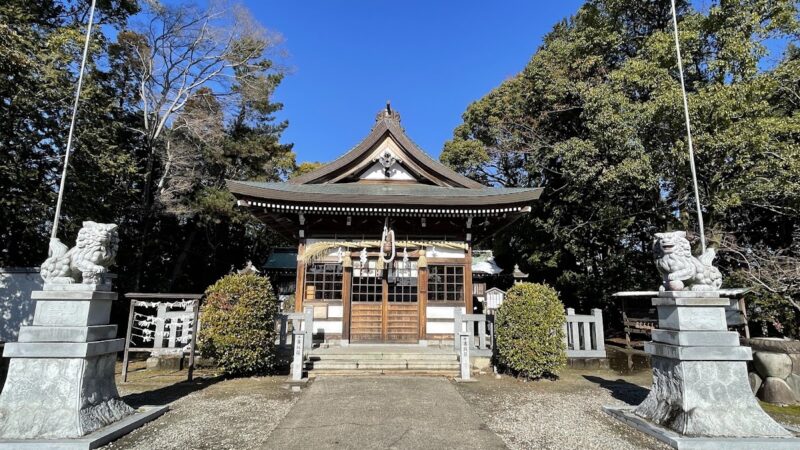
Main Hall and Worship Hall
The main hall of Ubusuna Shrine is built in the traditional style of shrine architecture. Since its relocation in Shoho 2 (1645), it has been maintained as the center of local faith, undergoing several repairs along the way. The main hall is a place where worshippers offer prayers, welcoming many visitors daily.
Atmosphere of the Shrine Grounds
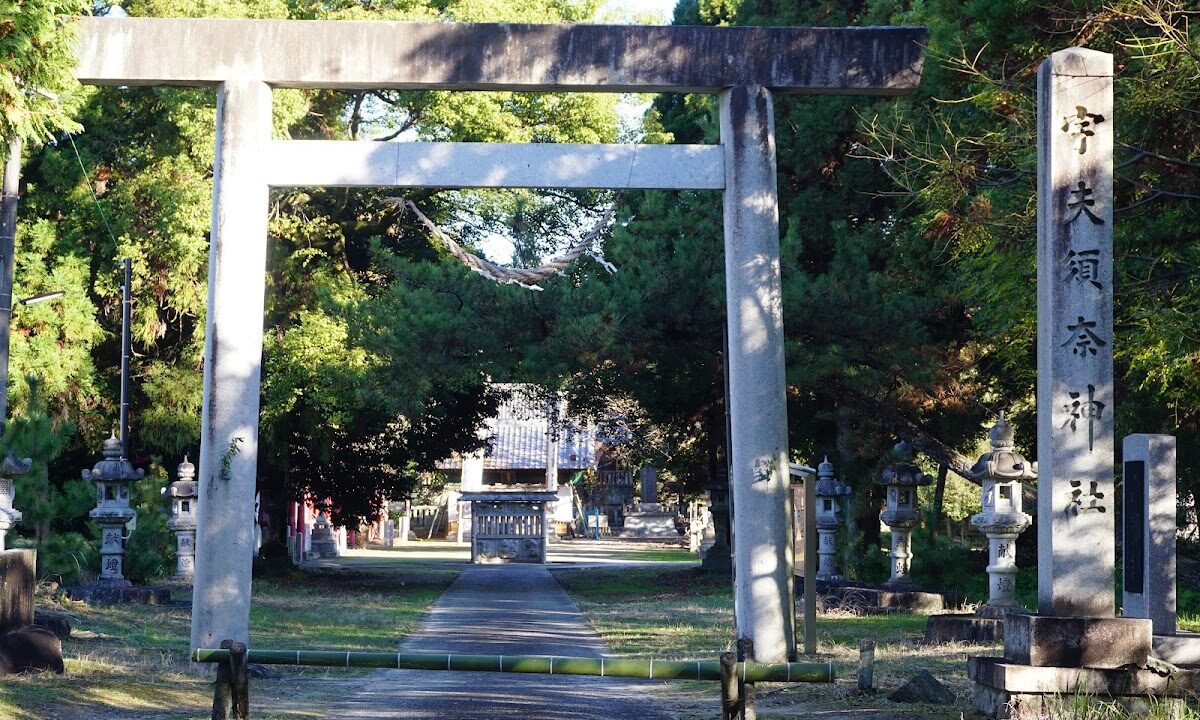
The shrine grounds are enveloped in a quiet and peaceful atmosphere. Surrounded by rural landscapes and close to the Kiso River embankment, it stands in a rich natural environment. Ancient trees can be seen within the grounds, creating a sacred space that evokes a long history.
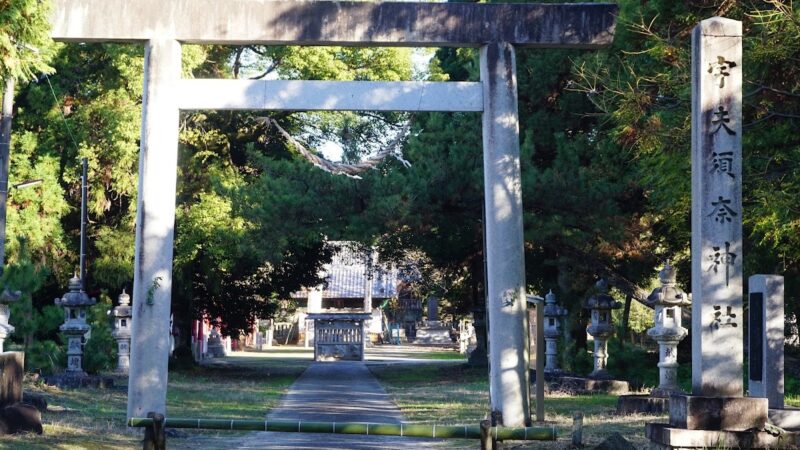
Shrine Name Marker and Torii Gate
At the entrance to the shrine grounds stands a shrine name marker inscribed with the words “Ubusuna Shrine.” Passing through the torii gate, the path leads to the main hall, guiding worshippers into the sacred realm.
Goshuin (Shrine Seal) Information
About the Issuance of Goshuin
Ubusuna Shrine offers goshuin (shrine seals). Goshuin are popular among many worshippers as a memento of their visit and as proof of their faith. An increasing number of people visit as part of a goshuin pilgrimage visiting shrines throughout Aichi Prefecture.
Features of the Goshuin (Shrine Seal)
The goshuin of Ubusuna Shrine features the shrine’s name written in ink and stamped with the shrine’s seal. As a goshuin reflecting its status as a Shikinaisha (a shrine listed in the Engishiki, an ancient Japanese legal text), it is attracting attention from goshuin collectors.
Issuance Hours and Precautions
If you wish to receive a goshuin, it is recommended to contact the shrine in advance. As it is a small shrine, the shrine office may not be open all the time. When visiting, it is important to show respect to the shrine.
Access Method
Access by Train
Using the Meitetsu Inuyama Line:
- Get off at Kuroda Station, approximately 20 minutes on foot
- Get off at Kisogawa-Tsutsumi Station, approximately 19 minutes on foot
Kuroda Station is easily accessible from both Nagoya and Gifu. The route from the station to the shrine passes through residential and rural areas.
Access by Car
From Nagoya:
- Head north on National Route 22 towards Kisogawa Town.
- Approximately 15 minutes from Ichinomiya city center.
From Gifu:
- Head south on National Route 22 towards Kisogawa Town.
Regarding parking, there may be spaces for visitors on or around the shrine grounds, but it is recommended to check before visiting.
Landmarks in the Area
Ubusuna Shrine is located southwest of Kisogawa Junior High School, near the Kisogawa River embankment. The surrounding area has place names such as Minami-Aoki, Naka-Aoki, and Kita-Aoki, which can be used as landmarks.
Annual Events and Festivals
Annual Festival
Ubusuna Shrine holds various festivals throughout the year. The annual festival is the most important festival for the shrine, where local residents gather to express gratitude to the gods and pray for the prosperity of the community.
Seasonal Festivals
Seasonal festivals such as New Year’s visits, Setsubun festivals, summer festivals, and autumn harvest festivals are held, serving as a place to strengthen community bonds. Many families visit the shrine, especially during the times of a baby’s first shrine visit and Shichi-Go-San (a traditional rite of passage for children).
Nearby Shrines and Temples
Temples and Shrines around Kisogawa Town
Kisogawa Town has many other historical temples and shrines. When visiting Ubusuna Shrine, visiting the surrounding shrines and temples will allow you to better understand the history and depth of faith in this region.
Shikinaisha Shrines in Ichinomiya City
Ichinomiya City has many Shikinaisha shrines, including Masumida Shrine. For those who enjoy visiting Shikinaisha shrines, Ubusuna Shrine will be an important place to visit.
Ubusuna Shrine and the Local Community
As the Local Guardian Deity
Ubusuna Shrine is the guardian deity of the Satokomaki district and is closely intertwined with the lives of the local residents. It continues to play an important role as a place to pray for the safety of the community, a bountiful harvest, and the well-being of families.
Center of the Community
Shrines are not merely religious institutions; they also function as the center of the local community. Through festivals and cleaning activities, they serve as a place for local residents to interact and deepen community bonds.
Passing on to the Next Generation
The long-standing traditions of Ubusuna Shrine are carefully preserved by the local people and passed down to the next generation. Children’s participation in festivals fosters a love for their hometown and an understanding of traditional culture.
Manners and Etiquette for Visiting a Shrine
Basic Worship Etiquette
When visiting a shrine, please observe the following basic etiquette:
- Bow before passing through the torii gate.
- Avoid walking in the center of the path (the center is the path of the gods).
- Cleanse your hands and mouth at the purification fountain.
- Bow twice, clap twice, and bow once in front of the main hall.
Photography
Photography is generally permitted on the shrine grounds, but you should refrain from taking pictures inside the main hall or in sacred areas. Also, please be considerate of other visitors.
Maintaining Silence
Shrines are sacred places. It is important to worship quietly without speaking loudly or making noise. Put your smartphone on silent mode and remain quiet on the shrine grounds.
Cultural Value of Ubusuna Shrine
Importance in the Study of Shikinaisha Shrines
Ubusuna Shrine holds an important position in the study of the Engishiki Jinmyocho (a list of shrines compiled in the Heian period). As the proposed location of “Ubusuna Shrine,” it is a valuable resource for understanding the distribution of shrines and forms of worship in ancient Haguri County.
Example of Ubusuna-gami Worship
As a rare shrine bearing the name of Ubusuna-gami (guardian deity of one’s birthplace), it has attracted attention in the study of Japanese folk beliefs. It is a shrine of high academic value as an example demonstrating how important the concept of Ubusuna was from ancient times.
Position in Local History
The history of the shrine’s relocation from Aoki-miya to its current location is deeply intertwined with the history of flood control on the Kiso River and the history of regional development. By tracing the history of Ubusuna Shrine, one can understand the changes in this region.
Visitor Feedback
Visitor Impressions
Many visitors to Ubusuna Shrine have commented on its “quiet and peaceful atmosphere,” “historical feel,” and “warm, community-rooted shrine.” Its appeal lies in the coexistence of its historical value as a candidate for a Shikinaisha (shrine listed in the Engishiki) and its approachable nature as a local tutelary shrine.
Visitors on a Pilgrimage to Collect Goshuin (Shrine Stamps)
The number of visitors coming to Ubusuna Shrine as part of a pilgrimage to collect Goshuin from shrines throughout Aichi Prefecture is increasing. Many are interested in its status as a Shikinaisha (shrine listed in the Engishiki) and its unique form of worship as a local guardian deity.
Summary
Ubusuna Shrine is a historical shrine located in Kisogawa-cho, Ichinomiya City, Aichi Prefecture. As a candidate for the Shikinaisha “Ubusuna Shrine” in Haguri District, Owari Province, and as a shrine embodying the worship of local guardian deities, it holds significant academic and religious value.
Originating as Aoki-no-miya, it was moved to its current location in 1645 (Shoho 2) and has since been revered by residents as the local tutelary deity. The shrine grounds, nestled in a quiet rural area, offer peace of mind to visitors.
Why not visit Ubusuna Shrine as part of a pilgrimage to Shikinaisha, a Goshuin collection, or a historical exploration of the region? By experiencing the deeply rooted faith of this local guardian deity, you can feel the essence of Japanese shrine worship.
Easily accessible from Kuroda Station and Kisogawa-Tsutsumi Station on the Meitetsu Inuyama Line, it’s conveniently located for inclusion in a shrine pilgrimage in Aichi Prefecture. When visiting, we recommend showing respect to the shrine and offering your prayers quietly and with a sincere heart.
Ubusuna Shrine is a valuable shrine that preserves the tradition of Japanese shrine worship that has continued since ancient times. By experiencing its history and faith, your understanding of Japanese culture will deepen.