The Complete Guide to Henjoin Temples: A Thorough Explanation of Famous Temples Nationwide, from History to Visiting Information
There are several temples throughout Japan that bear the name Henjoin. Each has its own unique history and beliefs, and continues to engage in activities rooted in its local community. This article provides a comprehensive explanation of the major Henjoin temples, including their history, principal deities, annual events, visiting procedures, and access information.
What is Henjoin?: The Origin of the Name and its Relationship to Shingon Buddhism
“Henjo” originates from “Henjo Kongo,” another name for Dainichi Nyorai, the fundamental Buddha in Esoteric Buddhism. This name means “to shine everywhere,” representing the light of Dainichi Nyorai’s wisdom illuminating the entire world. Therefore, many temples bearing the name Henjoin belong to the Shingon sect and transmit the teachings of Kobo Daishi Kukai.
In Shingon Buddhism, the foundation lies in esoteric Buddhist thought centered on Dainichi Nyorai (Vairocana Buddha), and the name Henjoin itself is an important element that indicates the religious identity of the temple. Henjoin temples throughout Japan have played a role in preserving and passing down the teachings of Kobo Daishi in their respective regions.
Kyoto Prefecture, Unryuzan Henjoin (Ujitawara Town): An ancient temple associated with Tokugawa Ieyasu
History and Origin
Located in Ujitawara Town, Tsuzuki District, Kyoto Prefecture, Unryuzan Henjoin is a temple of the Koyasan Shingon sect and has walked hand in hand with the history of Ujitawara, a town known for its tea. This temple is particularly noteworthy for the historical episode that Tokugawa Ieyasu and his entourage stopped and rested here during the “Shogun’s Crossing of Iga” after the Honnoji Incident.
In 1582, when Oda Nobunaga was killed at Honnoji Temple due to Akechi Mitsuhide’s rebellion, Tokugawa Ieyasu, who was in Sakai, narrowly escaped with his life and returned to Mikawa via Iga. It is said that along the way, he stopped at Henjo-in Temple in Ujitawara and rested at a spot that still remains on the temple grounds, known as “Lord Ieyasu’s Sitting Stone.” This historical fact illustrates the important position Henjo-in Temple held from the Sengoku period onward.
Temple Grounds and Highlights
The grounds of Unryuzan Henjo-in Temple are known for being adorned with flowers throughout the seasons. Cherry blossoms in spring, hydrangeas in early summer, and autumn leaves in fall—the temple grounds, displaying different expressions with each season, soothe the hearts of visitors. In the main hall, Fudo Myoo is enshrined as the principal deity, and esoteric Buddhist rituals such as Goma prayers are performed.
The “Stone Where Lord Ieyasu Sit” is preserved as an important historical site within the temple grounds, making it a must-see spot for history buffs and visitors interested in Tokugawa Ieyasu.
About the Branch Temple, Shogakuin
Unryuzan Henjoin has a branch temple, “Kaiun Fudōson Shogakuin,” located on the banks of the Uji River. This temple also enshrines Fudō Myōō as its principal deity and attracts worshippers as a sacred site for praying for good fortune. Its location overlooking the clear waters of the Uji River provides an ideal environment for worshippers seeking purification of mind and body.
Annual Events
Unryuzan Henjoin holds various annual events in accordance with the traditions of the Shingon sect. In particular, a monthly memorial service is held on the 21st of each month, the anniversary of Kōbō Daishi’s death, attracting many believers. Furthermore, a variety of events are held throughout the year, including New Year’s Day visits, Setsubun festivals, spring and autumn equinox services, and Obon memorial services.
Access and Visiting Information
Location: Ujitawara-cho, Tsuzuki-gun, Kyoto Prefecture
Transportation Access: Take the Keihan Uji Bus towards Ujitawara from Keihan Uji Station or Kintetsu Shin-Tanabe Station
Visiting Hours: From 9:00 AM to around 5:00 PM (may vary depending on events)
Parking: Available
Aichi Prefecture – Kobosan Henjoin Temple (Chiryu City): The First Temple of the Three Kobo Pilgrimage Sites of Mikawa
The Legend of the Looking-Back Kobo Daishi
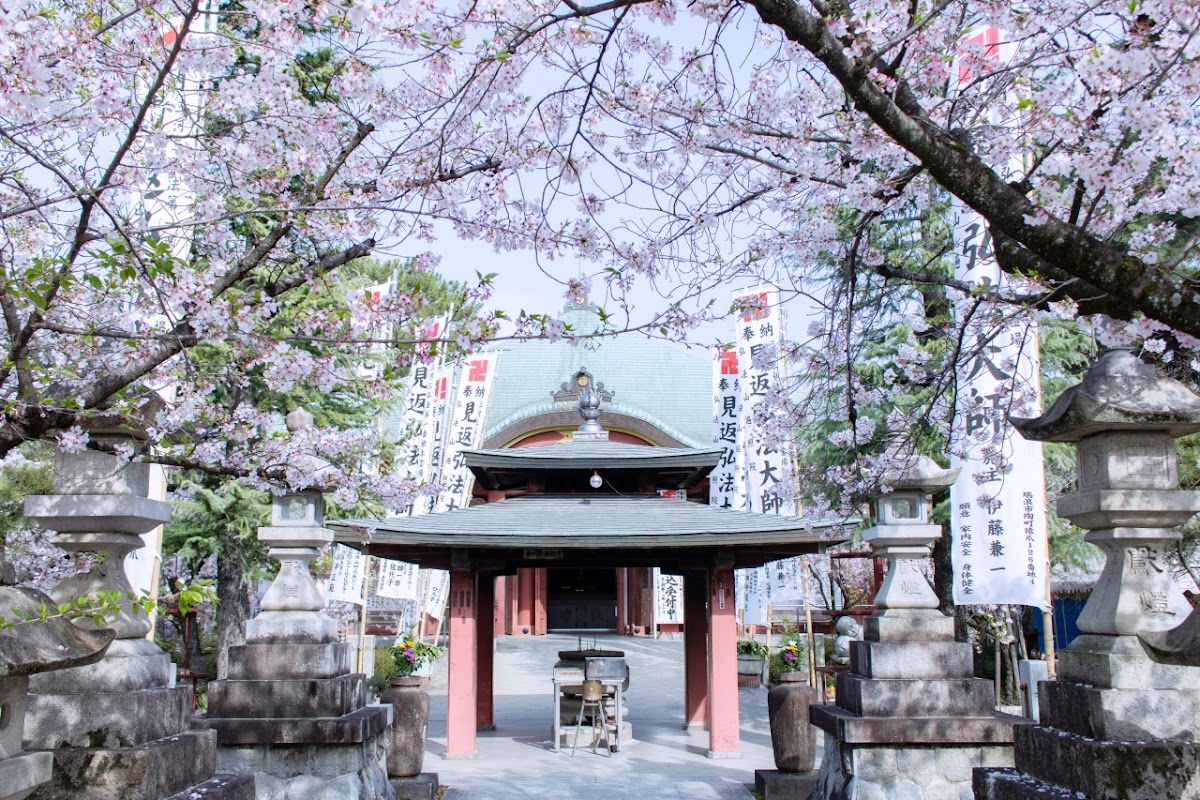
Kobosan Henjoin Temple in Chiryu City, Aichi Prefecture, is widely known as the first temple of the Three Kobo Pilgrimage Sites of Mikawa. The most distinctive feature of this temple is its principal image, known as the “Looking-Back Kobo Daishi.”
According to legend, one of the three self-portraits carved by Kobo Daishi Kukai himself is enshrined at this Henjoin Temple. The name “Mikaeri” (meaning “looking back”) is said to originate from the image of Kobo Daishi looking back and watching over people as he departed on his journey. His compassionate expression has attracted the faith of many worshippers.
Mikawa Three Kobo Pilgrimage
The Mikawa Three Kobo Pilgrimage consists of Henjo-in Temple (Chiryu City) as the first temple, Saifuku-ji Temple in Hitotsugi-cho, Kariya City as the second temple, and Mitsuzo-in Temple in Ichiriyama-cho, Kariya City as the third temple. This pilgrimage to these three temples is an important part of the Mikawa region’s religious culture, and the area is particularly known for its deep devotion to Kobo Daishi.
Monthly Festival on the 21st
At Henjo-in Temple in Chiryu, a grand festival is held on the 21st of each month, the anniversary of Kobo Daishi’s death. On this day, numerous stalls line the approach to the temple, and devout men and women from both within and outside Aichi Prefecture visit, creating a lively atmosphere. Goma prayers and other religious services are held, and worshippers offer prayers seeking the protection of Kobo Daishi.
Annual Events and Prayers
At Kobosan Henjoin Temple, a variety of events are held throughout the year, including the first Goma prayer of the New Year, Setsubun (bean-throwing festival), spring and autumn equinox services, Kobo Daishi’s birthday celebration (June 15th), the Obon (Buddhist festival) service for hungry ghosts, and the autumn grand festival. Individual prayers for protection from evil, family safety, business prosperity, recovery from illness, and traffic safety are also accepted at any time.
Access and Visiting Information
Location: Chiryu City, Aichi Prefecture
Transportation Access: Within walking distance from Chiryu Station on the Meitetsu Nagoya Main Line
Visiting Hours: From 8:00 AM to approximately 5:00 PM
Prayer Reception: From 9:00 AM to approximately 4:00 PM
Parking: Available (Public transportation is recommended as it can get crowded on festival days)
Tokyo – Henjo-in Temple (Asakusa): A branch temple of Senso-ji Temple
History from the Azuchi-Momoyama Period
Henjo-in Temple, located in Asakusa 6-chome, Taito-ku, Tokyo, has a long history as one of the branch temples of Senso-ji Temple. While its exact founding date is unclear, records indicate it was restored in 1598 (Keicho 3) during the Azuchi-Momoyama period by Junkei Hoin.
From Anrakuin to Henjoin
Initially known as “Anrakuin,” it served as a crematorium for the abbots of Senso-ji Temple and its parishioners until around the Kanbun era (1661-1673). This is an important historical fact demonstrating the central role that Edo temples played in funeral rites during this period.
In 1762 (Horeki 12), it was renamed “Henjoin,” and under the 17th abbot, Shojun (who passed away in 1789), it underwent significant development. Shojun was selected as a prayer monk for the Tokugawa family mausoleum on Momijiyama within Edo Castle, and this honor established Henjoin’s status as a highly prestigious temple among the Senso-ji temples.
Relationship with Senso-ji Temple
As a branch temple of Senso-ji Temple, Henjoin played an important role in supporting the religious activities of its head temple, Senso-ji. Located in Asakusa, the heart of Edo/Tokyo, it continues to support the faith of the local people.
Access Information
Location: 6-chome, Asakusa, Taito-ku, Tokyo
Transportation Access: Walking distance from Minowa Station on the Tokyo Metro Hibiya Line, or by Toei Bus
Nearest Station: Within walking distance from Asakusa Station on the Tsukuba Express
Kanagawa Prefecture – Mitsugonzan Henjoin Fudoji Temple (Yokohama City)
Shingon Buddhist Temple in Yokohama
Henjoin Temple, located in Kanagawa-ku, Yokohama City, Kanagawa Prefecture, is a Shingon Buddhist temple of the Koyasan sect, officially known as Mitsugonzan Fudoji Henjoin. Its mountain name is Mitsugonzan, its temple name is Fudoji, and Henjoin is its temple name.
Founding and History
It is said to have been founded in 1458 (Choroku 2) by Yuto Hoin. Established in the mid-Muromachi period, it has developed as a center of Shingon Buddhist faith in the Yokohama area. The current main hall was completed on May 3, 1956, by the 41st head priest, Hōjun, with a dedication ceremony held then. The guest hall and priest’s quarters were completed in November 1971.
Characteristics of the Temple Grounds
The temple grounds have a tranquil atmosphere and are known for their excellent sunlight. Esoteric Buddhism, centered on the principal deity Fudo Myoo, is preserved here, and rituals such as Goma prayers are regularly performed. A cemetery is also located on the premises, and the temple serves as a family temple for the local community.
Access and Visiting Information
Location: Kanagawa Ward, Yokohama City, Kanagawa Prefecture
Transportation Access: Walking distance or bus ride from any station on the Keikyu Line or JR Line
Visiting Hours: From 9:00 AM to around 5:00 PM
Saitama Prefecture – Nichijozan Shuzenji Henjoin Temple
History from the Muromachi Period
Henjoin Temple in Saitama Prefecture, officially known as Nichijozan Shuzenji Henjoin, is said to have been founded in 1394 (Oei 1). Established in the early Muromachi period, it is an ancient temple with a history of over 600 years.
Principal Image: Daisho Fudo Myoo
The principal image of Henjoin Temple is Daisho Fudo Myoo (Great Holy Fudo Myoo). Fudo Myoo is an important deity in Esoteric Buddhism, and is said to “transform into a wrathful form to save sentient beings whose sins are deep and difficult to enlighten.” This temple is deeply revered as a Buddha that grants wishes, wards off disasters, and brings wealth, and many worshippers offer prayers with various wishes.
Annual Events
At Henjo-in Temple in Saitama Prefecture, annual events are held in accordance with the traditions of the Shingon sect. Seasonal services such as the first Fudo ceremony of the New Year, bean-throwing ceremonies at Setsubun, spring and autumn equinox services, and Obon memorial services are held together with the local community.
Access Information
Location: Saitama Prefecture (See official information for details)
Visiting Hours: From 9:00 AM to around 5:00 PM
Ehime Prefecture – Yakuyoke Daishi Henjo-in Temple (Kikuma-cho, Imabari City)
As a Sacred Site for Warding Off Evil
Henjo-in Temple, located in Kikuma-cho, Imabari City, Ehime Prefecture, is a sacred site for warding off evil, widely known as “Yakuyoke Daishi” (the Great Master of Evil). In the Shikoku region, this temple is highly revered as a renowned place for prayers against misfortune, attracting many worshippers from both within and outside the prefecture, especially during the Setsubun (bean-throwing festival) season.
Exorcism Festival (Setsubun Festival)
The “Exorcism Festival,” held annually on Setsubun in February, is the most important annual event at Henjo-in Temple. On this day, many people who have reached their unlucky year visit to pray for protection against misfortune.
A unique custom involves changing into straw sandals at the entrance of the temple gate before praying, and then removing these sandals and burning them in the sacred fire during the Goma ritual. This belief in burning away misfortune along with the sandals is an interesting example of the fusion of local folk beliefs and Buddhism.
Kobo Daishi Faith
Shikoku is a land associated with Kobo Daishi Kukai, and the worship of the Great Master, including the Shikoku 88 Temple Pilgrimage, is deeply rooted here. Henjo-in Temple in Imabari City also inherits this traditional faith in Kobo Daishi and attracts people’s devotion as the “Yakuyoke Daishi” (Great Master who wards off evil).
Access and Visiting Information
Location: Kikuma-cho, Imabari City, Ehime Prefecture
Transportation Access: Walking or taxi from Kikuma Station on the JR Yosan Line
Visiting Hours: From 8:00 AM to around 5:00 PM
Yakuyoke Grand Festival: Every year on February 3rd (Setsubun)
How to Visit and Manners at Henjo-in Temple
Basic Visiting Etiquette
This section introduces basic etiquette when visiting Henjo-in Temple, a Shingon Buddhist temple.
- A Bow at the Temple Gate: Before entering the temple grounds, bow at the temple gate to compose yourself.
- Purification at the Water Basin: Purify your hands and mouth at the water basin.
- Worship at the Main Hall: Join your hands in prayer in front of the main hall, bow, and then offer your donation.
- How to Chant the Mantra: If Fudo Myoo is the principal deity, chant “Noumaku Sanmanda Bazara Dan Senda Makaroshada Sowataya Untarata Kanman.”
- Joining Hands in Prayer and Prostration: Join your hands deeply in prayer and silently recite your wish.
Receiving Prayer Services
If you wish to receive special prayer services such as Goma prayer, it is recommended that you contact the temple in advance to make a reservation. The amount of the prayer fee (offering) and reception hours vary by temple, so please check directly. Generally, reception is available from morning to early afternoon.
About Goshuin (Temple Seals)
Many Henjoin temples offer Goshuin. Bring your Goshuincho (stamp book) and receive your Goshuin at the temple office or sutra hall after your visit. The Goshuin fee is usually around 300 to 500 yen. Goshuin are not merely commemorative stamps, but rather tokens of your visit, so please handle them with care.
Henjoin Temple Annual Events Calendar
This summarizes the main annual events generally held at Henjoin temples (these may vary by temple).
January
- Shōshō-e/Hatsu-goma: A Buddhist service praying for safety and prosperity in the new year.
- Hatsumode: The first three days of the new year are bustling with many worshippers.
February
- Setsubun-e: Bean-throwing and prayers for warding off evil (especially held on a grand scale at Henjō-in Temple in Imabari City).
March/September
- Spring Equinox Service/Autumn Equinox Service: A Buddhist service for honoring ancestors.
April
- Hanamatsuri (Buddha’s Birthday): A Buddhist service celebrating the birth of Buddha.
June
- Kōbō Daishi Kōtan-e: A Buddhist service celebrating the birthday of Kōbō Daishi Kūkai.
August
- Obon Segaki Service: A Buddhist service for honoring ancestors and those without relatives.
21st of every month
- Kōbō Daishi Memorial Service: Monthly Buddhist Service (Grand event held as a temple festival at Henjoin Temple in Chiryu City)
December
- New Year’s Eve Bell: On New Year’s Eve, the bell is rung 108 times to dispel worldly desires.
Henjoin Temple and the Local Community
As a Center of Local Faith
Henjoin temples throughout Japan have functioned as important centers of faith in their respective regions. They are not merely places for religious ceremonies, but also deeply rooted in people’s lives as spiritual pillars of local communities.
Protection and Preservation of Cultural Properties
Many Henjoin temples house valuable cultural properties such as buildings, Buddhist statues, and ancient documents. These cultural properties are important materials that tell the history of the region, and each temple strives for their proper preservation and preservation.
Role in Modern Times
In modern society, temples, including Henjoin, play diverse social roles in addition to traditional religious activities, such as community welfare activities, cultural activities, and educational activities. Through activities such as sutra copying sessions, Dharma talks, and Zen meditation sessions, we provide a place of peace and tranquility for modern people.
Notes on Visiting Henjo-in Temple
Regarding Attire
While there are no strict dress code requirements for visiting the temple, please be mindful of the sacred nature of the place and dress appropriately. Avoid revealing or overly flashy clothing.
Regarding Photography
Photography of the temple grounds is generally permitted, but photography inside the main hall or of Buddha statues may be prohibited. Always check before taking photos and refrain from photographing in prohibited areas.
Maintaining Silence
Please be quiet on the temple grounds and be considerate of other visitors. Especially during religious services, refrain from talking and set your mobile phone to silent mode.
Regarding Offerings
There are no set amounts for offerings or donations; please offer an amount that reflects your feelings. For offerings when receiving prayers, it is advisable to check with the temple beforehand.
Summary: Diversity and Commonality of Henjo-in Temples
While each Henjo-in temple, scattered throughout Japan, possesses its own unique history and characteristics, they share a common thread: they all uphold the teachings of Kobo Daishi Kukai and continue to cherish the faith in esoteric Buddhist deities such as Fudo Myoo.
The Henjo-in in Ujitawara-cho, Kyoto Prefecture, has a history associated with Tokugawa Ieyasu; the Henjo-in in Chiryu City, Aichi Prefecture, is the first of the three Kobo pilgrimage sites in Mikawa; the Henjo-in in Asakusa, Tokyo, is a branch temple of Senso-ji Temple; the Henjo-in in Yokohama City, Kanagawa Prefecture, serves as a local family temple; and the Henjo-in in Imabari City, Ehime Prefecture, is a sacred site for warding off evil. Each plays an important role in its respective community.
When planning a visit, checking the latest information on each temple’s official website or tourist guide and visiting according to the annual event schedule will allow for a more fulfilling pilgrimage experience. The seasonal flowers that adorn the temple grounds, the historic buildings, and above all, the time spent in quiet prayer, offer a precious opportunity to escape the hustle and bustle of modern life and find inner peace.
As inheritors of Buddhist culture spanning over a thousand years, Henjoin temples throughout Japan will continue to walk alongside the people of their respective communities.