
Shirayama-hime Shrine (Hirosaki City, Aomori Prefecture) Complete Guide | The Legend of Oniko and the Charm of the Torii Gate
Shirayama-hime Shrine, located in Toriino, Hirosaki City, Aomori Prefecture, is a shrine steeped in the traditions and unique culture of the Tsugaru region. In particular, the “Oniko” adorning the torii gate has attracted attention as a rare sight nationwide. This article comprehensively introduces information you should know before visiting Shirayama-hime Shrine, including its history, the legend of Oniko, highlights, and access methods.
What is Shirayama-hime Shrine?
Shirayama-hime Shrine is a shrine located in Toriino, Hirosaki City, Aomori Prefecture, a sacred place where the history of ancient Tsugaru and the legend of demons remain strong. It has long been revered by local residents, and is especially famous for the demon statues called “Oniko” installed on the torii gate.
Deities and History
The deity enshrined at Shirayama-hime Shrine is Shirayama-hime no Okami. Hakusan worship is a mountain worship tradition centered around Mount Hakusan in Ishikawa Prefecture. While Hakusan shrines are distributed throughout Japan, it has also been worshipped in the Tsugaru region since ancient times.
There are various theories regarding the shrine’s founding date, but according to local historical documents, it is believed to have existed since before the Edo period. Along with the development of the Tsugaru region, it has been cherished by local residents as a place to pray for safety in agriculture and daily life.
Ancient Tsugaru, the Legend of the Oni, and the Charm of “Oniko”
What is Oniko?
Many visitors to Hakusan-hime Shrine are drawn to the “Oniko.” Oniko are statues of demons placed on the shrine’s torii gate, possessing a unique cultural characteristic of the Tsugaru region. This decoration, not typically seen on shrine torii gates, is deeply connected to the ancient Tsugaru legend of the demon.
The Oniko adorning the torii gate of Hakusan-hime Shrine are characterized by their endearing appearance. Unlike the image of a fearsome demon, they are somehow approachable and bring comfort to visitors.
Physical Characteristics of the Oni-ko
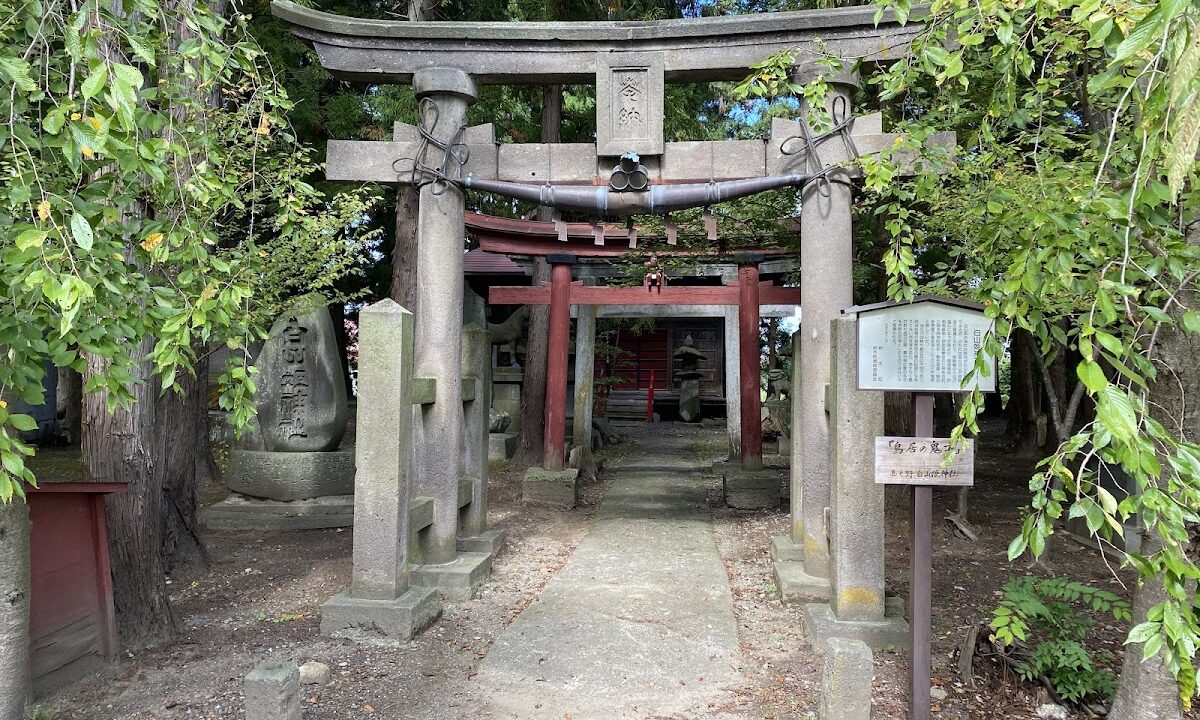
The Oni-ko at Hakusan-hime Shrine has unique characteristics compared to other Oni-ko in the Tsugaru region. Particularly noteworthy is its appearance, wearing white pants (diaper-like attire). This “red Oni-ko in baggy white pants” exudes cuteness and humor, making it a popular spot for many visitors to take photos.
The Oni-ko’s rear end is also a highlight, featuring a cute design. Viewing it from various angles, not just the front, allows you to appreciate the sculptor’s playful spirit and high level of skill.
Oni Legends of the Tsugaru Region
The Tsugaru region has many legends about Oni (demons) that have been passed down since ancient times. Oni were not merely fearsome beings; they were sometimes worshipped as guardian deities protecting villages, and sometimes as beings that brought fertility.
There are also legends about Oni in the Torii-no area surrounding Hakusan-hime Shrine. According to local elders, there is a legend that an ogre once appeared in this area and helped the villagers, and it is said that the ogre figures were placed on the torii gate to commemorate this event.
Grounds and Highlights of Hakusan-hime Shrine
Torii Gate and Approach
At the entrance to Hakusan-hime Shrine stands a distinctive torii gate adorned with ogre figures. Passing through this gate, a quiet approach continues. The approach is surrounded by trees, allowing visitors to experience the changing seasons while praying.
With cherry blossoms in spring, fresh greenery in summer, autumn leaves in fall, and snowscapes in winter, the approach shows a different face with each season, offering new discoveries with every visit.
Shrine Building and Grounds
As you proceed along the approach, the main shrine building comes into view. The shrine building of Hakusan-hime Shrine retains the traditional architectural style of the Tsugaru region, exuding a simple yet solemn atmosphere.
The grounds also include a water basin for purification and guardian lion-dogs, providing all the basic facilities expected of a shrine. The shrine grounds are carefully maintained by local residents, ensuring a clean and pleasant environment.
Cultural Assets and Historical Value
Hakusan-hime Shrine preserves cultural assets and historical materials that tell the story of the region’s history. In particular, the offerings and votive tablets from the Edo and Meiji periods are valuable resources for understanding the state of faith at that time.
Differences between Hakusan-hime Shrines in Hirosaki City and Kuroishi City
There are several Hakusan-hime Shrines in Aomori Prefecture. The two that are most often confused are the Hakusan-hime Shrine in Toriino, Hirosaki City, and the Hakusan-hime Shrine (Fukuro-no-Kannon) in Fukuro-Tomiyama, Kuroishi City.
Hakusanhime Shrine in Hirosaki City (Subject of this article)
- Location: Toriino, Hirosaki City, Aomori Prefecture
- Features: Famous for its Oni-Ko Torii gate
- Access: Approximately 5 minutes on foot from Konan Bus “Toriino” stop
Hakusanhime Shrine in Kuroishi City (Fukuro no Kannon)
- Location: 112 Fukuro Tomiyama, Kuroishi City, Aomori Prefecture
- Features: 27th temple of the Tsugaru Thirty-Three Kannon Pilgrimage, dedicated to the generation born in the Year of the Horse
- Founding: Founded during the Enryaku era (782-806) by Sakanoue no Tamuramaro (according to tradition)
- Principal Image: Seishi Bodhisattva (enshrining Hayagriva Kannon Bodhisattva)
- Access: Located in the mountains, the Hakusan-hime Shrine in Kuroishi City requires a 15-minute climb up stairs to reach it from Onto Onsen.
The Hakusan-hime Shrine in Kuroishi City was originally founded as a Kannon hall and became a Shinto shrine during the Meiji era’s separation of Shinto and Buddhism. Legend says that Sakanoue no Tamuramaro, during his eastern campaign, hung a Kannon statue in a bag on a large tree to pray for victory, and it is affectionately known as the “Bag Kannon.”
On the other hand, the Hakusan-hime Shrine in Toriino, Hirosaki City, has a unique feature: a torii gate shaped like an oni (demon). Its location closer to flat ground makes it more easily accessible.
How to Access Hakusan Hime Shrine
Basic Information
- Address: Toriino, Hirosaki City, Aomori Prefecture
- Nearest Station: Tsugaru-Onoue Station, Konan Railway Konan Line (however, it is a distance from the station)
- Visiting Hours: Grounds are open freely (please check the hours of the shrine office)
- Parking: Available (limited number of spaces)
Access by Public Transportation
Using Konan Bus
- Take a Konan Bus from Hirosaki Station Bus Terminal
- Get off at the “Toriino” bus stop
- Approximately 5 minutes on foot from the bus stop
Since the number of buses is limited, it is recommended to check the timetable in advance. Especially on holidays and during winter, the number of services may be reduced.
Access by Car
From Hirosaki City Center
- Approximately 15-20 minutes from central Hirosaki via National Route 7
- Enter “Hakusan Hime Shrine, Toriino, Hirosaki City” into your car navigation system.
From Aomori City
- Approximately 25 minutes from the Kuroishi Interchange on the Tohoku Expressway
- Accessible via National Route 102
Parking is available near the shrine, but spaces are limited, so congestion is expected during New Year’s visits and festivals.
Manners and Precautions for Visiting a Shrine
Basic Worship Etiquette
- Bow Before Passing Through the Torii Gate: Before passing through the Oniko Torii gate, bow slightly before entering the shrine grounds.
- Walk Along the Edge of the Path: The center of the path is considered the path of the gods.
- Purify at the Water Basin: Purify your hands and mouth before praying.
- Two Bows, Two Claps, One Bow: Follow the general worship etiquette for shrines.
Photography
The Oniko Torii gate is a popular photo spot, but please note the following:
- Be considerate of other worshippers.
- Permission may be required to photograph inside the shrine building.
- When posting on social media, be careful not to include other worshippers in your photos.
Best Time to Visit
Spring (April-May)
- The path is beautiful during cherry blossom season.
- The climate is mild and easy to visit.
Summer (June-August)
- Beautiful fresh greenery and a cool atmosphere
- Insect repellent is recommended
Autumn (September-November)
- Stunning autumn foliage, perfect for photography
- Harvest festival season in the Tsugaru region
Winter (December-March)
- The Oniko (demon) in the snowy landscape is fantastical
- Due to snow, warm clothing and non-slip shoes are essential
- It is recommended to check the snow removal status in advance
Nearby Tourist Spots
Major Tourist Attractions in Hirosaki City
Hirosaki Castle
- Approximately 20 minutes by car from Hakusan Hime Shrine
- A nationally important cultural property with an existing castle tower
- Nationally famous as a cherry blossom viewing spot
Hirosaki City Tourist Information Center
- A facility where you can learn about the history and culture of Hirosaki
- Exhibits of Tsugaru lacquerware and Tsugaru shamisen
Tsugaru Clan Neputa Village
- Facilities where you can experience the culture of the Neputa Festival
- Sales of traditional crafts from the Tsugaru region
Nearby Shrines and Temples
Sansha Shrine
- A shrine located in Hirakawa City
- One of the centers of faith in the Tsugaru region
Hakusan Hime Shrine (Fukuro no Kannon) in Kuroishi City
- Worshipped as the guardian deity for those born in the Year of the Horse
- Located in the mountains, surrounded by rich nature
Gourmet Food and Hot Springs
Gourmet Food in Hirosaki City
- Hirosaki Ramen (Tsugaru ramen with a dried sardine base)
- Various sweets made with apples
- Tsugaru Soba
Nuruyu Onsen
- A historic hot spring resort in Kuroishi City
- Close to Hakusan Hime Shrine (Fukuro no Kannon)
Connection to the Tsugaru Ichidai-sama Faith
The Tsugaru region has a unique faith called “Ichidai-sama.” This is a belief that a guardian deity should be worshipped once in one’s lifetime, depending on the zodiac sign of one’s birth year.
While the Hakusan-hime Shrine (Fukuro no Kannon) in Kuroishi City is known as the deity for those born in the Year of the Horse, the Hakusan-hime Shrine in Toriino, Hirosaki City, also holds an important position in local religious beliefs.
The Relationship Between the Twelve Zodiac Signs and Ichidai-sama (Essential Deities)
In the Tsugaru region, the following Ichidai-sama are designated for each year of birth according to the Chinese zodiac sign:
- Year of the Rat: Iwaki-yama Shrine (Hirosaki City)
- Year of the Ox/Tiger: Kyumonji Temple (Hirakawa City)
- Year of the Rabbit: Kushihiki Hachimangu Shrine (Hachinohe City)
- Year of the Dragon/Snake: Nansoji Temple (Hirosaki City)
- Year of the Horse: Hakusan-hime Shrine/Fukuro no Kannon (Kuroishi City)
- Year of the Goat/Monkey: Iwatani Kannon (Hirakawa City)
- Year of the Rooster: Kudoji Temple (Hirosaki City)
- Year of the Dog/Pig: Hyakusawaji Temple (Hirosaki City)
This Ichidai-sama faith is deeply rooted in the lives of the people of the Tsugaru region, and many people visit their respective Ichidai-sama.
Annual Events at Hakusan-hime Shrine
Grand Festival
Hakusan-hime Shrine holds its annual Grand Festival. This is an important day when local residents gather for Shinto rituals and offering ceremonies. The specific dates may vary from year to year, so it is recommended to check before visiting.
New Year’s Visit
Many worshippers, mainly local residents, visit the shrine for their first shrine visit of the new year. The contrast between the Oniko torii gate and the snowy landscape is beautiful, creating a solemn atmosphere befitting New Year’s prayers.
Other Events
Local festivals and seasonal Shinto rituals may be held. If you wish to deepen your interaction with the local people, participating in these events is a good idea.
About Goshuin (Shrine Seals)
If you wish to receive a Goshuin at Hakusan Hime Shrine, you need to check in advance. Since there may not always be a resident Shinto priest, we recommend checking the availability of Goshuin (temple/shrine stamps) using the following methods:
- Inquire with the Aomori Prefectural Shrine Association
- Check with the Hirosaki City Tourist Information Center
- Check by phone in advance (if contact information is publicly available)
If you bring your Goshuincho (stamp book), please be sure to be polite and prepare the offering fee (usually around 300-500 yen).
A Journey to Discover Oniko: Oniko Spots in the Tsugaru Region
After visiting the Oniko at Hakusan-hime Shrine, why not explore other Oniko spots in the Tsugaru region?
Characteristics of Oniko in the Tsugaru Region
The Tsugaru region boasts a variety of unique Oniko at various shrines and temples. Each Oniko has its own distinctive expression, attire, and pose, making a comparison tour a fascinating experience.
Diversity of Oni Figures
- Differences in color (e.g., red oni, blue oni)
- Differences in facial expressions (scary faces, gentle faces, humorous faces)
- Differences in decorations (pants, diapers, loincloths, etc.)
- Differences in poses (standing, sitting, etc.)
Points for Visiting Oni Figures
- Pre-Research: Research the location and characteristics of each shrine.
- Photography: Record the characteristics of each oni figure.
- Local History: Learn about the oni legends and origins of each region.
- Seasonal Selection: Oni figures in a snowy landscape are also charming.
Community Involvement and Preservation Activities
Hakusan-hime Shrine is a shrine that has been carefully preserved by local residents. Even amidst depopulation and an aging population, the cleaning and maintenance of the shrine grounds continue thanks to the efforts of local people.
Role of the Local Community
Residents of the Torii-no district cherish Hakusan-hime Shrine as an integral part of their community identity. During festivals, the entire community participates in preparations and operations, continuing their efforts to pass on traditions to future generations.
Preservation and Restoration of Oniko
The Oniko statues installed on the torii gate are exposed to wind, rain, and snow, requiring regular maintenance. Thanks to the cooperation of local residents and related parties, the Oniko are preserved and restored, ensuring that this unique cultural asset is passed down to future generations.
Message to Visitors
While Hakusan-hime Shrine is not a large-scale tourist destination, it is a valuable place where you can experience the history and culture of the Tsugaru region. The adorable Oniko statues bring smiles and comfort to visitors.
When visiting, please remember that this shrine has been preserved through the efforts of the local community and visit with respect. Combining your visit with nearby tourist attractions and hot springs will allow you to enjoy a more fulfilling Tsugaru trip.
Hakusan-hime Shrine is not a large-scale tourist destination, but it is a valuable place where you can experience the history and culture of the Tsugaru region. ## Summary: Reaffirming the Charm of Hakusan-hime Shrine
Hakusan-hime Shrine in Toriino, Hirosaki City, Aomori Prefecture, is a shrine with the following attractions:
- Unique Oni-ko Torii Gate: The red Oni-ko in baggy white pants is a rare sight nationwide.
- Old Tsugaru Oni Legend: A history deeply intertwined with local Oni legends.
- Easy Access: Relatively easy to visit, about a 5-minute walk from the Konan Bus “Toriino” stop.
- Beauty in the Seasons: The shrine grounds show different expressions with each season.
- Experiencing Local Culture: Feel the faith and traditions of the Tsugaru region firsthand.
When visiting Hirosaki City, be sure to visit not only major tourist spots such as Hirosaki Castle and Tsugaru Clan Neputa Village, but also locally rooted shrines like Hakusan-hime Shrine. The adorable Oni-ko will surely add color to your travel memories.
Enjoy a peaceful time at Hakusan-hime Shrine while experiencing the rich nature, history, and warmth of the people of the Tsugaru region.


