Inju-ji Temple (Chiba Prefecture) Complete Guide | History and Highlights of a Jodo Sect Temple Associated with the Chiba Clan
Inju-ji Temple, located in Ichiba-cho, Chuo-ku, Chiba City, Chiba Prefecture, is a Jodo sect temple founded during the Sengoku period (Warring States period). It has deep ties to the Chiba clan, a prestigious samurai family of the Boso region, and continues to attract many visitors as an indispensable part of Chiba City’s history. This article will introduce the charm of Inju-ji Temple in its entirety, from its history and highlights within the temple grounds to its cultural assets and access methods.
Basic Information on Inju-ji Temple
Inju-ji Temple’s official name is “Komyozan Chisoin Inju-ji,” and it belongs to the Jodo sect. It enshrines Amida Buddha as its principal image, and is characterized by the “Moon and Star Crest,” the family crest of the Chiba clan, carved on the main hall.
Location: 10-11 Ichiba-cho, Chuo-ku, Chiba City, Chiba Prefecture
Postal Code: 260-0855
Sect: Jodo-shu (Pure Land Buddhism)
Mountain Name: Komyo-zan
Temple Name: Chisho-in
Principal Image: Amida Buddha
Located in the heart of Chiba City, close to the prefectural office, it maintains a quiet environment despite being in an urban area.
History of Inju-ji Temple
Founding History
Inju-ji Temple was founded on December 1, 1558 (Eiroku 1). The founder was Ungan Shonin, a descendant of Takeishi Saburo Taneshige, the grandson of Chiba Tsunetane.
Abbot Ungan established this temple to commemorate his ancestor, Takeishi Taneshige, and to pass on Taneshige’s honor to future generations. The temple’s name, “Taneshige-ji,” is derived directly from Takeishi Taneshige’s name.
Relationship with the Chiba Clan
Chiba Tsunetane was a samurai who was active from the late Heian period to the early Kamakura period. He participated in Minamoto no Yoritomo’s uprising and made a significant contribution to the establishment of the Kamakura Shogunate. Tsunetane’s descendants expanded their influence throughout the Boso region and prospered as the Chiba clan.
Takeishi Taneshige was a grandson of Chiba Tsunetane and an important member of the Chiba clan. The fact that Taneshige’s descendants became monks after being samurai and built a temple to honor their ancestors’ achievements illustrates the importance of family temples in the samurai society of that time.
History since the Edo Period
During the Edo period, the temple became deeply rooted in the community as a Jodo sect temple and developed into a temple with many parishioners. During this time, Inju-ji Temple also forged deep ties with individuals associated with the Totsuka-ha Yoshin-ryu martial arts school.
Despite being affected by the anti-Buddhist movement of the Meiji era, it survived and has been carefully preserved as a historical temple of Chiba City to this day.
Highlights of the Temple Grounds
Main Hall
The main hall of Inju-ji Temple houses an Amida Buddha as its principal image. The Chiba clan’s family crest, the “Moon and Star Crest,” can be seen throughout the building, indicating the temple’s connection to the Chiba clan.
The Moon and Star Crest is a design combining a crescent moon and a star, and has been used by the Chiba clan for generations. When visiting the main hall, be sure to look for this crest.
Atmosphere of the Temple Grounds
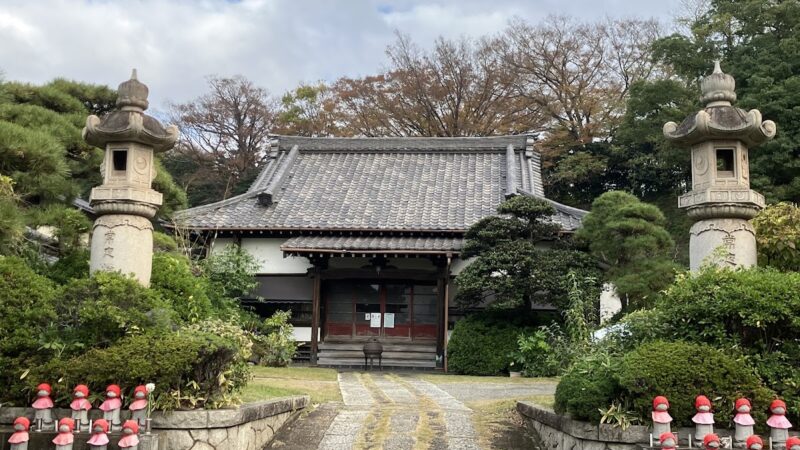
Despite being located in the heart of Chiba City, the temple grounds maintain a quiet and peaceful atmosphere. This is a peaceful space for worship, far removed from the hustle and bustle of the city.
The temple grounds, surrounded by trees, display different expressions throughout the seasons, offering particularly beautiful scenery during the fresh greenery of spring and the vibrant autumn foliage.
Cultural Property / Chiba Prefecture Designated Historic Site
Graves of those associated with the Totsuka-ha Yoshin-ryu school
Taneju-ji Temple houses the graves of the founder and successors of the Totsuka-ha Yoshin-ryu, a martial arts school that flourished during the Edo period. These are designated as a Chiba Prefecture Historic Site and are important cultural assets of Taneju-ji Temple.
Totsuka Hikosuke Hidetoshi – Founder of the Totsuka-ha Yoshin-ryu
Totsuka Hikokuro Hideyoshi – Second Generation
The graves of these two men are considered valuable historical sites for the study of martial arts history.
About the Totsuka-ha Yoshin-ryu School
The Totsuka-ha Yoshin-ryu is a comprehensive martial arts school centered on spear techniques that developed during the Edo period. Founded by Totsuka Hikosuke Hidetoshi, it was studied by many samurai throughout the Edo period.
This school encompassed not only spear techniques but also a wide range of other skills, including swordsmanship, jujutsu, and bojutsu (staff techniques), and was highly regarded as a practical martial art. The presence of the founder’s tomb at Inju-ji Temple indicates the temple’s deep connection to samurai culture.
Other Cultural Assets
The temple grounds contain numerous historically significant remains, including stone monuments and memorial towers dating back to the Edo period. These are valuable resources for understanding the history of Chiba City.
About Goshuin (Temple Seals)
Goshuin (temple seals) are available at Inju-ji Temple. As a Jodo sect temple, the goshuin is a popular memento of visits.
If you wish to receive a Goshuin (temple stamp), please speak to the temple office after paying your respects at the main hall. However, the office may be closed, so if you are certain you will receive a Goshuin, we recommend calling ahead to confirm.
The Goshuin will have the temple name and the name of the principal deity written in ink, and stamped with a red seal. Many people cherish it as proof of their visit and as a record of their pilgrimage.
Annual Events
Major Events of the Jodo Sect
At Inju-ji Temple, as a Jodo Sect temple, various memorial services and events are held throughout the year.
Spring Equinox Service – A memorial service for ancestors held around the spring equinox
Obon Festival – The Obon festival held in August
Autumn Equinox Service – A memorial service held around the autumn equinox
New Year’s Eve Bell – The bell rung on New Year’s Eve
These events are mainly for temple parishioners, but general visitors may also be able to participate.
Monthly Memorial Service
A regular memorial service is held every month, with participation from temple parishioners. Please contact the temple directly for detailed dates.
Access
Tanejuji Temple is located in the heart of Chiba City and is easily accessible by public transportation.
Access by Train
Chiba Urban Monorail Line 1 “Kencho-mae Station” – Approximately 5 minutes on foot (nearest station)
JR Sotobo Line/Uchibo Line “Hon-Chiba Station” – Approximately 8 minutes on foot
JR Sobu Line/Chuo Line “Chiba Station” – Approximately 20 minutes on foot, or by bus
Kencho-mae Station is the closest, and it’s about a 5-minute walk from the station towards Ichiba-cho. It’s also within walking distance from Hon-Chiba Station, making it a convenient visit in conjunction with exploring central Chiba City.
Access by Bus
If using the bus from JR Chiba Station, take a Chiba Chuo Bus or Keisei Bus bound for “Kencho-mae” or “Ichiba-machi” and get off at the nearest bus stop.
Access by Car
Keiyo Expressway “Anagawa IC” – Approximately 15 minutes
Higashi-Kanto Expressway “Chiba Kita IC” – Approximately 20 minutes
Parking may be limited, so we recommend using public transportation whenever possible. If visiting by car, we recommend checking with the temple in advance.
Nearby Parking
If the temple’s dedicated parking is limited, there are several coin-operated parking lots nearby. As it is in the central part of Chiba City’s Chuo Ward, you will likely need to use paid parking.
Nearby Tourist Attractions
There are many spots around Inju-ji Temple where you can experience the history and culture of Chiba City.
Chiba Prefectural Government Building
The Chiba Prefectural Government Building, located a few minutes’ walk away, offers panoramic views of Chiba city from its observation lobby. Admission is free, and on clear days, you can sometimes see Mt. Fuji.
Chiba Castle (Local History Museum)
This local history museum, built on the site of the Chiba clan’s castle, allows you to learn about the history of the Chiba clan and the development of Chiba City. Visiting it in conjunction with Taneju-ji Temple will give you a deeper understanding of the Chiba clan’s history.
Chiba Shrine
This is a representative shrine of Chiba City, dedicated to Hokushin Myoken Sonsei-o. It was the center of Myoken worship practiced by the Chiba clan, and you can feel its historical connection to Taneju-ji Temple.
Chiba City Central Park
This park is a popular place of relaxation for citizens, where you can enjoy flowers and greenery throughout the seasons. It’s an ideal resting spot during a stroll.
About Cemeteries and Burial Grounds
Taneju-ji Temple has a cemetery, where the graves of its parishioners are lined up. For new burial plots, please contact the temple directly.
Conditions for Using a Temple Cemetery
Generally, to use a temple cemetery, you must become a parishioner of that temple. Inju-ji Temple is a Jodo sect temple, therefore, visits are intended for those who practice Jodo sect Buddhism or who understand and accept the obligations of being a temple parishioner.
For detailed conditions, fees, and availability, we recommend contacting Inju-ji Temple directly.
Manners and Precautions for Visiting the Temple
Basic Manners for Visiting the Temple
When visiting a temple, please observe the following basic manners:
- Bow when passing through the temple gate
- Walk quietly within the temple grounds
- Offer prayers and bows in the main hall
- Take photographs only in designated areas
- Do not touch plants or buildings within the temple grounds
Dress Code
There are no specific dress code requirements, but it is advisable to avoid revealing or overly flashy clothing, as temples are sacred places.
Visiting Hours
While the temple grounds are generally open for daytime visits, the temple office has limited hours. If you wish to receive a temple stamp or detailed information, we recommend calling in advance.
Summary of the Charms of Inju-ji Temple
Inju-ji Temple, located in the urban area of Chiba City’s Chuo Ward, is a valuable temple that maintains a history dating back to the Sengoku period and a tranquil atmosphere.
Historical Value
- Connections to the Chiba clan, a prestigious samurai family of Boso Peninsula
- Clear founding date of 1558 during the Sengoku period
- Burial grounds of individuals associated with the Totsuka-ha Yoshin-ryu school, a prefecturally designated historical site
These historical elements give this temple value as a cultural asset beyond a mere religious facility.
Cultural Significance
In addition to its religious role as a Jodo sect temple, it possesses multifaceted cultural significance due to the preservation of important historical sites in the history of martial arts.
Accessibility
Located in the heart of Chiba City, just a 5-minute walk from Kencho-mae Station, its convenient location makes it easily accessible. Please consider visiting as part of your sightseeing or stroll around Chiba City.
A Tour of Historical Sites Associated with the Chiba Clan
When visiting Taneshige-ji Temple, you can gain a deeper understanding of the Chiba clan’s history by also visiting other historical sites associated with the Chiba clan within Chiba City.
Recommended Historical Site Tour Course
- Taneshige-ji Temple – A temple associated with Takeshi Taneshige
- Chiba Castle (Local History Museum) – The site of the Chiba clan’s castle
- Chiba Shrine – The center of Myoken worship practiced by the Chiba clan
- Inohana Castle Ruins – The Chiba clan’s early base
By visiting these sites over half a day to a full day, you can enjoy a fulfilling historical walk tracing the footsteps of the Chiba clan.
Summary
Tanejuji Temple is a Jodo sect temple located in Chuo-ku, Chiba City, Chiba Prefecture. It was founded in 1558 by Ungan Shonin, a descendant of Takeshi Taneju, the grandson of Chiba Tsunetane. It has ties to the Chiba clan, a prestigious samurai family of the Boso region, and is a historically important temple, housing the burial grounds of those associated with the Totsuka-ha Yoshin-ryu school of swordsmanship, a prefecturally designated historical site.
Despite its convenient location in the heart of Chiba City, just a 5-minute walk from Kencho-mae Station, it maintains a quiet and peaceful atmosphere, warmly welcoming visitors. Goshuin (temple stamps) are also available, making it a recommended spot for those who enjoy visiting temples and shrines.
When visiting Chiba City, be sure to visit Tanejuji Temple and experience the history of the Chiba clan and the serene atmosphere of a Jodo sect temple. It will be a peaceful place for history buffs and those seeking quiet time alike.