Honkei-ji Temple (Chuo-ku, Chiba City, Chiba Prefecture) | Complete Guide to History, Access, and Goshuin (Temple Seal)
Honkei-ji Temple, located in Honcho, Chuo-ku, Chiba City, Chiba Prefecture, is a Nichiren Buddhist temple founded in 1492. Despite its central location in Chiba City, this temple maintains a sense of history and tranquility. This guide provides detailed information about its history, highlights, and access methods.
Basic Information about Honkei-ji Temple
Honkei-ji Temple is a Nichiren Buddhist temple located in Honcho, Chuo-ku, Chiba City, Chiba Prefecture. Its mountain name is Jōkōzan.
Location and Contact Information
- Address: 1-10-1 Honcho, Chuo-ku, Chiba City, Chiba Prefecture
- Postal Code: 260-0012
- Sect: Nichiren Buddhism
- Mountain Name: Jōkōzan
- Corporate Number: 7040005000951 (Designated October 5, 2015)
- Head Temple: Mobara-ji Temple in Mobara, Chōsei-gun (as a branch temple)
Access
Public transportation is the most convenient way to access Honkei-ji Temple.
Access by Train:
- Approximately 5 minutes on foot from Yoshikawa Park Station on the Chiba Urban Monorail Line 1
- Approximately 7 minutes on foot from Kencho-mae Station on the Chiba Urban Monorail Line 1
- Approximately 8 minutes on foot from Sakaemachi Station on the Chiba Urban Monorail Line 1
- Approximately 15 minutes on foot from JR Chiba Station
Access by Bus:
Buses also run from Chiba Station, and the temple is a few minutes’ walk from the bus stop towards Honmachi.
Access by Car:
Approximately 10 minutes from Anagawa IC on the Keiyo Expressway. However, as it is in the central part of Chiba City, it is recommended to check the availability of parking in advance.
History and Origins of Honkei-ji Temple
Circumstances of Founding
Honkei-ji Temple was founded in 1492 (Meio 1) by Nichiden Shonin. This period was the late Muromachi period, a time when the Sengoku period was about to begin. During a period when Nichiren Buddhism was widely established in the Kanto region, Honkei-ji Temple was built in Chiba as a center of faith.
Relationship with the Head Temple
Honkei-ji Temple is positioned as a branch temple of Mohara-ji Temple in Mobara, Chosei District. Mohara-ji Temple is one of the important temples of Nichiren Buddhism, and Honkei-ji Temple, as a temple that inherited its lineage, has supported the faith of the region. While the head temple of the entire Nichiren Buddhism is Minobu-san Kuon-ji Temple in Yamanashi Prefecture, Honkei-ji Temple has played a central role in Nichiren Buddhism faith in the region.
Position in Chiba City’s Chuo Ward
There are currently 36 temples in Chiba City’s Chuo Ward, but Honkei-ji Temple is one of the oldest, having grown alongside the development of Chiba. Located in the heart of Chiba City, in what is known as Honmachi (meaning “main town”), it is a valuable presence that conveys the history of the region to the present day.
Highlights of Honkei-ji Temple
Main Hall and Enshrined Buddhist Statues
The following Buddhist statues are enshrined in the main hall of Honkei-ji Temple:
- Many Treasures Buddha: A Buddha appearing in the Lotus Sutra, considered important as a Buddha who proves the teachings of Shakyamuni Buddha.
- Shakyamuni Buddha: Shakyamuni Buddha, the founder of Buddhism.
- Ten Realms Deities: Deities representing the Ten Realms in Buddhism (Hell, Hungry Ghosts, Animals, Asuras, Humans, Heavenly Beings, Shravakas, Pratyekabuddhas, Bodhisattvas, and Buddhas).
- Statue of Nichiren Shonin: A statue of Nichiren Shonin, the founder of the Nichiren sect.
These Buddhist statues embody the doctrines of the Nichiren sect and visually represent the worldview of the Lotus Sutra.
Atmosphere of the Temple Grounds
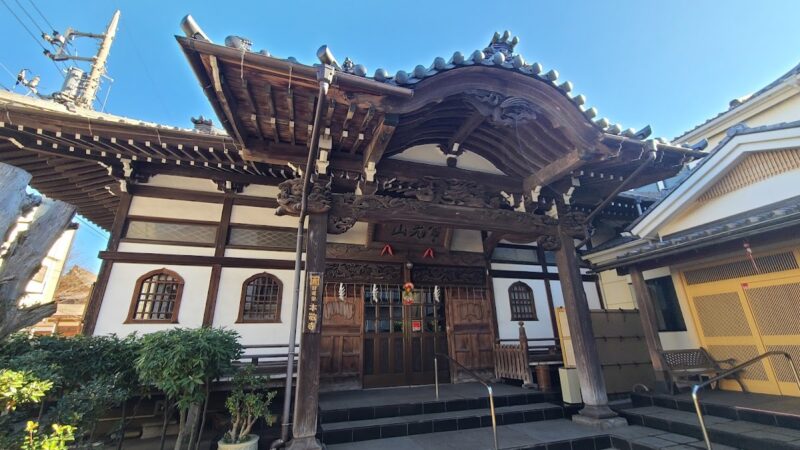
Despite being located in the urban environment of central Chiba City, Honkei-ji Temple maintains a quiet and peaceful atmosphere. The clean and bright grounds provide a calming space for visitors.
Jokokaku Columbarium
Nearby Honkei-ji Temple is the Jokokaku Columbarium, which accommodates modern forms of memorial services. For those considering perpetual memorial services or columbariums, its convenient access and the reassuring presence of a historic temple make it a viable option.
About Goshuin (Temple Seals)
Goshuin (temple seals) are available at Honkei-ji Temple. As a Nichiren Buddhist temple, the goshuin reflects the characteristics of the sect.
Points to Note When Receiving a Goshuin (Temple Stamp)
- Visit during temple hours
- Bring your Goshuincho (stamp book) (confirm whether pre-written stamps are available)
- Request with polite language and demeanor
- Understand that the Goshuin is proof of your visit, not a stamp rally.
For details on Goshuin and their availability, we recommend contacting the temple directly.
About the Nichiren Sect
We will introduce basic knowledge about the Nichiren Sect, to which Honkei-ji Temple belongs.
Doctrines of the Nichiren Sect
The Nichiren Sect is a Buddhist sect founded in the Kamakura period by Nichiren Shonin (1222-1282). It considers the Lotus Sutra as its supreme scripture and chants the mantra “Namu Myoho Renge Kyo” as its basic practice.
Characteristics of Nichiren Buddhism
- Centered on the Lotus Sutra: Believes the Lotus Sutra to be the true teaching of Shakyamuni Buddha.
- Emphasis on the Title: Believes that one can attain Buddhahood by chanting “Nam Myoho Renge Kyo.”
- Worldly Benefits: A practical teaching that also emphasizes happiness in this world.
- Shakubuku: An attitude of actively spreading the teachings.
Head Temple: Minobu-san Kuonji Temple
The head temple of Nichiren Buddhism is Minobu-san Kuonji Temple in Yamanashi Prefecture. It is the place where Nichiren Shonin spent his later years and is the central hub for Nichiren Buddhist temples throughout Japan. Honkei-ji Temple is also a temple connected to the Nichiren Buddhist lineage, with Kuonji Temple at its apex.
Temple Environment in Chuo Ward, Chiba City
Number of Temples in Chuo Ward, Chiba City
There are 36 temples in Chuo Ward, Chiba City. While this is only a portion of the total number of temples in Chiba Prefecture, it is a standard number for a temple density in an urban area. ### Nearby Temples and Cemeteries
The following temples and cemeteries are located near Honkei-ji Temple:
- Jokokaku Columbarium: A columbarium facility associated with Honkei-ji Temple
- Mitsuwadai Cemetery: One of the major cemeteries in Chiba City
- Sakuragi Cemetery: A cemetery in Chiba City
These facilities, along with others, offer a diverse range of options for memorial services and burial plots in Chuo Ward, Chiba City.
Memorial Services and Buddhist Rites at Honkei-ji Temple
Perpetual Memorial Services
Honkei-ji Temple also offers perpetual memorial services. Perpetual memorial services are a form of memorial service where the temple takes responsibility for continuing the service indefinitely. This is chosen by those without successors or those who do not wish to burden their descendants.
Tree Burial and Columbariums
Tree burial and columbariums are also options as modern forms of memorial services. Honkei-ji Temple’s affiliated facilities and nearby cemeteries accommodate these diverse forms of memorial services.
Grave Closure
We also offer consultations regarding “grave closure,” which involves moving a grave located far away to Honkei-ji Temple. Due to its convenient access to urban areas, it’s a popular option for those moving graves from rural areas to Chiba City.
Manners and Etiquette for Visiting a Temple
Etiquette for Visiting a Nichiren Buddhist Temple
- Bow at the Temple Gate: Bow before entering the temple grounds.
- Purification at the Water Basin: Cleanse your hands and mouth.
- Worship at the Main Hall:
- Offer a monetary donation.
- Join your hands in prayer and silently chant “Namu Myoho Renge Kyo.”
- Bow.
- Bow upon Exit: Turn around and bow when leaving the temple gate.
Attire
Unless it’s a special memorial service, clean, everyday clothing is acceptable. However, please note the following points.
- Avoid revealing clothing.
- Shoes are preferable to sandals.
- Remove your hat on the temple grounds.
Map and sightseeing around Honkei-ji Temple
Nearby attractions
The area around Honcho, Chuo-ku, Chiba City, where Honkei-ji Temple is located, has the following attractions:
- Chiba Prefectural Government: Located right next to the Kencho-mae Monorail Station, popular for its view from the observation lobby.
- Chiba City Museum of Art: A cultural facility of Chiba City.
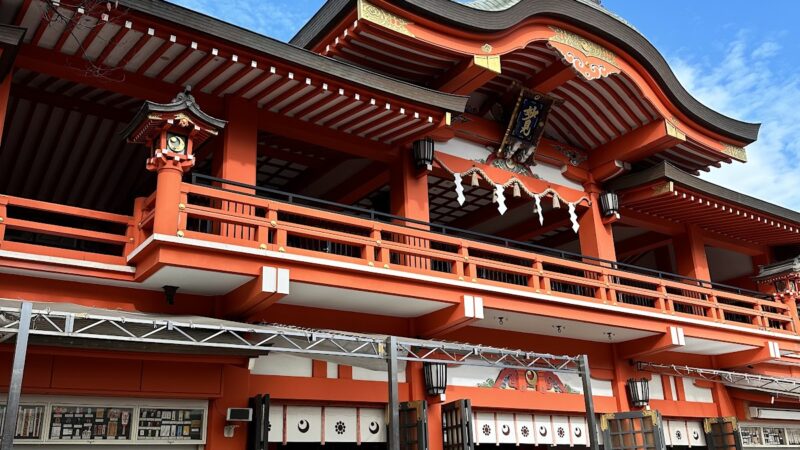
- Chiba Shrine: One of Chiba City’s representative shrines.
- Yoshikawa Park: A relaxing space in the city.
Walking course from Chiba Station
If you walk from JR Chiba Station to Honkei-ji Temple, you can stroll through the shopping streets and historical buildings of central Chiba City. The walk takes about 15 minutes, but including sightseeing in the surrounding area, it will be a course of about 1 hour.
Annual Events and Special Days
Main Events of the Nichiren Sect
The following annual events are generally held at Nichiren sect temples:
- New Year’s Day: New Year’s prayers
- Setsubun Festival: Around February 3rd
- Spring Equinox Festival: The period centered around the spring equinox in March
- Obon Festival: July or August (depending on the region)
- Autumn Equinox Festival: The period centered around the autumn equinox in September
- Oeshiki Festival: Memorial service for Nichiren Shonin (around October 13th)
For specific event dates at Honkei-ji Temple, please contact the temple directly.
Nichiren Sect Temples in Chiba Prefecture
Relationship between Chiba Prefecture and the Nichiren Sect
Chiba Prefecture has deep ties to the Nichiren sect. In Awa Province (present-day southern Chiba Prefecture), the birthplace of Nichiren Shonin, there are numerous important Nichiren sect temples, including Tanjo-ji Temple. ### Major Nichiren Buddhist Temples in Chiba Prefecture
- Tanjoji Temple (Kamogawa City): Birthplace of Nichiren Shonin
- Seichoji Temple (Kamogawa City): Temple where Nichiren Shonin became a monk and trained
- Mobara Temple (Mobara City): Head temple of Honkeiji Temple
- Nakayama Hokkeji Temple (Ichikawa City): One of the leading Nichiren Buddhist head temples in the Kanto region
Honkeiji Temple plays a vital role in this network of Nichiren Buddhist temples in Chiba Prefecture, supporting local faith.
Modern Role of Temples
As a Core of Local Communities
In modern times, temples serve not only as religious facilities but also as a core of local communities. Honkeiji Temple is also important as a place that inherits the history and culture of the region in Chuo Ward, Chiba City.
A Place of Peace and Tranquility
In the rapidly urbanizing heart of Chiba City, temples like Honkei-ji Temple offer a precious space to escape the hustle and bustle of everyday life and find peace of mind.
Protection of Cultural Properties
Founded in 1492 (Meio 1), Honkei-ji Temple is a cultural asset that conveys the history of Chiba City to the present day. Through its buildings, Buddhist statues, and records, it plays a role in passing on the history of the region to future generations.
Precautions During Visits
Visiting Hours
While temples are generally open for visits during the daytime, specific hours vary by temple. It is recommended to contact the temple in advance to confirm, especially if you wish to receive a temple stamp or attend a memorial service.
Photography
Photography is generally permitted on the temple grounds, but please note the following:
- Photography inside the main hall often requires permission.
- Please be considerate of other visitors.
- Please refrain from using flash photography.
- Commercial photography requires prior permission.
Pets
Bringing pets into temple grounds is generally prohibited or restricted. Except for assistance dogs such as guide dogs, it is recommended to check in advance.
Contacting Honkei-ji Temple
For inquiries regarding memorial services, perpetual memorial services, cemeteries, and other matters, please contact Honkei-ji Temple directly.
Address: 1-10-1 Honcho, Chuo-ku, Chiba City, Chiba Prefecture (〒260-0012)
When visiting, using public transportation is convenient. It is conveniently located about a 5-minute walk from Yoshikawa Park Station on the Chiba Urban Monorail.
Summary
Honkei-ji Temple is a historical Nichiren Buddhist temple founded in 1492 by Nichiden Shonin. Located in the urban area of Honcho, Chuo-ku, Chiba City, Chiba Prefecture, this temple has supported local faith for over 530 years.
With the mountain name Jōkōzan, it inherits the Nichiren sect’s lineage as a branch temple of Sōbara-ji Temple. The main hall houses statues of Tahōbutsu, Shakyamuni Buddha, various deities of the Ten Realms, and a statue of Nichiren Shonin. Its convenient location, approximately a 5-minute walk from Yoshikawa-kōen Station on the Chiba Urban Monorail, is another attractive feature.
In modern times, in addition to its role as a traditional temple, it also caters to diverse memorial needs, offering services such as perpetual memorial services and ossuaries. As one of the 36 temples in Chuo-ku, Chiba City, it is a valuable presence that conveys the history and culture of the region to the present day.
If you are visiting Chiba City, or if you are interested in Nichiren sect temples, we highly recommend visiting Honkei-ji Temple. Despite being in the city, you can spend a peaceful and tranquil time in its grounds.