Genraiji Temple (Asahi City, Chiba Prefecture) Complete Guide | A Sacred Site with a Prefecturally Designated Cultural Property: Amida Buddha Statue and Spring Water
Genraiji Temple, located in Hebizono, Asahi City, Chiba Prefecture, is a historic temple belonging to the Chizan branch of the Shingon sect. Its principal image is a wooden standing statue of Amida Buddha, a prefecturally designated tangible cultural property created during the Kamakura period. It is also known for the legend of a Buddha statue that drifted ashore, abundant spring water from the cliff face, and as a habitat for fireflies. This article provides a detailed explanation of Genraiji Temple’s history, cultural properties, natural environment, and access information.
Basic Information on Genraiji Temple
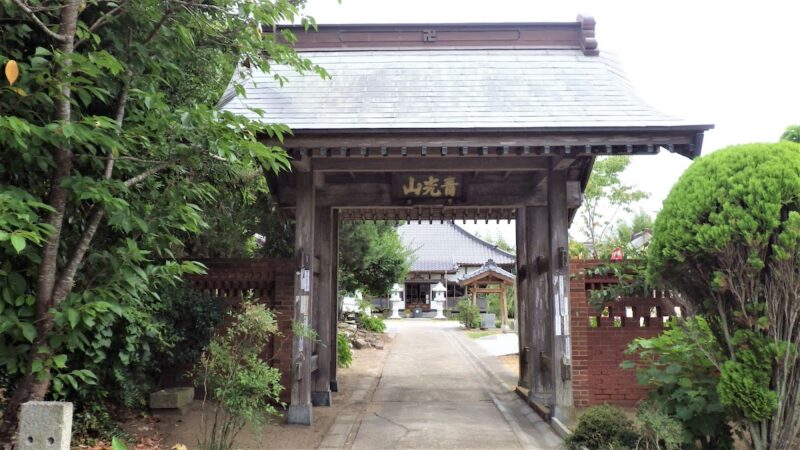
Genraiji Temple, also known as Iwataniyama Amidain, is one of Asahi City’s representative cultural property spots as a temple of the Chizan branch of the Shingon sect.
Location and Access
Location: 612 Hebizono, Asahi City, Chiba Prefecture
Nearest Station: Approximately 24 minutes on foot (approx. 2km) from Iioka Station on the JR Sobu Main Line
Access by Car: Approximately 30 minutes from the Daiei Interchange on the Higashi-Kanto Expressway
Parking: Parking available for visitors on the temple grounds
The temple is located in the Hebizono area, northeast of the center of Asahi City, near Kujukuri Beach. While it’s accessible on foot from Iioka Station, visiting by car is more convenient. Searching for “Kanraiji Asahi City” on a map app will display detailed location information.
Temple Overview
- Sect: Shingon-shu Chizan-ha
- Mountain Name: Iwatani-san
- Temple Name: Amida-in
- Principal Image: Wooden Standing Amida Buddha Statue (Prefectural Designated Tangible Cultural Property)
- Year of Establishment: Hōreki 8 (1758) ※Main Hall
- Former Branch Temple: Nonaka Chōzen-ji (present-day Asahi City)
History of Kanrai-ji Temple and the Legend of the Washed-Up Buddha
Origin of the Temple’s Founding
While there are no clear records regarding the founding of Kanrai-ji Temple, there is an interesting legend passed down in the region. This is the “Legend of the Washed-Up Buddha.”
The Story of the Washed-Up Buddha of Mikawaura
According to tradition, a wooden statue of Amida Buddha once washed ashore on the beach of Mikawaura (present-day Mikawa, Asahi City). Villagers from Hebizono, who were working on the beach, discovered something washed up at the water’s edge when they finished their work and were about to return. Upon returning to investigate, they discovered it was a magnificent wooden standing statue of Amida Buddha.
The villagers picked up this statue and respectfully enshrined it, marking the beginning of Kanraiji Temple. One theory suggests the temple was named “Kanraiji” (還来寺) because it enshrines a Buddha who “returned” from the sea.
Main Hall Construction in 1758
The current main hall was constructed in 1758 (Hōreki 8), as confirmed by the ridge beam inscription. It is a valuable building that preserves the architectural style of the mid-Edo period and is designated as a tangible cultural property of Asahi City.
Prefectural Designated Cultural Property: Wooden Standing Statue of Amida Buddha
A Masterpiece from the Kamakura Period
The wooden standing statue of Amida Buddha, the principal image of Kanraiji Temple, is a work from the Kamakura period (late 13th century) and is designated as a tangible cultural property of Chiba Prefecture.
Characteristics of the Buddhist Statue
- Period of Creation: Mid-Kamakura period (late 13th century)
- Style: Standing statue exhibiting characteristics of the Kamakura style
- Condition: Exists in good condition
- Cultural Property Designation: Chiba Prefecture Designated Tangible Cultural Property
Kamakura period Buddhist sculptures are characterized by a style that combines realism and power. This standing Amida Buddha statue is also valued as a valuable cultural property that demonstrates the excellent techniques of that era.
Attendant Bodhisattvas and Shrine
Standing statues of Kannon Bodhisattva and Seishi Bodhisattva are enshrined on either side of the main image as attendant bodhisattvas. These are considered to be later works, but together with the main image, they form the Amida Triad, creating a solemn atmosphere.
Furthermore, the tail shrine, altar, and front table are also designated as Asahi City designated cultural properties, and the entire set of Buddhist implements in the main hall is protected as a cultural property of historical value.
City-Designated Cultural Property: Kanraiji Temple Main Hall
Architectural Style
The Kanraiji Temple Main Hall is a mid-Edo period building designated as a tangible cultural property by Asahi City.
- Year of Construction: Hōreki 8 (1758)
- Structure: Five-bay, four-sided wooden building
- Roof: Thatched roof
- Style: Typical main hall style of a Shingon Buddhist temple
Five-bay, four-sided means a building with five bays on both the front and sides, indicating a relatively large main hall. Thatched roofs are rare today and represent a traditional architectural technique requiring regular maintenance.
Architectural Value
It well preserves the style of temple architecture from the mid-Edo period and is historically important as a typical example of a Shingon Buddhist temple in northeastern Chiba Prefecture. The existence of a ridge beam inscription further enhances its academic value, as the construction date is clearly established.
Natural Environment and Spring Water of Kanraiji Temple
Spring Water from the Cliff Face
One of the most distinctive features of Kanraiji Temple is the abundant water that springs from the steep cliff face behind the temple.
- Cliff Slope: Over 70 degrees
- Spring Water Volume: Approximately 140 tons per day
- Water Quality: Clear spring water
This spring maintains a stable water volume throughout the year and is an important water source supporting the surrounding ecosystem.
Unique Vegetation Environment
The cliff face maintains a unique vegetation environment due to frequent small-scale landslides of topsoil.
- Sun-loving carnivorous plants: Carnivorous plants that prefer sunny environments grow here.
- Orchid plants: Orchid plants adapted to the unique environment of the cliff face.
- Other rare plants: Plant groups adapted to the unique environment of spring water and cliffs.
The regular erosion of the topsoil makes it difficult for large plants to take root, preserving space for small plants adapted to the unique environment. This is a valuable ecosystem created by the workings of nature.
Habitat of the Genji Firefly
The area around Kanraiji Temple is known as a valuable habitat for Genji fireflies in Chiba Prefecture.
- Habitat: Clear spring water and surrounding vegetation
- Observation period: Early June to early July
- Conservation activities: Environmental conservation by local residents
Genji fireflies cannot survive without clean water and a rich natural environment. The ecosystem provided by the spring water of Kanraiji Temple nurtures this precious insect.
List of Cultural Properties at Kanraiji Temple
Kanraiji Temple possesses several designated cultural properties.
Chiba Prefecture Designated Tangible Cultural Property
- Wooden Standing Amida Buddha Statue (Mid-Kamakura Period)
Asahi City Designated Tangible Cultural Property
- Kanraiji Temple Main Hall (Built in 1758)
- Wooden Standing Kannon Bodhisattva Statue (Attendant)
- Wooden Standing Seishi Bodhisattva Statue (Attendant)
- Tail Shrine
- Shumidan
- Front Table
These cultural properties demonstrate that Kanraiji Temple is not merely a place of worship, but an important cultural heritage site that conveys the history and culture of the region to the present day.
Etiquette and Manners for Visiting
Precautions When Visiting
When visiting Kanraiji Temple, please observe the following manners:
- Silence: Temples are places of prayer. Let’s pray quietly.
- Photography: Please obtain permission in advance before taking photos inside the main hall.
- Nature Conservation: Please be careful not to damage the vegetation around the spring or on the cliff face.
- Firefly Observation: During the firefly season, please refrain from using flashlights and observe quietly.
Visiting Hours
As with most temples, daytime visits are the norm. For specific visiting hours and events, we recommend checking with the Asahi City Tourism Association or local information beforehand.
Nearby Tourist Attractions
When visiting Kanraiji Temple, consider exploring other tourist attractions in Asahi City.
Major Temples and Shrines in Asahi City
- Ryufuku-ji Temple and Ryufuku-ji Forest: A temple surrounded by abundant nature
- Kamazu Ise Grand Shrine: A shrine enshrining a分霊 (bunrei – a divided spirit) of Ise Grand Shrine
- Raijin Shrine: A shrine that attracts local faith
- Tamasaki Shrine: An ancient shrine possessing a prefecturally designated important cultural property
- Kaizumi Shrine: A shrine dedicated to the god of the sea
- Jokei-ji Temple: A historical temple
Kujukuri Beach Area
Asahi City is located in the northern part of Kujukuri Beach and has good access to the coastline. You can enjoy magnificent views of the Pacific Ocean from Iioka Beach and Gyobu Cape.
History and Culture of Asahi City
About Asahi City
Asahi City is a city with a population of approximately 60,000 located in the northeastern part of Chiba Prefecture. It is located at the northernmost tip of Kujukuri Beach and is known as a region where agriculture and fishing are thriving.
- Local Products: Rice, vegetables, seafood
- Tourist Resources: Coastline, temples and shrines, natural environment
- Access: JR Sobu Main Line, National Route 126
A Treasure Trove of Cultural Properties
Asahi City boasts numerous designated cultural properties, including Kanraiji Temple. Information on these cultural properties is available on the official websites of Chiba Prefecture and Asahi City, making it helpful for planning cultural site tours.
Detailed Access to Kanraiji Temple
Access by Public Transportation
Using the JR Sobu Main Line
- Approximately 2 hours from Tokyo Station on the Sobu Main Line, alight at Iioka Station
- Approximately 24 minutes on foot from Iioka Station (approx. 2km)
- Approximately 5 minutes by taxi
Iioka Station is an unmanned station, so it is recommended to arrange a taxi in advance.
Access by Car
From Tokyo
- Take the Higashi-Kanto Expressway and exit at Daiei IC.
- Approximately 30 minutes via National Route 296 and prefectural roads.
From Narita
- Approximately 40 minutes via National Route 296.
Parking Information
There is parking space for visitors on the temple grounds, but if you are visiting by large bus, please check in advance.
Points to Note When Visiting Kanraiji Temple
Recommended Time to Visit
- Spring: The season of fresh greenery, the plants on the temple grounds are beautiful
- Early Summer (June-July): The season for observing Genji fireflies
- Autumn: Autumn leaves and the tranquil atmosphere of the temple grounds
- Winter: A visit in crisp, clear air
Time Required
- Visiting the Temple Only: Approximately 30 minutes
- Appreciating Cultural Properties: Approximately 1 hour
- Including Nature Observation: 1.5-2 hours
Useful Items to Bring
- Comfortable walking shoes (for exploring the temple grounds and surrounding area)
- Camera (for exterior photography; permission is required for interior photography)
- Insect repellent spray (in summer, when observing nature)
- Drinking water (especially in summer)
Preservation and Future of Kanraiji Temple
Efforts to Protect Cultural Properties
The cultural properties of Kanraiji Temple are carefully preserved through the cooperation of Chiba Prefecture, Asahi City, and local residents. The thatched-roof main hall requires regular maintenance, and appropriate restoration work is carried out from the perspective of cultural property preservation.
Conservation of the Natural Environment
Conservation of the spring water environment and the ecosystem that depends on it is also an important issue. As a habitat for Genji fireflies, the entire community is working together to preserve water quality and maintain the surrounding environment.
Summary: The Charms of Kanraiji Temple
Kanraiji Temple in Asahi City, Chiba Prefecture, is a temple with three major attractions: a valuable Buddhist statue from the Kamakura period, a main hall architecture from the Edo period, and a unique natural environment created by abundant spring water.
The intriguing legend of the drifting Buddha, numerous prefectural and city-designated cultural properties, and the pristine environment where Genji fireflies dance allow visitors to feel the harmony of history and nature.
When visiting Asahi City, be sure to visit Kanraiji Temple, reflect on history in its tranquil grounds, and experience the rich natural environment. It is a precious spot where you can escape the hustle and bustle of the city and spend a peaceful time.
For detailed information and access details, we recommend checking the latest information on the Asahi City Tourism website or the official Asahi City homepage. Information on special openings of cultural properties and local events is also updated regularly, so be sure to check before your visit.