Gyōganji Temple (Isumi City, Chiba Prefecture) Complete Guide | Visiting the Sculptures of Nami no Ihachi and a Thousand Years of History
Located in Isumi City, Chiba Prefecture, Gyōganji Temple is an ancient Tendai sect temple dating back to the Heian period. Founded by Jikaku Daishi Ennin, this temple boasts a history of over 1200 years and is known for its transom carvings, “Waves and Jewel,” a masterpiece by the Edo period master craftsman “Nami no Ihachi.” This article comprehensively introduces everything you need to know before visiting Gyōganji Temple, including its history, cultural assets, access methods, and visiting information.
Basic Information about Gyōganji Temple
Official Name: Tōzusan Muryōjuin Gyōganji Temple
Sect: Tendai Buddhism
Principal Image: Amida Buddha
Founder: Jikaku Daishi Ennin
Established: 849 (Kashō 2)
Location: 2136 Ogihara, Isumi City, Chiba Prefecture
Gyōganji Temple was one of the first Tendai Buddhist temples established in eastern Japan, and was given the mountain name “Tōzusan.” It has a history of several relocations and reconstructions before reaching its current location, and has developed as an important center of Buddhist culture in the Bōsō region.
History and Origins of Gyōganji Temple
Establishment and Early Period (Heian Period)
The history of Gyōganji Temple dates back to 849 (Kashō 2). The temple’s origins trace back to its founding in Ito-Oyama (present-day Ito, Otaki-machi, Isumi-gun, Chiba Prefecture) by Jikaku Daishi Ennin (794-864), a high-ranking priest of the Tendai sect, during his pilgrimage through eastern Japan.
Jikaku Daishi Ennin, as the third head priest of the Tendai sect, made significant contributions to its development and was a high-ranking priest with experience studying in Tang China. It is believed that he established this temple as part of his Tendai missionary activities in eastern Japan. Because it was the first temple founded in eastern Japan, it was given the mountain name “Totozan,” a name that has been passed down to the present day.
Prosperity and War (Medieval Period)
After its founding, Gyogenji Temple flourished in Ito-Oyama for over 300 years. As a central temple of the Tendai sect in the Boso region, it served as a center of faith for many monks and a place of religious training for the area.
However, during the turbulent wars of the medieval period, it was repeatedly struck by the ravages of war. During the Sengoku period (Warring States period), in particular, the temple suffered damage when its buildings were destroyed by fire, caught in the conflicts between warlords vying for control of the Boso region.
Reconstruction and Relocation (After the Sengoku Period)
After being devastated by war, Gyogenji Temple was rebuilt with the support of several warlords and nobles. Powerful figures such as the Reizei, Nikaido, Takeda, and Toki families contributed to the temple’s restoration in their respective eras.
Particularly important is the reconstruction by Nikaido Gyogen. In recognition of Nikaido Gyogen’s achievements in relocating the temple, which had been destroyed by fire, to its current location (Ogihara, Isumi City), and rebuilding it, the temple’s name was changed to “Gyogenji.” This name change established the current temple name, which differs from the original name.
Development in the Edo Period
With the arrival of the Edo period, Gyogenji Temple entered a period of stability. In 1586 (Tensho 14), the main hall was constructed, and this building remains a valuable historical structure to this day.
During this period, the Boso region was home to many skilled shrine and temple carvers (craftsmen specializing in decorative carvings for shrines and temples), and Gyogenji Temple benefited greatly from their talent. In particular, the transom carvings by Takeshi Ihachiro Nobuyoshi, the first “Nami no Ihachi,” significantly enhanced the cultural value of Gyogenji Temple.
Nami no Ihachi and “Waves and Jewels”
About Nami no Ihachi
Takeshi Ihachiro Nobuyoshi (1751-1824), known by the nickname “Nami no Ihachi,” was a legendary shrine and temple carver who was active in the Boso region during the late Edo period. His real name was Takeshi Ihachiro, and he was born in what is now Kamogawa City, Chiba Prefecture.
Ihachi’s greatest characteristic is his dynamic depiction of waves. His carvings of waves, with their turbulent, surging crests, splashing spray, and swirling currents, are so three-dimensional and dynamic that they are almost unbelievable as wood carvings, overwhelming the viewer. His technique was so exceptional that it was said, “If you go to the Kanto region, don’t carve waves,” and it had a profound influence on later generations of sculptors.
“Waves and Jewel” at Gyogenji Temple
“Waves and Jewel,” adorning the transom of the main hall of Gyogenji Temple, is known as one of Ippachi’s representative works. This work depicts a Buddhist jewel floating amidst rough waves, and is a masterpiece that most clearly showcases Ippachi’s technique for depicting waves.
Characteristics of the Sculpture:
- Three-Dimensional Wave Representation: The overlapping wave crests are depicted three-dimensionally, as if they were the real sea.
- Dynamic Composition: Despite being a static wood carving, it possesses a sense of dynamism, as if the waves are in motion.
- Precise Carving: Every single splash of water is meticulously carved, showcasing the pinnacle of craftsmanship.
- Placement of the Jewel: The jewel placed in the center of the rough waves gives the work a Buddhist meaning.
Influence Theory on Katsushika Hokusai
In recent years, the possibility that Ippachi’s wave carvings influenced Katsushika Hokusai’s masterpiece, “The Great Wave off Kanagawa” from his Thirty-Six Views of Mount Fuji, has become a topic of discussion. Similarities in composition and expression can be seen between Hokusai’s waves and Ippachi’s carvings, leading to the suggestion that Hokusai may have seen Ippachi’s work during a visit to the Boso Peninsula.
However, there is no conclusive evidence for this influence, and opinions are divided among researchers. However, it is certain that Ippachi’s works were created before Hokusai’s, making it an interesting topic for considering the influences between artists during the Edo period.
The Only Work by Takamatsu Matahachi
Another valuable cultural asset at Gyogenji Temple is a sculpture by Takamatsu Matahachi, known as the “legendary master craftsman.” Takamatsu Matahachi was a sculptor who is believed to have been active during the same period as Nami no Ippachi, but most of his works do not exist, and his detailed biography remains unknown, making him a mysterious figure.
The work by Takamatsu Matahachi remaining at Gyogenji Temple is extremely valuable as the only confirmed work by Matahachi in Japan. The very existence of the work is the only physical evidence proving the existence of this master craftsman.
Characteristics of Takamatsu Matahachi’s work:
- A unique sculptural style distinct from Nami no Ippachi
- Delicate and elegant expressive techniques
- Excellent state of preservation, conveying Edo period sculptural techniques to the present day
Due to the extremely limited amount of information available about Matahachi, this work has very high research value and is indispensable for understanding the sculptural culture of Boso during the Edo period.
Main Hall and Temple Complex
Main Hall (Built in 1586)
The current main hall of Gyogenji Temple is a historical building constructed in 1586. With a history of approximately 440 years, this building preserves the characteristics of temple architecture from the late Sengoku period.
Features of the Main Hall:
- Architectural Style: Typical Japanese style architecture for Tendai sect temples
- Structure: Hip-and-gable roof, thatched roof (currently renovated with copper sheeting)
- Interior: Altar housing the principal image of Amida Buddha, transom carvings by Nami no Ihachi
- Condition: Well-preserved due to years of restoration
Inside the main hall, in addition to the principal image of Amida Buddha, several other Buddhist statues are enshrined. These statues also have high historical value and represent a collection of Buddhist art from the Boso region.
Highlights of the Temple Grounds
Besides the main hall, the grounds of Gyogenji Temple contain several other buildings and historical sites:
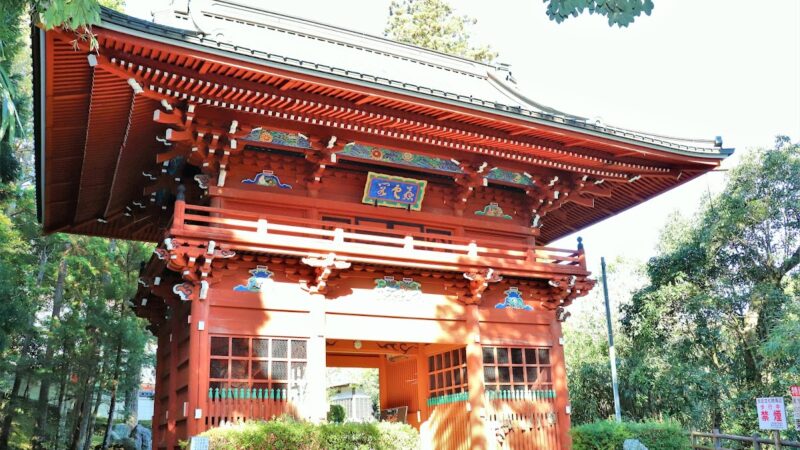
Main Gate: The main gate, standing at the entrance to the approach to the temple, is an important structure that signifies the temple’s status.
Bell Tower: There is a bell tower where the temple bell is hung, serving the role of telling the time.
Monk’s Quarters: This is the living space for the monks and also functions as the temple office.
Cemetery: This is the burial place of successive chief priests and parishioners, telling the story of the region’s history.
Stone Monuments and Stone Buddhas: Historical stone monuments and stone Buddhas are placed throughout the temple grounds, welcoming visitors.
Cultural Properties and Treasures
Designated Cultural Properties
Gyogenji Temple preserves several valuable cultural properties, including those designated as cultural properties by Isumi City:
Main Hall: Recognized for its historical value as a historical building
“Waves and Jewel” transom carving by Nami no Ihachi: City-designated tangible cultural property
Sculpture by Takamatsu Matahachi: Valuable as the only existing work
Amida Buddha Statue: Has been revered as the principal image of worship since ancient times
Other Temple Treasures
In addition to the designated cultural properties listed above, Gyogenji Temple possesses many other temple treasures:
- Calligraphy and paintings by successive chief priests
- Ancient documents (documents recording the history of the temple)
- Buddhist implements (incense burners, candlesticks, temple bells, etc.)
- Buddhist scriptures (important scriptures of the Tendai sect)
These treasures are not usually open to the public, but may be displayed on special occasions.
Visiting Information
Visiting Hours and Fees
Visiting Days: Saturdays, Sundays, and National Holidays
Visiting Hours: From 1 PM (We recommend checking in advance for details)
Admission Fee: Due to limited information, please contact the temple directly before visiting.
Notes:
- For weekday visits, please check with the temple in advance.
- Visits may not be possible during memorial services or events.
- Permission may be required for photography inside the main hall.
About Goshuin (Temple Seals)
Goshuin are available at Gyogenji Temple. Goshuin are given by temples as proof of worship, and in recent years, the number of visitors enjoying collecting goshuin has increased.
Goshuin Contents:
- Ink calligraphy of the temple name “Gyogenji”
- Inscription of the mountain name “Totozan”
- Temple seal (red seal)
- Date
When receiving a goshuin, please bring your goshuincho (stamp book), or you can receive a pre-written goshuin at the temple. The fee for a Goshuin (temple/shrine stamp) is generally around 300 to 500 yen, but it’s recommended to check in advance.
Access Methods
Access by Train
Nearest Station: JR Sotobo Line “Kuniyoshi Station” or “Kazusa-Nakagawa Station”
From Kuniyoshi Station:
- Taxi: Approximately 15 minutes
- Bus: Limited number of buses, please check the timetable in advance.
From Kazusa-Nakagawa Station:
- Taxi: Approximately 10 minutes
- Walking: Approximately 2.5 km (approximately 30-40 minutes)
Access by Car
From the Tokyo Metropolitan Area:
- Approximately 30 minutes from Ichihara-Tsurumai IC via Keiyo Expressway and Tateyama Expressway
- Approximately 25 minutes from Ken-O Expressway Ichihara-Tsurumai IC via National Route 297
Parking:
- Temple parking is available (limited number of spaces, please be aware of congestion)
Car Navigation Settings:
- Address: 2136 Ogihara, Isumi City, Chiba Prefecture
- If searching by phone number, please confirm with the temple in advance.
Nearby Tourist Attractions
When visiting Gyogenji Temple, we recommend also visiting other tourist attractions around Isumi City:
Otaki Castle: A historical museum with a restored castle from the Sengoku period (approximately 20 minutes by car)
Iizuna-ji Temple: Another temple featuring works by Nami no Ihachi (approximately 15 minutes by car)
Taitozaki Cape: A scenic spot overlooking the Pacific Ocean (approximately 25 minutes by car)
Isumi Railway: Enjoy a local train journey (starting from Kuniyoshi Station)
Annual Events and Memorial Services
Gyogenji Temple holds annual events in accordance with the traditions of the Tendai sect. The main events include the following:
New Year’s Day (First Three Days): First shrine visit of the year, Shusho-e (New Year’s Day ceremony)
Spring Equinox (Spring Equinox): Equinox memorial service (March)
Flower Festival (Hanamatsuri): Memorial service celebrating the birth of Buddha (April 8th)
Obon Festival (Urabon-e): Memorial service for the Obon festival (August)
Autumn Equinox (Autumn Equinox): Equinox memorial service (September)
New Year’s Eve Bell Ringing (December 31st): Please note that visiting hours may differ from normal during these events. We recommend checking in advance.
Manners and Precautions for Visiting the Temple
When visiting Gyogenji Temple, please observe the following manners:
Basic Manners for Visiting the Temple
- Bow at the Temple Gate: Bow before entering the temple grounds.
- Proper Hand-Washing Procedure: Cleanse your hands and mouth at the water basin.
- Respect: Be quiet within the temple grounds and avoid disturbing other visitors.
- Consideration for Photography: Refrain from taking photos in areas where photography is prohibited, and even in permitted areas, be considerate of other visitors.
- Worship at the Main Hall: Place your offering in the offering box and quietly clasp your hands together in prayer.
Clothing and Items to Bring
- Avoid excessively revealing clothing.
- Take precautions against the heat in summer and warm clothing in winter.
- Bring your goshuincho (stamp book) if you wish to receive a goshuin (temple stamp).
- Prepare cash (for goshuin fees, offerings, etc.).
A Summary of the Charms and Highlights of Gyōgenji Temple
The greatest charm of Gyōgenji Temple lies in its history of over 1200 years and the collection of masterpieces by renowned Edo-period craftsmen. In particular, “Waves and Jewel” by Nami no Ippachi is an important work in the history of Japanese sculpture and a cultural treasure that you should definitely see when visiting the Bōsō region.
Reasons to Visit Gyogenji Temple
- Historical Value: An ancient Tendai sect temple founded by Jikaku Daishi Ennin
- Artistic Value: You can admire the masterpieces of Nami no Ihachi up close
- Rarity: The only surviving work of Takamatsu Matahachi
- Architectural Beauty: The main hall, built in 1586 (Tensho 14), still exists
- Tranquil Environment: A quiet place to worship, away from the hustle and bustle of the city
Recommended Time to Visit
Spring (March-May): A warm and pleasant season, with beautiful fresh greenery
Autumn (October-November): The season of autumn leaves, when the trees on the temple grounds change color
New Year’s Visit (January): Pray for a safe year with a New Year’s visit
Visiting in spring or autumn is especially recommended, as summer is extremely hot and winter is extremely cold.
Summary
Gyogenji Temple in Isumi City, Chiba Prefecture, is a historic temple that has continued from its founding in the Heian period to the present day. With its founding by Jikaku Daishi Ennin, its history of war and reconstruction, the masterpiece “Waves and Jewel” by Nami no Ihachi, and the only known work of the legendary master craftsman Takamatsu Matahachi, the temple boasts a wealth of attractions that captivate many worshippers and tourists.
Developed as an important center of the Tendai sect in eastern Japan, Gyogenji Temple is a valuable institution that conveys the essence of Buddhist culture and art in the Boso region. In particular, the works of Edo period temple carvers represent the pinnacle of Japanese wood carving art and hold extremely important historical value.
When visiting Isumi City, be sure to stop by Gyogenji Temple and experience its more than 1000-year history and the skills of Edo period master craftsmen. By praying in the tranquil temple grounds and touching upon the cultural heritage preserved and passed down by our ancestors, you will find peace of mind and new discoveries.
From your current location, you can feel the origins of Buddhist culture in eastern Japan, be overwhelmed by the dynamic wave sculptures of Nami no Ippachi, and contemplate the only work by the legendary master craftsman Takamatsu Matahachi—your experience at Gyogenji Temple is sure to become an unforgettable memory.