Shibasaki Shrine (Abiko City, Chiba Prefecture) Complete Guide | History, Goshuin (Shrine Seal), Benefits, and Access Information
Shibasaki Shrine, located in Shibasaki, Abiko City, Chiba Prefecture, is one of the oldest shrines in Abiko City. Situated at a key transportation hub along the old Mito Highway, it has been revered by local people since ancient times. This shrine, with its numerous historical episodes including the legend of Yamato Takeru’s eastern expedition and its connection to Taira no Masakado, is introduced in detail, covering its history, benefits, highlights, and visiting information.
History and Origins of Shibasaki Shrine
Origin of Founding and the Legend of Yamato Takeru
While there are various theories regarding the founding date of Shibasaki Shrine, its origins are said to date back to the time of Yamato Takeru’s eastern expedition. According to tradition, Yamato Takeru visited this area during his conquest of the eastern provinces and erected a offering to pray for safe travels and lasting military fortune, marking the beginning of the shrine.
History and Origins of Shibasaki Shrine
Origin of Founding and the Legend of Yamato Takeru
While there are various theories regarding the founding date of Shibasaki Shrine, its origins are said to date back to the time of Yamato Takeru’s eastern expedition. According to legend, Yamato Takeru visited this area during his conquest of the eastern provinces and erected a offering to pray for safe travels and lasting military fortune, which is considered the beginning of the shrine. If this legend is true, the origins of Shibasaki Shrine date back to the Kofun period. Regarding its actual founding, records indicate it was established in the first year of Tenkei (938 AD), confirming its function as a shrine during the mid-Heian period.
Deep Connection with Taira no Masakado
A noteworthy aspect of Shibasaki Shrine’s history is its connection to Taira no Masakado. During the Taira no Masakado Rebellion, which occurred from the first year of Tenkei (938 AD) to the third year of Tenkei (940 AD), Shibasaki Shrine is said to have played a crucial role as Masakado’s place of prayer.
Taira no Masakado was a powerful clan leader who expanded his influence throughout the Kanto region and attempted to establish his own government by declaring himself the “New Emperor.” The fact that Masakado chose Shibasaki Shrine as his place of prayer indicates that it was already known as a shrine with miraculous powers at that time.
Guardian Deity of the Soma Clan
After the Taira no Masakado Rebellion, the Soma clan, believed to be descendants of Masakado, maintained their power based in Shimosa Province. Shibasaki Shrine was revered as the guardian deity of the Soma clan and served as a spiritual pillar of the region throughout the Middle Ages.
During the Sengoku period (Warring States period), this area, located at the southern end of the Shibasaki plateau, was used as Shibasaki Castle, making it a strategically important base. It is believed that the shrine, as part of the castle’s fortifications, also played a role in protecting the region’s safety.
Development and Improvement in the Edo Period
During the Edo period, Shibasaki Shrine underwent significant improvements. The current stone steps were built in 1728 (Kyoho 13), and the large torii gate was erected in 1803 (Kyowa 3). These improvements reflect the deep faith and economic strength of the people of Shibasaki Village at that time.
In 1842 (Tenpo 13), the Inari Shrine within the grounds was bestowed the honor of receiving the divine title of “Sho-ichii Inari Daimyojin” (First Rank Inari Great Deity). This was a high-ranking recognition from the Edo shogunate, indicating the elevated status of Shibasaki Shrine.
Changes Since the Modern Era
Shibasaki Shrine was formerly called “Myoken Shrine.” This was because the main deity, Amenominakanushi-no-Mikoto, was worshipped as Myoken Bodhisattva through syncretism with Buddhism. However, following the Meiji Restoration’s separation of Shinto and Buddhism, it was renamed “Hokusei Shrine” in 1868 (Meiji 1).
Furthermore, in 1880 (Meiji 13), the shrine’s name was changed to its current “Shibasaki Shrine,” and it was simultaneously elevated to the rank of a village shrine. This name change further clarified the shrine’s role as the guardian deity of the region.
In 1987 (Showa 62), the shrine building was completely renovated, resulting in a beautiful Shinto-style shrine. The current shrine building was constructed at this time, incorporating modern architectural techniques while maintaining traditional styles.
Deities and Benefits
Main Deity: Amenominakanushi-no-Mikoto
The main deity of Shibasaki Shrine is Amenominakanushi-no-Mikoto. Amenominakanushi-no-Mikoto is a highly revered deity, considered one of the three gods (the three creation gods) who first appeared at the creation of heaven and earth in the Kojiki (Records of Ancient Matters).
Amenominakanushi-no-Mikoto is the supreme deity at the center of the universe, worshipped as the source of all things and the god of creation. From the Middle Ages onward, he became syncretized with Myoken Bodhisattva, the deification of the North Star, and came to be widely worshipped as a god of protection against misfortune, safe voyages, and good fortune.
Deities Enshrined Together
In addition to Amenominakanushi-no-Mikoto, the following deities are enshrined at Shibasaki Shrine:
Deities Enshrined Together:
- Susanoo-no-Mikoto: God of protection against misfortune, eradication of disease, and matchmaking
- Ukanomitama-no-Mikoto: God of abundant harvests and business prosperity
Deities Enshrined Together:
- Yamato Takeru-no-Mikoto: God of long-lasting military fortune, success in competitions, and good fortune
- Wakeikazuchi-no-Kami: God of thunder, protection against misfortune, and victory
- Kanayama-hiko-no-Mikoto: God of mining, blacksmithing, and financial fortune
- Oyamakui-no-Mikoto: God of mountains, agriculture, and brewing
By enshrining these diverse deities, Shibasaki Shrine is known as a shrine that bestows a wide range of blessings.
Expected Blessings
The main blessings you can expect at Shibasaki Shrine are as follows:
Good Fortune & Protection from Unfavorable Directions
The main deity, Amenominakanushi-no-Mikoto, is considered the deification of the North Star and governs the auspiciousness or inauspiciousness of directions. It is believed to be effective for protection from unfavorable directions during moving or travel, and for praying for good fortune when determining one’s life direction.
Long-lasting Military Fortune & Success in Competitions
Due to the legend that Yamato Takeru prayed here for victory in battle, many worshippers visit to pray for success in competitions such as exams, job hunting, sports, and business.
Protection from Misfortune & Disaster
As Susanoo-no-Mikoto is enshrined here, it offers protection from misfortune and disasters during unlucky years. It is especially known as a god of warding off epidemics.
Business Prosperity & Abundant Harvest
As Inari-no-Mikoto (the fox god) is enshrined here, it offers blessings for business prosperity, business development, and abundant harvests.
Family Safety and Traffic Safety
As the guardian shrine of the region, we also accept prayers for the health and safety of families and for traffic safety.
Highlights of the Shrine Grounds
Shrine Buildings and Architectural Style
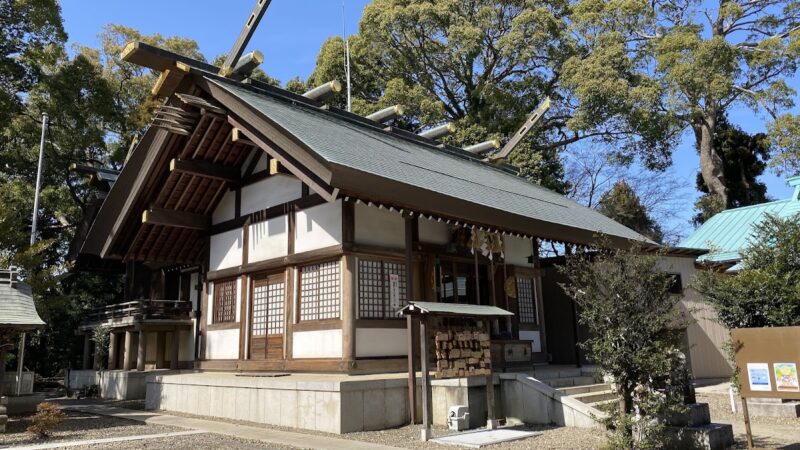
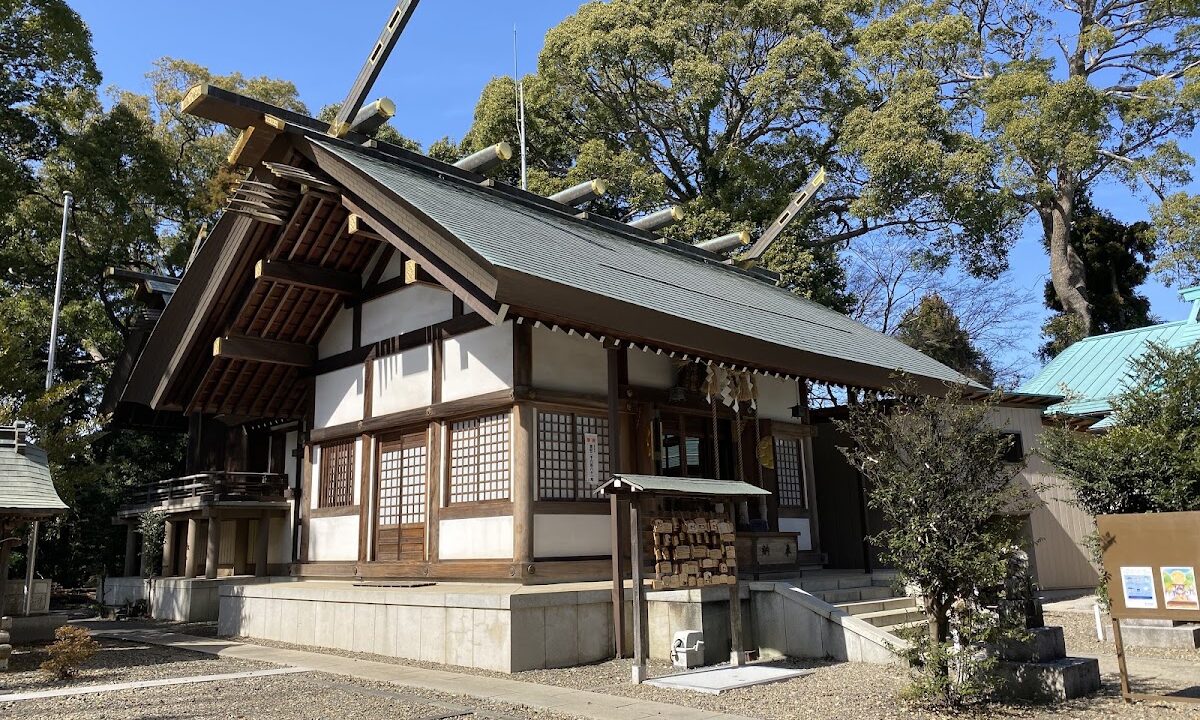
The shrine buildings, completely renovated in 1987, are built in the traditional Shinmei-zukuri architectural style. Shinmei-zukuri is the oldest style of shrine architecture in Japan, exemplified by Ise Grand Shrine, and is characterized by its simple yet dignified appearance.
The main hall, while relatively compact, is meticulously crafted down to the smallest detail, creating a refreshing space filled with the scent of cypress wood. From the worship hall, you can admire the beautiful chigi and katsuogi of the main hall, appreciating the beauty of traditional architecture.
Stone Steps and the Great Torii Gate
The stone steps, built in 1728, are a valuable historical structure bearing approximately 300 years of history. Leading from the old Mito Highway to the shrine grounds, these steps have been polished by the footsteps of worshippers over the years, exuding a unique character. The large torii gate, erected in 1803 (Kyowa 3), is also a symbolic presence of Shibasaki Shrine. As a valuable cultural asset that conveys the architectural techniques of the late Edo period, it tells the story of the region’s history.
Komainu (Guardian Dogs)
Impressive guardian dogs (komainu) stand within the shrine grounds. These dogs are believed to have been dedicated between the late Edo period and the Meiji era, and are characterized by their powerful form and intricate carvings.
The pair of komainu, with their A-un (open-mouthed and closed-mouthed) expressions, welcome worshippers and protect the sacred area. While some parts have weathered with age, this only adds to their sense of historical weight.
Fujizuka (Mt. Fuji Mound)
A Fujizuka remains within the grounds of Shibasaki Shrine. A Fujizuka is an artificial mound built to resemble Mt. Fuji, and was constructed in various locations during the Edo period when the Fuji-ko (Fuji pilgrimage) faith flourished.
People who found it difficult to actually climb Mount Fuji believed that climbing this mound would grant them the same blessings as climbing Mount Fuji. The Fujizuka (Mt. Fuji mound) at Shibasaki Shrine is a valuable historical site that conveys the popular beliefs of that time.
Stone Monuments
Numerous stone monuments are erected within the shrine grounds. These were dedicated from the Edo period to the Showa period, each imbued with various wishes, and serve as important historical documents for understanding the region’s history and the evolution of its beliefs.
The monuments are diverse in type, including Koshin towers, road markers, and memorial monuments, each bearing the thoughts and feelings of the people of that time. By examining each monument, one can gain a deeper understanding of Shibasaki’s history.
Shrine Precincts
Several subsidiary shrines (abstract shrines) are enshrined within the grounds of Shibasaki Shrine. The Inari Shrine, in particular, is a historically significant shrine, having been granted the divine title of “Sho-ichii Inari Daimyojin” in 1842 (Tenpo 13), and attracts many worshippers praying for business prosperity.
Numerous smaller shrines are scattered throughout the grounds, each attracting local devotion. Visiting these smaller shrines in addition to the main shrine is believed to bring a wider range of blessings.
About Goshuin (Shrine Seals)
Issuance of Goshuin
Shibasaki Shrine offers goshuin (shrine seals). Goshuin are popular among many visitors as proof of worship and as a way to forge a connection with the shrine.
Shibasaki Shrine’s goshuin features a simple yet dignified design, with the shrine’s name, “Shibasaki Shrine,” and the date of visit written in ink, followed by a red seal. While there may be slight variations depending on the calligrapher, all are carefully written.
Issuance Time and Location
Goshuin are issued at the shrine office. However, since there may not always be a resident priest, it is recommended to call ahead to confirm if you wish to receive a goshuin.
Contact Information: 04-7182-4815
General hours for receiving goshuin (stamps/stamps) are from 9:00 AM to around 5:00 PM, but these may change during festivals and events.
About Goshuincho (Stamp Books)
Please check with the shrine office upon your visit to see if Shibasaki Shrine has its own original goshuincho. You can also have your own goshuincho stamped.
The offering fee is generally around 300-500 yen, but sometimes it is left to your discretion.
Annual Events and Festivals
Grand Festival
The Grand Festival is the most important festival at Shibasaki Shrine. Held every autumn, it brings together the local community to make it a lively event. Traditional festival events such as the procession of the portable shrine and devotional performances are held, and the usually quiet shrine grounds are filled with activity.
New Year’s Visit
Many worshippers visit the shrine for their first shrine visit of the new year. From New Year’s Day through the third day, the shrine is bustling with people praying for family safety, business prosperity, academic success, and more. However, the crowds are relatively calm, making for a relaxed and enjoyable visit—a key attraction of Shibasaki Shrine.
Setsubun Festival
The Setsubun Festival is held in February, featuring events such as bean-throwing. Many people visit to pray for protection against evil.
Other Events
We also accept prayers for life’s milestones, such as first shrine visits (Omiyamairi), Shichi-Go-San (7-5-3) celebrations, and prayers for protection against evil. We also conduct on-site ceremonies such as ground-breaking ceremonies and house-purification ceremonies.
Access and Visiting Information
Basic Information
Address: 737 Shibazaki, Abiko City, Chiba Prefecture 270-1177
Phone Number: 04-7182-4815
Shrine Building: Shinmei-zukuri style (completely renovated in 1987)
Visiting Hours: Grounds are freely accessible (Shrine office is generally open from 9:00 to 17:00)
Parking: Available (approximately 30 spaces, free)
Access by Train
Nearest Station: JR Joban Line, Tennodai Station
Travel Time: Approximately 7 minutes on foot from the north exit of Tennodai Station (approximately 500m)
Exit the north exit of Tennodai Station and proceed northwest along the old Mito Highway (Chiba Prefectural Road No. 8). After passing through a residential area, you will see the torii gate of Shibazaki Shrine on your right. The path is relatively flat and easy to walk.
Access by Car
From National Route 6: Approximately 2 minutes from Shibasaki Intersection
From Joban Expressway: Approximately 15 minutes from Kashiwa Interchange
Located along the old Mito Highway, it is easily accessible by car. Entering the address or phone number into your car navigation system is recommended.
Parking
There is a free parking lot with space for approximately 30 cars on the shrine grounds. While usually spacious, it can get crowded during the first three days of the New Year and during events such as the annual festival.
Nearby Attractions
Old Mito Highway
Shibasaki Shrine is located along the old Mito Highway. This historic road was used by the Mito feudal lords during their sankin-kotai (alternate attendance) journeys in the Edo period, and the surrounding area is dotted with historical sites and old buildings that retain the atmosphere of that time.
Lake Teganuma
Approximately 2 km south of Shibasaki Shrine lies Lake Teganuma, a representative lake of northwestern Chiba Prefecture. The surrounding area has well-maintained walking paths, perfect for cycling and strolling.
Cultural Facilities in Abiko City
Abiko City boasts numerous cultural facilities, including the Shirakaba Literary Museum and the Sugimura Sojinkan Memorial Museum. Combined with a visit to Shibasaki Shrine, you can spend a day immersed in Abiko’s culture and history.
Visitor Feedback
Quiet and Peaceful Atmosphere
Many visitors to Shibasaki Shrine appreciate its quiet and peaceful atmosphere. Comments such as “It’s a very relaxed shrine” and “The quiet grounds bring peace of mind” are frequently heard.
Despite being located not far from the city center, Shibasaki Shrine maintains a tranquil space away from the hustle and bustle, allowing for a peaceful and serene visit—a major attraction.
A Shrine Beloved by the Local Community
Many visitors comment on its “very local feel,” reflecting its deep roots in the community. The shrine is meticulously maintained by its parishioners, and the grounds are impeccably clean.
It’s a shrine deeply integrated into the lives of local residents, and you can often see locals stopping by during their walks.
A Shrine Grounds Filled with History
Many praise this shrine as “quite impressive” and “a shrine with a long history,” and its compact yet numerous points of interest are highly regarded. With its abundant historical elements such as stone steps, guardian lion-dogs, a miniature Mount Fuji, and a group of stone monuments, it’s a shrine that will satisfy history buffs.
Manners and Points for Visiting
Basic Worship Etiquette
- Bow Before Passing Through the Torii Gate: As a sign of respect upon entering the sacred area, bow before the torii gate.
- Purify Yourself at the Water Basin: Scoop water with the ladle, purify your left hand, then your right hand, then receive water in your left hand and rinse your mouth.
- Worship at the Main Hall: The basic procedure is two bows, two claps, and one bow. After offering your donation and ringing the bell, bow deeply twice, clap twice, and finally bow once.
Regarding Photography
Photography is generally permitted within the shrine grounds, but there are areas where photography is prohibited, such as inside the main hall. Please also be considerate of other visitors.
Regarding Attire
There are no specific dress code requirements, but it is advisable to avoid revealing or overly flashy clothing, as this is a sacred place.
Summary
Shibasaki Shrine in Abiko City, Chiba Prefecture, is a venerable shrine boasting over a thousand years of history, beginning with the legend of Yamato Takeru and having connections to Taira no Masakado and the Soma clan. With Amenominakanushi-no-Mikoto as its main deity, it is deeply cherished by the local community as a shrine that bestows various blessings, including good fortune, military success, and protection from evil.
Its historical location along the old Mito Highway, the stone steps and large torii gate remaining from the Edo period, the Fujizuka (miniature Mount Fuji), and above all, the quiet and peaceful atmosphere of the shrine grounds are major attractions.
Combined with its easy accessibility—a 7-minute walk from JR Tennodai Station—it is a shrine that can be easily visited. When you visit Abiko, be sure to stop by Shibasaki Shrine and experience its history and blessings. It’s also a great place to visit for important life events such as New Year’s prayers, exorcisms, and Shichi-Go-San (a traditional Japanese rite of passage for children).