Ichimatsu Shrine (Chiba Prefecture) Complete Guide | A Thorough Explanation of its 1088-Year History and Highlights
Ichimatsu Shrine, located in Chosei Village, Chosei District, Chiba Prefecture, is a historic shrine said to have been founded in 1088. Designated as a village cultural property, its elaborate carvings on the main hall and diverse architectural styles make it a must-see spot for those interested in architecture and history. This article comprehensively covers everything you need to know before visiting Ichimatsu Shrine, including its history, enshrined deities, highlights, annual events, and access methods.
History and Origins of Ichimatsu Shrine
History of its Founding and the Rokutenjin Era
Ichimatsu Shrine is said to have been founded in the second year of Kanji (1088), making it a historic shrine with over 900 years of history. Initially, it was called “Rokutenjin” and enshrined Ōnamuchi-no-Mikoto. Ōkuninushi-no-Mikoto, also known as Ōnamuchi-no-Mikoto, has been worshipped as a god of nation-building.
The name “Rokutenjin” (Sixth Heavenly God) is a remnant of the era when Shinto and the Buddhist belief in the Sixth Heavenly Demon King merged, and it is valuable historical evidence that conveys the medieval syncretic culture of Shinto and Buddhism.
Suwa Shrine Consolidation during the Juei Era
The Juei era (1182-1184) marked a significant historical turning point. After the death of the Kiso clan in battle, it is said that a certain person from Suwa came to the village carrying sacred treasures and erected a temporary Suwa Shrine. This event is deeply connected to the historical context of the Genpei War and is an interesting historical fact that shows the spread of faith within the sphere of influence of Kiso Yoshinaka.
This merger expanded the deities enshrined at Ichimatsu Shrine, and currently, it enshrines Takamimusubi-no-Mikoto, Kamimusubi-no-Mikoto, and Takeminakata-no-Mikoto. Takeminakata-no-Mikoto is the principal deity of Suwa Grand Shrine, reflecting the history of this merger.
Changes in Local Beliefs
Throughout the Edo period, Ichimatsu Shrine served as the guardian shrine of the Ichimatsu district of Chosei Village, attracting the faith of local residents. During the Genroku earthquake (1703), this area was also affected by a tsunami, and the shrine is believed to have played a central role in the reconstruction as a spiritual pillar of the community.
After the Meiji-era separation of Shinto and Buddhism, it was reorganized into its current form as a purely Shinto shrine, and in the Showa period, it was officially designated as a village cultural property.
Deities and Blessings of Ichimatsu Shrine
Characteristics of the Main Deities
The three deities enshrined at Ichimatsu Shrine each possess different divine virtues.
Takamimusubi-no-Mikoto is one of the three creation deities involved in the creation of heaven and earth, and is known as the god of creation and development. It is believed to bring blessings for the development of agriculture and industry, and for matchmaking.
Kamimusubi-no-Mikoto is also one of the three creation deities, and is the god who governs the spiritual power that creates all things. It is believed to bring blessings for increased vitality and family safety.
Takeminakata-no-Mikoto is a god of war known as the main deity of Suwa Grand Shrine, and is believed to bring blessings for good fortune in competitions, protection from evil, and abundant harvests.
Expected Benefits
The main benefits you can expect from visiting Ichimatsu Shrine include the following:
- Abundant Harvest and Agricultural Prosperity: Through the divine virtues of Takeminakata-no-Mikoto, you can pray for a bountiful harvest.
- Matchmaking and Family Safety: Through the power of creation and development of Takamimusubi-no-Mikoto, you can pray for a good relationship and family happiness.
- Protection from Misfortune and Good Fortune: Through the power of Takeminakata-no-Mikoto as a god of war, you can ward off disasters and improve your luck.
- Business Prosperity and Development: Through the creative power of the three creation gods, you can pray for success in your business.
In the region, the shrine is particularly revered by those involved in agriculture, and many visitors come to pray for a bountiful harvest and give thanks for the harvest during the spring and autumn festivals.
Architecture and Highlights of Ichimatsu Shrine
Architectural Style and Sculptures of the Main Hall
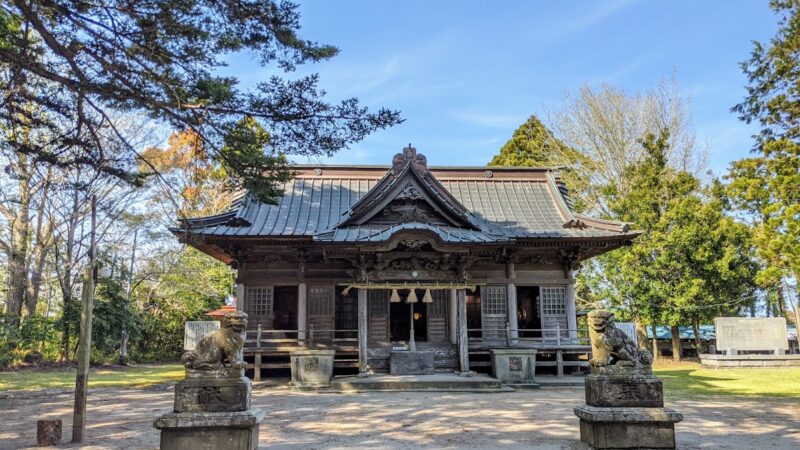
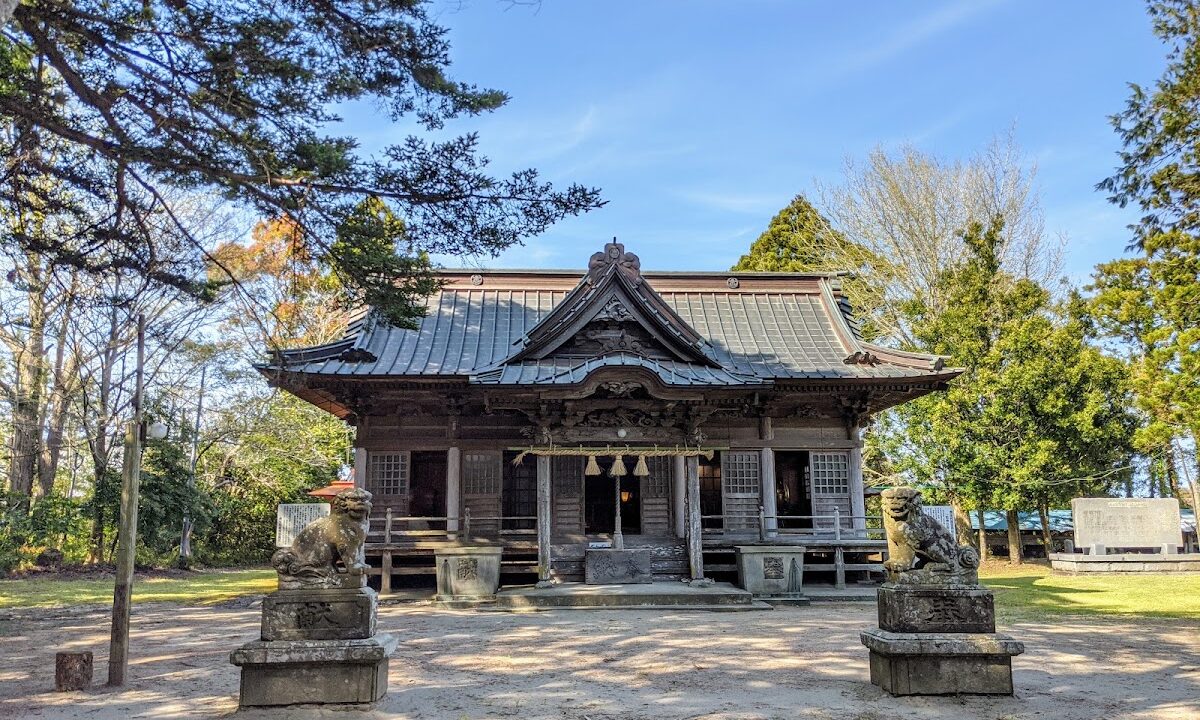
The greatest highlight of Ichimatsu Shrine is the main hall, adorned with intricate carvings. The main shrine building exhibits a blend of multiple architectural styles, reflecting its history of expansions and renovations over time.
The carvings in the main shrine are particularly noteworthy. Carvings of lions and sumo wrestlers, believed to be the work of master craftsmen from the late Edo period, can be seen throughout. These carvings are not merely decorative; they serve to protect the shrine and are valuable cultural assets that convey the high level of sculptural skill of the time.
The lion carvings are full of dynamism, meticulously carved down to the smallest detail, even depicting each individual strand of mane. The sumo wrestler carvings realistically portray the bulging muscles and expressions, possessing an overwhelming power that overwhelms the viewer.
Features of the Worship Hall and Shrine Grounds
A pine tree is planted in front of the worship hall, reflecting the local place name and suggesting the origin of the shrine’s name, “Ichimatsu” (meaning “one pine”). The shrine grounds are of a moderate size and function as a community space, with locals visiting to cool off.
Groundwater springs forth within the shrine grounds, known for its cold and delicious water. This spring water has been used in Shinto rituals and has been cherished as a valuable water source for the region. Visitors can freely drink from it, and many come to cool off, especially during the summer.
Targets Used in Shinto Ritual and the “O-Matoshiki” Ceremony
Within the shrine grounds, there are targets used in Shinto rituals. These are used in the traditional “O-Matoshiki” ceremony. The O-Matoshiki is an important Shinto ritual that predicts the year’s harvest; the outcome of the arrow shots is used to predict the year’s crop yield.
These targets are not merely tools, but are treated as sacred ritual implements for discerning the will of the gods. They are carefully stored and used only during festivals.
Stone Monuments and Historical Remains
Several stone monuments have been erected within the shrine grounds, recording the history of the shrine and local events. According to local elders, these monuments once served as a center for local cultural activities, with screens being set up to show movies.
These monuments suggest that the shrine has played diverse roles not merely as a religious facility, but as a central hub for the local community.
These monuments reveal that the shrine has played various roles as a center of the community. ## Annual Events and Festivals of Ichimatsu Shrine
Spring Festival (March)
The Spring Festival, held every March, is an important festival to pray for a bountiful harvest throughout the year. During this festival, traditional music and folk songs are offered, and local traditional performing arts are showcased.
The highlight of the Spring Festival is the “O-teki-shiki” (target shooting ceremony). In this ritual, Shinto priests and representatives of the parishioners shoot arrows at a target, and the outcome is used to predict the year’s crop yield. The closer to the center of the target, the greater the harvest; even if the arrow misses, the direction of the shot is used to predict the outcome of a specific crop, demonstrating the detailed methods of divination passed down through generations.
On the day of the festival, many local residents participate, and there is a procession of portable shrines and stalls, making it a spring tradition in Chosei Village.
Autumn Festival (October)
The Autumn Festival, held in October, is a festival to express gratitude for the harvest. Similar to the spring festival, traditional music and folk songs are offered, making it a valuable opportunity for the preservation of local traditional culture.
At the autumn festival, newly harvested rice and vegetables are offered to the gods, expressing gratitude for the bountiful harvest. Traditional performing arts such as Kagura (sacred dance) and lion dances are also sometimes offered, making it an important event for confirming the cultural identity of the region.
Other Annual Events
In addition to the Spring and Autumn Festivals, Ichimatsu Shrine holds the following annual events:
- New Year’s Day Festival (January 1st): A festival to pray for peace in the new year
- Setsubun Festival (February): A bean-throwing ceremony to ward off evil and invite good fortune
- Summer Purification Ceremony (June 30th): A Shinto ritual to purify oneself of the impurities accumulated over the past six months
- Annual Grand Festival (Autumn Festival): The most important festival of the year
- Year-End Purification Ceremony (December 31st): A Shinto ritual to purify oneself of the impurities accumulated over the year
These events are supported by the participation of local residents, and the faith is passed down through generations.
How to Access Ichimatsu Shrine
Basic Information
Location: 916 Ichimatsu-hei, Chosei-mura, Chosei-gun, Chiba Prefecture
Phone Number: Please confirm (Inquiries via Chosei Village Office are recommended)
Visiting Hours: Grounds are open freely (Shrine office hours are irregular)
Admission Fee: Free
Parking: Available (Several spaces)
Access by Public Transportation
Using Trains and Buses:
- Get off at Mobara Station on the JR Sotobo Line
- From Mobara Station, take the Kominato Railway Bus bound for “Shirako Depot” or “Ichimatsu Coast”
- Get off at the “Ichimatsu” bus stop and walk for approximately 5 minutes.
Since bus services are limited, it is recommended to check the timetable in advance. Especially on holidays, bus services are reduced, so planning your visit is necessary.
Access by Private Car
From Tokyo:
- Take the Shuto Expressway Wangan Line, then the Keiyo Expressway and the Ken-O Expressway.
- Exit at Mobara-Chonan IC and head south on National Route 128.
- Travel time: Approximately 1 hour 30 minutes (may vary depending on traffic conditions)
From Chiba City:
- Take National Route 16 towards Mobara.
- Take National Route 128 to the Ichimatsu area.
- Travel time: Approximately 50 minutes
If using a car navigation system, search for “916 Ichimatsu-Hei, Chosei Village” or “Ichimatsu Shrine”. However, please be careful when driving as the surrounding area is residential.
Nearby Tourist Spots and Model Courses
When visiting Ichimatsu Shrine, we recommend combining your visit with sightseeing in the surrounding area.
Ichimatsu Beach (approximately 5 minutes by car): A beautiful beach overlooking the Pacific Ocean, perfect for surfing and swimming.
Chosei Village Local History Museum (approx. 10 minutes by car): A facility where you can learn about the history and culture of Chosei Village.
Shirako Onsen (approx. 15 minutes by car): A natural hot spring containing iodine, said to have high therapeutic effects.
Mobara Park (approx. 20 minutes by car): Known as a famous cherry blossom viewing spot, it is bustling with many flower viewers in spring.
Recommended Model Course:
Morning: Visit Ichimatsu Shrine (1 hour) → Stroll along Ichimatsu Beach (1 hour)
Lunch: Local seafood restaurant
Afternoon: Relax at Shirako Onsen (2 hours) → Shopping in Mobara City
Manners and Precautions for Visiting Ichimatsu Shrine
Basic Manners for Visiting Shrines
When visiting Ichimatsu Shrine, please observe the following basic manners:
- Bow before passing through the torii gate: As a sign of respect before entering the sacred area, bow before the torii gate.
- Avoid walking in the center of the approach to the shrine: The center of the approach is considered the path of the gods, so walk along the sides.
- Purify yourself at the water basin: If there is a water basin, purify your left hand, then your right hand, then your mouth.
- Proper etiquette for worship at the main hall: The basic method is two bows, two claps, and one bow.
- Bow deeply twice
- Clap your hands twice
- Pray sincerely
- Finally, bow deeply once more
- Consideration for photography: Photography of the main hall and worship hall is permitted, but please be considerate of other worshippers and avoid disturbing religious ceremonies.
Points to note when visiting
Dress code: There are no strict regulations, but clean clothing that reflects the sacred nature of the place is desirable.
Time of day: Visiting in the early morning or evening offers a quiet and peaceful atmosphere, but the shrine office may be closed. If you wish to receive a Goshuin (shrine stamp), it is recommended to check in advance.
Festival Periods: The shrine is crowded with many visitors during the spring and autumn festivals. If you wish to visit at a more leisurely pace, visiting on weekdays outside of festival periods is recommended.
Consideration for the Community: The area surrounding the shrine is a residential area. Please be considerate of local residents by avoiding noise, illegal parking, etc.
Value of Ichimatsu Shrine as a Cultural Property
Significance as a Village-Designated Cultural Property
Ichimatsu Shrine is officially designated as a cultural property of Chosei Village and is protected as a valuable cultural heritage of the region. This designation is the result of a comprehensive evaluation of the shrine’s historical value, architectural style, and the artistry of its sculptures.
In particular, the carvings on the main hall are attracting attention from researchers as important materials demonstrating the level of carving technology in the Boso region during the late Edo period.
Diversity of Architectural Styles
The architecture of Ichimatsu Shrine incorporates styles from multiple periods. This reflects the history of expansions and renovations, and is an interesting feature from an architectural history perspective.
While the main shrine exhibits elements of the Gongen-zukuri architectural style, the worship hall employs a regional style from the late Edo period. This diversity of architectural styles reflects how the shrine has evolved and developed alongside the local community over its long history.
A Hub for the Transmission of Local Culture
Ichimatsu Shrine is important not only as a building but also as a hub for the transmission of local traditional culture. The music and folk songs performed at the spring and autumn festivals are intangible cultural assets passed down through generations.
In particular, the “O-teki-shiki” ritual is a valuable Shinto ceremony that preserves an ancient form of agricultural ritual and holds high value from an ethnological perspective.
History of the Area Around Ichimatsu Shrine and the Genroku Earthquake
Memories of the Genroku Earthquake and Tsunami
The Genroku earthquake, which occurred on November 23, 1703 (Genroku 16), caused immense damage to the Boso Peninsula. The Ichimatsu area was also affected by the tsunami, and it is said that many lives were lost.
Ichimatsu Shrine became a spiritual pillar of the community during the recovery process from this disaster. Prayers for recovery and memorial services were held at the shrine after the disaster, and it is believed to have played a crucial role in the reconstruction of the local community.
Even today, the elders of the community carefully preserve the legends of the Genroku earthquake and strive to pass on disaster prevention awareness. Around the shrine, there are sites that mark the point where the tsunami reached, preserving the memory of this historical disaster.
Role as the Center of the Community
From the Edo period through the Meiji, Taisho, and Showa eras, Ichimatsu Shrine was a central presence in the community. The shrine functioned not only as a religious place but also as a gathering and entertainment venue.
In the Showa era, it also served as a hub for local cultural activities, such as holding film screenings with a screen set up on the shrine grounds. This multi-functionality demonstrates the deep roots the shrine had in the community.
The Charms of Chosei Village and the Ichimatsu District
Overview of Chosei Village
Chosei Village is a village with a population of approximately 14,000, located in Chosei District, Chiba Prefecture. Blessed with a mild climate and abundant nature facing the Pacific Ocean, this region thrives on agriculture and fishing.
The village name, “Chosei,” is an auspicious name wishing for longevity, and it is indeed known as a village of healthy longevity where elderly people live actively. The mild climate, fresh produce, and low-stress living environment support the health of the residents.
Characteristics of the Ichimatsu District
The Ichimatsu district is located in the center of Chosei Village and is an old settlement. There are several theories about the origin of the place name, but the most likely is that it comes from a single magnificent pine tree.
Agriculture remains thriving today, with rice and vegetable cultivation. Ichimatsu Beach is also known as a surfing spot, attracting many surfers on weekends.
Local Specialties and Cuisine
In and around Chosei Village, you can enjoy fresh seafood and mountain produce. The following specialties are particularly famous:
Shirako Onions: A specialty of the neighboring Shirako Town, known for their strong sweetness and tenderness.
Kujukuri Clams: These are plump and delicious clams harvested from Kujukuri Beach.
Fresh Local Fish: Seafood caught in the Pacific Ocean is exceptionally fresh.
Chosei Tomatoes: Taking advantage of the warm climate, tomato cultivation is thriving, producing sweet and delicious tomatoes.
When visiting Ichimatsu Shrine, enjoying these local delicacies is highly recommended.
The Charm of Ichimatsu Shrine as a Power Spot
A Space of Natural Energy and Healing
The grounds of Ichimatsu Shrine are enveloped in a quiet and peaceful atmosphere. The ancient pine trees and pure spring water offer a sense of healing to visitors.
The tranquil environment, far removed from the hustle and bustle of the city, provides time to calm the mind and reflect on oneself. Visiting early in the morning, in particular, is recommended as it allows you to refresh your mind and body in the crisp air.
The Sacred Power of Groundwater
The groundwater that springs forth within the shrine grounds is cold and pure, and is cherished by the local people as “sacred water.” This water has been used in Shinto rituals and has been treasured as something sacred.
Visitors are free to drink it, and it is believed to have a purifying effect on the mind and body. Especially in summer, the cold spring water is refreshing.
The Divine Virtues and Energy of the Deities
The three deities enshrined at Ichimatsu Shrine each possess powerful divine virtues. Takamimusubi-no-Mikoto and Kami-no-Sanrei-no-Mikoto, the three creation deities, are believed to bestow the power of creation and development, while Takeminakata-no-Mikoto is believed to bestow good fortune in competitions and protection from evil.
With the combined energies of these deities, Ichimatsu Shrine welcomes visitors with various wishes as a comprehensive power spot for good fortune.
Summary: A Recommendation to Visit Ichimatsu Shrine
Located in Chosei Village, Chosei District, Chiba Prefecture, Ichimatsu Shrine boasts a long history dating back to 1088. It is a precious shrine where the intricately carved main hall and traditional Shinto rituals are still carefully preserved.
While possessing value as a village-designated cultural property, it maintains a friendly and welcoming atmosphere, making it easily accessible even for first-time visitors. Traditional music and folk songs are offered during the spring and autumn festivals, serving as a venue for the transmission of local culture.
Located approximately 1 hour and 30 minutes by car from Tokyo, and accessible by bus from Mobara Station, the shrine is surrounded by numerous tourist attractions such as Ichimatsu Beach and Shirako Onsen. As a hidden historical spot in Chiba Prefecture and a spiritually healing power spot, we highly recommend visiting Ichimatsu Shrine.
Why not spend some fulfilling time at Ichimatsu Shrine, reflecting on history in its tranquil grounds, purifying your mind and body with its pure spring water, and appreciating the artistry of its exquisite carvings?