Complete Guide to Akitomi Shrine (Sodegaura City, Chiba Prefecture) | Thorough Explanation of Goshuin (Shrine Seal), History, and Access
About Akitomi Shrine
Akitomi Shrine is a historic shrine located in Higashibaba, Iitomi, Sodegaura City, Chiba Prefecture. It is a Shikinaisha (a shrine listed in the Engishiki Jinmyocho), a compilation of Heian period texts, and is known as a historically significant ancient shrine, being the only Shikinaisha in the Kimitsu region.
Its former name was Otomi Shrine, and under the modern shrine ranking system, it was ranked as a prefectural shrine. As a sacred place that has attracted the faith of the local community for over a thousand years, it continues to be visited by many worshippers today.
Main Deities and Enshrined Deities
The following deities are enshrined at Akitomi Shrine:
Main Deities:
- Ukanomitama-no-Mikoto: God of abundant harvests and business prosperity
- Kanyai-mimi-no-Mikoto: The elder brother of Emperor Suizei (the second emperor), and a deity associated with the shrine’s founding
- Amenotomi-no-Mikoto: The ancestral deity of the Awa Imbe clan, and a deity associated with the development of the Boso Peninsula
Enshrined Deities:
- Ōnamuchi-no-Mikoto: Another name for Ōkuninushi-no-Mikoto, the god of nation-building
- Sukunahikona-no-Mikoto: God of medicine, hot springs, and sake brewing
These deities have been revered as gods deeply involved in agriculture, pioneering, nation-building, and the prosperity of the region.
History of Akutomi Shrine
Origin of Founding
According to shrine tradition, Akutomi Shrine was founded in the first year of Emperor Suizei’s reign (581 BC). It is said to have been founded by Kamiyaimimi-no-Mikoto, the elder brother of Emperor Suizei (the second emperor), making it a shrine with a very long history.
Kamiyaimimi-no-Mikoto was a son of Emperor Jimmu (the first emperor) and later became the ancestor of the Ōno clan. This founding legend is an important historical document illustrating the relationship between the central government and the Bōsō region in ancient times.
Status as a Shikinaisha (Shrine Listed in the Engishiki)
Akutomi Shrine is listed as “Ōtomi Shrine” in the “Tōkaidō Shrines, Kazusa Province, Bōda District” section of the Engishiki Jinmyōchō (a list of shrines compiled in 927 AD during the Heian period), and is ranked as a Shikinaisha (a minor shrine).
A Shikinaisha is a shrine listed in the Engishiki Jinmyocho (a list of shrines compiled in the Heian period), and was considered particularly important by the imperial court. While many shrines exist within Kazusa Province, Akutomi Shrine is the only one designated as a Shikinaisha in the Kimitsu region, suggesting its importance as a center of worship in the area.
Changes from the Medieval to the Early Modern Period
During the medieval period, it survived under the reverence of powerful local samurai and feudal lords. Even during the turbulent Sengoku period, faith in the shrine remained uninterrupted, and in the Edo period, it became a beloved local guardian shrine.
Under the modern shrine ranking system of the Meiji era, it was designated a prefectural shrine, establishing its position as a representative shrine of the region.
Akutomi Shrine in the Modern Era
Even through the Showa, Heisei, and Reiwa eras, Akutomi Shrine continues to be cherished as a spiritual anchor for local residents. Annual events, including the spring and autumn festivals, are still passed down, and it plays a central role in the local community.
Information on Goshuin (Shrine Seals) and Goshuincho (Shrine Seal Books)
About Goshuin
Akitami Shrine offers Goshuin. Many visitors receive them as a memento of their visit and as proof of their connection with the shrine.
The Goshuin features the shrine’s name and the date of visit written in ink, and stamped with a red seal. As a Goshuin from a prestigious shrine (a Shikinaisha/Kensha), it is attracting attention from Goshuin collectors.
Manners When Receiving a Goshuin
When receiving a Goshuin, please observe the following manners:
- Complete your prayers first: The Goshuin is proof of your visit. Always visit the main shrine first.
- Prepare your Goshuincho (stamp book): Use a dedicated Goshuincho, not a notepad or colored paper.
- Show the open page: Open to the page you want written on and hand it over.
- Wait quietly: Wait quietly while the stamp is being written.
- Express your gratitude: After receiving the stamp, say “Thank you.”
Reception Hours and Offering Fee
We recommend contacting the shrine directly before your visit regarding Goshuin reception hours and offering fees. The shrine office may be unattended, so prior confirmation is essential.
Highlights and Cultural Assets on the Shrine Grounds
Main Shrine and Worship Hall
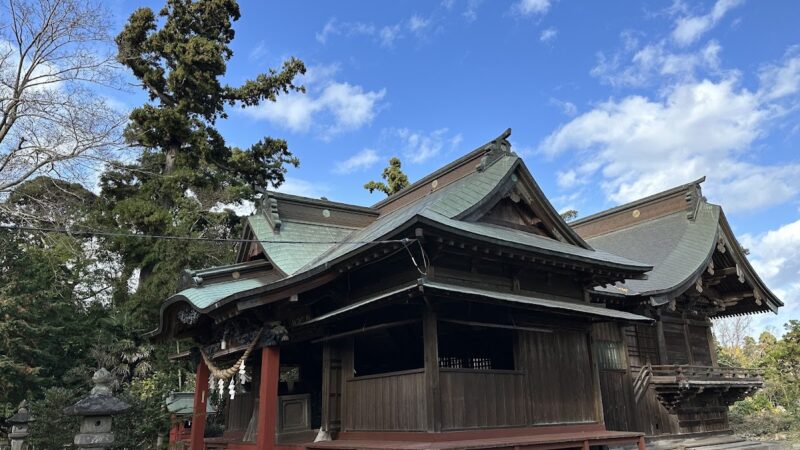
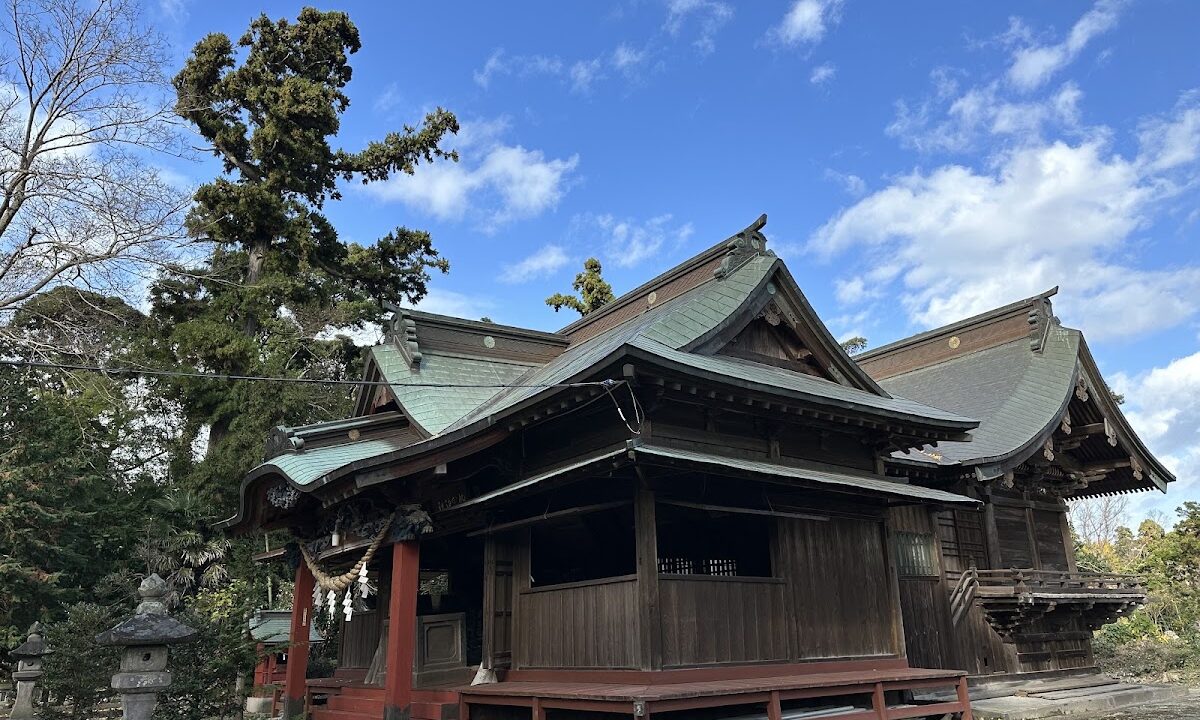
The main shrine of Akutomi Shrine is built in a traditional shrine architectural style, possessing a solemn atmosphere that reflects its long history. In the worship hall, worshippers convey their daily gratitude and wishes to the gods.
Shrine Grove
The shrine grove surrounding the grounds is a natural forest formed over many years, with many ancient trees remaining. These trees serve as a protective barrier for the sacred area and preserve the valuable natural environment of the region.
Stone Monuments and Sculptures
Within the shrine grounds, there are stone monuments and lanterns donated by successive generations, telling the story of the shrine’s history and the deep faith of the local people.
Atmosphere of the Shrine Grounds
Located in a quiet residential area, Akutomi Shrine envelops you in a solemn atmosphere the moment you step onto the grounds. It’s a tranquil space away from the hustle and bustle of the city, providing an environment where you can calm your mind and offer your prayers.
Access and Transportation Information
Location
Address: Higashibaba, Iitomi, Sodegaura City, Chiba Prefecture
Access by Train
Nearest Station: JR Uchibo Line “Sodegaura Station”
Akutomi Shrine is approximately 3-4 km from Sodegaura Station. Walking takes about 40 minutes, so the following methods are recommended:
- Taxi: Approximately 10 minutes by taxi from Sodegaura Station
- Local Bus: Take a local bus from Sodegaura Station (check the Sodegaura City Community Bus timetable for details)
- Rental Bicycle: Rent a bicycle at the station and arrive in about 15-20 minutes
Access by Car
Access from Major Roads:
- From Tateyama Expressway “Anesaki-Sodegaura IC”: Approximately 10 minutes
- From Tokyo Bay Aqua-Line “Kisarazu-Kaneda IC”: Approximately 15 minutes
Access from the Tokyo metropolitan area is excellent; using the Tokyo Bay Aqua-Line, it’s about 1 hour from central Tokyo.
Parking
There is parking space for visitors on the temple grounds or nearby, but the number of spaces may be limited. During major festivals, congestion is expected, so please consider using public transportation.
Estimated Time Required for Visiting
If you plan to stroll around the shrine grounds and offer your prayers at a leisurely pace, allow approximately 30 minutes to 1 hour. If you wish to receive a Goshuin (shrine stamp), it is recommended to allow even more time.
Annual Events and Festivals
Grand Festival
Akitami Shrine holds its Grand Festival in spring and autumn. Local residents gather for the procession of the portable shrine and various offerings, making it an important event that strengthens the bonds of the local community.
New Year’s Visit
Many worshippers visit the shrine for their first shrine visit of the new year. The shrine is bustling with people praying for safety and prosperity throughout the year.
Other Annual Events
- Saitansai (January 1st): A festival celebrating the New Year
- Setsubunsai (February): Events such as bean-throwing
- Kinensai (Spring): A festival praying for a bountiful harvest
- Natsukoshi no Oharae (End of June): A Shinto ritual to purify oneself of sins and impurities accumulated over the past six months
- Niinamesai (November): A festival expressing gratitude for the harvest
- Toshikoshi no Oharae (End of December): A Shinto ritual to purify oneself of sins and impurities accumulated over the past year
Please note that detailed dates may vary from year to year; please contact the shrine directly for the most up-to-date information.
Nearby Tourist Attractions
Sodegaura Park
Located about 10 minutes by car from Akutomi Shrine, Sodegaura Park is a place of relaxation for citizens, overflowing with water and greenery. Every year from late May to early June, approximately 6,000 irises bloom, attracting many tourists. This park, where you can enjoy flowers throughout the seasons, is perfect for strolls and picnics.
Tokyo German Village
Tokyo German Village, a representative tourist attraction in Sodegaura City, is located about 15 minutes by car from Akutomi Shrine. With its vast grounds, it boasts flowers blooming throughout the seasons, and in winter, a magnificent winter illumination display featuring 3 million lights takes place, making it one of the most popular spots in the Kanto region.
Sodegaura City Local History Museum
This facility allows you to learn about the history and culture of the region. There may also be exhibits related to the history of Akutomi Shrine, so visiting in conjunction with a visit to the shrine will deepen your understanding.
Kisarazu/Kimitsu Area
Sodegaura City is adjacent to Kisarazu City and Kimitsu City, and these areas also have many tourist attractions. You can enjoy a variety of sightseeing, including Mitsui Outlet Park Kisarazu, Mother Farm, and Kururi Castle.
Nearby Shrines and Temples
Temples and Shrines in Sodegaura City
Around Akutomi Shrine, there are many other historical temples and shrines. Those who enjoy visiting shrines and temples might consider visiting the following as well:
- Shogaku-ji Temple: A historic temple in Sodegaura City
- Other Shrines and Temples in the Area
Visiting multiple temples and shrines will allow you to gain a deeper understanding of the local history and culture.
Points to Remember When Visiting Akita Shrine
Etiquette for Visiting a Shrine
Let’s review the basic etiquette for visiting a shrine:
- Bow before passing through the torii gate: This is a greeting before entering the sacred area.
- Purify yourself at the water basin: Purify your left hand, then your right hand, then your mouth.
- Walk along the edge of the path: The center is considered the path for the gods.
- Worship at the main hall: Two bows, two claps, and one bow is the basic procedure.
- Bow when leaving: Turn around and bow before leaving the torii gate.
Regarding Attire
There are no specific dress code requirements, but as it is a sacred place, please dress cleanly and modestly. It is best to avoid revealing or overly flashy clothing.
Regarding Photography
Photography is generally permitted on the shrine grounds, but there are places and times when photography is prohibited, such as inside the main hall or during Shinto rituals. If you are unsure, please check with the shrine staff before taking pictures. Also, please remember to be considerate of other visitors.
Best Time to Visit
While Akita Shrine is open year-round, the following times are especially recommended:
- Spring (March-May): Beautiful fresh greenery and mild weather, ideal for visiting.
- Autumn (September-November): Beautiful autumn foliage and the season for the annual festival.
- New Year’s Visit (January 1st-3rd): Bustling with many visitors making New Year’s wishes.
In summer, enjoy the lush, cool grounds; in winter, enjoy the crisp, clean air.
Inquiries
Phone Number
Inquiries regarding Akita Shrine can be made through the Sodegaura City Tourism Association or City Hall. It is recommended to check in advance for details regarding the issuance of Goshuin (shrine stamps), festival dates, and other information.
Email Address/Official Website
Depending on the size of the shrine, an official website or email address may not be available. Please check the latest information on the official Sodegaura City tourism website or search sites listing shrine information.
Notes for Visitors
- The shrine office is not always open. If you wish to receive a Goshuin (shrine stamp), it is recommended to check in advance.
- General worship may be restricted during festivals and religious ceremonies.
- Smoking is prohibited on the shrine grounds. Please smoke only in designated areas.
- Please check in advance regarding whether pets are allowed.
The Charm of Akutomi Shrine
Historical Value
As a Shikinaisha (shrine listed in the Engishiki) with a history of over a thousand years, Akutomi Shrine is of great value to history enthusiasts and shrine researchers. Its rarity as the only Shikinaisha in the Kimitsu region is also a major attraction.
Quiet Worship Environment
Because it is not a large-scale tourist destination, you can worship in a quiet and peaceful atmosphere. It is a precious space where you can escape the hustle and bustle of everyday life and calmly face the gods.
Connections to the Community
As a shrine beloved and protected by local residents, it has strong ties to the local community. During festivals, local people gather, and you can witness the passing down of traditions to the next generation.
Easy Access
The opening of the Tokyo Bay Aqua-Line has significantly improved access from the Tokyo metropolitan area. Its appeal lies in its proximity to the city center, making it possible to visit on a day trip, while still experiencing rich nature and history.
About Sodegaura City
Overview of Sodegaura City
Sodegaura City is located almost in the center of Chiba Prefecture, facing Tokyo Bay. With a population of approximately 60,000, it is a distinctive region where industrial areas and naturally rich inland areas coexist.
Industry and Culture
Petrochemical complexes are located along the Tokyo Bay coast, making it an important region supporting Chiba Prefecture’s industry. Meanwhile, agriculture is thriving in the inland areas, particularly rice and vegetable cultivation.
A Transportation Hub
Major transportation routes such as the Tateyama Expressway, Tokyo Bay Aqua-Line, and National Route 16 pass through this area, making it a transportation hub connecting the Tokyo metropolitan area and the Boso Peninsula.
What are Shikinaisha Shrines?
Engishiki Jinmyocho (List of Shrines in the Engi Era)
The Engishiki Jinmyocho is a list of shrines throughout Japan, compiled in Volumes 9 and 10 of the Engishiki, a compilation from the mid-Heian period, in the 5th year of the Engi era (927 AD). It lists shrines that received official offerings and offerings for the Kinensai (harvest festival) from the imperial court at the time, with 2,861 shrines (3,132 deities) listed nationwide.
The Significance of Shikinaisha Shrines
These shrines are called “Shikinaisha” or “Engishiki-naisha,” and have been considered important as high-ranking shrines recognized by the imperial court since ancient times. Even today, being a Shikinaisha is an important indicator of a shrine’s historical value.
Shikinaisha Shrines of Kazusa Province
While many Shikinaisha shrines exist in Kazusa Province (present-day central Chiba Prefecture), only Akutomi Shrine in the Kimitsu region is designated as one, indicating its importance as a center of religious worship in the area.
About Kamiyaimimi-no-Mikoto
Son of Emperor Jimmu
Kamiyaimimi-no-Mikoto was the son of Emperor Jimmu, the first emperor of Japan, and the elder brother of Emperor Suizei, the second emperor. He is a historical figure whose name is recorded in the Kojiki and Nihon Shoki.
Ancestor of the Ō Clan
Kamiyaimimi-no-Mikoto later became the ancestor of the Ō clan. The Ō clan was one of the powerful ancient clans and played an important role in the imperial court.
Connection to Bōsō Peninsula
The appearance of Kamiyaimimi-no-Mikoto in the founding legend of Akutomi Shrine indicates a deep connection between the ancient central government and the Bōsō region. This is an important historical document that tells of the early influence of the Yamato court on this region.
Amenotomi-no-Mikoto and the Development of Boso Peninsula
Ancestor of the Imbe Clan
Amenotomi-no-Mikoto is considered the ancestral deity of the Awa Imbe clan, a branch of the Imbe clan. The Imbe clan was an important clan in ancient times, responsible for religious ceremonies.
Legend of Immigration to Boso Peninsula
According to historical sources such as the *Kogo Shūi*, Amenotomi-no-Mikoto is said to have migrated from Awa Province (present-day Tokushima Prefecture) to the Boso Peninsula and pioneered the area. He is said to have introduced cultivation techniques for hemp and grains, contributing to the region’s development.
Relationship with Shikinaisha Shrines in Boso Peninsula
Many Shikinaisha shrines on the Boso Peninsula enshrine Amenotomi-no-Mikoto. Akutomi Shrine is one such shrine, demonstrating its deep connection to the history of Boso Peninsula’s development.
Visitor Voices and Posts
A Shrine with a Sense of History
“I visited because it’s a Shikinaisha (a shrine listed in the Engishiki, an ancient Japanese legal text) with a history of over a thousand years. The quiet grounds allowed me to feel the long history and offer my prayers at a leisurely pace. I was also satisfied to receive a Goshuin (shrine stamp).”
A Calm Atmosphere
“Despite being located in a residential area, entering the shrine grounds envelops you in a quiet and peaceful atmosphere. It’s a place where you can forget the hustle and bustle of the city and find peace of mind.”
The Warmth of the Local Community
“I felt that this shrine is cherished by the local community. I visited during the annual festival, and the warm atmosphere conveyed the strong bonds of the local community.”
Everyone’s Posts and Photos
Many visitors to Akutomi Shrine have posted photos and impressions on social media and shrine search websites. The charm of Akutomi Shrine is showcased from various angles, including the shrine grounds, Goshuin, and seasonal scenery.
Those planning a visit can use these posts as a reference to create a more fulfilling pilgrimage plan.
Three Recommended Shrines in Chiba Prefecture
Here are three shrines in Chiba Prefecture that you should visit along with Akutomi Shrine.
Katori Shrine (Katori City)
The head shrine of approximately 400 Katori Shrines nationwide, and has been revered since ancient times as the Ichinomiya (first-ranked shrine) of Shimosa Province. It enshrines Futsunushi-no-Okami, a god of war, and is known as the god of martial arts.
Awa Shrine (Tateyama City)
A prestigious shrine as the Ichinomiya of Awa Province. It enshrines Amenotama-no-Mikoto as its main deity and is known for its blessings of financial fortune and business prosperity. It is a shrine surrounded by beautiful nature at the southern tip of the Boso Peninsula.
Tamasaki Shrine (Ichinomiya Town)
As the Ichinomiya of Kazusa Province, it is a representative shrine of Kazusa Province, just like Akutomi Shrine. It enshrines Tamayorihime-no-Mikoto and is known for its blessings of matchmaking and fertility. Its location near Kujukuri Beach is also appealing.
Summary
Akitomi Shrine is a Shikinaisha (a shrine listed in the Engishiki, an ancient Japanese legal text) located in Sodegaura City, Chiba Prefecture, with a history of over 1000 years. As the only Shikinaisha in the Kimitsu region, it holds great historical value, and enshrines Ukanomitama-no-Mikoto, Kamiyaimimi-no-Mikoto, and Amenotomi-no-Mikoto as its main deities.
You can visit the shrine in a peaceful setting and offer a Goshuin (shrine stamp). It’s easily accessible as a day trip from the Tokyo metropolitan area via the Tokyo Bay Aqua-Line, and there are plenty of tourist attractions nearby, such as Sodegaura Park and Tokyo German Village.
Why not spend some quiet time at Akitomi Shrine, where ancient beliefs are passed down to the present day, and reflect on its long and rich history?
Frequently Asked Questions (FAQ)
Q1: How do you pronounce Akitomi Shrine?
A: It is pronounced “Akitomi Jinja.” Its former name was “Ōtomi Jinja.”
Q2: Can I get a Goshuin?
A: Yes, Akutomi Shrine offers Goshuin (temple/shrine stamps). However, the shrine office may be unattended, so if you want to be sure to get a Goshuin, we recommend checking in advance.
Q3: Is there parking?
A: There is parking space for visitors, but the number of spaces may be limited. During festivals, congestion is expected, so please consider using public transportation.
Q4: How to access from the nearest station?
A: The nearest station is Sodegaura Station on the JR Uchibo Line. It’s about 3-4 km from the station, about 10 minutes by taxi, or about 40 minutes on foot. Renting a bicycle is also convenient.
Q5: How long does it take to visit the shrine?
A: If you want to stroll around the grounds and pray at your leisure, allow 30 minutes to an hour. If you want to get a Goshuin, we recommend visiting with even more time to spare.
Q6: What is a Shikinaisha (shrine listed in the Engishiki)?
A: This refers to shrines listed in the Engishiki Jinmyocho (a list of shrines compiled in the Heian period), which were particularly important to the imperial court during the Heian period. Akutomi Shrine is the only Shikinaisha (shrine listed in the Engishiki) in the Kimitsu region, and therefore holds great historical value.
Q7: When is the annual festival held?
A: The annual festival is held in spring and autumn. The exact dates may vary from year to year, so please contact the shrine directly.
Q8: What are some nearby tourist attractions?
A: There are Sodegaura Park (about 10 minutes by car) and Tokyo German Village (about 15 minutes by car). Both are popular spots where you can enjoy seasonal flowers and nature.
Q9: Can I bring my pet?
A: We recommend checking with the shrine in advance regarding pet policies. Generally, there may be restrictions as it is a sacred place.
Q10: Is it crowded during the New Year’s visit?
A: Many visitors come during the New Year, but it is not as crowded as large shrines. However, it may be relatively crowded on the morning of New Year’s Day.