Anagawa Shrine (Inage Ward, Chiba City, Chiba Prefecture) Complete Guide | History, Deities, Access, and Highlights Explained in Detail
Anagawa Shrine, located in Anagawa, Inage Ward, Chiba City, is a quiet shrine situated very close to the Inage Ward Office. It boasts a rare form nationwide, with two shrines enshrined within a single building, preserving the region’s history and faith. This article provides a detailed overview of Anagawa Shrine, from its historical background to its highlights and access methods.
Basic Information about Anagawa Shrine
Location: 3-356-1 Anagawa, Inage-ku, Chiba City, Chiba Prefecture
Nearest Station: Approximately 6 minutes on foot from Exit 2 of Anagawa Station on the Chiba Urban Monorail
Shrine Rank: Former Village Shrine (from the Meiji period to the end of World War II)
Annual Festival Day: Annual events are continued by the local community
Parking: None
Visiting Hours: Open all day (unmanned shrine)
Anagawa Shrine is currently an unmanned shrine, maintained by local residents, offering a peaceful atmosphere for worship. Located across from the Inage Ward Office, it’s a popular shrine for those visiting the ward office.
History and Origins of Anagawa Shrine
Founding of Dosojin Shrine (Tenmei 4, 1784)
The history of Anagawa Shrine dates back to the mid-Edo period. The origins of the Dōsojin shrine are said to date back to 1784 (Tenmei 4), when the villagers of Anagawa Village established the Dōsojin shrine. Dōsojin shrines, worshipped at village boundaries and crossroads, have long been revered by ordinary people as deities of folk belief, believed to ward off disease and evil spirits, and to pray for safe travels, successful relationships, and prosperity of descendants.
The Tenmei era also saw the Great Tenmei Famine (1782-1788), and it is believed that the villagers, living through difficult times, built the Dōsojin shrine to pray for the peace and prosperity of their village.
Establishment of Sekison Shrine (1850, Kaei 3)
Later, in 1850 (Kaei 3), during the late Edo period, the villagers of Anagawa Village newly established Sekison Shrine. This shrine is said to have been founded to enshrine three individuals who contributed to the region: Hotta Sagami-no-kami, Aoki Yasutarō, and Mukai Tōzaemon.
The Ishizon faith, originally a mountain worship practice originating from the Oyama Afuri Shrine (Ishizon Daigongen) in Kanagawa Prefecture, spread widely throughout the Kanto region, and forms of shrines enshrining local influential figures and meritorious individuals were also seen. The Ishizon Shrine in Anagawa is thought to follow this tradition.
Merger of Two Shrines and the Birth of Anagawa Shrine (1942)
In 1942, as part of the wartime shrine reorganization policy, the nearby village shrine, Ishizon Shrine, was relocated and merged with the unranked Dosojin Shrine. This merger resulted in the establishment of the new shrine name, “Anagawa Shrine,” and its current form.
Although Ishizon Shrine was a prestigious shrine that held the rank of village shrine from the Meiji period until the end of the war, after the merger, both shrines maintained their respective deities and beliefs, adopting the unusual arrangement of enshrining them side-by-side in a single shrine building.
Deities and Divine Virtues
Anagawa Shrine enshrines the deities of the two shrines that merged.
Deities of Dosojin Shrine
Sarutahiko-no-Okami and Ame-no-Uzume-no-Mikoto are believed to be enshrined here. Dosojin are generally worshipped as guardian deities of these gods and the region.
Divine Virtues:
- Safe travel and traffic safety
- Matchmaking and marital harmony
- Prosperity of descendants and fertility
- Protection from evil and disease
- Protection of village boundaries
Deities of Sekison Shrine
Oyamatsumi-no-Kami is the main deity, and it is said that three people who contributed to the region—Hotta Sagami-no-Kami, Aoki Yasutaro, and Mukai Tozaemon—are also enshrined here.
Divine Virtues:
- Protection of the mountains and agricultural prosperity
- Business success and industrial development
- Peace and tranquility of the region
- Family safety
Highlights of the Shrine Grounds
Torii Gate and Shrine Name Marker
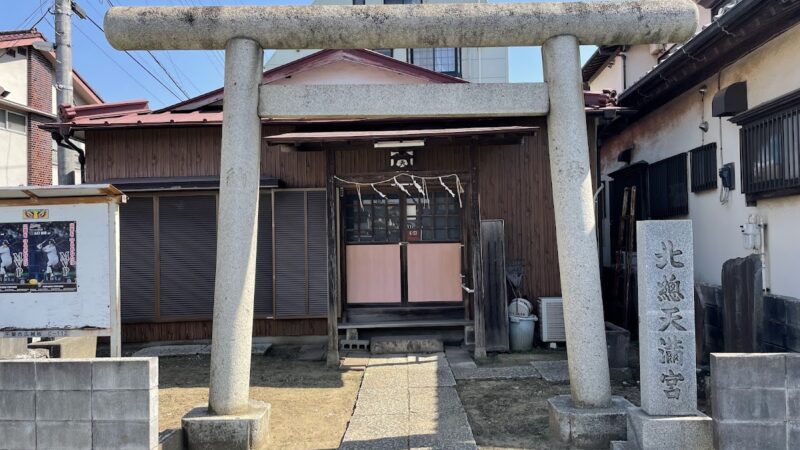
At the entrance facing the Boso Highway (the current main road), stands a torii gate indicating the presence of the shrine. To the right of the torii gate is a shrine name marker inscribed with “Anagawa Shrine,” welcoming visitors. Despite its location along the road, a tranquil space unfolds once you pass through the torii gate.
Features of the Shrine Building
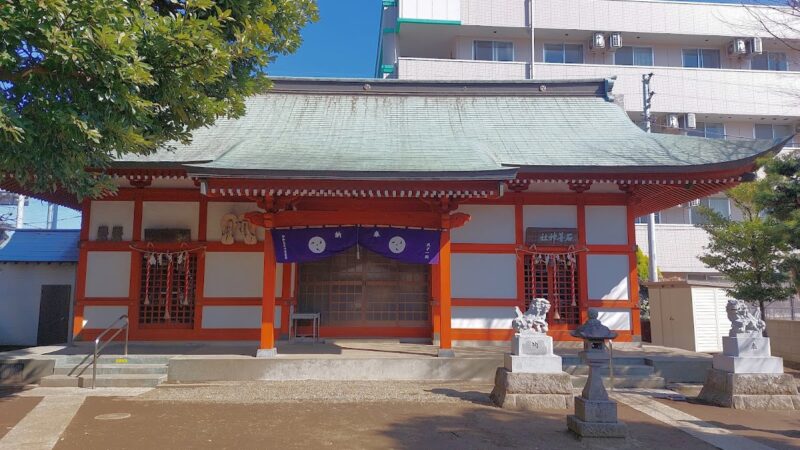
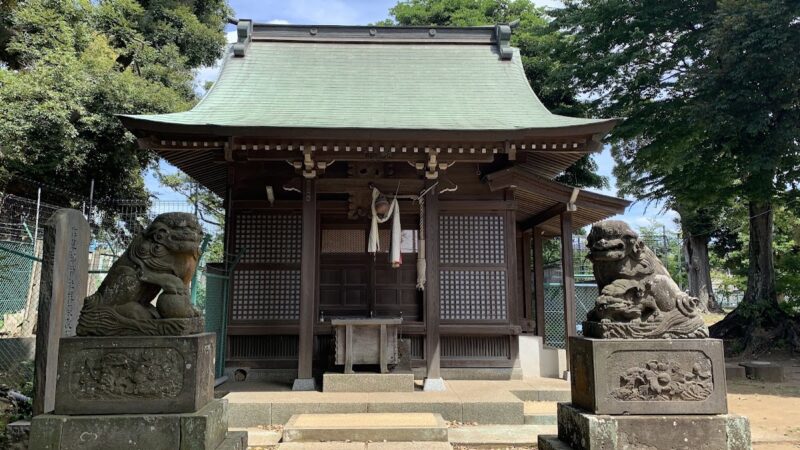
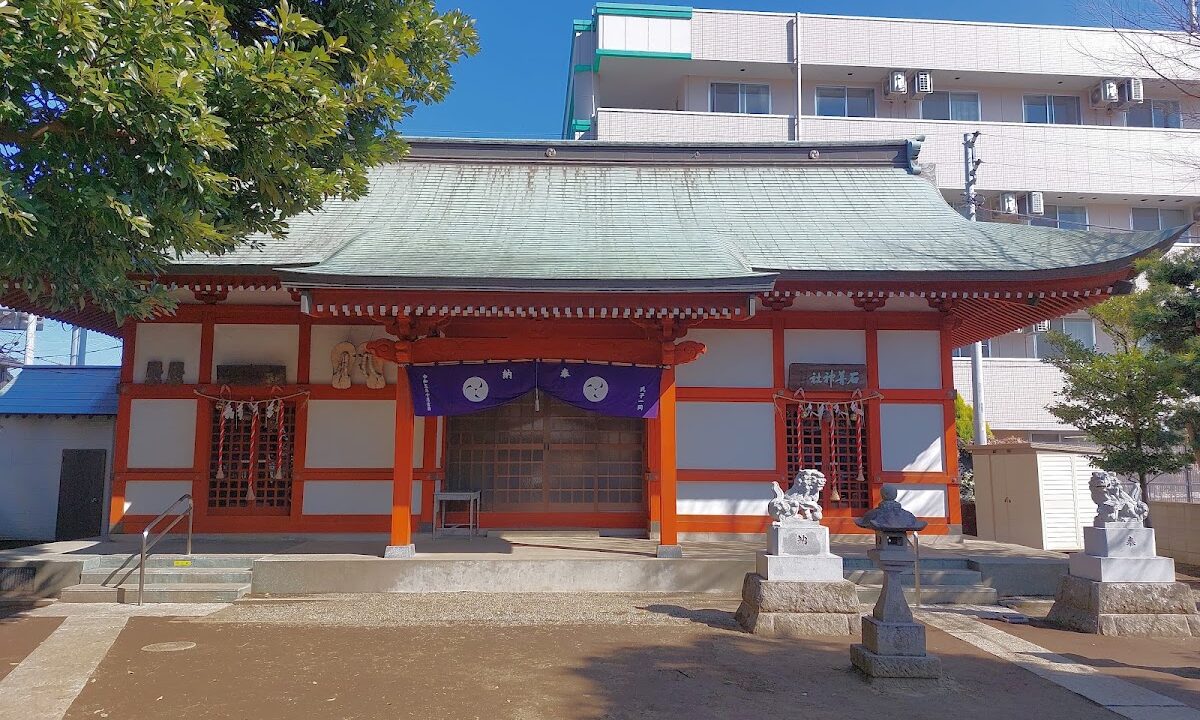
Located at the back of the grounds, the shrine building is a beautiful structure painted in a vibrant vermilion. Its most distinctive feature is that two shrines, “Dōsojinja” and “Sekisonjinja,” are enshrined on either side of a single shrine building.
This structure is rare nationwide and is a valuable architectural form that tells the story of the history of mergers. Each shrine maintains its independence while coexisting under one roof, representing the tolerant faith of the region.
Subsidiary Shrines
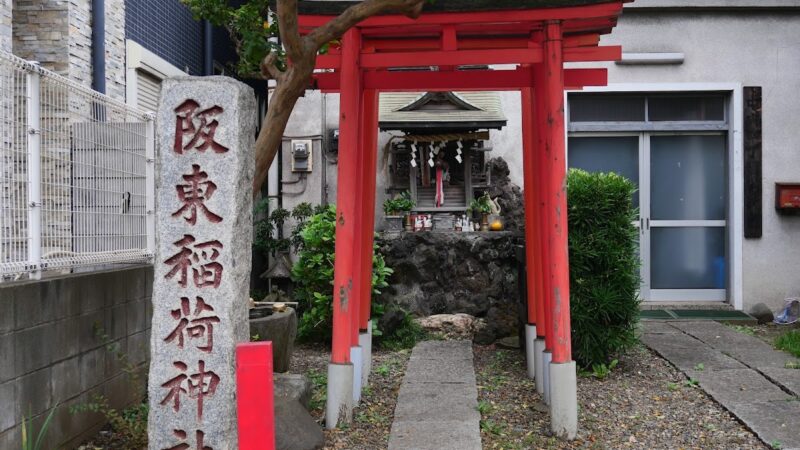
To the left of the main shrine building are subsidiary shrines. Though small in scale, they are carefully preserved as important pillars supporting local faith.
Atmosphere of the Shrine Grounds
The shrine grounds are small but well-maintained, giving them a clean and serene feel. Despite being located in an urban area, it offers a rare space for worship in a quiet and peaceful atmosphere. Adjacent to the administrative center of Inage Ward Office, its continued preservation of local history and traditions provides solace to visitors.
Access Methods
Access by Train
Using the Chiba Urban Monorail:
- Approximately 6 minutes on foot from Exit 2 of Anagawa Station
- Head northwest from the station towards Inage Ward Office
- Anagawa Shrine is located across from the ward office.
Using the JR Line:
- Approximately 20 minutes on foot from JR Sobu Line Inage Station, or by bus
- Take a bus from Inage Station West Exit and get off at Inage Ward Office bus stop.
Access by Bus
Buses run from various locations in Chiba City towards Inage Ward Office. It’s about a 1-minute walk from the Inage Ward Office bus stop.
Access by Car
Note: Anagawa Shrine does not have its own parking lot. If you are visiting by car, we recommend using nearby coin parking or public transportation. The Inage Ward Office parking lot is for ward office users only and cannot be used for shrine visits only.
Nearby Attractions and Tourist Spots
Inage Ward Office, Chiba City
An administrative facility located directly across from the shrine. Many people visit the shrine after running errands at the ward office, making it a central location in the area.
Anagawa Daishido (Extra Pilgrimage Site)
The Daishido, known as an extra pilgrimage site on the Chiba-dera Ten Good Deeds Pilgrimage of 88 Temples, is located in the Anagawa area. Many people visit it along with Anagawa Shrine.
Chiba Park
A vast urban park located a few stations away from Anagawa Station. Enjoy seasonal flowers, especially the magnificent Oga lotus in June.
Chiba City Museum of Art
An art museum located in the heart of Chiba City. It boasts a rich collection of ukiyo-e prints, allowing visitors to enjoy art appreciation along with shrine visits.
Manners and Points for Visiting Shrines
Proper Shrine Visiting Etiquette
Anagawa Shrine is an unmanned shrine, but please observe basic shrine visiting manners.
- Bow before the torii gate: Before entering the shrine grounds, bow slightly before the torii gate.
- Walk along the edge of the path: The center of the path is considered the path of the gods.
- Two bows, two claps, one bow: In front of the shrine building, bow twice, clap twice, and bow once.
- Worship quietly: As it is close to a residential area, please worship quietly.
Regarding photography
Photography is generally permitted on the shrine grounds, but please remember that it is a sacred place and take photos with respect. Particular consideration is needed if the interior of the shrine building or other worshippers are included in the photos.
Regarding Goshuin (shrine stamps)
Anagawa Shrine is an unmanned shrine, so there are no resident priests, and Goshuin are not issued. Those collecting Goshuin are advised to visit other nearby shrines.
The charm and value of visiting Anagawa Shrine
Historical value
This is a valuable place where you can experience the history of two shrines dating back to the Edo period all at once. The history of the Dosojinja Shrine, from its founding in 1784 (Tenmei 4), to the establishment of the Sekisonjinja Shrine in 1850 (Kaei 3), and finally to their merger in 1942 (Showa 17), spanning approximately 160 years, can be discerned from the structure of the shrine grounds.
Architectural Features
The unusual form of having two shrines enshrined side-by-side in a single building is rare nationwide and is a fascinating example for those interested in shrine architecture and folklore.
Inheritance of Local Beliefs
Despite being an unmanned shrine, the fact that it is carefully preserved and meticulously maintained by local residents speaks to the faith and love for their community of the Anagawa district.
An Oasis in the City
Despite being adjacent to the administrative center of Inage Ward Office, it maintains a quiet and peaceful space, making it a valuable place for those seeking solace amidst urban life.
History and Culture of the Anagawa Area
The name Anagawa is thought to originate from the geographical features and water systems that have existed in this region since ancient times. During the Edo period, it formed an agricultural area known as Anagawa Village.
After modernization in the Meiji era and urbanization in the Showa era, the area is now a mix of residential and commercial areas. Anagawa Shrine, however, is a witness to this history, having watched over these transformations.
Before the war, it was a central place of worship as a village shrine, and many villagers likely gathered for festivals. Although it is now an unmanned shrine, the history of the region and the prayers of its people still breathe within its quiet atmosphere.
Best Time and Season for Visiting
Enjoying the Seasons
Spring (March-May): The fresh greenery is beautiful, and you can visit in a mild climate. The surrounding street trees are also vibrant during cherry blossom season.
Summer (June-August): The shrine grounds offer shade, making it relatively cool compared to other urban areas. Visiting in the early morning or evening is recommended. Autumn (September-November): The pleasant weather makes it the perfect season for a peaceful visit.
Winter (December-February): During the New Year’s visit season, local residents come to the shrine. Visiting in the crisp air is a refreshing experience.
Recommended Time of Visit
As it is an unmanned shrine, it is open 24 hours a day, but the following times are recommended:
- Early Morning (7:00-9:00): You can visit at your leisure in the quiet and refreshing air.
- Morning (9:00-12:00): On sunny days, the vermilion color of the shrine buildings shines beautifully.
- Evening (4:00-18:00): Suitable for visiting after work.
Combining Visits with Nearby Shrines and Temples
When visiting Anagawa Shrine, you can enjoy a more fulfilling shrine pilgrimage by also visiting other shrines and temples in Chiba City.
Chiba Shrine
The head shrine of the Myoken faith, located in Chuo Ward, Chiba City. A historically significant shrine associated with the Chiba clan, it features a distinctive multi-tiered shrine building. Located towards Chiba Station from Anagawa Station.
Inage Asama Shrine
An ancient shrine located in Inage, Inage Ward. Situated on a hill overlooking Mount Fuji, it is revered as a deity of safe childbirth and child-rearing.
Chiba-dera Temple
An ancient Shingon Buddhist temple located in Chuo Ward, Chiba City. Known as the 29th temple of the Bando Thirty-Three Kannon Pilgrimage.
Summary: Anagawa Shrine is a valuable shrine that conveys local history
Anagawa Shrine, located in Inage Ward, Chiba City, is a nationally rare shrine with two deities, Dosojinja and Sekisonjinja, enshrined in a single building. It boasts a history dating back to 1784 (Tenmei 4), and continues to convey the faith and prayers of the local people.
Conveniently located across from the Inage Ward Office, yet maintaining a quiet and peaceful atmosphere, it is a precious place for those seeking solace amidst urban life. Its unmanned status, protected by local residents, prompts reflection on the relationship between community and faith in modern times.
Its excellent accessibility, just a 6-minute walk from Anagawa Station on the Chiba Urban Monorail, is another attractive feature. Please visit Anagawa Shrine on your way to the Inage Ward Office, or as part of a shrine tour in Chiba City. The beautiful vermilion-painted shrine building and the unusual structure where two shrines coexist will surely make for a memorable visit.
Anagawa Shrine quietly preserves the history and culture of the region. Its small grounds are filled with the prayers and love for the community that have continued from the Edo period to the present day.