Complete Guide to Sandaiō Shrine (Chiba Prefecture) | Thorough Explanation of History, Goshuin (Shrine Seals), and the Seven-Year Festival
Sandaiō Shrine, located in Takeshi-cho, Hanamigawa-ku, Chiba City, is a historical shrine associated with the Takeshi clan, a branch of the Chiba clan. This article comprehensively explains everything you need to know before visiting, including the history of Sandaiō Shrine, its enshrined deities, highlights of the grounds, information on goshuin (shrine seals), and its relationship to the Shimōsa Sanzan Seven-Year Festival.
Overview and Basic Information of Sandaiō Shrine
Sandaiō Shrine is located at 1-4 Takeshi-cho, Hanamigawa-ku, Chiba City, Chiba Prefecture, and was formerly known as Takeshi Myōjin. Despite being located in a residential area, it retains a lush green grounds and a historical atmosphere.
Basic Information
- Location: 1-4 Takeshi-cho, Hanamigawa-ku, Chiba City, Chiba Prefecture
- Main Deity: Amenotaneko-no-mikoto
- Former Shrine Rank: Village Shrine
- Annual Festival Date: October 17th
- Nearest Station: Approximately 15 minutes on foot from Keisei Makuhari Station (Keisei Electric Railway), approximately 20 minutes on foot from JR Makuhari Station
To reach the shrine grounds, you need to climb a steep stone staircase, but a tranquil space awaits you at the top.
History and Origins of Sandaiō Shrine
Circumstances of Founding and Takeshi Saburō Tanemori
There are various theories regarding the founding of Sandaiō Shrine, but the most widely accepted theory is that it was established in Kennin 2 (1202) by Takeshi Saburō Tanemori.
Takeshi Saburo Tanemori was a member of the Chiba clan, which wielded great power in Shimosa Province, and is known as the third son of Chiba no Suke Tsunetane. Tanemori established Takeshi Castle in the area around present-day Takeshi Town and ruled the region. It is said that he enshrined a deity as the guardian deity of the region, and that it was initially called “Takeshi Myojin.”
Relationship between the Chiba Clan and Sandaiō Shrine
The Chiba clan was a samurai family that wielded power primarily in Shimosa Province from the late Heian period to the Sengoku period. Chiba Tsunetane is known for participating in Minamoto no Yoritomo’s uprising and making a significant contribution to the establishment of the Kamakura Shogunate.
Because Takeshi Tanemori, Tsunetane’s third son, ruled this area, Sandaiō Shrine holds an important position as a shrine associated with the Chiba clan. Chiba City has designated the Sandaiō Shrine as a “historical site and legend spot associated with the Chiba clan,” making it an indispensable presence when discussing the region’s history.
History of Sandaiō Shrine according to the “Chiba Prefecture Shrine Directory”
According to the “Chiba Prefecture Shrine Directory,” compiled by the Chiba Prefecture Shrine Association, the history of Sandaiō Shrine is described as follows:
Around the Jōan era (1171-1175), Takeshi Saburō Tanemori, the third son of Chiba-no-suke Tsunetane, built a castle in this area and revered it as the guardian shrine of the region. This description suggests a slightly earlier founding date than Kennin 2 (1202), indicating that Tanemori had a deep connection with this area from a young age.
History of Miyo-o Shrine According to the “Chiba Prefecture Chiba County History”
The “Chiba Prefecture Chiba County History,” compiled during the Taisho era, contains detailed records of Miyo-o Shrine. According to the history, it was revered by local residents as Takeishi Myojin and was positioned as a village shrine.
Despite being affected by the Meiji-era shrine consolidation policy, the shrine continued to exist as a center of local faith, demonstrating its importance to the community.
Deities and Divine Virtues
Main Deity: Amenotaneko-no-mikoto
The main deity of Miyo-o Shrine is Amenotaneko-no-mikoto. Amenotaneko-no-mikoto is a god appearing in Japanese mythology, known for presiding over rituals when Amaterasu Omikami hid in the Amano-Iwato cave. He is considered the ancestral deity of the Nakatomi clan (later the Fujiwara clan) and is worshipped as the god of rituals and learning.
Divine Virtues
The Sandaiō Shrine, dedicated to Amenotane-no-Mikoto, is believed to possess the following divine virtues:
- Academic Achievement and Passing Exams: Due to its nature as a god of rituals and learning.
- Family Safety: Due to its history as a guardian deity of community safety.
- Regional Protection: Due to the history of the Takeshi clan praying for the peace and security of their territory.
- Good Fortune and Prosperity: Due to its divine power as a god who served Amaterasu Ōmikami.
Highlights and Cultural Assets of the Shrine Grounds
Shrine Buildings and Grounds Layout
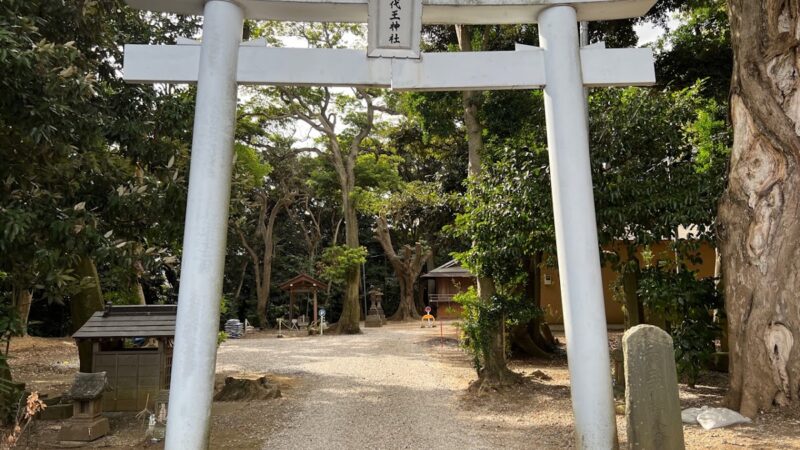
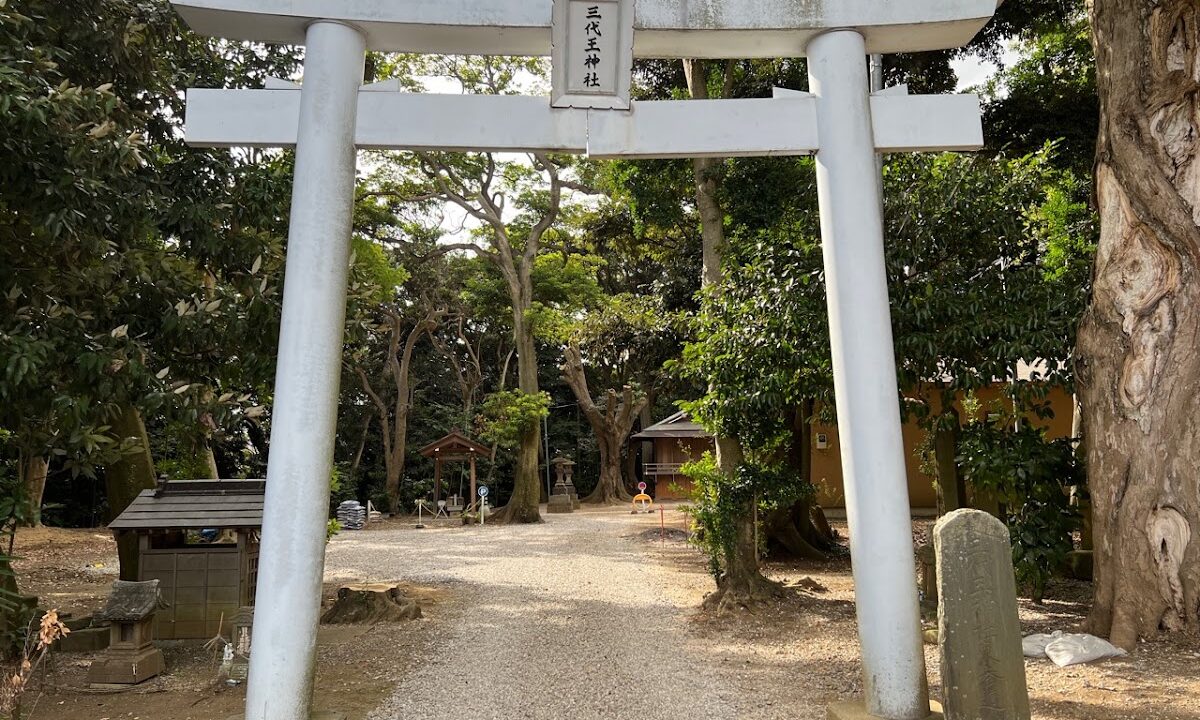
The grounds of Sandaiō Shrine are located on a hill reached by climbing steep stone steps. This location is close to the site of the former Takeshi Castle, indicating its strategic importance.
The shrine buildings consist of a main hall and a worship hall, and while simple, they exude a sense of dignity. The grounds are surrounded by trees, maintaining a quiet environment for worship despite being in an urban area.
Kagura of Miyo-o Shrine (City Regional Cultural Property)
The Kagura of Miyo-o Shrine is a valuable intangible folk cultural property designated as a regional cultural property of Chiba City. This Kagura is a traditional performing art that has been passed down in the region for centuries and is performed as an offering during festivals and other occasions.
The Kagura is preserved by the local parishioners, and the traditional performances are still carefully preserved. Chiba City has recognized this Kagura as an important cultural heritage of the region and is supporting its preservation and transmission.
Stone Steps and Approach
The first thing visitors to Miyo-o Shrine see is the steep stone steps leading to the shrine grounds. These steps can be a challenge for visitors, but the sense of accomplishment after reaching the top and the tranquil atmosphere of the shrine grounds are exceptional.
Trees grow lushly on both sides of the steps, displaying different scenery with each season. The seasons of fresh greenery and autumn leaves are particularly excellent opportunities to appreciate the beauty of nature while visiting the shrine.
The Shimousa Miyama Seven-Year Festival and the Sandaiō Shrine
What is the Seven-Year Festival?
The Shimousa Miyama Seven-Year Festival is a grand festival held once every seven years (actually once every six years) in the area spanning Funabashi City, Narashino City, Chiba City, and Yachiyo City in Chiba Prefecture. It is officially called the “Shimousa Miyama Seven-Year Festival” or “Miyama Seven-Year Festival” and is designated as an Intangible Folk Cultural Property of Chiba Prefecture.
The Role of Sandaiō Shrine
Sandaiō Shrine plays an important role as one of the nine shrines participating in this Seven-Year Festival. During the festival, the portable shrines from each shrine gather at Ninomiya Shrine (Funabashi City), where a magnificent parade of portable shrines takes place.
The participation of Sandaiō Shrine in the Seven-Year Festival demonstrates that this shrine is not merely a small local shrine, but holds an important position within a broader religious sphere.
Next Festival and Highlights
The Seven-Year Festival is held only once every seven years (according to the traditional Japanese age counting system), so we recommend checking the date of the next festival before visiting. During the festival, the usually quiet Sandaiō Shrine becomes vibrant, allowing visitors to experience the local traditional culture firsthand.
Goshuin (Shrine Seal) and Goshuincho (Shrine Seal Book) Information
About the Issuance of Goshuin
Sandaiō Shrine offers goshuin (shrine seals). However, there may not always be a permanent shrine office, so we recommend checking in advance if you wish to receive a goshuin.
The goshuin bears the name of “Sandaiō Shrine,” the date of visit, and the shrine’s seal. Simple yet dignified, the goshuin is a popular memento of the visit.
Regarding Goshuincho (Stamp Books)
Regarding the original Goshuincho of Sandai-o Shrine, you will need to check with the shrine office about availability. It is also possible to use Goshuincho from other shrines in Chiba City.
Access and Visiting Information
Access by Train
Using Keisei Electric Railway
- Approximately 15 minutes on foot from Keisei Makuhari Station
- Exit the station and head northwest, passing through the residential area to arrive.
Using JR
- Approximately 20 minutes on foot from JR Sobu Line Makuhari Station
- The easiest route is via Keisei Makuhari Station.
Access by Car
Access from Major Roads
- Approximately 10 minutes from Keiyo Expressway Makuhari IC
- Turn north from National Route 14.
Parking
- Limited parking space available on the temple grounds
- Consider using nearby coin parking.
Points to Note When Visiting
- Regarding the Stone Steps: Due to the steep stone steps, comfortable walking shoes are recommended.
- Visiting Hours: While the temple grounds are generally open for worship, avoid early mornings and late nights.
- Shrine Office: Since staff may not always be present, it is recommended to check in advance if you wish to receive a Goshuin (temple/shrine stamp).
- Surrounding Environment: Located in a residential area, please be considerate of the surrounding area regarding noise, etc.
Nearby Attractions and Recommended Spots
Historical Sites Associated with the Chiba Clan
When visiting Sandaiō Shrine, you can gain a deeper understanding of history by also visiting other historical sites in Chiba City associated with the Chiba clan.
- Chiba Shrine: A shrine dedicated to the guardian deity of the Chiba clan.
- Inohana Castle Ruins: The site of the Chiba clan’s headquarters.
- Inohana Castle Ruins Park: An exhibition facility where you can learn about the history of the Chiba clan.
Tourist Spots in Hanamigawa Ward
- Hanashima Park: A vast park along the Hanamigawa River.
- Makuhari Messe: An international event venue (not within walking distance, but located in the same ward).
- Kemigawa Shrine: Another historical shrine in Hanamigawa Ward.
Annual Events of Sandaiō Shrine
Annual Festival (October 17th)
The annual festival, the most important festival of Sandaiō Shrine, is held every year on October 17th. Local parishioners gather for the dedication of Kagura (sacred dance) and Shinto rituals.
New Year’s Visit
Visitors come for their first shrine visit of the year during the first three days of the New Year. As a community-oriented shrine, it is bustling with people, mainly local residents, who come to offer prayers for the New Year.
Other Annual Events
- Setsubun Festival: Around February 3rd
- Summer Purification Ceremony: June 30th
- Year-End Purification Ceremony: December 31st
The Charm and Significance of Visiting Sandaiō Shrine
Historical Value
Sandaiō Shrine is a shrine with a history of over 800 years, dating back to the early Kamakura period. As a valuable historical site that conveys the footsteps of the Chiba clan, a medieval samurai family, it is a must-see for history enthusiasts.
The shrine’s origin, founded by Takeshi Saburō Tanemori to pray for the safety of the village, speaks to how much importance the samurai of that time placed on the well-being of their people.
Cultural Value
The Kagura, designated as a Chiba City Regional Cultural Property, is a valuable cultural heritage as a traditional performing art of the region. Furthermore, participation in the Shimousa Sanzan Seven-Year Festival demonstrates its role as part of a broader network of religious culture.
Center of the Local Community
Even today, the Sandaiō Shrine functions as a spiritual center for the local community. Through its annual festivals and other events, it serves as a place to deepen the bonds among local residents, preserving the traditional form of community even amidst increasing urbanization.
Significance of Visiting
Visiting the Sandaiō Shrine is not merely about making personal wishes; it’s an opportunity to connect with the region’s history and culture, and to feel the thoughts of our ancestors. As you climb the steep stone steps and offer your prayers in the quiet shrine grounds, you’ll feel a sense of standing in the same place where Takeshi Tanemori and the local residents prayed over 800 years ago.
Summary
The Sandaiō Shrine is a historic shrine located in Takeshi-cho, Hanamigawa-ku, Chiba City. It is said to have been founded around 1202 (Kennin 2) by Takeshi Saburō Tanemori, a member of the Chiba clan. This shrine enshrines the principal deity, Amenotane-no-Mikoto, and is believed to bestow blessings such as academic success and family safety.
It holds a culturally significant position, participating in events such as the Kagura (sacred dance) designated as a Chiba City regional cultural property and the Shimousa Sanzan Seven-Year Festival. Despite its urban location, the shrine grounds, reached by climbing steep stone steps, maintain a tranquil atmosphere, offering peace to visitors.
With easy access—approximately a 15-minute walk from Keisei Makuhari Station—it’s a shrine worth visiting as part of a tour of historical sites related to the Chiba clan and as an opportunity to experience local traditional culture. Those wishing to receive a Goshuin (shrine stamp) are advised to check in advance before visiting.
Why not take a moment to quietly pray at the Sandaiō Shrine, which conveys the history and culture of Chiba Prefecture to the present day, while reflecting on its more than 800-year history of faith?