Complete Guide to Daifukuji Temples | A Thorough Explanation of Daifukuji Temples Across Japan, from Cliffside Kannon to Kyoto and Hamamatsu
There are several temples named “Daifukuji” throughout Japan, each with its own unique history and charm. This article provides detailed explanations of major Daifukuji temples, including the one in Tateyama City, Chiba Prefecture, known for its Cliffside Kannon; the one in Kyoto enshrining Hotei; and the one in Hamamatsu City, Shizuoka Prefecture, famous for its Daifukuji Natto (fermented soybeans).
Daifukuji Temple (Cliffside Kannon) in Tateyama City, Chiba Prefecture
Overview and History of Cliffside Kannon
Daifukuji Temple, located in Funagata, Tateyama City, Chiba Prefecture, is officially called Fumon-in Funagata-san Daifukuji and belongs to the Chizan branch of the Shingon sect. This temple is widely known as “Cliffside Kannon” and is deeply revered by locals and people from neighboring areas.
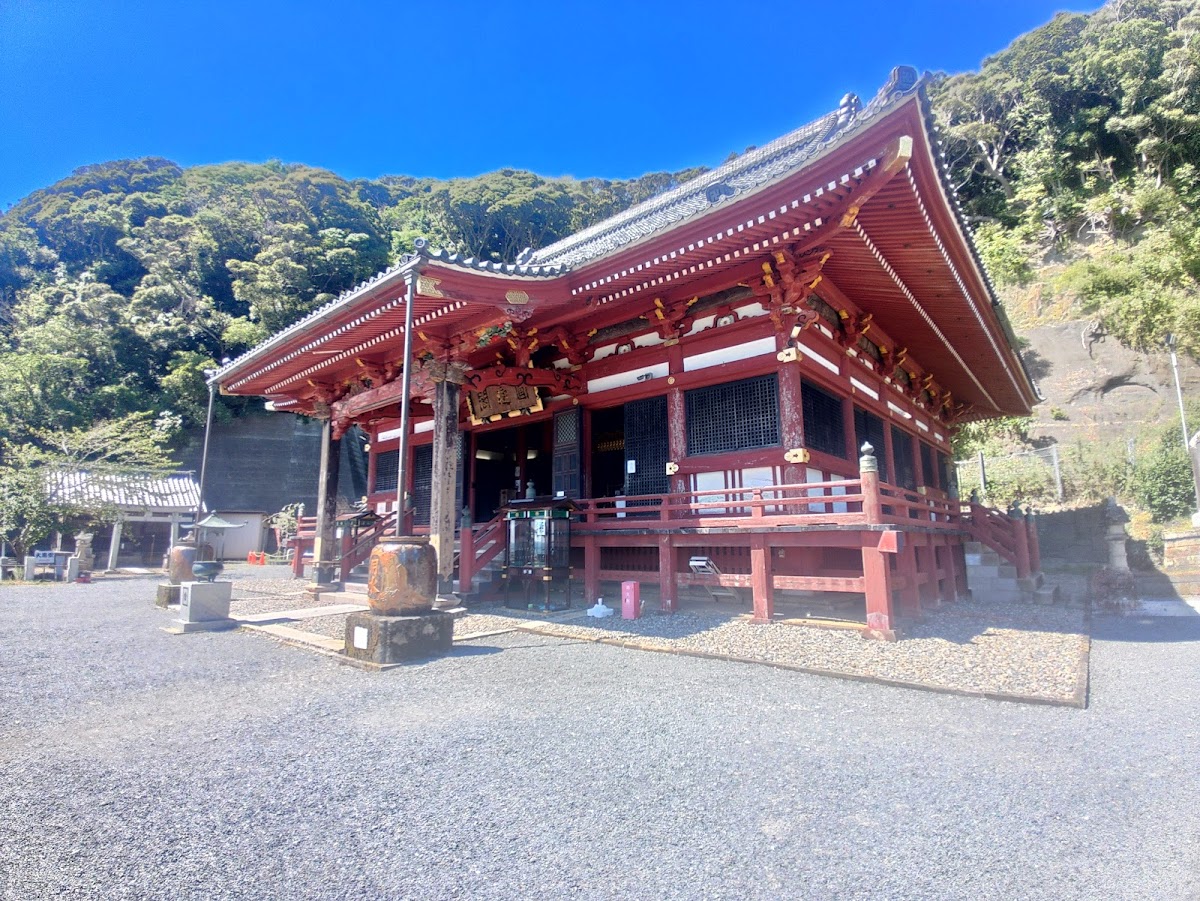
The vermilion-painted Kannon Hall, perched on the cliffside of Funagata-yama within the temple grounds, boasts a truly breathtaking view. This Kannon Hall houses a rock-carved image of the Eleven-Faced Kannon Bodhisattva, and was built to pray for maritime safety and abundant catches.
Founding Legend by Gyōki
The principal image, the Eleven-Faced Kannon Bodhisattva, is said to have been carved in 717 (Yōrō 1) by Gyōki Bodhisattva during his pilgrimage to eastern Japan. He visited this area and prayed for the safety of local fishermen at sea and for abundant catches. Gyōki is known as a high-ranking priest of the Nara period, and legends remain that he founded temples throughout Japan.
The Charm of the Kakezukuri Kannon Hall
The most distinctive feature of the Kake-Kannon is its unique architectural style. The Kannon Hall is built using a technique called kakezukuri (suspended construction), where long pillars are erected on the slope of a cliff to support the floor. This architectural style is a traditional method also seen at Kiyomizu-dera Temple in Kyoto.
The vermilion-painted Kannon Hall stands out even from afar, presenting a beautiful sight against the backdrop of the green of Funagata Mountain and the blue sky. The stone steps leading from the temple grounds to the Kannon Hall are steep, requiring some stamina for the visit, but the view of Tateyama Bay from the top is spectacular.
Visiting Information and Access
Visiting Hours: 8:00 AM – 5:00 PM (Open year-round)
Access:
- Approximately 15 minutes on foot from JR Uchibo Line “Nagofunagata Station”
- Approximately 5 minutes by car from Tomiura IC
- Parking available (free)
Since you need to climb stone steps to reach the temple grounds, we recommend wearing comfortable shoes. Particular caution is needed during rainy weather, as the ground can be slippery.
Nearby Tourist Attractions
Tateyama City is located at the southern tip of the Boso Peninsula and is blessed with a mild climate and abundant nature. The following tourist attractions are located around Daifukuji Temple.
- Tateyama Castle (Shiroyama Park): A castle that is a symbol of Tateyama City
- Okinoshima Island: An uninhabited island where you can enjoy snorkeling and exploring the tide pools
- Tateyama Bay (Kagamiura): A calm bay popular for swimming and marine sports
- Suzaki Shrine: An ancient shrine located near the southernmost tip of the Boso Peninsula
A Place of Worship Beloved by Locals
Daifuku-ji Temple is not only a tourist destination, but is also cherished as a place of worship for local people. Many worshippers visit, including those involved in the fishing industry who pray for safety at sea and a bountiful catch. It is especially crowded during annual events such as Hatsumode (first shrine visit of the year) and Setsubun (bean-throwing festival).
Daifuku-ji Temple, Nakagyo Ward, Kyoto Prefecture
Hotei, one of the Seven Lucky Gods of Kyoto
Daifuku-ji Temple, located in Nakagyo Ward, Kyoto Prefecture, is known as a temple that enshrines Hotei, one of the Seven Lucky Gods of Kyoto. Hotei is worshipped as the god of good fortune and family prosperity, and many visitors come here on pilgrimages to the Seven Lucky Gods.
Bodhi Yakushi and the Twelve Yakushi of Kyoto
The principal image, Bodhi Yakushi, is said to have been created by Prince Shotoku and is counted as one of the Twelve Yakushi of Kyoto. It is also known as the 10th temple on the Twelve Yakushi Pilgrimage of Kyoto, and is unveiled annually on January 17th.
Yakushi Nyorai is believed to grant blessings for healing illnesses and longevity, attracting many worshippers. Within the temple grounds, in addition to the main hall enshrining Yakushi Nyorai, there is also a Hotei Hall.
A Quiet Place of Worship in the Heart of Kyoto
Despite being located in the heart of Kyoto City, Nakagyo Ward, the temple grounds maintain a quiet and peaceful atmosphere. Traditional Kyoto townhouses line the surrounding area, allowing visitors to experience the charm of the ancient capital.
Access:
- Within walking distance of Kyoto Municipal Subway and Hankyu Railway stations
- Also accessible by Kyoto City Bus
Seven Lucky Gods Pilgrimage Course
The Kyoto Seven Lucky Gods pilgrimage is a course that visits seven deities: Ebisu (Ebisu Shrine), Daikokuten (Matsugasaki Daikokuten), Bishamonten (Toji Temple), Benzaiten (Rokuharamitsu-ji Temple), Fukurokuju (Sekizan Zen-in Temple), Jurojin (Kakudo Gyogan-ji Temple), and Hotei (Daifuku-ji Temple). It is especially crowded with visitors during the New Year’s pilgrimage period.
Daifuku-ji Temple (Hamanako Koyasan) in Hamamatsu City, Shizuoka Prefecture
History as Hamanako Koyasan
Daifuku-ji Temple, located in Mikkaichi-cho, Kita-ku, Hamamatsu City, Shizuoka Prefecture, is a Koyasan Shingon Buddhist temple known as Hamanako Koyasan. This region, facing Lake Hamana, is a scenic area that has flourished as a center of faith since ancient times.
The Tradition of Daifukuji Natto
The most distinctive feature of Daifukuji Temple is its production and sale of a traditional food called Daifukuji Natto. Also known as “Hama Natto,” Daifukuji Natto is a fermented food with a salty taste, different from typical stringy natto.
This natto originates from Chinese douchi (fermented black beans) and is believed to have been introduced to Japan by Zen monks during the Kamakura period. Daifukuji Temple has continued production since the Edo period and still maintains its traditional methods.
Characteristics of Daifukuji Natto:
- Uses black soybeans
- Fermented with koji mold
- Salty with a unique flavor
- Valued as a preserved food
- Price: 800 yen (tax included)
One of the Five Mountains of Kohoku
Daifukuji Temple is counted as one of the Five Mountains of Kohoku. The Kohoku Gozan refers to five renowned temples located in the northern part of Lake Hamana, each possessing historical and cultural value.
Visiting and Souvenirs
The temple grounds are situated on a hill overlooking Lake Hamana, offering a quiet and peaceful atmosphere. After visiting, you can purchase Daifukuji Natto, a popular local specialty.
Access:
- By bus or taxi from JR Tokaido Main Line “Mikkabi Station”
- Approximately 10 minutes by car from Tomei Expressway “Mikkabi IC”
Daifukuji Temple, Okayama City, Okayama Prefecture
Shingon Omuro School, Seimanzan Daifukuji Temple
There is also a Daifukuji Temple in Okayama City, Okayama Prefecture. This temple belongs to the Shingon Omuro School and is called Seimanzan Daifukuji. The head temple of the Omuro School is Ninna-ji Temple in Kyoto, and Daifukuji Temple inherits its lineage.
Perpetual Memorial Services and Member Activities
Daifuku-ji Temple accepts requests for perpetual memorial services and manages the cemetery, performing memorial services and other related activities. It also regularly holds various events and Dharma talks for its members, functioning as a center of local faith.
Related Temples
- Komatsu Anraku-in: Affiliated temple with which Daifuku-ji Temple collaborates
- Ninna-ji: Head temple of the Omuro branch of Shingon Buddhism
- Aki Kokubun-ji: A temple with historical ties
Access:
- Accessible by bus or car from Okayama City
- Parking available
Inquiries:
- TEL: 086-272-0802
- FAX: 086-206-1886
Common Characteristics of Daifuku-ji Temples Nationwide
Connection to Shingon Buddhism
Many of the major Daifuku-ji temples nationwide belong to the Shingon sect. Shingon Buddhism is a Buddhist sect founded by Kobo Daishi Kukai, and transmits the teachings of Esoteric Buddhism. While there are differences depending on the branch, such as the Shingon-shu Chizan-ha, Shingon-shu Omuro-ha, and Koyasan Shingon-shu, the basic doctrines are common.
Centers of Local Faith
Each Daifuku-ji temple has a long history in its respective region and has functioned as a center of faith for the local residents. Faiths tailored to the characteristics of each region have been cultivated, including prayers for maritime safety, abundant catches, recovery from illness, and family safety.
Cultural Assets and Traditions
Each Daifuku-ji temple preserves valuable cultural assets such as Buddhist statues, buildings, and documents. Furthermore, traditional food cultures, such as Daifuku-ji natto (fermented soybeans), are also preserved, giving them cultural value that transcends mere religious institutions.
Points to Note When Visiting Daifuku-ji Temples
Visiting Etiquette
When visiting Daifuku-ji temples, please observe the following etiquette.
- Dress Code: Avoid revealing clothing and wear clean attire when visiting a temple.
- Photography: Photography is often permitted within the temple grounds, but check beforehand as it may be prohibited inside the main hall, etc.
- Quietness: Behave quietly within the temple grounds and be considerate of other visitors.
- Offerings: While not mandatory, offering a donation helps support the maintenance of the temple.
Seasonal Highlights
Spring: During cherry blossom season, the temple grounds are beautifully in full bloom. The contrast between the vermilion-painted Kannon Hall and the cherry blossoms is particularly stunning at the Cliff Kannon Temple in Chiba.
Summer: The lush green temple grounds are cool and refreshing, making it an ideal summer retreat. At Daifuku-ji Temple in Tateyama, the sea breeze is pleasantly refreshing.
Autumn: During the autumn foliage season, the temple grounds are ablaze with color, offering beautiful scenery. The area around Daifuku-ji Temple in Kyoto is particularly known for its beautiful autumn leaves.
Winter: A season with many annual events such as Hatsumode (first shrine visit of the year) and Setsubun (bean-throwing festival). You can enjoy special pilgrimage experiences, such as the Kyoto Seven Lucky Gods pilgrimage.
Collecting Goshuin (temple/shrine stamps)
You can receive Goshuin at each Daifukuji temple. Goshuin are popular as proof of pilgrimage and as souvenirs of your trip. Bring your Goshuincho (stamp book) and ask respectfully.
Gourmet Food and Souvenirs Around Daifukuji Temples
Chiba/Tateyama Area
Tateyama is a region rich in seafood.
- Local Fish Dishes: Dishes using fresh seafood
- Loquats: Loquats, a specialty of Tateyama, and their processed products
- Peanuts: A representative specialty of Chiba Prefecture
Kyoto Area
You can enjoy traditional Japanese sweets and pickles typical of Kyoto.
- Kyoto Confectionery: Numerous long-established Japanese confectionery shops
- Kyoto Pickles: Traditional pickling culture
- Matcha Sweets: Confectionery using matcha unique to Kyoto
Hamamatsu/Lake Hamana Area
The bounty of Lake Hamana and local specialties are its charm.
- Eel: Lake Hamana is famous for its eels
- Daifukuji Natto: Traditional fermented food produced at temples
- Mandarin Oranges: Mikkaichi mandarins are famous nationwide
Summary: The Charm of Visiting Daifukuji Temples
Daifukuji temples throughout Japan each have their own unique history and characteristics, making them well worth visiting. From the spectacular views of the cliffside Kannon in Chiba, to the Seven Lucky Gods worship in Kyoto, and the food culture of Daifukuji Natto in Hamamatsu, there are diverse attractions.
The fact that even with the single name “Daifukuji,” there are such different characteristics depending on the region demonstrates the richness of Japanese Buddhist culture. When traveling, visiting local Daifuku-ji temples can give you a deeper understanding of the region’s history and culture.
Strolling through the temple grounds, experiencing the faith of the local people, and enjoying unique local experiences will surely create lasting travel memories. We encourage you to visit Daifuku-ji temples in various locations and experience their individual charms.