Complete Guide to Makata Shrine | The Charm and Benefits of the Guardian Shrine of the Sakura Domain with a Thousand-Year History
Makata Shrine is a prestigious shrine boasting a history of over 1700 years, serving as the head shrine of the “Makata Eighteen Shrines,” 18 shrines scattered mainly in Narita and Sakura cities in Chiba Prefecture. Locally, it has long been affectionately known as “Makata-sama,” and is a well-known power spot attracting many worshippers as the guardian shrine of the Sakura Domain.
This article comprehensively introduces information you should know before visiting, including the history of Makata Shrine, its enshrined deities and benefits, the characteristics of its two main shrine buildings, annual events, how to worship, and access information.
What is Makata Shrine? | A Shikinaisha Shrine Protecting the Inba Region
Makata Shrine is a shrine located in Daigata, Narita City, Chiba Prefecture, and is a Shikinaisha shrine listed in the “Engishiki Jinmyocho,” a compilation of shrines from the Heian period. Formerly a village shrine, it is the head shrine of the “Magata Eighteen Shrines” located in Inba County and City, and serves as the center of faith in this region.
Distribution of the Magata Eighteen Shrines
Magata shrines are a distinctive group of shrines found only in the area from the east to the south of Lake Inba. Their distribution is as follows:
- Sakura City: 11 shrines (most numerous)
- Shisui Town: 2 shrines
- Narita City: 2 shrines (main shrine and inner shrine)
- Tomisato City: 2 shrines
- Yachiyo City: 1 shrine
These shrines have long been revered by local residents as guardians of the agricultural areas surrounding Lake Inba.
History of Magata Shrine | A History of Over 1700 Years
Origin of Founding
The founding of Magata Shrine dates back approximately 1700 years. It is believed to have begun when Itsukori-no-Mikoto, the then-governor of Inba Province, enshrined Magata-no-Okami in what is now Daigata, Narita City.
The Inba-no-Kuni-no-Miyatsuko was a position equivalent to a local governor in the Yamato court, responsible for governing and developing this region. It is thought that Itsukori-no-Mikoto’s enshrinement of Magata-no-Okami was intended to pray for the development of the region and for a bountiful harvest.
History as the Guardian Shrine of the Sakura Domain
During the Edo period, Magata Shrine was deeply revered by the lord and people of the Sakura Domain as its guardian shrine. The Sakura Domain was known as a prestigious domain that produced many senior councilors, and Magata Shrine, its guardian shrine, was an important place for praying for the domain’s prosperity and peace.
The affectionate name “Makata-sama” became established among the local people around this time and has been passed down to the present day.
Status as a Shikinaisha Shrine
As it is listed in the “Engishiki Jinmyocho,” compiled in the mid-Heian period, Magata Shrine is known to have been a high-ranking shrine recognized by the imperial court for over a thousand years. There are approximately 3,000 Shikinaisha shrines nationwide, but they are relatively few in Chiba Prefecture, demonstrating the high historical value of Magata Shrine.
Deities and Benefits | The God of Connections, “Makata-sama”
Main Deity: Wakamusubi-no-Mikoto
The main deity of Magata Shrine is Wakamusubi-no-Mikoto. This deity is known in Japanese mythology as the god who presides over grains and food, and is believed to possess the divine power of “musubi” (connection/bonding).
“Musubi” not only means to tie together, but also signifies the power to create, nurture, and grow all things. Therefore, Wakumusubi-no-Mikoto is believed to offer a wide range of blessings, including:
- Abundant Harvest: Prosperity and bountiful harvests in agriculture
- Industrial Development: Success and prosperity in all industries
- Matchmaking: The benefit of forming good relationships
- Safe Childbirth: Prayers for safe childbirth based on the hemp leaf crest
- Child Rearing: Protection for raising healthy children
- Fulfillment of Wishes: Fulfillment of all wishes
These are some of the wide-ranging blessings that this deity is believed to offer.
Meaning of the Shrine Crest | Hemp Leaf Crest
The shrine crest of Magata Shrine is the “hemp leaf.” Hemp has been considered a sacred plant in Japan since ancient times, symbolizing purity and protection against evil. Furthermore, because hemp grows straight and quickly, it also embodies the wish for the healthy growth of children. Therefore, Magata Shrine is particularly known as a shrine visited by many worshippers for prayers related to children, such as:
- Prayers for safe childbirth
- First shrine visit for a newborn
- Shichi-Go-San (7-5-3) festival
Main Shrine and Inner Shrine | Characteristics of the Two Shrine Buildings
Magata Shrine consists of two shrines: the main shrine (Daigata) and the inner shrine (Funagata).
Main Shrine (Daigata Shrine Building)
The main shrine, located at 1 Daigata, Narita City, is the central shrine of the Magata Eighteen Shrines. A magnificent shrine building stands within the grounds, and daily worship and prayers are performed here.
Features of the Main Shrine:
- Relatively good transportation access
- Ample parking available
- Shrine office offers Goshuin (stamped seals) and amulets
- Major festivals, including the annual grand festival, are held here.
Inner Shrine (Funagata Shrine)
Located approximately 800 meters north of the main shrine in Funagata-ku Teguro, the inner shrine is said to have an even older history. The tranquil grounds are popular as a power spot.
Features of the Inner Shrine:
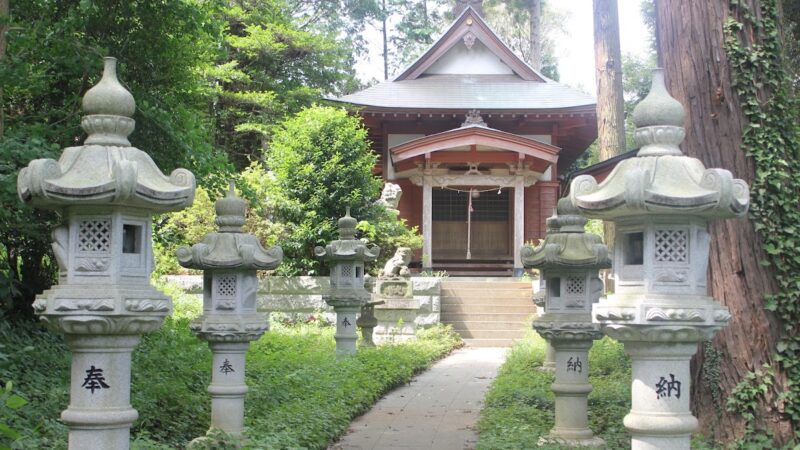
- Mysterious atmosphere surrounded by a deep forest
- Numerous giant and ancient trees
- A sacred place said to be visited only by those “called”
- Quiet worship environment
It is believed that visiting both shrines brings deeper blessings, so those with ample time are recommended to visit both.
Annual Events of Magata Shrine | Setsubun Festival and Annual Grand Festival
Magata Shrine holds various festivals throughout the year.
Setsubun Festival
The Setsubun Festival, held annually on February 3rd, is one of the most important events at Magata Shrine. Bean-throwing ceremonies are held, and local residents pray for protection from evil and good health throughout the year. It’s a popular festival that attracts many worshippers.
Annual Grand Festival
The Annual Grand Festival at Magata Shrine is the most important festival of the year. Traditional Shinto rituals, such as the procession of the portable shrine and the dedication of Kagura (sacred dance), are performed. The entire community participates in the festival, making it an opportunity to reaffirm the connection between the shrine and the community.
Other Annual Events
- Hatsumode: New Year’s visit to the shrine
- Hatsumiyamairi: Prayers for the healthy growth of a baby
- Shichi-Go-San: Celebration of a child’s growth
- Yakuyoke Kigan: Prayers for safety during the unlucky year
- Gokaku Kigan: Prayers for success in exams
These prayers are accepted at any time, and individual prayers are possible with prior notice. ## Magata Shrine as a Power Spot
In recent years, Magata Shrine has been attracting attention as a representative power spot in Chiba Prefecture.
Reputation as a “Shrine That Calls You”
The inner sanctuary, in particular, is known as a “shrine visited by those who are called,” and is popular among people interested in spirituality. Among visitors, there are numerous reports of:
- Having mysterious experiences on the shrine grounds
- Feeling a sense of purification
- Having wishes granted
Natural Energy
Magata Shrine, especially the inner sanctuary, is surrounded by a deep forest and lined with giant trees estimated to be hundreds of years old. This rich natural environment is said to provide healing and vitality to visitors.
Many worshippers visit this place as a place to escape the hustle and bustle of the city and have time to reflect on themselves in silence.
Manners and Methods of Worship
Here are some basic manners to observe when visiting Magata Shrine.
Procedure for Visiting the Shrine
- Bow before passing through the torii gate: A courtesy when entering the sacred area.
- Purify yourself at the water basin: Purify your left hand, right hand, and mouth in that order.
- Walk along the edge of the path: The center is the path for the gods.
- Bow twice, clap twice, and bow once in front of the main hall: Basic worship etiquette.
- Stroll around the shrine grounds: Visit the subsidiary shrines as well.
- Bow before leaving the torii gate: With gratitude.
Goshuin (Shrine Seal) and Amulets
At Magata Shrine, goshuin are available at the shrine office. You can bring your own goshuincho (seal book) or purchase one on the spot.
Amulets are available in various types, including:
- Safe Childbirth Amulet: A popular amulet featuring the hemp leaf crest
- Child-Rearing Amulet: For the healthy growth of children
- Matchmaking Amulet: For those seeking a good relationship
- Good Fortune Amulet: For the fulfillment of wishes
Access Information | How to Get to Magata Shrine
Access to the Main Shrine (Daigata, Narita City)
By Train/Bus:
- Approximately 10 minutes by car from JR Narita Line “Narita Station” or Keisei Electric Railway “Keisei Narita Station”
- Approximately 5 minutes on foot from the “Daigata” bus stop (by local bus)
By Car:
- Approximately 15 minutes from Higashi-Kanto Expressway “Narita IC”
- Parking available (free)
Address: 1 Daigata, Narita City, Chiba Prefecture
Access to the Inner Shrine (Funagata)
The Inner Shrine is located approximately 800 meters north of the main shrine.
Walking: Approximately 10-15 minutes from the main shrine
Car: Approximately 3 minutes from the main shrine
There is parking space at the inner shrine, but it is limited, so during busy times, it is recommended to park at the main shrine and visit on foot.
Access to Magata Shrine in Sakura City
Access to Magata Shrine (the guardian shrine of the Sakura Domain) in Sakura City:
By Train:
- Approximately 20 minutes on foot from Keisei Electric Railway “Keisei Sakura Station”
- Approximately 25 minutes on foot from JR Sobu Main Line “Sakura Station”
By Car:
- Approximately 10 minutes from Higashi-Kanto Expressway “Sakura IC”
- Parking available
Nearby Tourist Spots
Here are some nearby spots you might want to visit when you come to Magata Shrine.
Naritasan Shinshoji Temple
A representative temple of Narita City, with one of the highest numbers of New Year’s visitors in the country. It is approximately 15 minutes by car from Magata Shrine’s main shrine.
Lake Inbanuma
The area around Lake Inbanuma, dotted with the eighteen Magata shrines, is a scenic spot rich in nature. Enjoy cycling and birdwatching.
Sakura Castle Ruins Park
The site of the former castle of the Sakura Domain, now developed as a park. In spring, it’s a popular spot for cherry blossom viewing, attracting many visitors. It’s within walking distance of Magata Shrine in Sakura City.
National Museum of Japanese History
Located within Sakura Castle Ruins Park, this is one of the largest history museums in Japan. You can learn about Japanese history and culture here.
Prayers and Sorrows at Magata Shrine
Magata Shrine accepts various prayers and blessings.
Main Prayer Requests
- Prayer for Safe Childbirth: On the Day of the Dog in the 5th month of pregnancy
- First Shrine Visit: Around 30 days after birth
- Shichi-Go-San: Celebrating the growth of a child at ages 3, 5, and 7
- Exorcism: Praying for safety during unlucky years
- Prayer for Success in Exams: Wishing for success in exams
- Business Prosperity: Praying for the development of a business
- Family Safety: Wishing for the health and happiness of the family
- Traffic Safety: Blessing of a car, etc.
How to Apply for a Prayer
If you wish to request a prayer, we recommend contacting us by phone in advance. Weekends and auspicious days can be particularly busy, so making a reservation will ensure a smoother process.
The offering fee (prayer fee) varies depending on the prayer request; please confirm when applying.
Summary of the Charms of Magata Shrine
Magata Shrine is a venerable shrine with a history of over 1700 years, and is loved by many as a modern-day power spot.
Main Charms of Magata Shrine:
- Deep History: A prestigious shrine with over a thousand years of history as a Shikinaisha (a shrine listed in the Engishiki, an ancient Japanese legal text).
- Wide Range of Blessings: Diverse divine blessings from the god of connection.
- Two Shrine Buildings: The unique charms of the main shrine and the inner shrine.
- Power of Nature: A healing space surrounded by a lush forest.
- Connection with the Community: A beloved presence known as “Makata-sama.”
- Easy Access: Accessible from Narita and Sakura.
This shrine is worth visiting for various purposes, such as praying for milestones in life, seeking peace of mind, visiting power spots, and exploring history.
When visiting Chiba Prefecture, be sure to visit Magata Shrine. Having received the prayers of countless people throughout its long history, “Makata-sama” may also answer your wishes. You can spend time in the tranquil grounds purifying your heart and gaining renewed vitality.