A Complete Guide to Asuwa Shrine (Fukui Prefecture) | The Charm and Highlights of the 1500-Year-Old Ancestral Shrine of Echizen
Asuwa Shrine, located on the slopes of Mt. Asuwa in Fukui City, Fukui Prefecture, is the oldest shrine in Echizen, boasting a history of approximately 1500 years. Enshrining Emperor Keitai as its principal deity, it is a venerable shrine listed in the Engishiki (ancient Japanese legal code) and is deeply revered by the local people. This article provides a detailed explanation of everything you need to know before visiting Asuwa Shrine, including its history, enshrined deities, highlights, blessings, and access methods.
What is Asuwa Shrine? | The Oldest Shrine in Echizen
Asuwa Shrine is located in Asuwa 1-chome, Fukui City, Fukui Prefecture. It is a shrine listed in the Engishiki Jinmyocho (a list of shrines compiled in the Heian period) and its former rank was Prefectural Shrine. Its founding is believed to date back to the late 5th century, approximately 1500 years ago, making it the oldest shrine in Fukui City.
Nestled amidst the lush greenery of Mt. Asuwa, the shrine grounds showcase beauty throughout the seasons, with the weeping cherry blossoms in spring and the Takao maple trees in autumn particularly captivating many worshippers and tourists. Easily accessible from Fukui city center, it’s also a popular power spot.
The Reason for Being Called “Echizen Ancestral Deity”
The reason Asuwa Shrine is called “Echizen Ancestral Deity” lies in its deep connection to Emperor Keitai. Emperor Keitai grew up in the Echizen region and ruled this area before ascending to the throne as the 26th emperor. Asuwa Shrine is said to have been founded by Emperor Keitai himself, and it is believed that he enshrined a分霊 (bunrei, a divided spirit) of himself there when he traveled to the capital, leading to its reverence as the ancestral deity of Echizen.
History of Asuwa Shrine | The Story of Emperor Keitai and Ikasuri-no-kami
Origin of the Shrine and Emperor Keitai
The founding of Asuwa Shrine dates back to the time when Emperor Keitai was still known as Prince Odo or Hikofutonomikoto. According to shrine tradition, Emperor Keitai was the sixth-generation descendant of Emperor Ojin and was born in Mio-no, Takashima-go, Omi Province. His father was Prince Hikohito and his mother was Furuhime, and he was a grandson of Emperor Suinin.
Emperor Keitai spent his childhood in Takamuko-go (present-day Maruoka-cho), his mother’s hometown, and grew up to be a compassionate and wise person. In the late 5th century, Prince Odo invited Ikasuri-no-kami, the spirit of the great shrine, to Asuwa Mountain, which is considered the beginning of Asuwa Shrine.
The Accession of Emperor Keitai and its Role as a Local Deity
In 507, Prince Odo ascended to the throne as the 26th Emperor Keitai. When he left Echizen Province for the capital, Emperor Keitai enshrined a divided spirit of himself as the principal deity of Asuwa Shrine, making it the local tutelary deity (ubusunagami). As a result, Asuwa Shrine became a special object of worship for the people of Echizen, and has been revered as the “ancestral deity of Echizen” to this day.
Status as a Shikinaisha Shrine
The Engishiki Jinmyocho, compiled during the Heian period, lists “Asuwa Shrine” as a Shikinaisha shrine in Asuwa District, Echizen Province. This indicates that Asuwa Shrine was a historically significant shrine recognized by the imperial court from ancient times. During the Edo period, it was also highly revered by the lords of the Fukui domain, and in the Meiji era, it was ranked as a prefectural shrine.
Deities Enshrined | Emperor Keitai and the Five Ikasuri-no-Kami
Ashiwa Shrine enshrines Emperor Keitai as its principal deity, along with five deities known as Ikasuri-no-Kami.
Principal Deity: Emperor Keitai (Oto-no-Ōto no Mikoto)
Emperor Keitai was the 26th Emperor of Japan. He grew up in Echizen Province and loved this region. He was the founder of Ashiwa Shrine and is revered as the principal deity because he enshrined a分霊 (bunrei, a divided spirit) of himself there.
The Five Deities of Ikui-no-Kami
Ikui-no-Kami is a collective term for the deities who protect homes and land, and consists of the following five deities:
- Ikui-no-Kami – The deity who governs the water of life
- Sakui-no-Kami – The deity of wells that bring happiness
- Tsunagai-no-Kami – The deity who governs permanence
- Asuha-no-Kami – The deity who strengthens the foundation
- Hahiki-no-Kami – The deity who wards off disaster
These deities are worshipped as gods who govern the protection of homes, the stability of the land, and the safety of life. In particular, the name “Sakui-no-Kami” is said to be related to the origin of the place name Fukui, and holds significant meaning for the region.
Benefits of Asuwa Shrine | From Business Prosperity to Foot Protection
Asuwa Shrine is known for its diverse divine blessings, attracting worshippers with various wishes.
Main Benefits
- Business Prosperity – Prayers for business prosperity, as the deity Ikuma protects the foundation of life.
- Construction Safety – Prayers for construction safety, as the deity is the guardian of land and buildings.
- Protection from Evil and Protection from All Directions – Protection from misfortune and disaster from all directions.
- Fertility and Safe Childbirth – Prayers for conception and safe childbirth through the divine blessings of Ikui-no-kami, the god of life.
- Family Safety – Peace and security of the home through the protection of Ikuma-no-kami, the guardian of the residence.
Distinctive “Foot Protection”
Asuwa Shrine’s name includes the character for “foot,” it is also known for its benefits related to feet. “Foot protection” amulets are given out, imbued with wishes related to feet, such as healing from foot illnesses and injuries, and protection of feet during sports.
The shrine enjoys strong devotion from athletes, runners, and mountain climbing enthusiasts—those who engage in activities that involve using their legs—and many visitors come to pray for the health of their legs and lower backs.
Highlights of the Shrine Grounds | Natural Monuments and the Beauty of the Seasons
380-Year-Old Weeping Cherry Tree
The greatest highlight of Asuwa Shrine is the approximately 380-year-old weeping cherry tree that stands tall within the shrine grounds. This cherry tree is designated as a natural monument of Fukui City and is affectionately known to the citizens as “Asuwa-san’s Weeping Cherry Tree.”
The tree reaches a height of approximately 12 meters and a trunk circumference of about 4 meters, and in spring, the sight of its pale pink blossoms cascading down like a waterfall is breathtaking. It is usually in full bloom from late March to early April, and is sometimes illuminated at night, allowing visitors to enjoy the magical sight of the cherry blossoms after dark.
During cherry blossom season, the shrine is bustling with many visitors and is known as one of Fukui City’s representative cherry blossom viewing spots. Many tourists visit Asuwayama Park to see the cherry blossoms, making it a classic spring sightseeing spot in Fukui.
Takao Maple Trees on the Approach
The Takao maple trees (Takao Momiji) that adorn the approach to Asuwa Shrine are designated as a natural monument of Fukui City. In autumn, their vibrant autumn leaves adorn the approach, captivating visitors.
The Takao maple is a variety known for its deeply lobed leaves and particularly beautiful autumn colors. It is usually at its best from mid- to late November, delighting worshippers climbing the stone steps. This shrine is worth visiting in both spring (cherry blossoms) and autumn (autumn leaves).
Atagozaka Stone Steps
The Atagozaka stone steps leading to Asuwa Shrine are a picturesque approach that evokes the history of Fukui City. The approximately 140 stone steps serve as a boundary between everyday life and the sacred realm, prompting visitors to prepare themselves mentally.
Seasonal flowers bloom on both sides of the steps, offering particularly beautiful scenery during the seasons of fresh greenery and autumn leaves. While the steps are somewhat steep, the tranquil atmosphere of the shrine grounds that unfolds at the top makes the climb well worthwhile.
Atmosphere and Power Spot of the Shrine Grounds
Surrounded by the rich nature of Mt. Asuwa, the shrine grounds are enveloped in silence despite being located within the city. With its lush, ancient trees and sacred atmosphere, the grounds are also known as a power spot.
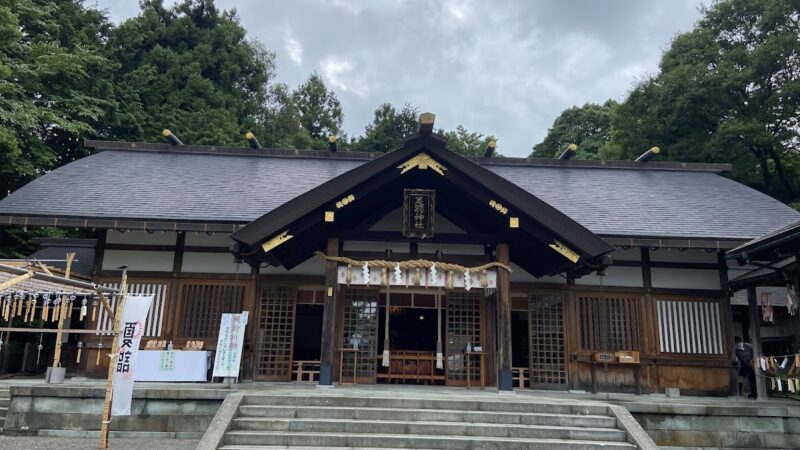
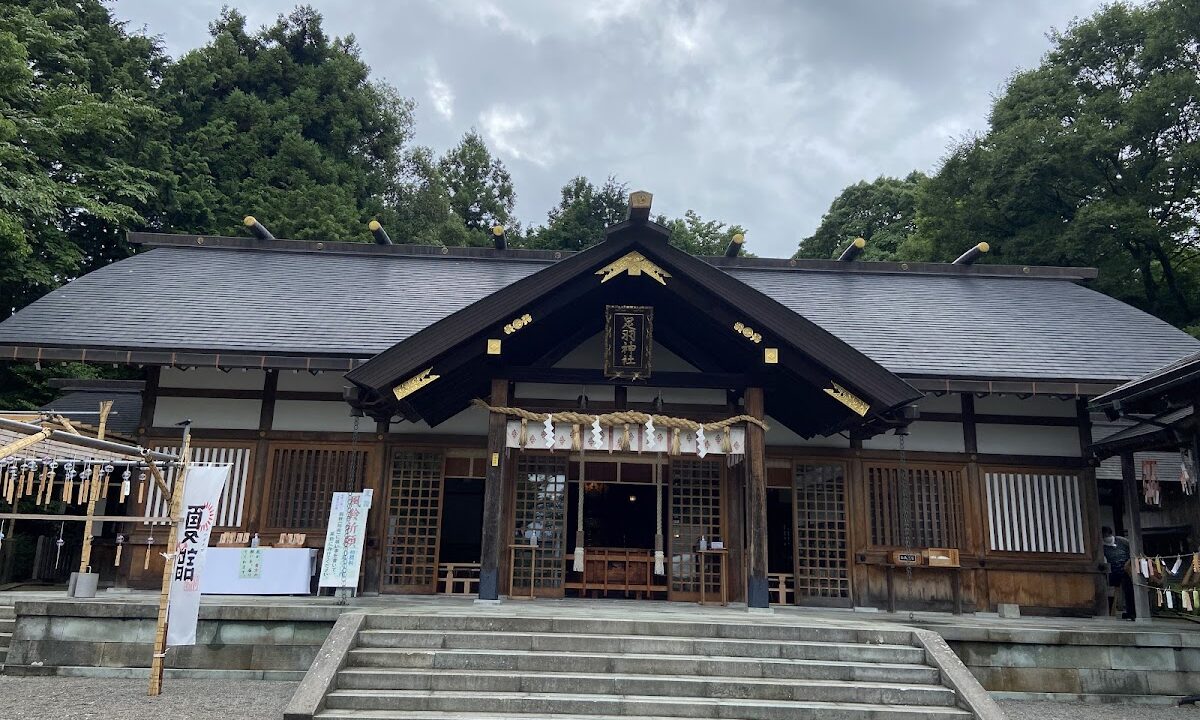
The main hall and worship hall are traditional wooden shrine buildings, conveying a sense of historical weight. The grounds are equipped with a purification fountain, shrine office, and gift shop, ensuring a welcoming environment for visitors.
Information on Goshuin (Shrine Seals) and Amulets
Goshuin (Shrine Seals)
At Asuwa Shrine, you can receive a goshuin as a memento of your visit. It is available at the shrine office. In addition to the regular goshuin, seasonal limited-edition goshuin are sometimes offered.
During cherry blossom season and autumn foliage season, special goshuin designs are sometimes available, so those collecting goshuin are advised to check in advance.
Amulets and Souvenirs
Ashiwa Shrine offers a variety of amulets and souvenirs:
- Foot Amulet – A unique amulet from Ashiwa Shrine to protect the health of your feet
- Business Prosperity Amulet – An amulet to pray for the development of your business
- Safe Childbirth Amulet – An amulet to pray for a safe childbirth
- Exorcism Amulet – An amulet to ward off evil and avoid misfortune
- Traffic Safety Amulet – An amulet to pray for safe travels
The reception hours for the amulet office are generally from 9:00 to 17:00, but these may vary depending on the season and events. It is recommended to check in advance if you wish to be sure to receive an amulet.
Annual Events and Festivals
Ashiwa Shrine holds various festivals throughout the year.
Main Annual Events
- New Year’s Day Festival (January 1st) – A festival celebrating the New Year
- Setsubun Festival (around February 3rd) – A ritual to ward off evil spirits, including bean-throwing
- Spring Grand Festival (April) – An important festival held during the cherry blossom season
- Summer Purification Ceremony (June 30th) – A Shinto ritual to purify oneself of the impurities accumulated over the past six months
- Autumn Grand Festival (October) – A festival to give thanks for the harvest
- Year-End Purification Ceremony (December 31st) – A Shinto ritual to purify oneself of the impurities accumulated over the year and welcome the New Year
During these festivals, you can visit the shrine in a special atmosphere different from the usual.
Access Information | Directions from Fukui Station
Basic Information
- Location: 1-8-25 Asuwa, Fukui City, Fukui Prefecture
- Phone: 0776-36-0287
- Visiting Hours: Grounds are freely accessible (Shrine office is generally open from 9:00 to 17:00)
- Parking: Available (Free, limited number of spaces)
Access by Train and on Foot
Approximately 25 minutes on foot from JR Fukui Station. Head southwest from Fukui Station, walk to the foot of Mt. Asuwa, and climb the stone steps of Atago-zaka.
Those with good stamina can enjoy a walk through Fukui city while visiting. However, since there are approximately 140 steps, comfortable walking shoes are recommended.
Access by Bus
Take the Community Bus “Smile” (towards Terute/Asuwa) and get off at the “Atagozaka” bus stop. It’s about a 5-minute walk from there. Using the bus makes it easy to reach the foot of the stone steps.
Access by Car
It’s about a 15-minute drive from the Fukui Interchange on the Hokuriku Expressway. There is a parking lot on the shrine grounds, but spaces are limited, so it’s expected to be crowded during the peak cherry blossom and autumn foliage seasons. Please consider using nearby paid parking lots.
Nearby Tourist Attractions | Highlights of the Asuwa Mountain Area
When visiting Asuwa Shrine, we recommend also visiting the surrounding tourist attractions.
Asuwa Mountain Park
Asuwa Mountain, where Asuwa Shrine is located, is a park popular with Fukui citizens as a place of relaxation. Approximately 3,600 cherry trees are planted there, and it has been selected as one of “Japan’s Top 100 Cherry Blossom Viewing Spots.” In spring, the entire mountain is dyed pink with cherry blossoms, offering a spectacular view.
Asuwayama Zoo
This free zoo is located near the summit of Mt. Asuwayama. You can see a variety of animals, including red pandas, penguins, and monkeys, making it a popular spot for families.
Fukui City Museum of Natural History
This museum allows you to learn about the nature and wildlife of Mt. Asuwayama. It also exhibits replicas of dinosaur fossils excavated in Fukui Prefecture, making it enjoyable for both children and adults.
Tachibana Akemi Memorial Literature Museum
This museum showcases the achievements of Tachibana Akemi, a poet from the late Edo period. You can learn about literary figures associated with Fukui.
Fukui Castle Ruins and Fukui City Center
Heading north from Mt. Asuwayama, you’ll find the Fukui Castle Ruins and the city center of Fukui. There are also many historical sites, such as the Kitano-sho Castle Ruins (associated with Shibata Katsuie) and the Yohokan Garden.
Gourmet Information Around Asuwa Shrine
Echizen Soba
Echizen soba is a representative gourmet dish of Fukui Prefecture. Many soba restaurants serving authentic Echizen soba are scattered around Mt. Asuwa and in Fukui city. “Oroshi soba,” topped with plenty of grated daikon radish, is a unique Fukui way of eating it.
Sauce Katsu Don
Sauce katsu don, a famous local Fukui dish, can also be enjoyed at restaurants in the city. Thinly sliced pork cutlet is placed on top of rice and covered with a Worcestershire sauce-based sauce; a simple yet addictive flavor.
Seafood Dishes
Fukui Prefecture, facing the Sea of Japan, is blessed with fresh seafood. Many restaurants offer seasonal seafood dishes such as Echizen crab, sweet shrimp, and Wakasa pufferfish.
Precautions and Manners When Visiting
Clothing and Items to Bring
Since you will need to climb the stone steps of Atago-zaka, we recommend wearing comfortable shoes. The stone steps can become particularly slippery during rainy weather and winter, so caution is advised.
During cherry blossom and autumn foliage seasons, the shrine is bustling with tourists, so bringing a camera will allow you to capture wonderful memories. However, please be considerate of other worshippers.
Shrine Visiting Manners
Please observe basic shrine visiting manners:
- Bow before passing through the torii gate.
- Avoid walking in the center of the path (the center is the path of the gods).
- Cleanse your hands and mouth at the purification fountain.
- Bow twice, clap twice, and bow once at the main hall.
- Maintain silence within the shrine grounds.
Photography
Photography is generally permitted within the shrine grounds, but it may be prohibited inside the main hall or during Shinto rituals. Also, please be considerate of other worshippers when taking photos, and avoid using tripods during crowded times. Please be mindful of proper etiquette when taking photos.
Tips for Enjoying the Charms of Ashiwa Shrine to the Fullest
Best Seasons to Visit
Ashiwa Shrine boasts beauty in every season, but the following are especially recommended:
- Spring (Late March to Early April): The 380-year-old weeping cherry tree is in full bloom. There’s also nighttime illumination, allowing you to enjoy different views during the day and night.
- Autumn (Mid-to-Late November): The Takao maple leaves are at their most beautiful. The tunnel of autumn leaves along the approach to the shrine makes for stunning photos.
- New Year’s Visit (January 1st-3rd): The perfect time to visit and offer your New Year’s wishes.
Choosing the Right Time of Day
Visiting early in the morning means fewer people, allowing for a peaceful and tranquil experience. Especially during cherry blossom and autumn foliage seasons, the shrine can get crowded during the day, so morning is recommended.
Evening visits also offer a different kind of charm, with the shrine grounds illuminated by the setting sun.
Combined with a Stroll Through the Surrounding Area
You can have a more fulfilling experience by exploring not only Asuwa Shrine but also the entire Asuwa Mountain area. A half-day course visiting Asuwa Mountain Park, the zoo, and the Natural History Museum, or a full-day course combining Asuwa Shrine with sightseeing in Fukui city, are good options depending on your time.
Summary | Echizen’s Ancestral Shrine with 1500 Years of History
Asuwa Shrine, the oldest shrine in Echizen associated with Emperor Keitai, has watched over the land of Fukui for over 1500 years. The shrine grounds, surrounded by abundant nature and featuring two natural monuments—a 380-year-old weeping cherry tree and the Takao maple trees along the approach—offer healing and strength to visitors.
It offers various blessings, including business prosperity, construction safety, protection from evil, and safe childbirth. The “Ashi-mamori” (foot amulet) is particularly popular as a unique item offered at Asuwa Shrine. Its convenient location within walking distance of Fukui Station is also a major attraction, making it a must-visit spot during your Fukui sightseeing trip.
Asuwa Shrine displays different expressions with each season, from cherry blossoms in spring to autumn leaves. Why not take some time to quietly pray in this sacred space where history and nature harmonize, and reflect on the history of Echizen? When you visit Fukui, be sure to experience the divine atmosphere of the “ancestral deity of Echizen” at Asuwa Shrine.