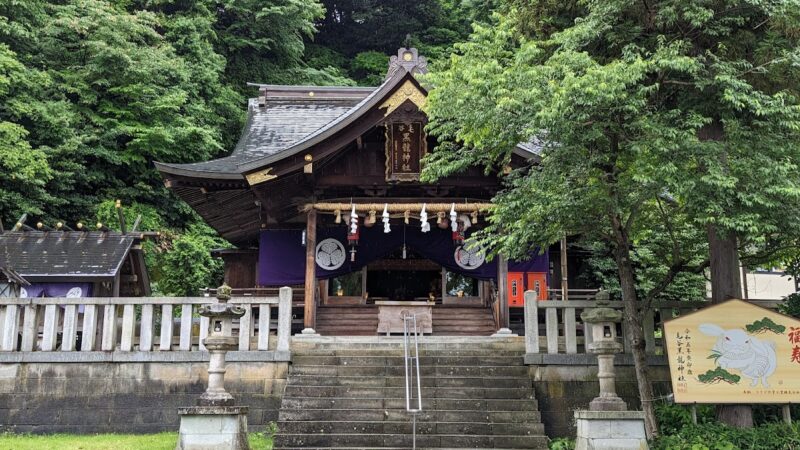
Fujishima Shrine Complete Guide | History and Visiting Information for the Fifteen Shrines of the Kenmu Restoration, Dedicated to Nitta Yoshisada
Fujishima Shrine, located on Mt. Asuwa in Fukui City, Fukui Prefecture, is a historically significant shrine dedicated to Nitta Yoshisada, a military commander of the Nanboku-cho period. Formerly a special government-supported shrine, it is currently listed as a special shrine by the Association of Shinto Shrines and is counted as one of the fifteen shrines of the Kenmu Restoration. Revered by the people of Fukui Prefecture as a god of both military and literary arts, especially learning, Fujishima Shrine attracts many visitors. This guide provides a detailed introduction to its history and visiting information.
History and Origins of Fujishima Shrine
Nitta Yoshisada and the Battle of Echizen Fujishima
Nitta Yoshisada, the principal deity of Fujishima Shrine, is a military commander known for his loyalty to Emperor Go-Daigo, who overthrew the Kamakura Shogunate and supported him during the Kenmu Restoration. In August of the 3rd year of the En’en era (1338), during the Battle of Fujishima in Echizen Province (Battle of Tomyoji-nawate), he was killed in a fierce battle against the Ashikaga forces led by Shiba Takatsune.
The place where Lord Yoshisada died is preserved as the current place name, Nittazuka in Fukui City, and has long been cherished by the local people as a place to remember Lord Yoshisada. The name Nittazuka itself originates from the mound of Lord Nitta Yoshisada, illustrating the deep connection between this place and Yoshisada.
History of the Shrine’s Founding
The founding of Fujishima Shrine dates back to the Meiji era. In 1876 (Meiji 9), it was established as a special government-supported shrine by imperial decree of Emperor Meiji to commemorate the loyalty of Lord Nitta Yoshisada. Initially, the shrine building was planned to be built on the site of Nittazuka, but it was ultimately located at its current location on Mt. Asuwa.
Emperor Meiji posthumously bestowed the rank of Senior First Rank upon Yoshisada Nitta, and he was enshrined as Fujishima Okami. This was part of a series of policies to honor the meritorious figures of the Kenmu Restoration, and shrines established with a similar purpose are known as the Fifteen Shrines of the Kenmu Restoration.
What are the Fifteen Shrines of the Kenmu Restoration?
The Fifteen Shrines of the Kenmu Restoration are a collective term for shrines that enshrine the meritorious figures who contributed to Emperor Go-Daigo and the Kenmu Restoration. Fujishima Shrine is one of them, enshrining Nitta Yoshisada, a key figure in the Kenmu Restoration. Other shrines included are Minatogawa Shrine, which enshrines Kusunoki Masashige, and Abeno Shrine, which enshrines Kitabatake Chikafusa. All of these were established as special government-supported shrines during the Meiji era.
These shrines have a historical background: they were established with the purpose of honoring the meritorious figures of the Southern Court amidst the rise of reverence for the Emperor after the Meiji Restoration.
Deities Enshrined and Subsidiary Deities
Main Deity: Nitta Yoshisada (Posthumously Granted the First Rank)
The main deity enshrined at Fujishima Shrine is Nitta Yoshisada (Posthumously Granted the First Rank). Yoshisada was from Nitta Manor in Kōzuke Province (present-day Gunma Prefecture). In 1333, he raised an army to overthrow the Kamakura Shogunate and achieved great merit in the attack on Kamakura. He played a central role as a military commander during the Kenmu Restoration, but due to his conflict with Ashikaga Takauji, he moved to the Hokuriku region and met his end in Echizen Province.
Yoshisada was not only a highly skilled military commander but also deeply knowledgeable in waka poetry, and is known as a man of both literary and martial arts. Therefore, Fujishima Shrine is revered as a deity of both literary and martial arts, and is particularly believed to grant divine blessings for academic achievement and improvement in martial arts.
Enshrined Deities
Fujishima Shrine enshrines the following individuals alongside Nitta Yoshisada:
- Nitta Yoshiaki: Yoshisada’s eldest son. He fought alongside his father and died young in battle.
- Nitta Yoshioki: Yoshisada’s second son. He continued to fight against the Ashikaga forces in the Kanto region.
- Nitta Yoshimune: Yoshisada’s third son. He worked alongside his brothers to restore the Nitta family.
- Wakiya Yoshisuke: Yoshisada’s younger brother. He was a warrior no less capable than his brother.
- Family and Retainers Who Perished: The Nitta family and retainers who fought alongside Yoshisada.
These enshrined deities, along with the main deity, are worshipped as beings who convey the loyalty and martial prowess of the Nitta family to the present day.
Shrine Grounds and Highlights
Location and Scenery of Mt. Asuwa
Fujishima Shrine is located near the summit of Mt. Asuwa, in the heart of Fukui City. Mount Asuwa, with an elevation of approximately 116 meters, is a mountain rich in nature and beloved by the citizens of Fukui, and is also known as a famous cherry blossom viewing spot. From the shrine grounds, you can enjoy a panoramic view of Fukui city, and on clear days, you can even see the distant Hakusan mountain range—a truly spectacular viewpoint.
The entire Mount Asuwa is maintained as a nature park, and with its well-developed walking trails, visitors can enjoy nature walks in addition to their shrine visit.
Shrine Buildings and Grounds Facilities
The shrine buildings of Fujishima Shrine have undergone several restorations since their founding in the Meiji era, resulting in their current form. The main hall has a dignified structure, conveying the dignity of a special government-sponsored shrine. The worship hall, where worshippers offer their prayers, is always kept clean.
The grounds include facilities such as a purification fountain, shrine office, and ema (votive tablet) hanging area, ensuring a comfortable visit for worshippers. Furthermore, information boards and explanatory plaques detailing the achievements of Lord Yoshisada are installed on the grounds, allowing visitors to learn about history while worshipping.
National Important Cultural Property Sacred Treasures
Fujishima Shrine houses precious sacred treasures designated as National Important Cultural Properties. The most famous is the “Iron Helmet with Silver Inlay,” said to have been worn by Nitta Yoshisada. This helmet is extremely valuable as a piece of armor from the Nanboku-cho period and is a precious relic that conveys the bravery of Yoshisada to this day.
Furthermore, letters from Yuki Munehiro, who fought alongside Yoshisada, are also preserved as Important Cultural Properties and are important historical materials for studying the history of the Nanboku-cho period. These sacred treasures are usually not open to the public, but are sometimes displayed on special occasions.
Visiting Information and Access
Basic Information
Address: 8-21, Keya 3-chome, Fukui City, Fukui Prefecture 918-8003
Phone Number: 0776-35-7010
Visiting Hours: Open 24 hours (Shrine office hours: 10:00 AM – 4:00 PM)
Closed Days: Open all year round
Parking: Available (Asuwayama Park parking lot can be used)
Access Methods
Access by Train/Bus
From JR Fukui Station, take the Keifuku Bus bound for “Red Cross Hospital” and get off at the “Fudoyamaguchi” bus stop (approximately 10 minutes). It’s about a 5-minute walk from there. There are also multiple routes to Asuwayama; you can also hike up the mountain from the bus stop to reach the shrine.
Access by Car
Approximately 15 minutes from the Fukui IC on the Hokuriku Expressway. Asuwayama Park parking lot is available. However, during peak seasons such as cherry blossom season, the parking lot may be full, so we recommend considering using public transportation.
Information on Prayer Ceremonies (Oharai)
Types and Contents of Prayer Ceremonies
At Fujishima Shrine, you can receive prayers tailored to various milestones in life and your wishes. The main prayers include the following:
Prayer for Academic Success and Passing Exams
As the shrine enshrines Nitta Yoshisada, known as the god of both academic and martial arts, many visitors come to pray for academic success and passing exams. Especially during exam season, many students and their parents visit the shrine.
Exorcism and Warding Off Evil Spirits
Prayers for warding off evil spirits for those entering their unlucky year are accepted throughout the year. A quick reference chart for unlucky years in 2026 can be found at the shrine office or on the official website.
Shichi-Go-San (7-5-3 Festival)
We also offer prayers for the healthy growth of children in Shichi-Go-San. While the busiest period is from October to November, prayers are accepted throughout the year.
Prayers for Safety and Family Safety
We offer prayers for safety in daily life, including traffic safety, construction safety, and family safety.
Naming Service
We also offer a service to name your baby at the shrine. If you wish to have your baby named based on name divination, please contact the shrine office in advance.
How to Request a Prayer
Those wishing to request a prayer should visit the shrine office during reception hours (10:00 AM to 4:00 PM). Reservations are generally not required, but for group prayers or special dates/times, we recommend contacting us by phone in advance.
The prayer fee (offering) varies depending on the prayer requested; please contact the shrine office for details.
Goshuin (Shrine Seal) and Goshuincho (Shrine Seal Book)
Fujishima Shrine’s Goshuin
Fujishima Shrine offers Goshuin as proof of your visit. The goshuin (temple/shrine stamp) bears the seal of “Fujishima Shrine” and the seal of “Nitta Daimyojin,” and the date of visit is written in ink. As one of the fifteen shrines of the Kenmu Restoration, this goshuin is of high historical value and popular among goshuin collectors.
Goshuin are available during the shrine office’s reception hours (10:00 AM to 4:00 PM). For those without a goshuincho (stamp book), pre-printed goshuin are also available.
Original Goshuincho
Fujishima Shrine also offers its own original goshuincho. The designs are inspired by Nitta Yoshisada and Fujishima Shrine, making them popular as souvenirs. For details on the goshuincho, designs, and prices, please inquire at the shrine office.
Types of Amulets and Talismans
Fujishima Shrine offers various types of amulets and talismans.
Academic Success and Passing Exam Charms
Charms for academic success and passing exams, which draw upon the divine virtues of Lord Yoshisada, the god of both academic and martial arts, are particularly popular. Many students and their families seek them out.
Protection from Evil and Traffic Safety Charms
Various types of charms for protection from evil and traffic safety are also available. They range from wearable sizes to those that can be displayed in a car.
Victory Charms and Long-Lasting Military Fortune Charms
As a shrine dedicated to the warlord Nitta Yoshisada, charms for those striving for success in competitions and martial arts are also offered. These are popular among athletes and martial artists.
Family Safety Charms and Charms for Home Altars
Charms for home altars are also available. You can choose a charm according to your purpose, such as family safety or business prosperity.
Annual Events and Festivals
Grand Festival
The most important festival at Fujishima Shrine is the Grand Festival, held every August. This solemn festival commemorates the death of Nitta Yoshisada in battle, honoring his spirit and family, and celebrating his achievements.
New Year’s Day Festival
The New Year’s Day Festival is held on January 1st. Many visitors come to pray for peace and prosperity in the new year.
Monthly Festivals
Monthly festivals are held on designated days each month, expressing gratitude for the day and praying for future peace.
About Protection from Eight Directions and Years of Misfortune
Years of Misfortune Quick Reference Chart for 2026
Fujishima Shrine accepts prayers for those in years of misfortune or years of protection from eight directions. The Years of Misfortune Quick Reference Chart for 2026 can be found on the shrine’s official website or at the shrine office.
Generally, for men, the main unlucky years are considered to be 25, 42 (major unlucky year), and 61 (according to the traditional Japanese age counting system), and for women, 19, 33 (major unlucky year), and 37. Including the preceding and succeeding unlucky years, the unlucky period lasts for three years.
What is Happo-yoke?
Happo-yoke is a type of exorcism based on Nine Star Kiology, and is a prayer received by those in a year of “Happo-fusatsu” (a year of being blocked in all directions). A year in which one’s birth star is located in the center is considered a year of “Happo-fusatsu,” and cautious action is required during this year.
Information on Banner Dedication
Fujishima Shrine accepts the dedication of banners (nobori-bata) as offerings to the shrine. Banner dedications are limited in quantity, and donated banners are displayed on the shrine grounds, beautifying the shrine.
Those wishing to dedicate a banner should inquire at the shrine office. Information regarding dedication fees, production time, and design details will be provided. The banners can bear the names and wishes of the donors, demonstrating their faith in the shrine.
Nearby Attractions and Nittazuka Mound
Nittazuka Mound Site
A few kilometers north of Fujishima Shrine lies Nittazuka Mound, believed to be the site where Nitta Yoshisada died in battle. The name Nittazuka remains today, and a stone monument and information board commemorating Yoshisada have been erected.
Visiting Nittazuka Mound, the actual site of his death, along with a visit to Fujishima Shrine, allows for a deeper understanding of Yoshisada’s history.
The Charm of Asuwayama Park
Asuwayama is a nature park beloved by the citizens of Fukui as a place of relaxation. Known as a famous cherry blossom viewing spot with approximately 3,600 cherry trees in spring, it has been selected as one of “Japan’s Top 100 Cherry Blossom Viewing Spots.”
When visiting Fujishima Shrine, you can also enjoy a nature walk on Asuwayama Mound and the views from the observation deck. Within the mountain area, there are other points of interest scattered around, such as the Asuwa Shrine, the statue of Emperor Keitai, and a mini zoo.
The Faith and Divine Virtues of Fujishima Shrine
As a God of Both Military and Cultural Excellence
Nitta Yoshisada was a warrior of exceptional bravery, but also a man of great literary and martial arts knowledge, possessing deep knowledge of waka poetry and scholarship. Therefore, Fujishima Shrine is worshipped as a god of both military and literary arts, and is believed to bestow blessings for academic success, improvement in skills, and martial arts training.
Faith as a God of Learning
Especially in Fukui Prefecture, Fujishima Shrine is deeply revered as a god of learning. During exam season, many students and their parents visit to pray for success, and after passing, they are often seen returning to offer thanks.
Symbol of Loyalty and Courage
Nitta Yoshisada’s unwavering loyalty to Emperor Go-Daigo and his fighting spirit to the very end are recounted as a symbol of loyalty and courage. Many visitors come seeking courage to face difficulties and the strength to persevere in their beliefs.
Shrine Visit Manners and Etiquette
Basic Shrine Visit Etiquette
The basic etiquette for visiting a shrine is as follows:
- Bow before passing through the torii gate: As a sign of respect before entering the sacred area, bow before the torii gate.
- Walk along the edge of the path: The center of the path is considered the path of the gods, so walk along the edge.
- Purify at the water basin: Purify your hands and mouth at the water basin. Purify your left hand, then your right hand, then your mouth, and finally your left hand.
- Worship at the main hall: Worship using the two bows, two claps, and one bow method.
- Bow upon leaving: Turn around and bow when leaving the torii gate.
Photography
Photography is generally permitted within the shrine grounds, but please refrain from taking pictures inside the shrine buildings or during Shinto rituals. Furthermore, consideration should be given to avoid disturbing other worshippers.
Summary: The Significance of Visiting Fujishima Shrine
Fujishima Shrine is a historical and venerable shrine that enshrines Nitta Yoshisada, a famous general of the Nanboku-cho period, as its main deity. It holds an important position as one of the fifteen shrines of the Kenmu Restoration and as a specially designated shrine.
As a god of both military and literary arts, and a god of learning, it is revered by many worshippers, and is particularly cherished as a locally rooted shrine in Fukui Prefecture. Situated amidst the rich natural environment of Mt. Asuwa, the shrine grounds offer magnificent views, allowing visitors to enjoy nature while worshipping.
Prayers can be received for various milestones and wishes in life, such as academic success, passing exams, protection from evil, and family safety. Amulets and Goshuin (shrine seals) are also available. As a place to learn about history, experience nature, and offer quiet prayers, Fujishima Shrine is a shrine well worth visiting.
When you visit Fukui City, why not pay your respects at Fujishima Shrine and pray for your own wishes while reflecting on the great achievements of Nitta Yoshisada?