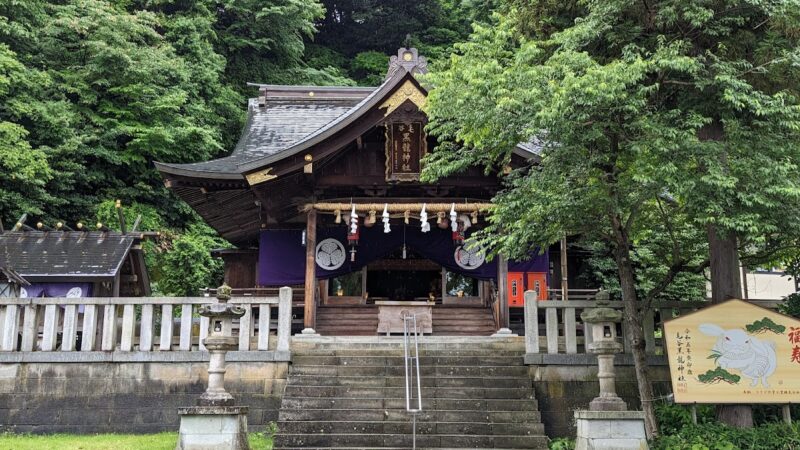
Kurotatsu Shrine (Fukui City) Complete Guide | Deities, Blessings, Access, and Goshuin Information [Fukui Prefecture]
Kurotatsu Shrine, located in Fukui City, is a historic shrine dedicated to the guardian deity of the Kuzuryu River, the mother river of Fukui. Affectionately known locally as “Kurotatsu-san,” it has long been revered by the people of Fukui. This article provides a detailed introduction to Kurotatsu Shrine, including its history, enshrined deities, blessings, worship methods, access information, goshuin (shrine stamps), and nearby attractions.
What is Kurotatsu Shrine?
Kurotatsu Shrine is located in Keya 3-chome, Fukui City, and enshrines Kurotatsu Okami (Takaokami-no-kami), the guardian deity of the Kuzuryu River, as its main deity. Situated at the foot of Mt. Asuwa, it has long been revered by the people of Fukui as an important shrine protecting the northeast (demon’s gate) of Fukui Castle town.
The shrine has a long history, dating back to its founding. It has been worshipped as a deity protecting people from floods, expressing gratitude for the blessings of water and its role in flood control along the Kuzuryu River. Even today, it remains a local guardian shrine and a spiritual haven for the citizens of Fukui, attracting many worshippers.
History of Kuro-ryu Shrine
Founding and Origin
The exact founding date of Kuro-ryu Shrine is unclear, but it has long been deeply connected to the water deity worship of the Kuzuryu River basin. While the Kuzuryu River nourishes the Fukui Plain, it has also frequently caused floods, inflicting suffering on the people. It is said that the shrine was founded to appease the raging river god and express gratitude for the blessings of water.
The name “Kuro-ryu” (Black Dragon) is deeply related to the “Kuzuryu” (Nine-Headed Dragon) of the Kuzuryu River. There are various theories about the origin of the Kuzuryu River’s name, but one theory suggests that this turbulent river was likened to a nine-headed dragon, and prayers for flood control were offered by enshrining this dragon god.
Connection to the Fukui Domain
During the Edo period, the shrine received deep reverence from the Matsudaira family, the lords of the Fukui Domain. Located in the northeast (the “demon’s gate”) of Fukui Castle, it was also considered important as the guardian deity of the castle town, and the lords made repairs and donations to the shrine buildings.
Even after the Meiji-era separation of Shinto and Buddhism, the shrine continued to be worshipped as the local tutelary deity, and this continues to the present day. During the post-war reconstruction period, it played an important role as a source of spiritual support for the local residents.
Deities and Benefits
Main Deity: Kuro-ryu Okami (Takaokami-no-kami)
The main deity of Kuro-ryu Shrine is Kuro-ryu Okami, which is considered another name for Takaokami-no-kami. Takaokami-no-kami is a water and dragon deity appearing in Japanese mythology, and is an ancient deity mentioned in the Kojiki and Nihon Shoki.
Takaokami-no-Kami is believed to have been born from the blood of Izanagi-no-Mikoto when he slew Kagutsuchi-no-Kami, the god of fire. He is revered as the god who governs the water sources of the mountains. He is worshipped as the guardian deity of the entire flow of water, from the source to the mouth of the Kuzuryu River.
Benefits
Kokuryu Shrine is believed to offer the following benefits:
Protection from Water Disasters and Flood Control
This is one of the oldest beliefs, and it is believed to protect people from floods and bring the blessing of safe water.
Abundant Harvests and Business Prosperity
Water is the foundation of agriculture, and abundant water nourishes fields and brings bountiful harvests. Therefore, it is believed to bring blessings of abundant harvests and business prosperity.
Good Fortune and Prosperity
The dragon god is a powerful being that creates updrafts, and is believed to bring blessings of improved luck and good fortune.
Protection from Evil and Protection from Inauspicious Directions
As a shrine protecting the northeast direction (the “demon’s gate”) of Fukui Castle, it is also believed to offer protection from evil and inauspicious directions.
Matchmaking and Family Safety
As the local guardian deity, it is believed to bring good fortune in relationships and protect the safety and happiness of families.
Highlights of the Shrine Grounds
Main Hall and Worship Hall
The shrine buildings of Kuro Ryujin Shrine are constructed in the traditional style of shrine architecture. The main hall incorporates the Shinmei-zukuri style, creating a simple yet dignified structure. The worship hall maintains a pure atmosphere as a place for worshippers to offer prayers.
Water Basin
The water basin, where worshippers purify themselves before praying, is fitting for a shrine dedicated to the water god, with pure water flowing from it. The water flows from the mouth of a dragon, symbolizing the worship of the dragon god.
Shrine Office
There is a shrine office where you can receive Goshuin (shrine stamps) and amulets. During the hours when Shinto priests are present, you can receive detailed explanations about proper worship etiquette and the history of the shrine.
Atmosphere of the Shrine Grounds
The shrine grounds have a quiet and peaceful atmosphere, making it an ideal place to escape the hustle and bustle of the city and find peace of mind. Ancient trees line the grounds, allowing you to experience the changing seasons.
Worship Methods and Manners
Basic Worship Etiquette
- Bow Before Passing Through the Torii Gate
Before entering the sacred area, bow before the torii gate. When passing through the torii gate, avoid walking in the center of the path (the center is considered the path of the gods).
- Purifying Yourself at the Water Basin
- Hold the ladle in your right hand and purify your left hand.
- Switch the ladle to your left hand and purify your right hand.
- Switch the ladle back to your right hand, receive water in your left hand, and rinse your mouth.
- Finally, stand the ladle upright and purify the handle.
- Worship at the Main Hall
- Place your offering in the offering box.
- Ring the bell if there is one.
- Perform the two bows, two claps, and one bow ritual (bowing deeply twice, clapping twice, and bowing deeply once).
- Upon Exiting
Before leaving through the torii gate, turn around and bow towards the main hall.
Attire for Worship
There are no specific dress code requirements, but it is desirable to dress appropriately for a sacred place. Avoid revealing or overly flashy clothing, and aim for clean and presentable attire.
Regarding Photography
Photography is generally permitted within the shrine grounds, but please refrain from taking photos inside the main hall or in areas requiring permission from the Shinto priests. It is also important to be considerate of other visitors.
Goshuin (Shrine Seal) Information
Regarding Goshuin
Kokuryu Shrine offers Goshuin. Goshuin are proof of your visit and a memento of your connection with the deities.
Offering Fee (Goshuin Fee): Usually around 300-500 yen
Reception Hours: During the hours the shrine office is open (generally 9:00 AM to 5:00 PM)
*Please note that Goshuin may not be available if the Shinto priests are absent. If you wish to be sure to receive a Goshuin, it is recommended to call ahead to confirm.
Regarding Goshuincho (Shrine Seal Book)
It is common to bring your own Goshuincho, but if you do not have one, you may be able to receive a pre-printed Goshuin. First-time visitors can also purchase a Goshuincho at the shrine.
Manners for Receiving a Goshuin (Shrine Stamp)
- It is customary to receive the stamp after praying.
- Carefully present your Goshuincho (stamp book) with both hands.
- Wait quietly while the stamp is being written.
- Receive the stamp with both hands and express your gratitude.
- Remember that the Goshuin is proof of your visit, not a stamp rally item.
Amulets and Souvenirs
Kokuryu Shrine offers a variety of amulets and souvenirs.
Main Amulets
Water Protection Amulet
As befits a shrine dedicated to the water god, this amulet protects against water-related disasters. Popular among those engaged in water-based leisure activities or fishing.
Good Fortune Amulet
This amulet is believed to boost your luck with the powerful energy of the dragon god.
Traffic Safety Amulet
This amulet prays for safe daily commutes, school runs, and travel.
Exorcism Amulet
This amulet is for those in their unlucky year or those who wish to protect themselves from misfortune.
Matchmaking Charm
This charm is believed to bring good fortune in finding a partner.
Other Items Offered
- Ofuda (Shinto Talisman)
- Ema (Votive Tablet)
- Omikuji (Fortune Slip)
- Goshinya (Sacred Arrow)
Annual Events and Festivals
Kokuryu Shrine holds various festivals throughout the year.
Main Annual Events
New Year’s Day Festival (January 1st)
A festival to welcome the new year and pray for peace and happiness throughout the year. Many worshippers visit for their first shrine visit of the year.
Setsubun Festival (Around February 3rd)
A traditional event where beans are scattered to ward off evil and invite good fortune.
Spring Festival
A festival to celebrate the arrival of spring and pray for a bountiful harvest.
Summer Purification Ceremony (June 30th)
A Shinto ritual to purify oneself of sins and impurities accumulated over the past six months. A ritual of passing through a ring of reeds may also be performed. Autumn Festival
An important festival to give thanks for the harvest and to offer offerings to the gods.
Shichi-Go-San (around November 15th)
A celebration of children’s growth and prayers for their healthy development.
Year-End Purification Ceremony (December 31st)
A Shinto ritual to cleanse away the sins and impurities of the past year and welcome the new year with a fresh start.
*Please note that the dates of festivals may change from year to year. For details, please contact the shrine directly.
Access Information
Location
Address: Keya 3-chome, Fukui City, Fukui Prefecture
Access by Train
From JR Fukui Station
- Walking: Approximately 20-25 minutes
- Taxi: Approximately 5-7 minutes
- Bus: Take a Keifuku Bus from the bus stop in front of Fukui Station, get off at the nearest bus stop, and walk for approximately 5 minutes.
Access by Car
From the Hokuriku Expressway
- Approximately 15 minutes from Fukui IC
- Approximately 20 minutes from Fukui Kita IC
From Fukui City Center
- Approximately 10 minutes from the area around Fukui Station
Parking
There is a parking lot for visitors at the shrine. Spaces are limited, so we recommend using public transportation during New Year’s visits and festivals.
Car Navigation Settings
When searching with a car navigation system, please search for “Kokuryu Shrine Fukui City” or the address “Keya 3-chome, Fukui City, Fukui Prefecture”.
Best Time and Duration for Visiting
Recommended Time for Visiting
Early Morning (7:00 AM – 9:00 AM)
There are fewer people, allowing for a peaceful visit. Visiting in the refreshing morning air is especially wonderful.
Weekday Mornings
Compared to weekends, there are fewer visitors, allowing for a more relaxed visit.
Evening (4:00 PM – 5:00 PM)
As the sun begins to set, a gentle light shines into the temple grounds, creating a magical atmosphere.
Estimated Time Required for Visiting the Shrine
- Visiting only: Approximately 15-20 minutes
- Including a stroll around the shrine grounds: Approximately 30-40 minutes
- Including receiving a Goshuin (shrine stamp) and other gifts: Approximately 40-60 minutes
Times to Avoid
- New Year’s visit period (January 1st-3rd): Extremely crowded
- Shichi-Go-San season (mid-November): Weekends are crowded
- Festival days: Many visitors, and parking lots may be full
Nearby Tourist Attractions
There are many attractive tourist spots in Fukui City around Kuro-Ryu Shrine.
Asuwayama Park (within walking distance)
Asuwayama, a symbol of Fukui City, is famous as a cherry blossom viewing spot. Approximately 3,600 cherry trees bloom in spring, and it has been selected as one of “Japan’s Top 100 Cherry Blossom Viewing Spots.” From the summit, you can enjoy a panoramic view of Fukui City, and it is also a popular hiking course.
Asuwa Shrine (approx. 10-minute walk)
This ancient shrine, located on the mountainside of Mt. Asuwa, enshrines Emperor Keitai. Within the shrine grounds is a weeping cherry tree approximately 370 years old, designated as a natural monument of Fukui City.
Fukui Castle Ruins (approx. 5-minute drive)
This is the site of Fukui Castle, built by Yuki Hideyasu, the second son of Tokugawa Ieyasu. While the Fukui Prefectural Government building now stands on the site, the stone walls and moats remain, allowing visitors to experience its former glory.
Yohokan Garden (approx. 7-minute drive)
This garden, originally built as a villa for the Matsudaira family, lords of the Fukui domain, is designated as a national scenic spot. It’s a beautiful garden that preserves the atmosphere of an Edo-period daimyo garden.
Ichijodani Asakura Clan Ruins (approx. 20-minute drive)
This is the site of the castle town of the Sengoku period daimyo Asakura clan, designated as a national special historic site. The reconstructed townscape allows visitors to experience life during the Sengoku period. ### Fukui Prefectural Dinosaur Museum (approx. 40 minutes by car)
One of the world’s three major dinosaur museums, it exhibits dinosaur fossils and reconstructed models. It’s especially recommended for families.
Nearby Restaurants and Rest Stops
Sauce Katsu Don (Pork Cutlet Rice Bowl with Sauce)
Sauce katsu don, a soul food of Fukui, is a must-try specialty. There are several famous sauce katsu don restaurants around Kuro-ryu Shrine.
Echizen Soba (Echizen Noodles)
Echizen soba, a local dish of Fukui Prefecture, is characterized by “oroshi soba” (soba noodles topped with plenty of grated daikon radish). Many soba restaurants can be found around Fukui Station.
Habutae Mochi (Habutae Rice Cake)
Habutae mochi, a representative confection of Fukui, makes a perfect souvenir. Many long-established Japanese confectionery shops are scattered throughout the city.
Seasonal Highlights
Spring (March-May)
During cherry blossom season, the area around Mt. Asuwa is dyed pink with blossoms, attracting many visitors. It’s recommended to enjoy the cherry blossoms on Mt. Asuwa after visiting Kuro Ryujin Shrine. The fresh green season is also refreshing, making for a pleasant visit.
Summer (June-August)
The lush green grounds offer relief from the summer heat. At the summer purification ceremony, pass through the straw ring to cleanse yourself of the impurities of the past six months and pray for good health for the remaining half of the year.
Autumn (September-November)
During the autumn foliage season, the trees in the shrine grounds and surrounding areas change color, offering beautiful scenery. The autumn festival includes a Shinto ritual to give thanks for the harvest. During the Shichi-Go-San festival, the shrine grounds are vibrant with children in their festive attire.
Winter (December to February)
When it snows, the temple grounds are enveloped in silence, enhancing the sacred atmosphere. Many worshippers visit for Hatsumode (first shrine visit of the year) to pray for happiness in the new year. Visiting amidst a snowy landscape is a unique experience only available in Fukui.
Precautions During Visits
Weather Precautions
During Rain
The stone pavement on the temple grounds becomes slippery, so please be careful of your footing.
On Snowy Days
Fukui is one of Japan’s leading heavy snowfall areas. During winter, the ground becomes extremely slippery due to snow accumulation. Please wear non-slip shoes and be very careful when visiting.
On Hot Summer Days
Remember to stay hydrated to prevent heatstroke. Using a hat or parasol is also recommended.
Accessibility Information
There are steps in some areas of the temple grounds, so if you plan to visit using a wheelchair or stroller, it is recommended that you check with the shrine in advance.
Regarding Pets
Some shrines may have restrictions on bringing pets. If you wish to visit with your pet, please check with the shrine in advance.
Frequently Asked Questions
Q1: Are there any restrictions on visiting hours?
Entry to the shrine grounds is generally unrestricted, but the shrine office is open from approximately 9:00 AM to 5:00 PM. If you wish to receive a Goshuin (shrine stamp) or other items, it is recommended to visit within these hours.
Q2: Can I request a prayer service?
We accept various prayer services (for protection against misfortune, family safety, business prosperity, etc.). If you wish to request a prayer service, it is recommended to contact the shrine in advance to make a reservation.
Q3: Can I have a wedding ceremony here?
We can also discuss Shinto wedding ceremonies. Please contact the shrine directly for details.
Q4: Can I have amulets mailed to me?
Generally, amulets are given to those who visit the shrine in person, but if you live far away or have other circumstances, please consult with the shrine.
Q5: How crowded is it during the New Year’s visit?
Many visitors come from January 1st to 3rd. It is especially crowded on the morning of New Year’s Day, so if you want to avoid the crowds, we recommend visiting early in the morning, in the evening, or after the first three days of the year.
The Deep Connection Between Kuro-ryu Shrine and the Kuzuryu River
An essential part of discussing Kuro-ryu Shrine is its connection to the Kuzuryu River, the largest river in Fukui Prefecture.
The History of the Kuzuryu River
The Kuzuryu River is a 116km-long first-class river that originates near the Aburasaka Pass on the border with Gifu Prefecture, flows north through Fukui Prefecture, and empties into the Sea of Japan. Its drainage basin covers 2,930km², and it is affectionately known as the “mother river” that nourishes the Fukui Plain.
However, it is also known as a “raging river,” and has frequently flooded since ancient times, causing suffering to the people. Especially during the rainy season and typhoon season, the water volume would surge, sometimes causing flood damage.
The Importance of Water Deity Worship
Given this background, water deity worship has been prevalent in the Kuzuryu River basin since ancient times. Kuro-ryu Shrine has served as a central figure, functioning as a place to appease the river’s floods and express gratitude for the blessings of water.
The dragon god is considered a deity that controls water, possessing the power to bring rain and control the river’s flow. People have visited Kuro-ryu Shrine to pray for protection from floods and for the blessings of abundant water.
Significance in Modern Times
In modern times, advances in flood control technology have significantly reduced flooding of the Kuzuryu River, but the importance of water remains unchanged. The water of the Kuzuryu River continues to support the lives of the people of Fukui Prefecture for agricultural, industrial, and drinking water purposes.
Visiting Kuro-ryu Shrine is an opportunity to express gratitude for the blessings of water and to be mindful of coexisting with nature.
History of Fukui City and Kuro-ryu Shrine
Origins of Fukui City
Fukui City began in the Sengoku period when the Asakura clan built a castle town in Ichijodani. During the Edo period, it developed as the castle town of the Fukui Domain. Since the Meiji era, it has served as the prefectural capital, becoming the political, economic, and cultural center of Fukui Prefecture.
Guardian Deity of the Castle Town
Kuro-ryu Shrine, located in the northeast (demon’s gate) of Fukui Castle, has long been considered important as the guardian deity of the castle town. The demon’s gate is considered a direction from which evil spirits easily enter, and the idea of protecting the entire castle town by placing a shrine in this direction is a long-standing tradition in Japanese urban planning.
The Matsudaira family, the lords of the Fukui Domain, also deeply revered Kuro-ryu Shrine and provided support for the repair of the shrine buildings and festivals. This historical background has preserved the prestige and traditions of Kuro-ryu Shrine to this day.
About Dragon God Worship
What is a Dragon God?
Dragon gods are revered in Japanese folk beliefs and Shinto as deities who control water. It is believed that this belief was formed through the fusion of the concept of dragons, which originated in China, and the ancient Japanese belief in snake gods.
Dragons were believed to have the power to summon clouds and bring rain, making them extremely important figures in agricultural societies. Furthermore, due to their powerful, ascending image, dragons are also considered symbols of success, advancement, and good fortune.
Dragon God Worship Across Japan
There are numerous shrines throughout Japan dedicated to dragon gods. Famous examples include Niukawakami Shrine in Nara Prefecture, Kifune Shrine in Kyoto Prefecture, and Enoshima Shrine in Kanagawa Prefecture. These shrines are also located in places associated with water sources and rivers, demonstrating the universality of dragon god worship as a water deity.
Characteristics of the Dragon God Worship at Kuro-ryu Shrine
The dragon god worship at Kuro-ryu Shrine is unique in its connection to the specific Kuzuryu River. Rather than an abstract water deity worship, it has been worshipped as a river god directly connected to daily life, a more familiar presence.
This regional connection gives the worship at Kuro-ryu Shrine a unique depth and persuasiveness.
Visitor Voices and Experiences
Voices of Local Residents
“Since I was a child, I’ve always made it a tradition to visit Kuro Ryujin Shrine for my first shrine visit of the year. I pray every year for my family’s health and happiness.” (Woman in her 60s)
“As I run a business, I always visit on the 1st of every month. Thanks to the prayers, my business has been going smoothly.” (Man in his 50s)
Voices of Tourists
“I stopped by during a trip to Fukui. It’s a quiet and peaceful shrine, and I felt like my soul was cleansed.” (Woman in her 30s, Tokyo)
“I visited as part of a pilgrimage to collect Goshuin (shrine stamps). The shrine priest was very kind and taught me about the history of the shrine.” (Man in his 40s, Osaka Prefecture)
Special Experiences
“I received prayers for protection against bad luck during my unlucky year. The prayers were performed carefully, and I felt more positive.” (Woman in her 30s)
“I visited for my child’s Shichi-Go-San (7-5-3) ceremony. I felt a sense of gratitude for my child’s growth.” (Couple in their 30s)
Summary: A Recommendation to Visit Kuro-ryu Shrine
Kuro-ryu Shrine is a sacred place where the history, culture, and faith of the people of Fukui breathe life into. Revered since ancient times as the guardian deity of the Kuzuryu River, it continues to attract unwavering faith as a spiritual anchor for the citizens of Fukui.
Kuro-ryu Shrine is believed to offer various blessings, including protection from water-related disasters, abundant harvests, good fortune, and protection from evil. It is an ideal place to visit at life’s milestones and to express daily gratitude.
When visiting Fukui City, be sure to visit Kuro-ryu Shrine, find peace in its quiet and sacred atmosphere, and pray for the protection of the Dragon God. Visiting nearby tourist spots such as Asuwayama Park and Fukui Castle Ruins in conjunction with the shrine will allow you to gain a deeper understanding of Fukui’s history and culture.
When visiting, it is important to observe proper etiquette and manners, and offer your prayers with gratitude. May your visit to Kuro-ryu Shrine be a memorable and wonderful experience.
Contact Information
For detailed inquiries regarding Kuro-ryu Shrine, please contact the shrine directly. The shrine priests will kindly assist you with prayer reservations, festival schedules, and any other questions you may have.
We recommend checking the latest information before your visit. Especially during inclement weather or festivals, procedures may differ from usual, so prior confirmation is recommended.
We sincerely pray that your visit to Kuro-ryu Shrine will be fruitful.