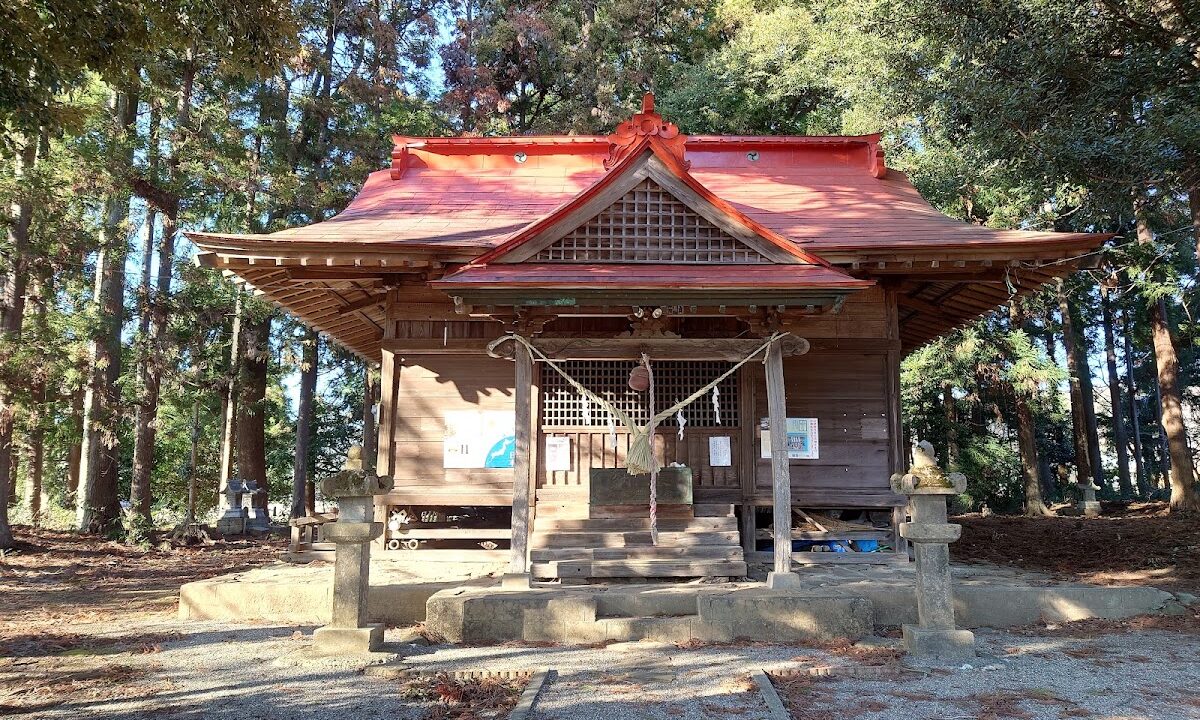
Akese Shrine (Hitachiota City, Ibaraki Prefecture) Complete Guide | History, Deities, and Access Information
Akese Shrine, located in Kamesaku-cho, Hitachiota City, Ibaraki Prefecture, is a historically significant shrine with ties to Tokugawa Mitsukuni (Mito Komon). Situated on a plateau at the southwestern foot of Mt. Mayumi, its tranquil grounds, surrounded by ancient chinquapin trees, evoke a mystical atmosphere from antiquity in visitors. This article provides detailed information useful for visiting Akese Shrine, including its history, enshrined deities, highlights of the grounds, and access methods.
Basic Information on Akese Shrine
Akese Shrine is located at 1349 Kamesaku-cho, Hitachiota City, Ibaraki Prefecture. Its former shrine rank was Village Shrine. As a shrine that attracts the faith of the local community, it has a long history and continues to be cherished by the local people.
Location and Access Overview
Address: 1349 Kamesaku-cho, Hitachiota City, Ibaraki Prefecture 313-0023
Nearest Station: Approximately 50 minutes on foot (approx. 4km) from Hitachiota Station on the JR Suigun Line, approximately 59 minutes on foot (approx. 4.7km) from Tanigawara Station
Access by Bus:
- Approximately 4 minutes on foot (approx. 255m) from Kamesaku Shrine bus stop
- Approximately 6 minutes on foot (approx. 448m) from Kamesaku-kami bus stop
- Approximately 8 minutes on foot (approx. 614m) from Mabune bus stop
The shrine is located in a plateau settlement at the southwestern foot of Mt. Mayumi, and is characterized by its solemn grounds surrounded by ancient chinquapin trees.
History and Origins of Akese Shrine
Akese Shrine has a long history; the exact date of its founding is unknown, but its origins are believed to date back to ancient times. Unraveling the history of the shrine reveals a deep connection with Tokugawa Mitsukuni.
From Akusho Myojin to Myose Shrine
According to shrine records, Myose Shrine was originally called “Akusho Myojin.” The name “Akusho” didn’t necessarily have a negative connotation; in ancient times, it could mean “a treacherous place” or “a sacred place.”
In 1691 (Genroku 4), Tokugawa Mitsukuni, the lord of the Mito domain, visited the shrine and viewed the sacred wooden statues. Seeing the statues—a male figure wearing a robe and a female figure wearing a crown—Mitsukuni exclaimed, “These are things of the ancient world, beyond the reach of later generations,” and had them placed in a specially made box.
Later, in 1699 (Genroku 12), Mitsukuni changed the shrine’s name from “Akusho Myojin” to “Myose Shrine” and donated a spear. This name change is thought to have embodied the wish to “illuminate the world.”
Tokugawa Mitsukuni and Myosei Shrine
Tokugawa Mitsukuni (1628-1701) was the second lord of the Mito Domain and a renowned ruler known for beginning the compilation of the “Dai Nihon Shi” (Great History of Japan). Mitsukuni devoted himself to the investigation and maintenance of shrines and temples within his territory, clarifying the history of many shrines and establishing their ranks.
Mitsukuni’s involvement with Myosei Shrine extended beyond mere inspection; he recognized the value of the sacred object, took measures for its preservation, and even took concrete actions such as changing the shrine’s name and donating sacred treasures. This can be seen as evidence of Mitsukuni’s high regard for this shrine.
This history is also recorded in detail in the “Ibaraki Prefecture Shrine Records,” revealing Myosei Shrine’s important position in the region’s history.
Deities and Blessings
The deities enshrined at Akese Shrine are the gods of creation in Japanese mythology, responsible for the creation of the land and the gods.
Deities Enshrined
Izanagi-no-Mikoto
Izanami-no-Mikoto
These two deities are known as the divine couple who created the Japanese archipelago and many other gods. According to the Kojiki and Nihon Shoki, Izanagi-no-Mikoto and Izanami-no-Mikoto stood on the Heavenly Floating Bridge and stirred the sea with the Heavenly Jeweled Spear to create the first islands.
Expected Benefits
At shrines dedicated to Izanagi-no-Mikoto and Izanami-no-Mikoto, the following benefits can be expected:
- Matchmaking and Marital Harmony: As they are a married couple, benefits are expected for successful relationships and deepening the bond between spouses.
- Childbearing and Safe Childbirth: As they gave birth to many gods, benefits are expected for fertility and safe childbirth.
- Family Safety: Benefits are expected for the health and safety of the family.
- Abundant Harvest: As gods who created the land, benefits are expected for the prosperity of agriculture and industry.
- Protection from Misfortune and Good Fortune: Benefits are expected for warding off misfortune and opening new paths.
Highlights of the Shrine Grounds
The grounds of Akese Shrine offer visitors a quiet and sacred atmosphere.
Approach and Torii Gate
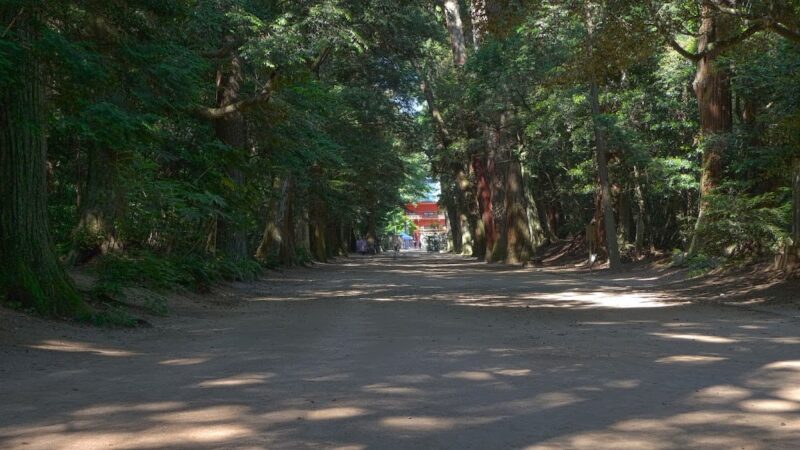
One of the features of Akese Shrine is its straight approach. Walking along this approach shifts one’s mind from everyday life to a sacred realm.
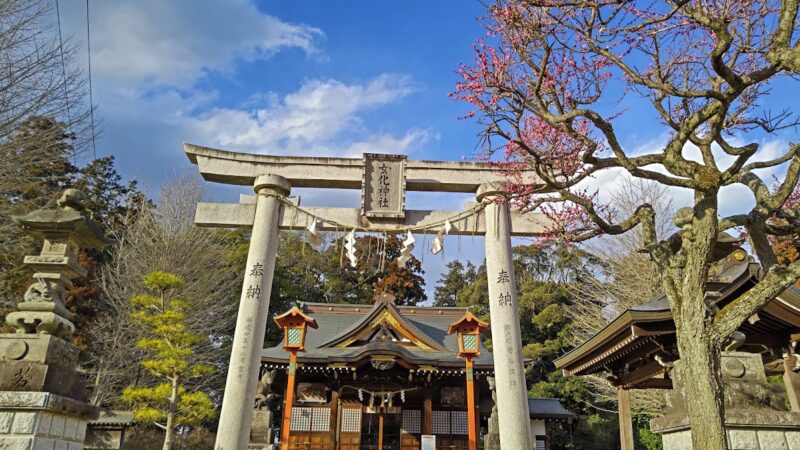
The shrine grounds have two torii gates, the first and second, creating a structure that allows visitors to gradually approach the sacred area. Each time you pass through a torii gate, you feel a sense of approaching a sacred space.
Shrine Name Marker and Historical Information
At the entrance to the approach stands a shrine name marker inscribed with the name “Akese Shrine.” A historical information sheet is also provided, allowing visitors to learn about the shrine’s history and enshrined deities. Reading these before your visit will allow for a deeper understanding of the shrine.
Worship Hall and Main Sanctuary
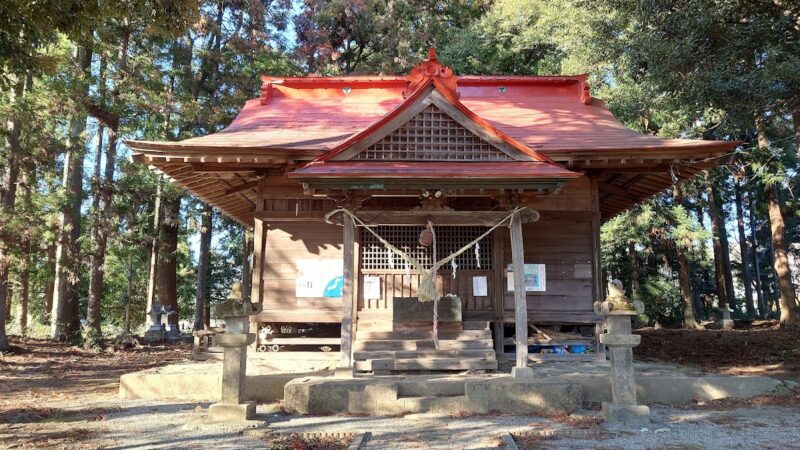
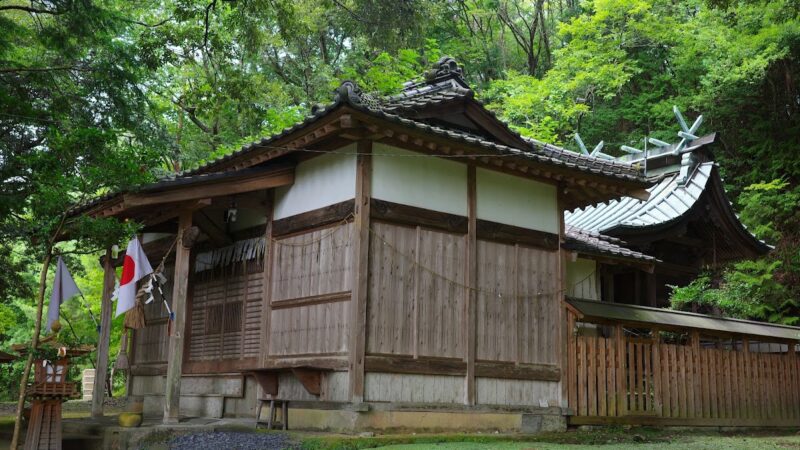
The worship hall is where worshippers offer their prayers, and the main sanctuary sits behind it. The roof of the main sanctuary features two katsuogi (decorative roof beams) and two chigi (decorative roof finials, cut inwards), which are characteristic of shrines dedicated to goddesses. This architectural style indicates that Izanami-no-Mikoto is enshrined there.
Ancient Chestnut Trees
The ancient chestnut trees surrounding the shrine grounds are living witnesses that have watched over the history of Akese Shrine. These towering trees contribute to the solemn atmosphere of the shrine, creating a space where nature and faith are intertwined. The evergreen chinquapin trees are also considered symbols of eternity and permanence.
About the Sacred Object
As mentioned above, the sacred object of Akese Shrine is a wooden statue; the male figure wears a ceremonial robe, and the female figure wears a celestial crown. This sacred object, which Tokugawa Mitsukuni described as “an object of the higher world,” is now carefully preserved in a specially made box. Its style suggests it may have been created during the Heian period or earlier.
How to Access Akese Shrine
Detailed access information to Akese Shrine is provided below.
Access by Public Transportation
By Train
- From Hitachi-Ota Station on the JR Suigun Line:
- Walking: Approximately 50 minutes (approx. 4 km)
- Taxi: Approximately 10 minutes
- Bus: Take an Ibaraki Kotsu bus and get off at “Kamezaku Jinja-mae” bus stop, then walk approximately 4 minutes.
- From Tanigawara Station on the JR Suigun Line:
- Walking: Approximately 59 minutes (approx. 4.7 km)
- Taxi: Approximately 12 minutes
By Bus
If using an Ibaraki Kotsu bus, the following bus stops are convenient:
- Kamezaku Jinja-mae Bus Stop: Approximately 4 minutes on foot to the shrine (approx. 255 m) – Closest bus stop
- Kamezaku-kami Bus Stop: Approximately 6 minutes on foot to the shrine (approx. 448 m)
- Mabune Bus Stop: Approximately 8 minutes on foot (approx. 614m) to the shrine.
For bus routes from Hitachiota Station, we recommend checking the latest timetable on the Ibaraki Kotsu official website or at the station’s information desk.
Access by Private Car
Routes from Major Roads
- From the Joban Expressway
- Approximately 30 minutes from Naka IC via National Route 349
- Approximately 25 minutes from Hitachi Minamiota IC via National Routes 293 and 349
- From National Route 349
- Approximately 10 minutes north from Hitachiota city center
- Follow the signs for Kamesaku-cho
Parking Information
There is parking space for visitors around the shrine, but it is not a large parking lot, so caution is advised during busy times. Especially during New Year’s visits and festivals, we recommend arriving early.
Car Navigation Settings
- Address Input: 1349 Kamesaku-cho, Hitachiota City, Ibaraki Prefecture
- Phone Number Search: May be registered as local facility information
- Map Code: If your car navigation system supports it, it’s convenient to check it in advance.
Manners and Points for Visiting the Shrine
We will introduce basic manners and points for visiting Akese Shrine.
Basic Etiquette for Visiting the Shrine
- How to Pass Through the Torii Gate: Bow before passing through the torii gate. Since the center of the path is considered the path of the gods, walk along the side.
- How to Wash Your Hands: If there is a water basin for washing your hands, purify yourself in the following order.
- Hold the ladle in your right hand and purify your left hand.
- Switch the ladle to your left hand and purify your right hand.
- Switch the ladle back to your right hand, receive water in your left hand, and rinse your mouth.
- Finally, hold the ladle upright and purify the handle.
- Worship at the Main Hall: The basic procedure is two bows, two claps, and one bow.
- Bow deeply twice.
- Clap your hands twice at chest height.
- Pray with sincerity.
- Finally, bow deeply once.
Suitable Time for Visiting
Akese Shrine is open for worship throughout the year, but each season offers a different charm.
- Spring: The season of fresh greenery, the trees in the shrine grounds are beautiful.
- Summer: The shade of the chinquapin trees provides coolness.
- Autumn: Autumn leaves and a tranquil atmosphere.
- Winter: Worship in a serene atmosphere.
Regarding Photography
Photography is generally permitted on the shrine grounds, but please note the following:
- Photography may be prohibited inside the main hall and worship hall.
- Be considerate of other worshippers.
- Remember that this is a sacred place and photograph with respect.
Nearby Tourist Attractions
There are many attractive tourist spots in Hitachiota City around Myose Shrine.
Historical Sites in Hitachiota City
Nishiyama-so
This was the retirement residence where Tokugawa Mitsukuni spent his later years, and the compilation of the “Dai Nihon Shi” (Great History of Japan) also took place here. Visiting it together with Myose Shrine will give you a deeper understanding of Mitsukuni’s connection to the region.
Satake-ji Temple
A historic Shingon Buddhist temple with a main hall designated as a National Important Cultural Property. A temple where you can feel the history of Hitachiota City.
Ryujin Suspension Bridge
A pedestrian-only suspension bridge 375 meters long, offering spectacular views of Ryujin Gorge. It’s about a 30-minute drive from Myose Shrine.
Nearby Shrines and Temples
There are many other shrines and temples around Hitachiota City, making it a great place to enjoy a shrine tour. A journey tracing the history of local faith would also be interesting.
History and Origin of the Place Name of Kamesaku-cho
The place name of Kamesaku-cho, where Myose Shrine is located, has an interesting background.
Meaning Behind the Place Name
The place name “Kame-saku” can also be translated as “Kame-saku” or “Kame-saku,” allowing for various interpretations:
- Turtle Symbol: Connection to sea god worship, such as Toyotama-hime
- Jar Symbol: Water god worship, like the male and female jars at Ikisu Shrine
- Meaning of Saku: Mythological background, such as Konohanasakuya-hime
These interpretations suggest that this region has been considered an important place of worship since ancient times.
Myths and Legends Around Mayumi-yama
Ancient myths and legends remain around Mayumi-yama, where Akese Shrine is located. There are also legends related to the star god Amatsumikaboshi, mentioned in the Hitachi Province Fudoki (ancient gazetteer), contributing to the mystical atmosphere of the region.
Cultural Properties and Preservation Activities of Akese Shrine
Akese Shrine preserves cultural properties of historical value.
The Value of the Sacred Wooden Statue
The sacred wooden statue, which Tokugawa Mitsukuni described as “an object of the ancient world,” is believed to be a work from the Heian period or earlier, based on its date of creation and style. Its appearance, adorned with robes and a crown, is a valuable historical artifact that conveys the style of divine statue sculpture from that era.
The Spear Donated by Mitsukuni
The spear donated by Tokugawa Mitsukuni in 1699 (Genroku 12) is carefully preserved as a treasure of the shrine. This is tangible evidence of Mitsukuni’s reverence for the shrine and is an item of high historical value.
Local Preservation Activities
Akese Shrine has been carefully preserved by the local community. The community works together to support the shrine, including cleaning and maintaining the grounds and conducting the annual festival.
Annual Festivals and Events
Akese Shrine holds various festivals and events throughout the year.
Annual Events
As a local shrine, the following events are likely to be held:
- New Year’s Day Festival: A festival to welcome the new year
- Spring Festival: A festival celebrating the arrival of spring
- Autumn Festival: A festival offering thanks for the harvest
- Monthly Festival: A regular monthly festival
For specific dates, we recommend checking local information or contacting the shrine directly.
Visitor Voices and Experiences
Visitors who have visited Myose Shrine have shared the following impressions:
“Walking along the straight path to the shrine, I felt a sense of purification.”
“I was able to pray peacefully in the quiet grounds surrounded by ancient chestnut trees.”
“As a shrine associated with Tokugawa Mitsukuni, I felt the weight of history.”
“I had been curious about this shrine for a long time, and this was my first visit. It was an even more wonderful shrine than I expected.”
Many visitors seem to be impressed by the shrine’s tranquil atmosphere and profound history.
Preparation and Checklist for Visiting Akese Shrine
Here is a checklist for planning your visit to Akese Shrine.
Pre-Visit Preparations
- Check Access Methods: Check public transportation timetables and driving routes.
- Check Weather: Check the weather forecast for your visit.
- Attire: Comfortable walking shoes are recommended as you will be walking along the approach and within the shrine grounds.
- Items to Bring: Offering money, camera, and a Goshuincho (stamp book) (if you receive a Goshuin stamp).
Information on Nearby Facilities
- Dining Options: There are restaurants in the Hitachiota city center.
- Accommodation: There are accommodations in the city and surrounding areas.
- Tourist Information Center: There is a tourist information center near Hitachiota Station.
Hitachiota City Shrine Pilgrimage Route
Here is a suggested model route for visiting shrines, starting from Akese Shrine.
Half-Day Course
- Akase Shrine (Duration: 30 minutes)
- Travel to Hitachiota City Center (Approx. 15 minutes by car)
- Visit Satake-ji Temple (Duration: 30 minutes)
- Visit Nishiyama-so (Duration: 1 hour)
Full-Day Course
In addition to the above half-day course:
- Lunch (Hitachiota City Center)
- Ryujin Suspension Bridge (Approx. 30 minutes by car, Duration: 1 hour)
- Explore surrounding shrines and natural spots
Summary: The Charm of Akase Shrine
Akase Shrine is an important shrine that conveys the history and faith of Hitachiota City, Ibaraki Prefecture. It has many attractions, including its deep connection with Tokugawa Mitsukuni, its history of faith that has continued since ancient times, and the tranquil atmosphere of its grounds.
Nestled on a plateau at the southwestern foot of Mt. Mayumi, this shrine, surrounded by ancient chinquapin trees, offers visitors a sense of peace and tranquility. It enshrines Izanagi-no-Mikoto and Izanami-no-Mikoto, fundamental deities of Japanese mythology, and is believed to grant blessings for various aspects of life, including matchmaking, family safety, and fertility.
While access from Hitachi-Ota Station is time-consuming on foot, it is relatively easy to reach by bus or car. The surrounding area boasts many attractive tourist spots, such as Nishiyama-so and Ryujin Suspension Bridge, allowing visitors to enjoy the history and nature of Hitachi-Ota City for a full day.
A visit to Myose Shrine is not merely sightseeing; it is a valuable experience that touches upon the depth of Japanese history and faith. It is one shrine you should definitely visit when you come to Ibaraki Prefecture. Spend some special time away from everyday life in its tranquil grounds.