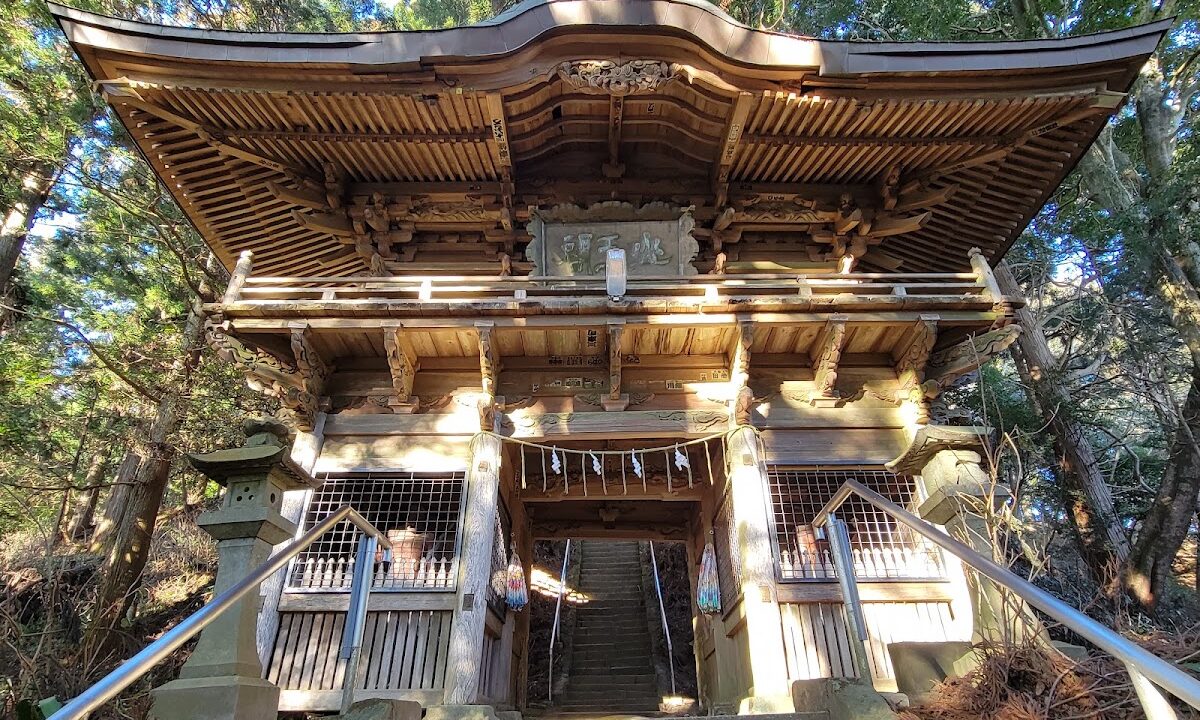
Higashikanasa Shrine (Hitachiota City, Ibaraki Prefecture) Complete Guide | A Sacred Site of a Grand Festival Held Once Every 72 Years and Dengaku Dance
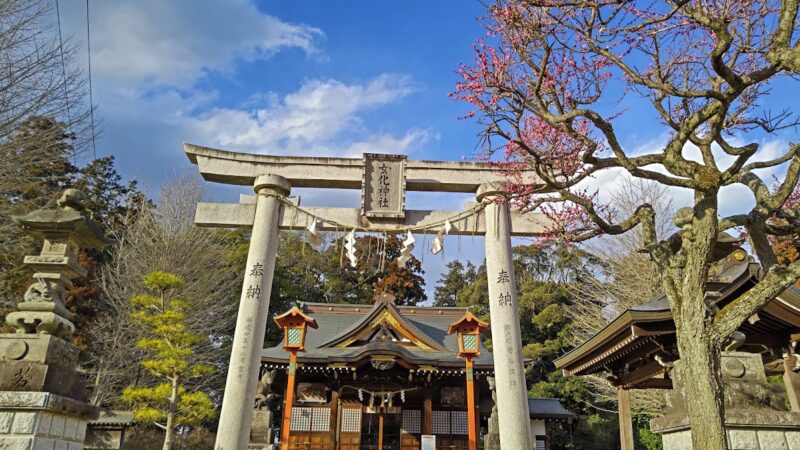
Higashikanasa Shrine, situated on the summit of Mt. Higashikanasa in Hitachiota City, Ibaraki Prefecture, at an altitude of 494 meters, is a venerable shrine boasting a history of over 1200 years. It forms a pair with Nishikanasa Shrine and is known for the “Isoide Grand Festival (Kanasago Daidengaku),” held once every 72 years, and the Dengaku dance performed annually in February. This article provides a detailed guide to Higashikanasa Shrine, including its history, enshrined deities, festival events, goshuin (shrine seals), worship methods, and access information.
Basic Information about Higashikanasa Shrine
Official Name: Higashikanasa Shrine
Common Name: Kanasa-san, O-Higashi-san
Location: 9740 Tenkanoya-cho, Hitachiota City, Ibaraki Prefecture
Deities Enshrined: Ōnamuchi-no-mikoto, Sukunahikona-no-mikoto
Founded: Enryaku 25 (806)
Shrine Rank: Former Village Shrine
Higashikanasa Shrine is located across the Yamada River valley from Nishikanasa Shrine, and the two shrines are a pair. Locally, they are affectionately called “Kanasa-san” and “O-Higashi-san,” and have long been revered as the center of local faith.
History and Origins of Higashikanasa Shrine
Circumstances of Founding
The founding of Higashikanasa Shrine dates back to March of Enryaku 25 (806). At the behest of Emperor Heizei, the high-ranking priest Hoju Shonin constructed a shrine on the summit of Higashi-Kanasago Mountain. Hoju Shonin established an altar and invited a divided spirit from Hiyoshi Taisha Shrine (then known as Hiyoshi Shrine or Sanno Gongen) on Mount Hiei in Omi Province (present-day Shiga Prefecture), and performed rituals.
From its inception, this shrine was positioned as a place of prayer for “national peace and security” and “abundant harvests,” and was highly regarded by the imperial court. Nishi-Kanasago Shrine was also founded in the same year, and the two shrines developed in a twin-like relationship.
About the Deities
The deities enshrined at Higashi-Kanasago Shrine are Ōnamuchi-no-Mikoto and Sukunahikona-no-Mikoto.
Ōnamuchi-no-Mikoto is another name for Ōkuninushi-no-Mikoto, a god with divine virtues related to national management, agriculture, medicine, and matchmaking. Known as the principal deity of Izumo Taisha Shrine, Sukunahikona-no-Mikoto is worshipped as an important god who played a crucial role in nation-building in Japanese mythology.
Sukunahikona-no-Mikoto is a god who, along with Ōkuninushi-no-Mikoto, pioneered the land and is revered as the god of medicine, hot springs, and sake brewing. Despite his small stature, he possessed great wisdom and is said to have assisted Ōkuninushi-no-Mikoto in developing the land of Japan.
These two deities are also enshrined at Hiyoshi Taisha Shrine, and since Higashi-Kanasago Shrine enshrines a分霊 (bunrei, a divided spirit) of Hiyoshi Taisha Shrine, the same deities are worshipped there.
Historical Changes
From the Heian period to the Middle Ages, Higashi-Kanasago Shrine developed as an important center of faith in Hitachi Province (present-day Ibaraki Prefecture). Influenced by mountain worship and the syncretism of Shinto and Buddhism, it also flourished as a sacred site for Shugendō (mountain asceticism).
During the Sengoku period, it received reverence from local warlords, including the Satake clan, who carried out repairs and donations to the shrine buildings. During the Edo period, it received the patronage of the Mito Domain and became a revered guardian shrine of the region.
Following the Meiji-era decree separating Shinto and Buddhism, the shrine’s form as a Shinto shrine was clarified, and it was designated a local shrine. Since then, it has remained a center of faith for the local people.
The Isoide Grand Festival (Kanasago Ota-gaku), held once every 72 years
The festival with the longest interval between events in Japan
The most distinctive feature of Higashi-Kanasago Shrine is the “Isoide Grand Festival,” held jointly with Nishi-Kanasago Shrine once every 72 (or 73) years. This festival is known as the festival with the longest waiting period in Japan, making it a rare event that one may only see once in a lifetime.
The most recent festival was held in 2003 (Heisei 15), and the next one is scheduled for 2075. Because this long cycle roughly coincides with a human lifespan, it is also called the “festival of life rituals.”
Festival Contents
In the Isoide Grand Festival, parishioners from both Higashi-Kanasago Shrine and Nishi-Kanasago Shrine form large processions of approximately 500 people each. The portable shrine is carried from the two shrines to Mizukihama in Hitachi City, a journey of approximately 75 kilometers, taking 7 to 10 days to complete the round trip.
The procession includes people with various roles, such as the shrine bearer, Shinto priests, shrine maidens, performers of Dengaku dance, lion dancers, and children’s procession. Along the way, Dengaku dances are performed at various locations, and the entire region is immersed in the festival atmosphere.
At Mizukihama, the “Isoide” ceremony involves purification rituals in the sea and Shinto rites, praying for a bountiful harvest and safety at sea. This ceremony is based on the belief that the mountain god descends to the sea to renew his power.
Historical Background
The origin of the Isoide Grand Festival is unclear, but it is believed to have been held as early as the late Heian period. The 72-year cycle is said to be a combination of the Chinese calendar’s “one yuan” (60 years) and the twelve-year cycle of the Chinese zodiac, or it may be related to human lifespan.
Arashiyoke Festival and Dengaku Dance
Arashiyoke Festival Held Annually on February 11th
At Higashikanasago Shrine, the “Arashiyoke Festival” is held annually on February 11th (National Foundation Day). This festival is an important event held before spring farming to protect crops from disasters such as wind and flood damage and to pray for a bountiful harvest.
At the Arashiyoke Festival, the “Dengaku Dance,” designated as a nationally selected intangible folk cultural property and an intangible folk cultural property designated by Ibaraki Prefecture, is performed.
Characteristics of Dengaku Dance
Dengaku dance is a traditional performing art that has been passed down since the Heian period and originates from agricultural rituals. The Dengaku dance at Higashikanasago Shrine has been preserved in its ancient form and has the following characteristics:
- Binzasara: A unique rhythm using a bamboo instrument
- Flute and Drum: Music influenced by Gagaku (Japanese court music)
- Costume: Colorful costumes and eboshi (traditional Japanese hat)
- Dance Movements: Movements mimicking rice planting and harvesting
Dengaku dance is carefully preserved and passed down by a local preservation society, which is also focusing on training successors. Many worshippers visit the shrine every year for the Arashiyoke Festival, witnessing this traditional culture.
Guide to the Grounds of Higashikanasago Shrine
Structure of the Approach and Grounds
Higashikanasago Shrine has two approaches: the front approach and the back approach.
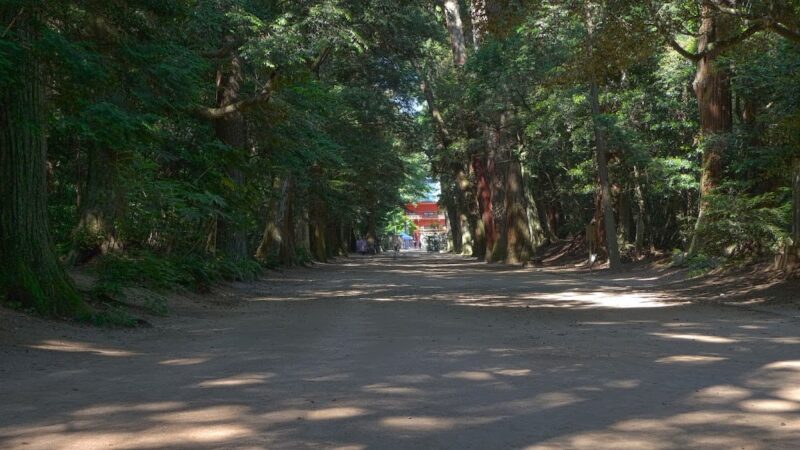
The front approach is a stone staircase leading from the foot of the mountain, ascending through a tranquil atmosphere surrounded by natural forest. Along the way, there are stone lanterns and a water basin, giving a sense of mountain worship.
The back approach is a route accessible by car almost to the summit, and the distance from the parking lot to the shrine grounds is relatively short. For those who are not confident in their physical strength or have limited time, this route is recommended.
Shrine and Architecture
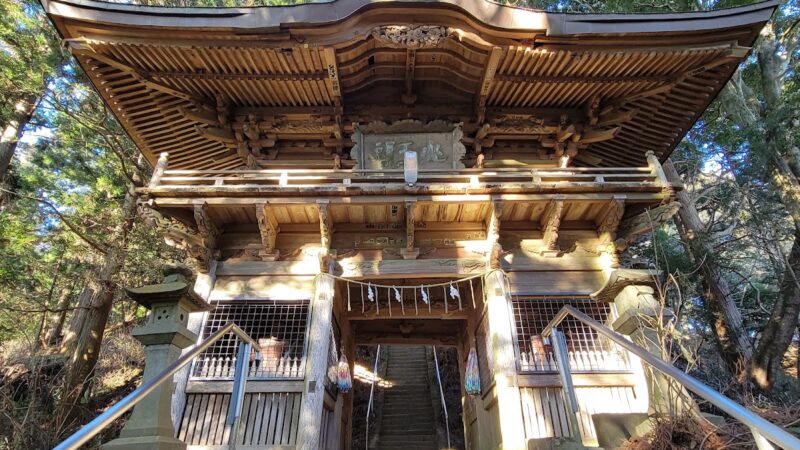
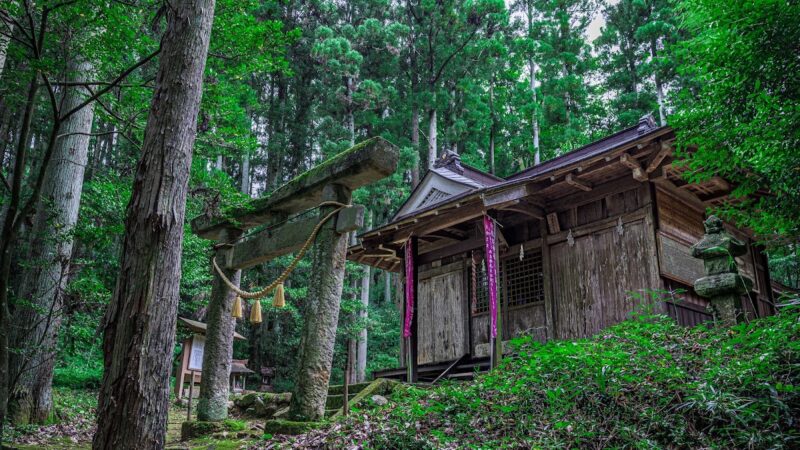
Located at the summit of Higashikanasayama, the shrine harmonizes with the surrounding nature, creating a tranquil atmosphere. The shrine complex, consisting of the main hall, worship hall, and offering hall, retains architectural styles from the Edo to Meiji periods.
From the shrine grounds, you can see Hitachiota City and the surrounding mountains, and on clear days, you can even see the Pacific Ocean in the distance. Because it is located at an altitude of 494 meters, you can enjoy a refreshing and peaceful pilgrimage experience.
Highlights of the Shrine Grounds
- Sacred Tree: A giant cedar tree hundreds of years old
- Stone Monuments: Stone monuments recording past festivals and donations
- Observation Spot: Views from the shrine grounds
- Water Basin: Clean water from a mountain spring
Goshuin (Shrine Seal) Information
Issuance of Goshuin
Higashi Kanasago Shrine offers goshuin to visitors. Goshuin can be obtained directly at the shrine as proof of your visit.
Issuance Hours: Usually during the shrine office’s opening hours (please check)
Offering Fee: Generally around 300-500 yen
Special Goshuin: Limited edition goshuin may be issued during festivals or on special days
The goshuin will have the calligraphy of “Higashi Kanasago Shrine” and the shrine’s seal. Each goshuin has its own unique style depending on the calligrapher, and is cherished as a memento of your visit.
Points to Note When Receiving a Goshuin (Shrine Stamp)
- It is recommended to contact the shrine office in advance to confirm their opening hours.
- Bring your own Goshuincho (stamp book) (pre-printed stamps may be available).
- It is considered good manners to receive your Goshuin after completing your prayers.
- Waiting times may occur during busy periods.
Access and Visiting Information
Access by Car
Higashikanasago Shrine is located on a mountaintop, making access by car convenient.
From the Joban Expressway:
- Approximately 40 minutes from Naka IC
- Approximately 35 minutes from Hitachi Chuo IC
Car Navigation Setting:
- Address: 9740 Tenkanoya-cho, Hitachiota City, Ibaraki Prefecture
- Searching by phone number is also possible.
Parking: Free parking is available near the shrine grounds (approximately 20 spaces).
Access by Public Transportation
Public transportation access is limited, but the following methods are available.
JR Suigun Line:
- Get off at Hitachi-Ota Station, then take a taxi for about 30 minutes.
- Bus service is infrequent, so please check in advance.
Local Bus:
- Take a bus from Hitachi-Ota city towards the Suifu area.
- You may need to hike uphill from the nearest bus stop.
Notes for Visiting the Shrine
- Clothing: If walking on mountain paths, comfortable shoes and clothing are recommended.
- Season: In winter, there is a possibility of snow and ice, so caution is necessary.
- Physical Fitness: If using the main approach, a certain level of physical fitness is required.
- Time: Allow 1-2 hours for visiting the shrine and exploring the grounds.
- Toilets: There are toilets on the grounds, but it’s best to use the facilities beforehand.
Nearby Tourist Spots
Nishikinasa Shrine
Nishikinasa Shrine, which is paired with Higashikinasa Shrine, is located on Mt. Nishikinasa (elevation 411 meters) on the west side of the Yamada River. Both shrines were founded in 806 and enshrine the same deity. Visiting both the East and West shrines offers a deeper religious experience.
Ryujin Suspension Bridge
A representative tourist spot in Hitachiota City, this pedestrian-only suspension bridge is 375 meters long. Enjoy a thrilling aerial stroll while admiring the beautiful Ryujin Gorge. It’s about a 30-minute drive from Higashikinasago Shrine.
Nishiyama-so (Nishiyama Palace)
This was the retirement residence of Tokugawa Mitsukuni, also known as Mito Komon. The simple yet charming building and garden remain, making it a recommended spot for history buffs.
Hitachiota City’s Local Products
Hitachiota City is famous as a production area for Hitachi Aki soba noodles. After visiting the shrines, we recommend enjoying fresh soba noodles at a local soba restaurant. You can also enjoy dishes made with Hitachi beef and local vegetables.
Annual Events at Higashikanasago Shrine
Main Festivals
- January 1st: New Year’s Day Festival (Prayers for the New Year)
- February 11th: Storm Repellent Festival (Dedication of Dengaku Dance)
- Spring Grand Festival: Prayer for a Bountiful Spring Harvest
- Autumn Grand Festival: Autumn Harvest Thanksgiving Festival
- Once Every 72 Years: Isoide Grand Festival (Kanasago Grand Dengaku Dance)
Recommended Time to Visit
Spring (April-May): Beautiful fresh greenery and mild weather, ideal for visiting. The mountain paths are easy to walk, and you can visit in refreshing air.
Autumn (October-November): A beautiful season for autumn leaves, with the shrine grounds and approach colored. The Autumn Grand Festival is also held, creating a lively atmosphere.
Winter (February): The Storm Repellent Festival is held, and you can enjoy Dengaku dance. While cold weather precautions are necessary, this is a valuable opportunity to experience traditional culture.
Faith and Blessings of Higashikanasago Shrine
Divine Virtues
The deities enshrined at Higashikanasago Shrine, Ōkuninushi-no-Mikoto and Sukunahikona-no-Mikoto, are believed to bestow the following divine virtues:
- Abundant Harvest: Prosperity and abundant harvests in agriculture
- National Security: Peace and prosperity of the nation
- Healing from Illness: Protection of health and medical care
- Matchmaking: Good relationships and harmonious family life
- Business Prosperity: Development and success in business
- Protection from Misfortune: Protection from disaster and prayers for safety
Etiquette for Worship
When visiting Higashikanasago Shrine, please observe the following basic etiquette.
- Bow before the Torii gate: Bow before entering the shrine grounds.
- Purify yourself at the water basin: Purify your left hand, then your right hand, then your mouth.
- Walk along the edge of the path: The center is considered the path of the gods.
- Worship at the main hall: Two bows, two claps, and one bow is the basic ritual.
- Express gratitude: Express not only your wishes but also your gratitude.
Higashikanasago Shrine and its connection to the community
Center of the local community
Higashikanasago Shrine has functioned as the center of local faith for over 1200 years. For the people of the Suifu district in particular, it is an integral part of their lives.
Preparations for festivals and the maintenance of the shrine are supported by local parishioners. The transmission of Dengaku dance is also centered around a local preservation society, providing a place for traditional cultural education for children.
Value as a Cultural Asset
The Dengaku dance of Higashi-Kanasago Shrine is designated as a nationally selected intangible folk cultural property and an intangible folk cultural property of Ibaraki Prefecture, and is protected as a valuable traditional performing art. The Isoide Grand Festival, held once every 72 years, is also attracting attention as an important case study for the study of Japanese festival culture.
Utilization as a Tourism Resource
In recent years, Higashi-Kanasago Shrine has been positioned as an important tourism resource for Hitachiota City. In the city’s tourism promotion plan, it is being developed together with Nishi-Kanasago Shrine as “Kanasago no Sato,” strengthening the system for receiving worshippers and tourists.
Summary: Points to Note When Visiting Higashi-Kanasago Shrine
Higashi-Kanasago Shrine is a venerable shrine with a history of over 1200 years, located on the summit of Mt. Higashi-Kanasago in Hitachiota City, Ibaraki Prefecture. It is known for its Dengaku dance, performed at the Isoide Grand Festival (held once every 72 years) and the annual Arashiyoke Festival in February, and is paired with Nishi-Kanasago Shrine.
Points to Note When Visiting:
- Located on a mountaintop at an altitude of 494 meters, it boasts refreshing air and stunning views.
- There are two approaches: the front approach and the back approach.
- Goshuin (temple/shrine stamps) are available at the shrine office (prior confirmation recommended).
- You can enjoy a nationally designated Dengaku dance at the Arashiyoke Festival on February 11th.
- Visiting both Higashikanasago Shrine and Nishikanasago Shrine will enhance your experience.
- Convenient access by car; parking available.
A visit to Higashikanasago Shrine will be a valuable experience where you can feel history, tradition, and the beauty of nature. The next Isoide Grand Festival, which may only be seen once in a lifetime, will be held in 2075, but even the annual Arashiyoke Festival and regular visits will allow you to fully appreciate the sacred atmosphere and cultural value of this shrine.
When visiting Ibaraki Prefecture, be sure to include a visit to Higashikanasago Shrine in your itinerary. The views from the mountaintop and the peaceful atmosphere of the shrine will create a memorable experience.