What is Omido? A Complete Guide to the Charms and Pilgrimages of this Historic Temple on Mount Tsukuba
Omido is a historically significant temple located on the slopes of Mount Tsukuba in Tsukuba City, Ibaraki Prefecture. Its official name is “Tsukuba-san Chishokuin Chuzenji Omido,” and it welcomes many pilgrims as the 25th temple on the Bando Thirty-Three Kannon Pilgrimage. This article provides detailed information on Omido’s historical background, characteristics of its faith, annual events, and methods of worship—information you won’t find anywhere else.
History and Origin of Omido
Establishment and Founding in Enryaku 1
The history of Omido dates back to Enryaku 1 (782 AD). In that year, a temple building (Mido) was constructed on the slopes of Mount Tsukuba, and the principal image, the Thousand-Armed Kannon Bodhisattva, was enshrined there. This is considered the origin of the name Chishokuin Chuzenji.
The Enryaku era corresponds to the early Heian period, a time when Buddhist culture flourished under the reign of Emperor Kanmu. Mount Tsukuba was known as a sacred site of mountain worship from this period, and a unique form of faith developed where shrines and temples coexisted under the syncretic belief of Shinto and Buddhism.
Development during the Konin Era
There is a tradition that during the Konin era (810-824), the Daigodō (Great Hall) was founded by Tokuichi Shōnin at the behest of Emperor Saga. During this period, many monks visited Mount Tsukuba for training, and it prospered as a major center of mountain Buddhism.
Chisokuin Chūzenji functioned as the core of the Buddhist temple complex on Mount Tsukuba, and was systematically managed by its monks. Records indicate that in the medieval period, it possessed a vast temple complex with many monks’ quarters.
Separation of Shinto and Buddhism and the Crisis of Temple Abolition
In the early Meiji era, when the Meiji government issued the Shinto-Buddhist Separation Order, it had a significant impact on Mount Tsukuba. Mount Tsukuba, with its strong tradition of Shinto-Buddhist syncretism, was forced to separate shrines and temples, and the Omidō (Great Hall) was temporarily destined to be abolished.
While Tsukuba Shrine was renovated as a Shinto facility, the Buddhist temple faced a crisis of survival. Many Buddhist statues and artifacts were scattered, and the building fell into disrepair.
Re-establishment as a Branch Temple of Gokoku-ji
Having overcome the crisis of temple abolition, the Omidō was re-established as a branch temple of Gokoku-ji, the head temple of the Buzan branch of Shingon Buddhism, located in Ōtsuka, Bunkyo-ku, Tokyo. Currently, it functions as “Tsukuba-san Chishoku-in Chūzen-ji Omidō,” a branch temple of Gokoku-ji, and continues its role as the 25th temple on the Bandō Thirty-Three Kannon Pilgrimage.
Thanks to the support of Gokoku-ji Temple, precious Buddhist statues, including the principal image of the Thousand-Armed Kannon Bodhisattva, are preserved, and the place of worship for visitors is maintained.
Characteristics of the Principal Image and Faith
Eleven-Faced Thousand-Armed Kannon Bodhisattva
The principal image of the Daigodo Hall is the Eleven-Faced Thousand-Armed Kannon Bodhisattva. This Kannon Bodhisattva is said to watch over the world of sentient beings with its eleven-faced gaze and relieve all suffering with its thousand arms.
The Thousand-Armed Kannon is one of the manifestations of Kannon Bodhisattva, symbolizing infinite compassion and the power of salvation. The eleven faces represent the vow to look in all directions and not overlook the suffering of sentient beings.
Faith in Kannon’s Mysterious Wisdom
The concept of “Kannon’s Mysterious Wisdom” is emphasized in the Daigodo Hall. This refers to the miraculous wisdom of Kannon Bodhisattva, a belief that she bestows the wisdom to overcome all hardships.
Pilgrims entrust Kannon with various wishes, such as recovery from illness, family safety, academic success, and business prosperity. Especially as Kannon resides on the sacred mountain of Mount Tsukuba, she is believed to possess particularly strong spiritual power.
Bandō Thirty-Three Kannon Pilgrimage
Ōmidō is the 25th temple on the Bandō Thirty-Three Kannon Pilgrimage. The Bandō Thirty-Three Kannon is a pilgrimage centered in the Kanto region, believed to have been established during the Kamakura period.
Pilgrims receive a temple stamp at each temple, seeking purification of mind and body while experiencing Kannon’s compassion. Ōmidō, located on the sacred mountain of Mount Tsukuba, holds a special place within the pilgrimage route.
The poem, “The bell of the Great Hall stands on the peak of Mount Tsukuba, and as evening falls, I yearn for my homeland,” is a tribute to the evening scenery of Mount Tsukuba and the sentiment of Kannon worship, and is beloved by many pilgrims.
Annual Events and Ceremonies
First Goma Ceremony (January)
As an important event to welcome the new year, the first Goma Ceremony is held. Goma is a ritual of Esoteric Buddhism in which fire is lit to burn away worldly desires and to fulfill wishes.
Worshippers write their wishes on goma wood and throw it into the flames, sending their wishes to Kannon. The ceremony is bustling with many worshippers praying for good health and safety for their families in the new year.
Bean-Throwing Ceremony (February)
A bean-throwing ceremony is held around Setsubun (the day before the beginning of spring). With the chant of “Good fortune in, demons out!”, prayers are offered for protection from evil and for good fortune. In 2025, the bean-throwing ceremony is scheduled for Tuesday, February 18th. This annual event brings together local residents and worshippers, making it an enjoyable event for people of all ages.
Gama Matsuri (March)
In March, a unique event called the “Gama Matsuri” is held. In 2025, it is scheduled for Sunday, March 16th. It’s such a grand festival that traffic restrictions are implemented on the day.
The “Gama” in the name comes from the toad, a famous symbol of Mount Tsukuba, and is considered a lucky charm for financial prosperity and business success. This festival includes demonstrations of toad oil sales pitches, allowing visitors to experience the traditional culture of Mount Tsukuba.
Kannon Mantokai (August)
In August, the Kannon Mantokai is held. In 2024, it was held on Sunday, August 18th. The Mantō-e is a Buddhist service where numerous lanterns are offered to honor the Buddha.
From dusk until night, countless lights illuminate the temple grounds, creating a mystical atmosphere. It also carries the meaning of honoring ancestors and sending off the spirits of the Obon festival, making it a solemn and beautiful event.
Other Shinto Rituals and Events
At the Ōmidō (main hall), monthly Goma rituals and special prayers are held as needed. Furthermore, it has deep ties to Tsukuba-san Shrine and is involved in the rituals and events of the entire mountain.
Throughout the year, seasonal services and events are held, allowing visitors to discover different charms depending on the time of year.
Highlights of the Ōmidō
Main Hall and Temple Grounds
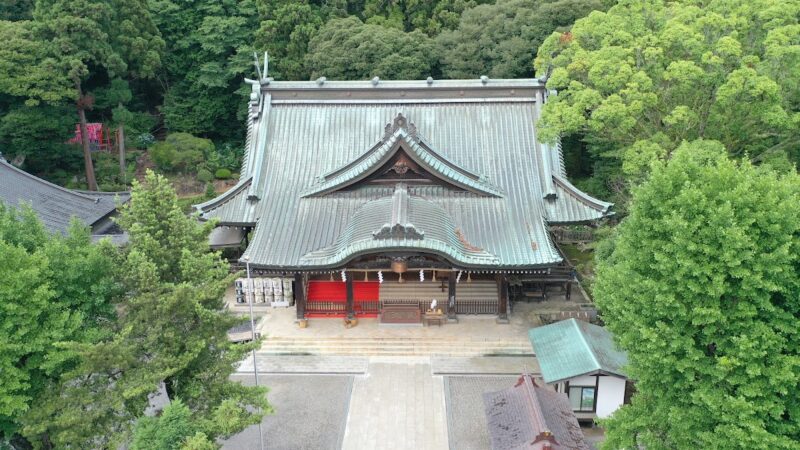
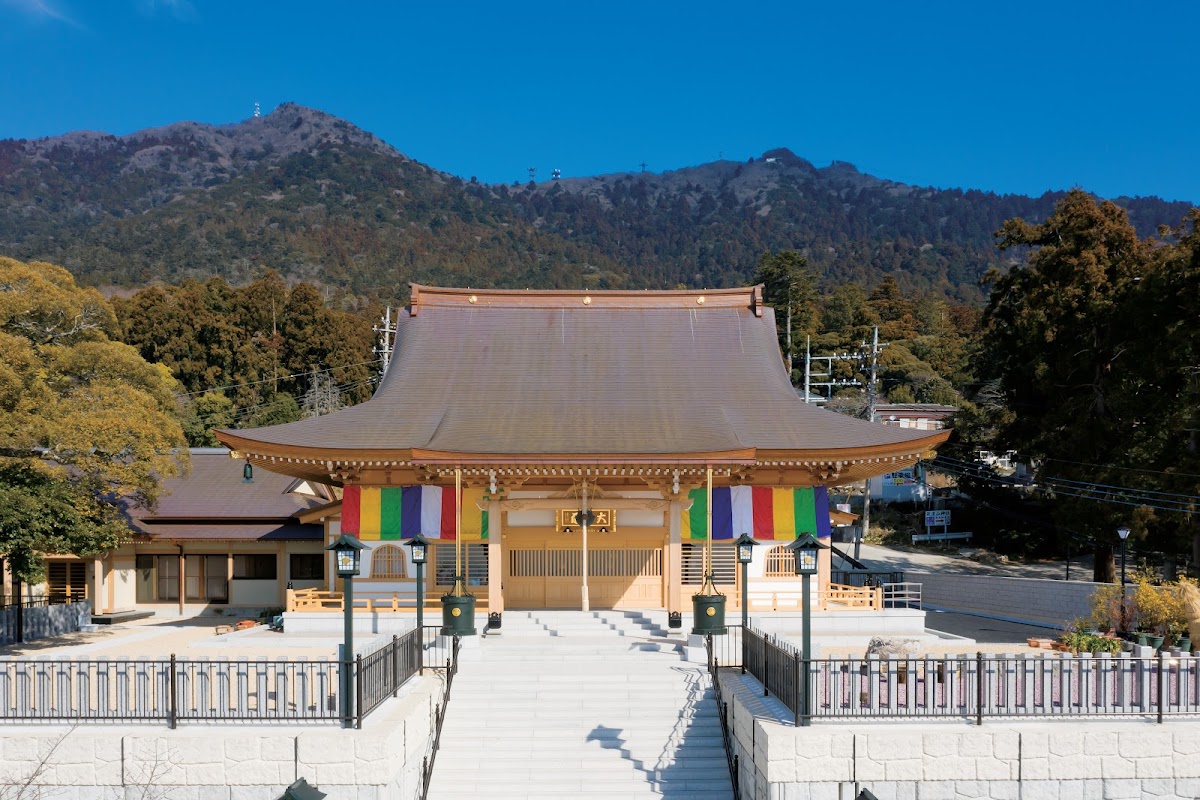
The current main hall was rebuilt in modern times, but it retains the style of traditional temple architecture. The principal image, the Thousand-Armed Kannon Bodhisattva, is enshrined inside, allowing visitors to worship in a serene atmosphere.
From the temple grounds, visitors can enjoy magnificent views of Mount Tsukuba, with scenery that changes with the seasons. The cherry blossoms of spring, the fresh greenery of summer, the autumn leaves, and the snowy landscapes of winter all present different faces depending on the time of year.
Tsukuba’s Landscape
Located on the slopes of Mount Tsukuba, Omido offers a spectacular panoramic view of the Kanto Plain. On clear days, Mount Fuji can even be seen in the distance, making it a beloved “view of Tsukuba.”
The view at sunset is particularly beautiful; as celebrated in poetry, the landscape of the mountains and plains bathed in the setting sun is a truly memorable sight.
Goshuin (Temple Seal) and Sutra Copying
As a pilgrimage site on the Bando Thirty-Three Kannon Pilgrimage, Omido offers Goshuin (temple seals). For pilgrims, the Goshuin is proof of their visit and a cherished memento.
The temple’s seal features calligraphy such as “Number 25” and “Thousand-Armed Kannon,” along with a red stamp, and boasts a design unique to the Tsukuba-san Daigomido temple.
Access and Visiting Information
Location
300-4352 Tsukuba, Tsukuba City, Ibaraki Prefecture
Transportation Access
Access by Train and Bus:
- From Tsukuba Station on the Tsukuba Express, take the Kanto Railway Bus “Tsukuba-san Shuttle Bus” or “Tsukuba-san bound” for approximately 40 minutes, get off at “Tsukuba-san Shrine Entrance,” and walk for approximately 15 minutes.
- From Tsuchiura Station on the JR Joban Line, take the Kanto Railway Bus “Tsukuba-san bound” for approximately 50 minutes.
Access by Car:
- Approximately 40 minutes from Tsuchiura-Kita IC on the Joban Expressway
- Approximately 40 minutes from Sakuragawa-Chikusei IC on the Kita-Kanto Expressway
- Parking is available around Tsukuba-san Shrine (both paid and free).
Cable Car/Ropeway:
- Alternatively, you can take the Tsukuba-san Cable Car or Ropeway to near the summit and then descend on foot.
Visiting Hours and Admission Fees
Visiting hours are usually during the daytime, but may change depending on events and seasons. It is recommended to check the official website in advance.
Admission is generally free, but separate fees apply for special viewings and prayers.
Precautions When Visiting
- As the temple is located in a mountainous area, comfortable walking shoes are recommended.
- Please dress appropriately as temperatures vary greatly depending on the season.
- Traffic restrictions are in place during major events such as the Gama Festival; using public transportation is recommended.
- Due to measures against infectious diseases such as COVID-19, visiting hours may be shortened or the hours for receiving temple stamps may change.
The Role of Tsukuba-san Faith and the Oomido Hall
The Tradition of Shinto-Buddhist Syncretism
Tsukuba-san has been revered since ancient times as a sacred mountain where Shinto and Buddhism are intertwined. The entire mountain is an object of worship, and a unique form of faith developed where shrines and temples coexist.
While Tsukuba-san Shrine is the center of Shinto, the Oomido Hall has functioned as the center of Buddhist faith. Rather than being in conflict, the two have supported the worship of Mount Tsukuba while maintaining a complementary relationship.
A Place of Mountain Asceticism
In the Middle Ages, Mount Tsukuba was also known as a place of mountain asceticism. Many monks gathered at Chishokuin Chuzenji Temple and underwent rigorous training.
The tradition of mountain Buddhism is still carried on today in esoteric Buddhist rituals such as the Goma ritual, and the Omidō (main hall) has an aspect as a place of spiritual training, beyond just a place of worship.
Connections with the Local Community
The Omidō is also a temple deeply connected to the local community. Local residents actively participate in annual events, and the bonds of the community are strengthened through festivals and religious services.
Events such as the Gama Festival and the Bean-Throwing Ceremony have the character of local cultural events, going beyond mere religious ceremonies.
The Significance of Visiting the Omido Hall
A Place of Peace and Prayer
In modern society, the Omido Hall serves as a refuge for those seeking peace of mind. By experiencing the compassionate light of the Thousand-Armed Kannon Bodhisattva, one can escape the hustle and bustle of daily life and find time to quiet their mind.
Visitors who believe in the miraculous power of Kannon visit the Omido Hall seeking her wisdom when facing life’s difficulties. The time spent quietly praying becomes a precious opportunity for self-reflection.
Experiencing History and Culture
Visiting the Omido Hall, with its long history dating back to the first year of the Enryaku era, is also an experience of Japanese religious and cultural history. Its history, having overcome the modern transformation of Shinto-Buddhist separation, tells the story of the evolution of Japanese religious culture.
Visiting as part of the Bando Thirty-Three Kannon Pilgrimage allows one to relive the pilgrimage culture that has existed since the Middle Ages.
Harmony with Nature
Located in the naturally rich environment of Mount Tsukuba, the Omido Hall is a place where one can feel harmony with nature. Visiting the temple while experiencing nature with all five senses—the scenery of the four seasons, the mountain air, the birdsong—leads to a refreshing experience for both mind and body.
The beautiful view known as “Tsukuba no Kei” (Scenery of Tsukuba) has captivated many people since ancient times. Even today, its charm remains undiminished, providing solace to visitors.
Summary: Experience the Charm of Omidō
Omidō (Tsukuba-san Chishokuin Chūzenji Omidō) is a venerable temple with a history of over 1200 years since its establishment in 782 AD. Under the benevolent light of the principal image, the Eleven-Faced Thousand-Armed Kannon Bodhisattva, many worshippers visit seeking peace of mind.
As the 25th temple of the Bandō Thirty-Three Kannon Pilgrimage, it welcomes pilgrims and preserves faith and culture through annual events rooted in the local community. Its history of overcoming the separation of Shinto and Buddhism during the Meiji era and being re-established as a branch temple of Gokoku-ji Temple is a valuable example that tells the story of the changes in Japanese religious culture. Located on the slopes of Mount Tsukuba, the “Tsukuba landscape” offers ever-changing views throughout the seasons, soothing the hearts of visitors. Various events are held throughout the year, including the Gama Festival, bean-throwing ceremony, and the Kannon Lantern Festival, ensuring new discoveries with every visit.
This temple is open to everyone: those seeking peace of mind, those wishing to experience history and culture, and those wanting to enjoy beautiful nature. Why not visit Mount Tsukuba and experience the compassionate light of the Thousand-Armed Kannon? The wondrous wisdom of Kannon may bring new insights to your life.