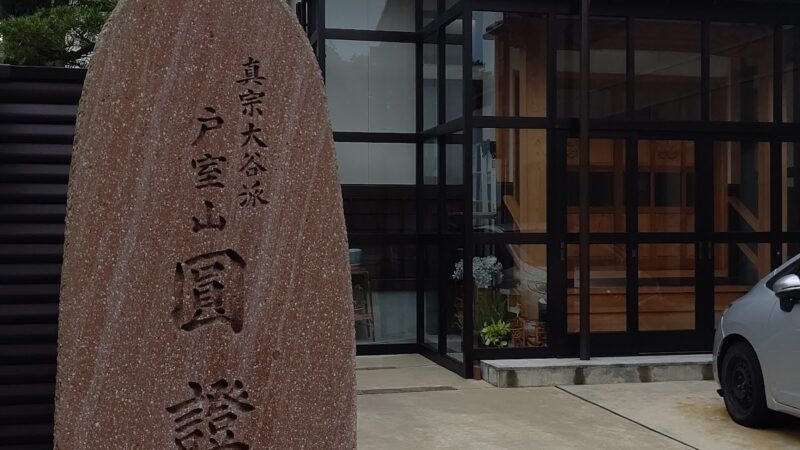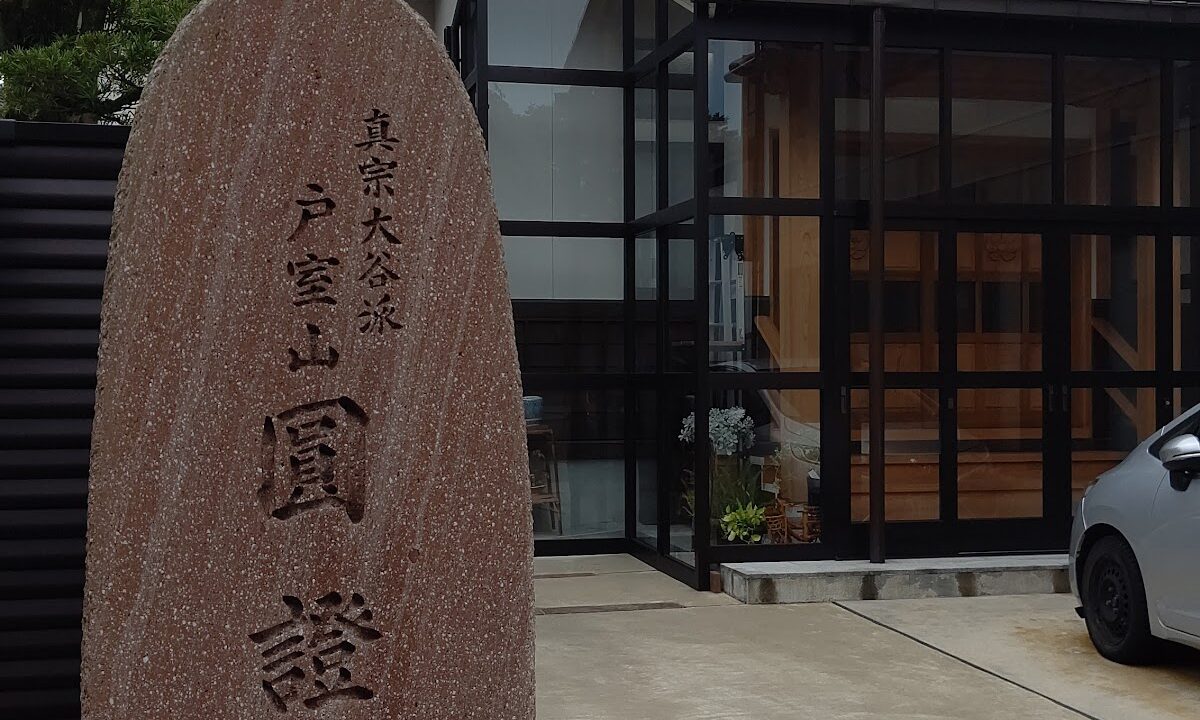
Enshoji Temple (Kanazawa City, Ishikawa Prefecture) Complete Guide | History, Access, and Characteristics of the Shinshu Otani School
Located in the Ishibiki district of Kanazawa City, Ishikawa Prefecture, Enshoji Temple is a historic temple belonging to the Shinshu Otani school. It occupies a corner of the Kodatsuno temple group, which was strategically placed as a defensive base for Kanazawa Castle town, and has been cherished by the local people as a center of faith for many years. This article provides detailed information on Enshoji Temple, from its basic information and historical background to access methods and surrounding environment, making it useful for those considering a visit or those wanting to learn more about local temples.
Basic Information about Enshoji Temple
Location and Contact Information
Location: 2-3-18 Ishibiki, Kanazawa City, Ishikawa Prefecture
Sect: Shinshu Otani School (Higashi Honganji School)
Chief Priest: Haruyuki Fujimuro
Postal Code: 920-0935
Enshoji Temple is located in the Ishibiki district, close to the center of Kanazawa City, and is easily accessible from tourist attractions such as Kenrokuen Garden and Kanazawa Castle Park.
About the Shinshu Otani School
The Shinshu Otani School is one of the sects of Jodo Shinshu Buddhism, with its head temple at Higashi Honganji Temple in Kyoto. Its founder is Shinran Shonin, and it centers on the teaching of salvation through the power of Amida Buddha’s vow, which is attained by chanting “Namu Amida Butsu.”
The following are some of the characteristics of the Shinshu Otani sect:
- Teaching of Salvation by the Power of Others: It preaches salvation through the power of Amida Buddha’s vow, not through self-effort.
- Lay Buddhism: Marriage of monks is permitted, making it an open sect that is not separated from the secular world.
- Montō System: Believers are called “Montō,” and there is a strong bond between temples and their parishioners.
- Hōonkō: The memorial service on the anniversary of Shinran Shōnin’s death is considered the most important event.
Enshōji Temple also functions as a center of local religious activities while upholding these traditions and teachings of the Shinshu Otani sect.
Historical Background of the Ishibiki Area
Origin of the Place Name
The place name “Ishibiki” has an interesting history. According to the *Kame no O no Ki* (Record of the Turtle’s Tail), the name “Ishibiki” (stone-pulling road) originated in 1592, during the construction of Kanazawa Castle, when this road was used to transport massive stones from Mount Tomuro.
Mount Tomuro is located southeast of Kanazawa City and was known as a source of high-quality stone. The “Tomuro stone” used in the stone walls of Kanazawa Castle was quarried from Mount Tomuro and transported via the Ishibiki Road. The name “Ishibiki” comes from the fact that these massive stones, weighing several tons, were pulled by human power.
Kodatsuno Temple Group and the Castle Town’s Defense System
Many temples are concentrated on the Kodatsuno Plateau, including the Ishibiki district where Enshoji Temple is located. This Kodatsuno temple group, along with the Teramachi temple group and the Utatsuyama temple group, is considered one of Kanazawa’s three major temple groups.
These temples were not merely a collection of religious facilities, but were strategically placed as part of a clever urban planning strategy by the Kaga Domain:
- Function as a defensive stronghold: In times of emergency, the temples functioned as fortresses, playing a role in protecting Kanazawa Castle.
- Surveillance function: The temples fortified the entrances and exits to the castle town, controlling the flow of people.
- Fire prevention: The temples acted as firebreaks, preventing the spread of fire.
- Religious policy: Religious control was exercised by gathering temples of various sects.
Enshoji Temple also occupies an important position in the region within this historical context.
Development of the Ishibiki District
During the feudal period, the Ishibiki district included samurai residences, such as the residence of the Okumura family, who held the position of chief retainer of the Maeda Domain, and three towns were formed: Kami-Ishibiki-machi, Naka-Ishibiki-machi, and Shimo-Ishibiki-machi. Even today, traces of the historical townscape remain in many places in this area.
Located adjacent to Kenrokuen Garden, this area was a center for important domain facilities during the Edo period, and has continued to develop as a cultural and educational hub of Kanazawa since the Meiji era.
How to Access Enshoji Temple
Access by Public Transportation
From JR Kanazawa Station:
- Using Hokutetsu Bus
- Take the bus bound for “Kodatsuno” from the Kanazawa Station East Exit Bus Terminal
- Get off at the “Ishibiki” bus stop and walk for about 3 minutes
- Travel time: About 15 minutes
- Fare: 200 yen (IC card accepted)
- Using the Kanazawa Castle Town Loop Bus
- Take the clockwise route
- Get off at “Kenrokuen-shita/Kanazawa Castle” and walk for about 10 minutes
- Convenient when visiting in conjunction with sightseeing
From Hokuriku Railway Ishikawa Line:
- About 20 minutes by Hokutetsu Bus from Nomachi Station
Access by Car
From the Hokuriku Expressway:
- About 20 minutes from Kanazawa West IC
- About 15 minutes from Kanazawa East IC
Parking: Parking space may be limited depending on the size of the temple. We recommend checking in advance. There are several paid parking lots in the vicinity of Kenrokuen Garden.
Access on Foot
- Approximately 8 minutes on foot from Kenrokuen Garden’s Katsurazaka Entrance
- Approximately 12 minutes on foot from the 21st Century Museum of Contemporary Art, Kanazawa
- Approximately 10 minutes on foot from Kanazawa Castle Park’s Ishikawa Gate
It’s within walking distance of many tourist attractions, making it a convenient stop during your Kanazawa sightseeing trip.
Surrounding Temples and Cultural Facilities
Main Temples in the Ishibiki Area
Around Enshoji Temple, there are numerous temples of various sects, including the Shinshu Otani sect:
Joenji Temple (Fushōzan Joenji):
- Location: 1-4-20 Ishibiki, Kanazawa City, Ishikawa Prefecture
- Sect: Shinshu Otani sect
- Characteristics: Originally a Tendai sect temple, Fushōji Temple, its first head priest, Zen’ei, was deeply impressed by the teachings of Rennyo Shonin, and converted to Jodo Shinshu Buddhism in 1489.
In this way, some temples in the Ishibiki area have a history of changing sects, reflecting the religious changes from the Sengoku period to the Edo period.
Nearby Tourist Attractions
Kenrokuen Garden:
- One of Japan’s three most famous gardens
- Approximately 8 minutes’ walk from Enshoji Temple
- Enjoy beautiful scenery throughout the seasons
Kanazawa Castle Park:
- Site of the castle of the Kaga domain (a domain with a million koku of rice production)
- Reconstructed buildings such as the Gojukkan Nagaya (Fifty-Ken Long House) and Hishiyagura (Diamond-Shaped Turret) are open for viewing
21st Century Museum of Contemporary Art, Kanazawa:
- A museum of contemporary art
- There are areas that can be enjoyed for free
Ishibiki Shopping Street:
- A community-oriented shopping street
- Experience the traditional atmosphere of Kanazawa
When visiting Enshoji Temple, exploring these surrounding facilities in conjunction will allow you to gain a deeper understanding of Kanazawa’s history and culture.
About Buddhist Services and Funerals at Temples
Characteristics of Buddhist Services in the Shinshu Otani School
The following types of Buddhist services are held at temples of the Shinshu Otani School:
Ho-on-ko:
- The most important service commemorating the anniversary of Shinran Shonin’s death
- Held around November 28th every year
- An opportunity for followers to gather and reaffirm the teachings of the saint
Eitaikyo:
- A memorial service for ancestors
- Often held in spring and autumn
Obon/Ohigan:
- An opportunity to remember ancestors and engage with Buddhist teachings
- Participating in Buddhist services at temples in conjunction with visiting graves
Consultation on Funerals and Memorial Services
Enshoji Temple provides consultation on funerals and memorial services for its parishioners. A characteristic of Shinshu Otani School funerals is that they are not seen as sending the deceased to the Pure Land, but rather as a place for attendees to encounter Buddhist teachings.
Consultation Methods:
- Consult by phone or visit the temple directly.
- We recommend making an appointment in advance.
- In case of emergency, you can also contact a funeral home that provides 24-hour service.
About the Danka System
In the Shinshu Otani sect, believers are called “Monto” and value their deep connection with the temple. By becoming a Monto of Enshoji Temple, you can receive support such as:
- Participation in various memorial services
- Funeral and memorial service arrangements
- Consultation regarding Buddhist rituals
- Use of cemeteries (varies depending on the temple)
Kanazawa City’s Temple Culture and the Position of Enshoji Temple
Temple Density in Kanazawa
Kanazawa City is known as a “city of temples,” with approximately 400 temples within the city. The number of temples per capita is among the highest in the country, a result of the religious policies and urban planning of the Kaga Domain.
The Role of the Three Major Temple Groups
Teramachi Temple Group:
- Located along the Sai River
- Primarily developed as a countermeasure against the Ikko-ikki rebellions
- Approximately 70 temples densely clustered together
Utatsuyama Temple Group:
- Located on the slopes of Utatsuyama Mountain
- Responsible for defense from the east
- Approximately 50 temples
Kodatsuno Temple Group (including Enshoji Temple):
- Located on the Kodatsuno Plateau
- Defense from the southeast
- Approximately 30 temples
These temple groups form Kanazawa’s unique urban landscape and are now important tourist resources.
Cultural Value
The temple group in the Ishibiki district is a valuable legacy of Edo-period urban planning and an important element of Kanazawa City’s cultural identity. Many cultural properties, including buildings, Buddhist statues, and ancient documents, are preserved in each temple, conveying the history of the region to the present day.
Notes and Manners for Visitors
Temple Visit Manners
When visiting a temple, please observe the following manners:
- Attire: Wear clean, understated clothing.
- Quietness: Behave quietly within the temple grounds.
- Photography: Refrain from taking photographs inside the main hall or of Buddha statues without permission.
- Visiting Hours: Avoid visiting early in the morning or late at night.
- Offering: Prepare an appropriate offering if participating in a memorial service.
Shinshu Otani School Temple Visiting Etiquette
The Shinshu Otani School has the following temple visiting etiquette:
- Gassho: Bring both hands together in front of your chest.
- Nembutsu: Chant “Namu Amida Butsu.”
- Bow: Bow deeply.
When offering incense, the Shinshu Otani School custom is to place the incense directly into the incense burner without pressing it to your forehead.
Regarding Visits
While the grounds of Enshoji Temple are generally open to the public, prior contact and permission are required for viewing the interior of the main hall or for special tours. General visits may be restricted during religious services and events.
Shinshu Otani-ha Temple Network in Ishikawa Prefecture
Shinshu Otani-ha in Ishikawa Prefecture
Ishikawa Prefecture is a region where Jodo Shinshu Buddhism is very popular, with a particularly large number of Shinshu Otani-ha temples. This is largely due to the influence of Rennyo Shonin’s missionary work in the Hokuriku region during the Muromachi period, and Kaga, in particular, has a history of strong Ikko-ikki (Ikko-ikki uprisings), to the point of being called “a country owned by the peasants.”
Relationship with Major Temples
Shinshu Otani-ha temples in Kanazawa City cooperate with each other in the following ways:
- Holding joint religious services
- Holding Buddhist lectures
- Participating in community activities
- Cultural property preservation activities
Enshoji Temple is also a member of this network, contributing to the preservation of local Buddhist culture.
The Role of Temples in Modern Times
Center of the Local Community
In modern times, local temples like Enshoji Temple play a role that goes beyond mere religious institutions:
- Spiritual Sanctuary: A place to seek advice on worries and anxieties
- Cultural Preservation: Preservation of traditional events and Buddhist culture
- Educational Space: Buddhist lectures and activities for children
- Community Building: A place for interaction among parishioners and local residents
Aspects as a Tourism Resource
The temples of Kanazawa City also occupy an important position as a tourist resource. The Ishibiki district, where Enshoji Temple is located, is close to Kenrokuen Garden and Kanazawa Castle, and is attracting attention from tourists as an area that preserves historical townscapes.
“Temple Town Walks” and “Temple Group Tours” are also popular, offering a valuable opportunity to experience Kanazawa’s history and culture.
Summary
Enshoji Temple is a Shinshu Otani sect temple located at 2-3-18 Ishibiki, Kanazawa City, Ishikawa Prefecture. It occupies a corner of the Kodatsuno temple group, which was positioned as part of the defense system of Kanazawa Castle town, and has functioned as a center of local faith throughout its long history.
It is conveniently located near Kenrokuen Garden and Kanazawa Castle Park, making it easily accessible. It’s about a 15-minute bus ride from Kanazawa Station and within walking distance of many tourist attractions, making it easily accessible for those sightseeing in Kanazawa.
While fulfilling its traditional role as a temple by conducting memorial services and funerals based on the teachings of the Shinshu Otani sect, and providing consultations on Buddhist matters to its followers, it also functions as a center of the local community.
This article has explained various aspects of Enshoji Temple, from the origin of the place name Ishibiki to the historical significance of the Kodatsuno temple group and the characteristics of the Shinshu Otani sect’s teachings. We hope this will be helpful for those interested in Kanazawa’s temple culture, those considering visiting Enshoji Temple, or those who want to learn more about Shinshu Otani sect temples.
When you visit Kanazawa, be sure to stroll through the temples of the Ishibiki district and experience the rich religious culture and history nurtured by the castle town of Kaga, which boasted a million koku of rice production. Enshoji Temple, as a part of that history, awaits your visit.