
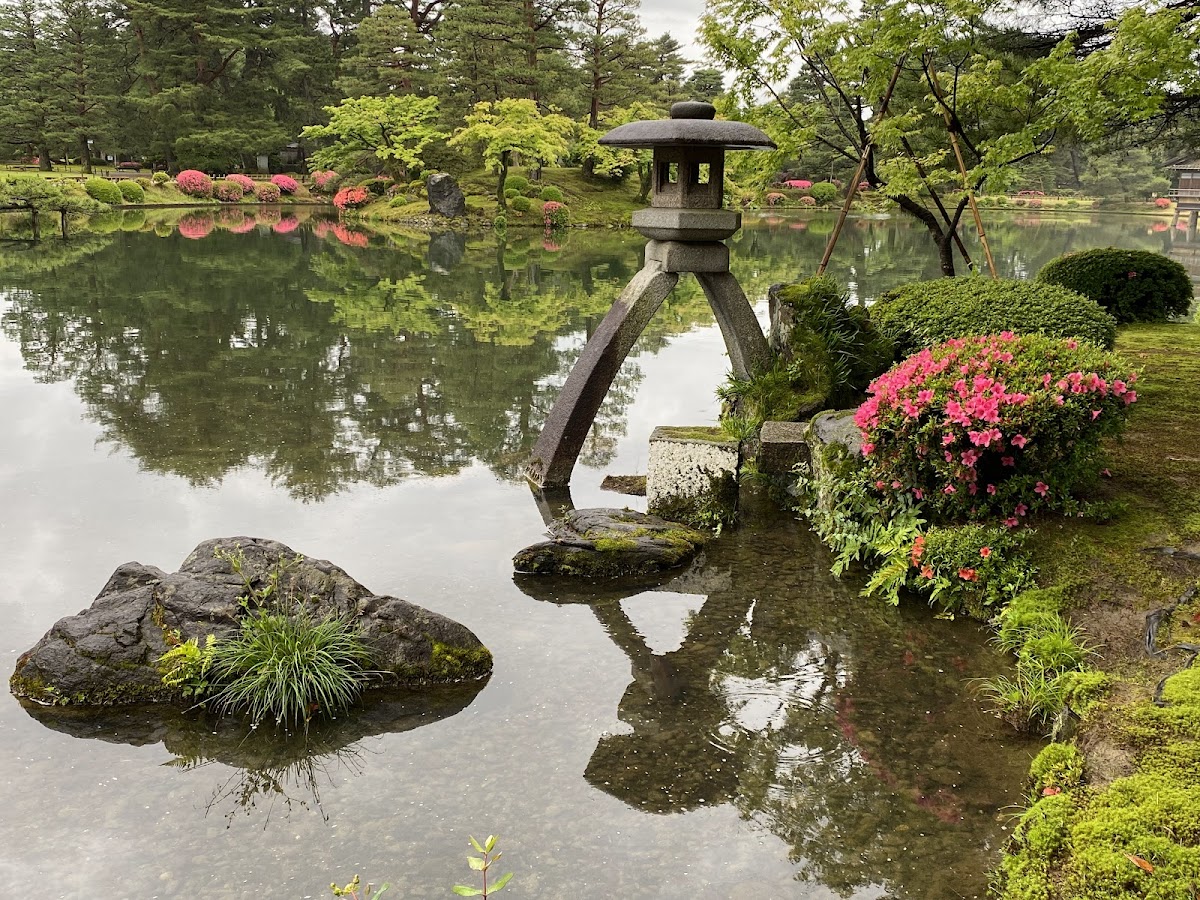
About Kenrokuen Garden
Kenrokuen Garden is one of Japan’s three most famous gardens, located in Kanazawa City, Ishikawa Prefecture. Along with Kairakuen Garden in Mito and Korakuen Garden in Okayama, it is a nationally designated Special Place of Scenic Beauty. It is a strolling garden constructed over approximately 180 years by successive lords of the Kaga Domain.
The name “Kenroku” originates from its possession of six conditions for a famous garden (spaciousness, serenity, human effort, antiquity, water features, and views) as described in the Chinese book “Luoyang Mingyuan Ji” (Records of Famous Gardens of Luoyang). The garden, covering approximately 11.7 hectares, offers scenery that changes with the seasons, designed so that visitors can enjoy different beauty in any season.
History and Origins
The construction of Kenrokuen Garden began in 1676 (Enpo 4), when Maeda Tsunanori, the 5th lord of the Kaga Domain, built the Renchi-o-chin (Lotus Pond Pavilion) on the outer perimeter of Kanazawa Castle. Subsequently, successive feudal lords continued to make improvements, and it approached its current form, particularly during the time of the 13th lord, Maeda Nariyasu. After the Meiji Restoration, it was opened to the public and was designated a National Place of Scenic Beauty in 1922 (Taisho 11) and a Special Place of Scenic Beauty in 1985 (Showa 60).
Seasonal Highlights
Spring (March-May)
From late March to early April, approximately 420 cherry trees adorn the park. Kumagaya cherry blossoms, Somei Yoshino cherry blossoms, and mountain cherry blossoms are especially beautiful, and the area around Kasumigaike Pond and Hanamibashi Bridge are popular spots. In late April, azaleas bloom profusely, and in May, the season of dazzling new greenery arrives.
Summer (June-August)
In early June, approximately 5,000 irises bloom along the winding stream, creating a beautiful scene of purple flowers reflected on the water’s surface. During the rainy season, the greenery deepens in color, and the beauty of the moss and trees wet with rain is exceptional. In summer, taking advantage of the early morning opening (6:00 AM) allows for a cool and comfortable stroll.
Autumn (September-November)
The autumn leaves reach their peak from mid- to late November. Approximately 340 maple and other trees turn red and yellow, and the reflection of the autumn leaves on the surface of Kasumigaike Pond is breathtaking. Snow ropes are put up from November 1st, and many tourists visit to see this winter preparation spectacle. The snow ropes on the Karasaki Pine are particularly famous and represent the winter scenery of Kenrokuen Garden.
Winter (December-February)
Kenrokuen Garden, covered in snow, possesses a fantastical beauty. The landscape created by the snow-roped pine trees and the world of white snow evokes the unique winter atmosphere of Kanazawa. From late January to February, the plum blossoms in the plum grove begin to bloom, allowing visitors to enjoy the contrast between the snow and the plums.
Must-See Spots
Kotoji Lantern
This is the most famous landmark and symbol of Kenrokuen Garden. Standing on the north shore of Kasumigaike Pond, this two-legged lantern is named after its resemblance to the kotoji (bridge) that supports the strings of a koto (Japanese harp). Taking a photo with the Rainbow Bridge in the background creates a postcard-perfect image.
Kasumigaike Pond
The largest pond in the garden, covering approximately 5,800 square meters. A sacred island, Horai-jima, is situated in the center of the pond, representing the Shinto belief in eternal youth and longevity. The walking paths around the pond offer various angles from which to enjoy the garden’s beauty.
Karasaki Pine
This black pine was cultivated by the 13th lord of the domain, Maeda Nariyasu, who brought seeds from Karasaki on the shores of Lake Biwa. It is approximately 200 years old, with a branch spread of about 20 meters. Winter snow-hanging begins every year on November 1st, and the sight of the trees supported by approximately 800 ropes is a winter tradition in Kanazawa.
Neagari-matsu (Root-Exposed Pine)
This is a rare pine tree with its roots exposed up to a height of 2 meters above the ground. It is said that the 13th lord, Nariyasu, piled up soil to cultivate the roots when the tree was young, and then removed the soil after it grew to expose the roots. The sight of more than 40 roots creeping along the ground is breathtaking.
Hisago-ike (Gourd Pond)
This is the oldest pond in Kenrokuen Garden, and it gets its name from its gourd-like shape. Around the pond are other points of interest such as Midori-taki (Green Waterfall) and Kaiseki-to (Sea Stone Pagoda), creating a quiet and peaceful atmosphere.
Sightseeing Points
Estimated Time Required
If you want to stroll through the garden at a leisurely pace, 1 hour 30 minutes to 2 hours is a good estimate. While visiting only the main spots is possible in about an hour, we recommend allowing ample time to enjoy the seasonal flowers and the beauty of the details.
Recommended Route
If entering from Katsurazaka Entrance:
Katsurazaka Entrance → Kasumigaike Pond → Kotoji Lantern → Karasaki Pine → Neagari Pine → Fountain → Hyotan Pond → Mayumizaka Entrance
If entering from Mayumizaka Entrance:
Mayumizaka Entrance → Hyotan Pond → Fountain → Neagari Pine → Karasaki Pine → Kotoji Lantern → Kasumigaike Pond → Katsurazaka Entrance
You can enjoy the garden in either a clockwise or counterclockwise direction, but if you prioritize photography, consider the direction of the light in the morning.
Guided Tours
Free volunteer guides (reservations required) and audio guide apps (available in Japanese, English, Chinese, and Korean) are available. Recommended for those who want to learn more about the garden’s history and landscaping techniques.
Combining with Nearby Facilities
Kenrokuen Garden is surrounded by other attractions such as Kanazawa Castle Park, Ishikawa Prefectural Museum of Art, Seisonkaku, and the 21st Century Museum of Contemporary Art, Kanazawa. It is adjacent to Kanazawa Castle Park, and a combined ticket is available. For efficient sightseeing, a popular plan is to visit Kenrokuen Garden in the morning and Kanazawa Castle Park and other nearby facilities in the afternoon.
Access Information
Access by Train and Bus
From JR Kanazawa Station:
- Local Bus: Take a bus from bus stop #3 or #6 at the East Exit bus terminal and get off at the “Kenrokuen-shita/Kanazawa Castle” bus stop (approx. 15 minutes, fare 200 yen)
- Kanazawa Castle Town Loop Bus: Take the clockwise route and get off at “Kenrokuen-shita/Kanazawa Castle” (approx. 20 minutes, fare 200 yen)
- Machi Bus: Get off at “Kenrokuen-shita” (approx. 20 minutes, fare 100 yen)
- Taxi: Approx. 10 minutes, around 1,000 yen
If using the Hokuriku Shinkansen:
Use the above transportation options from JR Kanazawa Station
Access by Car
- Approx. 30 minutes from Hokuriku Expressway “Kanazawa West IC”
- Approx. 30 minutes from Hokuriku Expressway “Kanazawa East IC”
- Approximately 20 minutes from the Kanazawa Morimoto Interchange on the Hokuriku Expressway.
Parking:
There is no dedicated parking lot for Kenrokuen Garden, but there are several paid parking lots in the surrounding area.
- Ishikawa Prefecture Kenroku Parking Lot (482 spaces, 350 yen for the first hour, 150 yen for every 30 minutes thereafter)
- Kenrokuen Lower Parking Lot (approximately 500 spaces)
Due to congestion on weekends and during peak tourist seasons, using public transportation is recommended.
Entrances
Kenrokuen Garden has seven entrances:
- Katsurazaka Entrance (most frequently used)
- Mayumizaka Entrance
- Kodatsuno Entrance
- Renchimon Entrance
- Zuishinzaka Entrance
- Kamizaka Entrance
- Chaya-dori Entrance
If coming by bus from Kanazawa Station, Katsurazaka Entrance or Mayumizaka Entrance are convenient.
Basic Information
Opening Hours
- March 1st to October 15th: 7:00 AM – 6:00 PM (closing time)
- October 16th to the end of February: 8:00 AM – 5:00 PM (closing time)
Early Morning Opening:
- Saturdays, Sundays, and public holidays from April to August: Open at 6:00 AM (Katsurazaka Entrance and Renchimon Entrance only)
Illumination:
Nighttime illumination is held during cherry blossom season, autumn foliage season, and snow-covered tree season (limited time, free admission).
Admission Fee
- Adults (18 years and older): 320 yen
- Children (6 to under 18 years old): 100 yen
- Seniors (65 years and older): Free (proof required)
Combined Ticket:
- Kenrokuen Garden + Kanazawa Castle Park (Hishiyagura, Gojukkengaya, Hashizumemon Tsuzukiyagura): 500 yen
Annual Passport:
- Adults: 1,000 yen (valid for one year)
Closed Days
Open all year round
Inquiries
- Ishikawa Prefecture Kanazawa Castle & Kenrokuen Garden Management Office
- Phone: 076-234-3800
- Address: 1 Kenrokumachi, Kanazawa City, Ishikawa Prefecture 920-0936
How to Enjoy Sightseeing
Take a Break at a Teahouse
There are teahouses such as “Shiguretei” and “Miyoshian” within the garden where you can enjoy matcha green tea and Japanese sweets. At Shiguretei, you can enjoy an authentic tea ceremony while overlooking the garden (matcha and Japanese sweets set: 730 yen).
Best Photo Spots
- Kotoji Lantern and Rainbow Bridge: Beautiful light in the early morning or late morning
- Snow-covered Karasaki Pine: A representative winter scene
- Uchibashi Pavilion across Kasumigaike Pond: The scenery reflected on the water is spectacular
- Yamazakiyama during the Autumn Foliage Season: Best viewing is mid-November
Seasonal Events
- Cherry Blossom Illumination (Early April): Open at night to coincide with the cherry blossom season
- Kanazawa Hyakumangoku Festival (First week of June): A large-scale festival held in the surrounding area
- Snow-covered Tree Work Observation (November 1st onwards): Observe the craftsmanship up close
- Winter Illumination (February): A fantastical illumination of the snowy landscape
Summary
Kenrokuen Garden is a special place where the history of Kaga Hyakumangoku and the beauty of Japanese gardens are condensed. The garden shows a different face in each of the four seasons, and you can discover something new every time you visit. When sightseeing in Kanazawa, take your time to stroll around at a leisurely pace and enjoy the traditional beauty of Japan. Visiting nearby Kanazawa Castle Park and art museums in conjunction with your sightseeing will allow you to gain a deeper understanding of Kanazawa’s culture.


