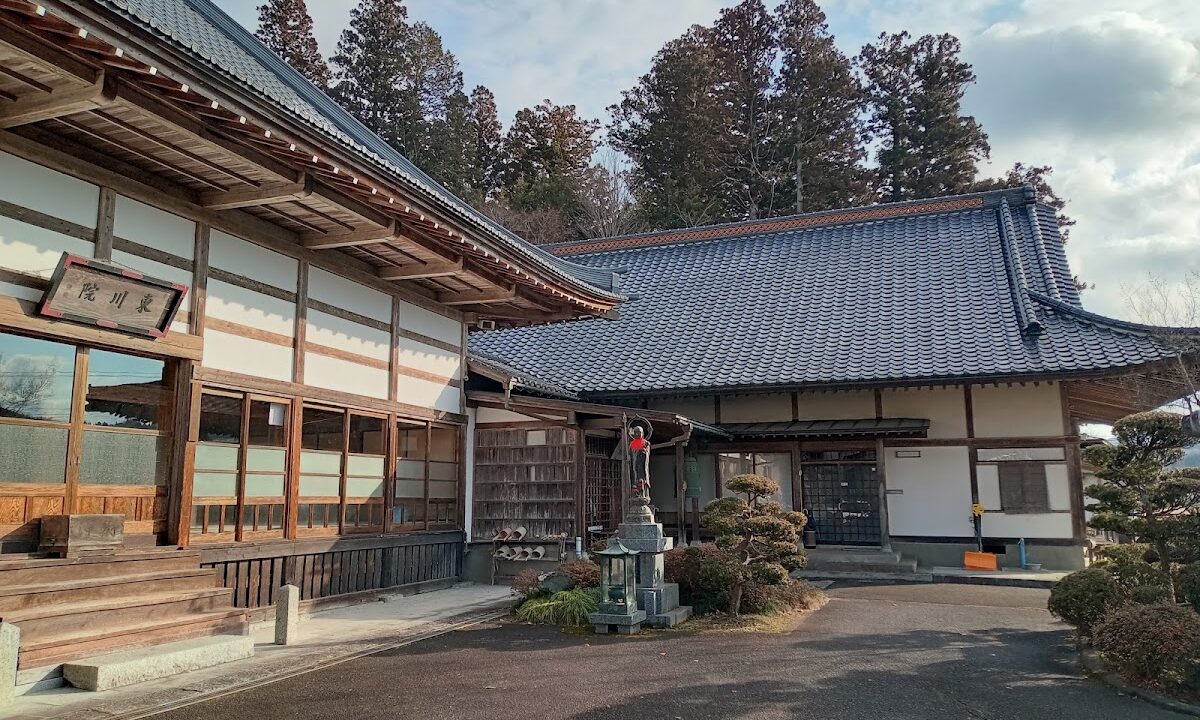
Complete Guide to Tosen-in Temple (Ichinoseki City, Iwate Prefecture) | National Treasure-Class Seated Kannon Bodhisattva Statue and Treasures of Heian Buddhist Culture
Located in Daito-cho, Ichinoseki City, Iwate Prefecture, Tosen-in Temple is a valuable ancient temple that preserves the culture of the Oshu Fujiwara clan from the late Heian period. It houses a wooden seated statue of Kannon Bodhisattva, designated as a National Important Cultural Property, and occupies an extremely important position in the history of Buddhist art in the Tohoku region. This article comprehensively explains everything you need to know before visiting Tosen-in Temple, from its history and cultural properties to access information.
History and Origins of Tosen-in Temple
Tosen-in Temple is located in Daito-cho, Ichinoseki City, Iwate Prefecture, and its founding is believed to date back to the late Heian period. During the time when the Oshu Fujiwara clan flourished centered in Hiraizumi, Buddhist culture spread widely throughout this region, and numerous temples were built. Higashikawa-in is also presumed to have been founded within that context, and as one of the temples heavily influenced by the Hiraizumi cultural sphere, it holds historical value.
The name “Higashikawa-in” is thought to reflect the geographical characteristics of the region and the circumstances of its founding, but due to limited written records, local oral traditions and legends are important sources of information regarding its detailed origins.
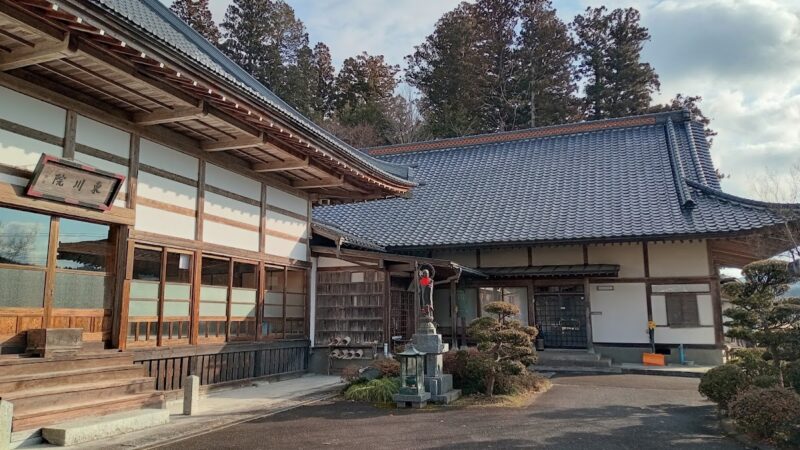
Currently, Higashikawa-in is managed by Chief Priest Hirotoshi Oba, and plays an important role as a center of local faith and as a place for the protection and preservation of valuable cultural assets. Within the temple grounds is the Kannon Hall, where a seated statue of Kannon Bodhisattva continues to attract the attention of visitors and researchers alike.
The Value of the National Important Cultural Property “Wooden Seated Statue of Kannon Bodhisattva”
Basic Information on the Seated Statue of Kannon Bodhisattva
The wooden seated statue of Kannon Bodhisattva owned by Higashikawa-in is a valuable Buddhist statue designated as a National Important Cultural Property. The characteristics of this statue are as follows:
- Statue Height: 114.3 centimeters
- Material: Coniferous wood
- Technique: Yosegi-zukuri (joined wood construction)
- Finish: Lacquer and gold leaf finish
- Production Period: Late Heian period (around the 12th century)
- Style: Inheriting the Jocho style of the late Heian period
Embodying the characteristics of Heian Buddhist art
The Yosegi-zukuri technique is a method of creating Buddhist statues by combining multiple pieces of wood, perfected by the sculptor Jocho in the mid-Heian period. This technique allowed for the efficient production of large statues and reduced distortion due to wood shrinkage.
The seated Kannon Bodhisattva statue at Higashikawa-in Temple was created using this Yosegi-zukuri technique, making it a valuable example that conveys the advanced Buddhist sculpture techniques of the late Heian period. The majestic appearance with lacquer and gold leaf finish reflects the refined aesthetic sense of Buddhist art at that time. ### The Relationship Between the Oshu Fujiwara Clan and Buddhist Sculptors
According to expert research, this seated statue of Kannon Bodhisattva is presumed to have been created by a Buddhist sculptor who was involved in the construction of temples in Hiraizumi during the reigns of the three generations of the Oshu Fujiwara clan (Fujiwara no Kiyohira, Motohira, and Hidehira). Many temples, including the Konjikido (Golden Hall) of Chuson-ji Temple, were built in Hiraizumi, and Buddhist sculptors invited from Kyoto, as well as local sculptors who learned their techniques, played an active role.
The style seen in the seated statue of Kannon Bodhisattva at Higashikawa-in Temple exhibits characteristics common to Buddhist statues within the Hiraizumi cultural sphere, providing important evidence of the high level of Buddhist art in the Tohoku region at that time. This statue is a valuable cultural heritage that tells the story of how the Oshu Fujiwara culture, centered in Hiraizumi, spread to the surrounding areas.
Major Restoration and Return in 2024
A Restoration Project spanning approximately two years
On March 26, 2024, the wooden seated statue of Kannon Bodhisattva at Higashikawa-in Temple returned to the Kannon Hall on the temple grounds after approximately two years, following a major restoration project. This restoration was undertaken to professionally repair damage and deterioration over many years, representing a crucial effort to pass on the value of the statue as a nationally important cultural property to future generations.
Restoration of important cultural properties is carried out carefully by specialized technicians in accordance with the Cultural Properties Protection Law. During the restoration period, the Kannon Bodhisattva statue was moved to a specialized restoration workshop, where work combining the latest scientific research with traditional restoration techniques was carried out.
Significance of the Restoration and its Impact on the Community
This “return” was a major event for the community and was widely reported in local media, including the Iwate Nippo newspaper. Returning to the Kannon Hall after approximately two years, the Kannon Bodhisattva statue has regained its former grandeur through the restoration, providing renewed awe to worshippers and researchers alike.
Large-scale repairs are not merely restoration work; they also provide opportunities for academic research using the latest investigative techniques. Through X-ray imaging and material analysis, new insights into the techniques and materials used at the time of creation are often obtained, and it is believed that valuable data has been accumulated during this repair.
Higashikawa-in Temple Grounds and Kannon Hall
Role of the Kannon Hall
Within the grounds of Higashikawa-in Temple is the Kannon Hall, which houses a wooden seated statue of Kannon Bodhisattva, a nationally designated Important Cultural Property. The Kannon Hall plays a crucial role in protecting the statue from wind, rain, and deterioration, while also serving as a sacred space where worshippers can quietly offer prayers.
The architectural style and structure of the Kannon Hall reflect the characteristics of traditional temple architecture in the region, and careful consideration has been given to the appropriate protection of the statue as a cultural property. Since environmental management within the hall directly affects the preservation of the statue, temperature and humidity control are carefully managed.
Atmosphere of the Temple Grounds
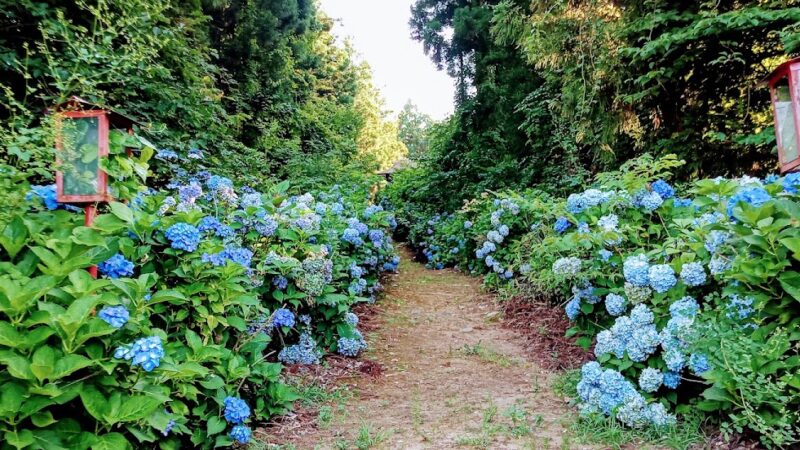
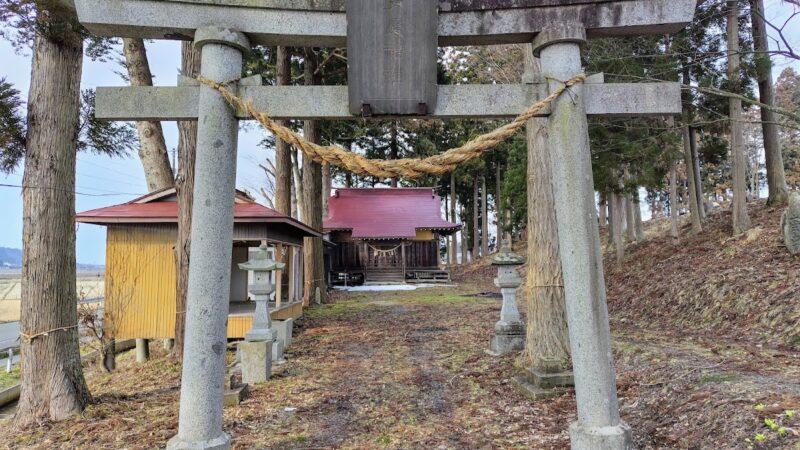
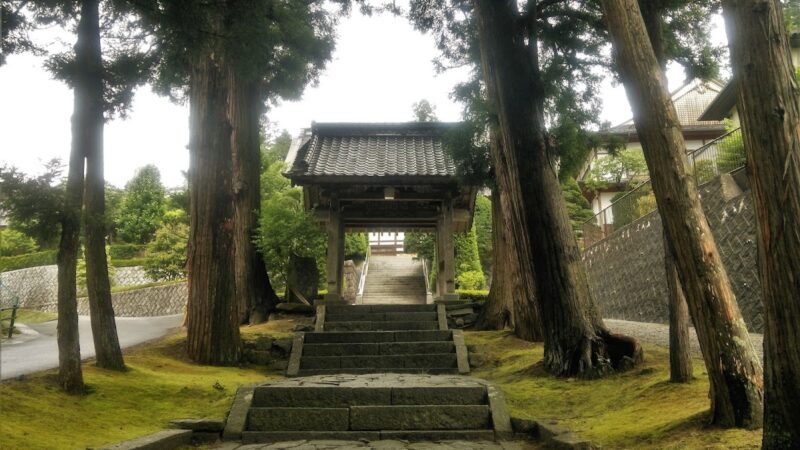
Located in the naturally rich environment of Daito-cho, Ichinoseki City, the grounds of Higashikawa-in Temple possess a tranquil and peaceful atmosphere. The environment, where visitors can experience the changing seasons and nature, offers peace of mind to those who come to worship.
From the temple grounds, one can enjoy views of the surrounding countryside and mountains, making it a precious place where one can feel firsthand the history of Buddhist culture that has taken root in this land since the Heian period.
Historical Background of Daito-cho, Ichinoseki City
Part of the Oshu Fujiwara Cultural Sphere
Daito-cho in Ichinoseki City was located within the sphere of influence of the Oshu Fujiwara clan, which flourished at the end of the Heian period. The cultural sphere centered on Hiraizumi extended from southern Iwate Prefecture to northern Miyagi Prefecture, and numerous temples and cultural properties remain in this region.
Daito-cho, where Higashikawa-in Temple is located, is one of the areas strongly influenced by this culture, and the seated statue of Kannon Bodhisattva holds extremely important significance as concrete evidence of this. Sharing the same historical background as famous temples such as Chuson-ji and Motsu-ji in Hiraizumi, Higashikawa-in Temple is indispensable for understanding the spread of Oshu Fujiwara culture.
Center of Faith in the Region
From the Middle Ages to the early modern period and into the present day, Higashikawa-in Temple has played a vital role as a center of faith for the local people. Kannon worship is a widely prevalent form of faith in Japanese Buddhism, and Kannon Bodhisattva, in particular, has been revered as a compassionate being who relieves people’s suffering.
The seated statue of Kannon Bodhisattva at Higashikawa-in Temple has undoubtedly been cherished as an object of prayer by the local people throughout its long history. Even today, local residents and visitors from afar can be seen quietly offering their prayers.
Access Information to Higashikawa-in Temple
Location
Address: Daito-cho, Ichinoseki City, Iwate Prefecture
Higashikawa-in Temple is located in the Daito-cho district of Ichinoseki City. Ichinoseki City is located at the southernmost tip of Iwate Prefecture, near the border with Miyagi Prefecture.
Access
Access by Train:
- The nearest station is Surisawa Station on the JR Tohoku Main Line.
- Approximately 10-15 minutes by car from Surisawa Station.
- Taking a taxi from the station is convenient.
Access by Car:
- Approximately 30 minutes from the Ichinoseki Interchange on the Tohoku Expressway.
- Accessible via National Route 284.
- It is recommended to check in advance whether parking is available.
Notes for Visitors
Higashikawa-in is an active temple managed by Chief Priest Hirotoshi Oba. If you wish to visit, please note the following:
- Prior Contact: If you wish to view the seated statue of Kannon Bodhisattva, it is advisable to contact in advance.
- Visiting Manners: Maintain silence on the temple grounds and be considerate of other visitors.
- Photography: Permission may be required to photograph cultural properties. Please check in advance.
- Visiting Hours: We recommend contacting the temple directly regarding visiting hours.
Nearby Tourist Attractions and Cultural Properties
Highlights of Ichinoseki City
When visiting Higashikawa-in Temple, combining your visit with other tourist spots in Ichinoseki City will make your trip even more fulfilling.
Genbikei Gorge:
A representative scenic spot of Ichinoseki City, designated as a national scenic spot and natural monument. The gorge carved by the Iwai River is beautiful throughout the four seasons, and is especially magnificent during the autumn foliage season.
Geibikei Gorge:
A scenic spot counted as one of Japan’s 100 most beautiful landscapes, where you can enjoy boating. The scenery of cliffs over 50 meters high stretching for 2 kilometers is breathtaking.
Hiraizumi’s World Heritage Sites
Hiraizumi town, located about 40 minutes by car from Higashikawa-in, contains components of the World Heritage Site “Hiraizumi – Temples, Gardens and Archaeological Sites Representing the Buddhist Pure Land.”
Chuson-ji Golden Hall:
This Amida Hall, built by Kiyohira, the first head of the Oshu Fujiwara clan, is designated a National Treasure. Visitors can experience Buddhist art from the same period as the seated Kannon Bodhisattva statue at Higashikawa-in.
Motsu-ji Temple:
This temple, built by Motohira, the second head, and Hidehira, the third head, has a Pure Land garden designated a Special Place of Scenic Beauty.
Visiting these World Heritage Sites along with Higashikawa-in will allow for a deeper understanding of the overall picture of Oshu Fujiwara culture.
The Importance of Cultural Property Preservation as Demonstrated by Higashikawa-in
Valuable Cultural Heritage Remaining in the Provinces
The wooden seated Kannon Bodhisattva statue at Higashikawa-in is a cultural property that has been passed down in a small, rural temple, rather than in a famous temple in a large city. Such local cultural properties often receive little attention, and securing funding for their preservation and repair can be a challenge.
However, as the example of Higashikawa-in Temple shows, cultural properties remaining in rural areas are invaluable witnesses to the unique history and culture of those regions. To understand the reality of the Oshu Fujiwara culture, which spread not only to the central Hiraizumi but also to the surrounding areas, research into temples like Higashikawa-in and the cultural properties they house is essential.
Sustainable Cultural Property Preservation
The large-scale repairs in 2024 are an example of an important initiative in cultural property preservation. Designation as an Important Cultural Property allows for appropriate preservation and repair with support from the national and local governments.
By continuing regular inspections and necessary repairs, this precious seated statue of Kannon Bodhisattva can be reliably passed on to future generations. Higashikawa-in Temple’s efforts will serve as a model case for cultural property preservation in local temples throughout Japan.
Relationship with Local Communities
The preservation of cultural properties requires not only experts and government, but also the understanding and cooperation of local communities. The seated statue of Kannon Bodhisattva at Higashikawa-in Temple has been preserved in this location for approximately 900 years, thanks to the efforts of successive chief priests, parishioners, and local residents.
Even today, local residents continue to cooperate in the maintenance and management of the temple and its events, passing on the value of cultural properties to future generations. This kind of community-wide effort forms the foundation of cultural property preservation.
Best Season to Visit Higashikawa-in Temple
Charms of Each Season
Spring (April-May):
The temple grounds are enveloped in a vibrant atmosphere of fresh greenery. During cherry blossom season, the contrast between the temple and the cherry blossoms creates a beautiful landscape.
Summer (June-August):
A lush green season, with the trees displaying deep green leaves. Visitors can enjoy the cool breeze in the quiet temple grounds.
Autumn (September-November):
The autumn foliage season is especially recommended. The surrounding mountains change color, creating a uniquely beautiful scene that complements the temple’s historical atmosphere.
Winter (December-March):
The temple, amidst the snowy landscape, is utterly serene. Visiting in this crisp, serene atmosphere is a special experience that cleanses the soul.
Event Information
It is recommended to check the temple’s annual events in advance. During special ceremonies and events, cultural artifacts not normally on public display may be specially exhibited.
Evaluation by Researchers and Experts
Position in Art History
The wooden seated statue of Kannon Bodhisattva at Higashikawa-in Temple is considered an important example in the study of Japanese art history, particularly in the study of Buddhist sculpture in the Tohoku region during the late Heian period.
Stylistically comparing it with the Buddhist statues remaining at Chūson-ji and Mōtsū-ji Temples in Hiraizumi has revealed the extent of the Ōshū Fujiwara clan’s cultural influence, the scope of the sculptors’ activities, and the reality of their technical transmission. The statue at Higashikawa-in Temple is an indispensable comparative object in this research.
Future Research Topics
The data obtained from the survey conducted in conjunction with the large-scale repairs in 2024 is expected to provide new insights for future academic research. Further research is particularly needed on the following points:
- Identification of the tree species and origin of the wood used
- Identification of the Buddhist sculptors involved in the creation and elucidation of their lineages
- The scale and characteristics of Higashikawa-in Temple at the time of its founding
- Changes in regional religious practices
As these studies progress, the reality of the Oshu Fujiwara culture will be clarified in more detail, and the historical value of Higashikawa-in Temple will become even clearer.
Summary: The Historical Weight Conveyed by Higashikawa-in Temple
Higashikawa-in Temple, located in Daito-cho, Ichinoseki City, Iwate Prefecture, is a valuable ancient temple that houses the “Wooden Seated Kannon Bodhisattva Statue,” a nationally important cultural property. Created during the late Heian period, when the Oshu Fujiwara clan flourished, this Kannon statue, with its advanced joined-wood technique and lacquer and gold leaf finish, conveys the high level of Buddhist art of that time.
The seated statue of Kannon Bodhisattva, which returned to the Kannon Hall in 2024 after approximately two years of extensive restoration, is now guaranteed to be passed on to future generations thanks to proper preservation and restoration. This initiative has become an important model case for the protection of local cultural properties.
Visiting Higashikawa-in Temple is not simply about seeing an old Buddhist statue; it is a valuable experience that allows you to touch upon the history of Japanese Buddhist culture that has continued since the Heian period, the splendor of the Oshu Fujiwara clan, and the faith that the local people have preserved. Visiting it in conjunction with the Hiraizumi World Heritage Site will allow you to gain a deeper understanding of the rich cultural heritage of the Tohoku region.
When you visit Ichinoseki City, be sure to visit Higashikawa-in Temple and come face to face with the majestic seated statue of Kannon Bodhisattva that has been passed down for over 900 years. As you clasp your hands together in the quiet temple grounds, you will experience a不思議な感覚 (mysterious feeling) of sharing the same space of prayer as the people of the Heian period.