Complete Guide to Haishiwa Shrine (Ichinoseki City, Iwate Prefecture) | History and Divine Virtues of an Engishiki-Listed Shrine
Haishiwa Shrine, located in Yamame, Ichinoseki City, Iwate Prefecture, is an ancient shrine boasting a history of over 1900 years. It is a Shikinaisha (shrine listed in the Engishiki Jinmyocho, an ancient Japanese legal code) and has long been revered as the guardian shrine of Iwai District. This article provides a detailed introduction to Haishiwa Shrine, including its history, enshrined deities, cultural assets, and points of interest for visitors.
Overview of Haishiwa Shrine
Haishiwa Shrine is located at 56 Tate, Yamame, Ichinoseki City, Iwate Prefecture, approximately 2km northwest of JR Ichinoseki Station. Situated at the foot of Mt. Ranbai, it is characterized by its tranquil environment surrounded by abundant nature.
Basic Information
- Location: 56 Tate, Yamame, Ichinoseki City, Iwate Prefecture
- Shrine Rank: Shikinaisha (listed in the Engishiki Jinmyocho), former Prefectural Shrine
- Deities Enshrined: Takamimusubi-no-kami, Ninigi-no-mikoto, Konohanasakuya-hime-no-mikoto
- Divine Virtues: Safe childbirth, fertility, matchmaking, family safety
- Telephone: 0191-23-2904
Haishiwa Shrine is particularly known for its strong divine blessings for safe childbirth. The special ritual “Omuroyaki,” performed during the Shikinen Taisai (Grand Festival), preserves a valuable tradition of childbirth based on mythology.
The History and Origins of Haishiwa Shrine
Legend of its Founding
The founding of Haishiwa Shrine is said to date back to the reign of Emperor Keiko, during the eastern expedition of Yamato Takeru no Mikoto. It is believed that when Yamato Takeru no Mikoto pacified the eastern provinces, he founded a shrine on Iwakurayama Mountain, calling it “Hiishiwa-no-miya.”
The name “Hiishiwa” is said to originate from the myth of childbirth in fire, and later changed to “Haishiwa.” This name change is deeply connected to the shrine’s belief in safe childbirth.
Records from the Heian Period
Records show that in 852 (Ninju 2), the shrine was granted a divine rank by the imperial court, indicating that it was already recognized as an important shrine during this period.
The shrine was relocated to its current location during the Engi era (901-923) and renamed “Haishiwa Shrine” in the 5th year of the Enchō era (927). This year marked the completion of the Engishiki Jinmyōchō (a list of shrines compiled in the Engi era), and the shrine is officially listed as a Shikinaisha (a shrine listed in the Engishiki) in Iwai District, Mutsu Province.
History of Haishiwa Shrine according to the “Iwate Prefecture Shrine Directory”
According to the “Iwate Prefecture Shrine Directory,” compiled by the Iwate Prefecture Shrine Association, Haishiwa Shrine is positioned as one of the oldest shrines in Iwai District. As the guardian deity of the Nishi-Iwai and Nagare areas, it has served as a spiritual pillar for the region, encompassing a wide area of parishioners.
It has also received deep reverence from successive feudal lords and influential local figures, and records show that the entire community cooperated in the construction and repair of the shrine buildings.
History of Haishiwa Shrine According to the “Iwate Prefecture Town and Village History”
The “Iwate Prefecture Town and Village History,” compiled during the Meiji era, details Haishiwa Shrine as the central shrine of Yamame Village. The size of the shrine grounds, the scale of the shrine buildings, and the details of the festivals are specifically recorded, revealing the shrine’s importance to the local community.
In particular, it is noted that the festivals held throughout the year attracted many worshippers, creating a lively atmosphere with a market even being held.
Deities and Divine Virtues
Takamimusubi-no-kami
One of the three creation gods who appeared at the time of the creation of heaven and earth, this deity possesses the sacred power to create all things. They are revered as a symbol of vitality and creativity.
Ninigi-no-Mikoto
The grandson of Amaterasu-Omikami, and the principal deity of the descent of the heavenly grandchild. She is worshipped as the god of national prosperity and abundant harvests.
Konohanasakuya-hime no Mikoto
She is the consort of Ninigi-no-Mikoto and a goddess known for the myth of giving birth in flames. This myth is the root of the safe childbirth belief at Haishiwa Shrine, and she is especially revered as the guardian deity of safe childbirth, fertility, and child-rearing.
When Konohanasakuya-hime no Mikoto was suspected of wrongdoing, she set fire to her birthing hut to prove her innocence, and safely gave birth to three princes in the flames. This myth is the origin of the name “Hisekiwa” and is the prototype for the “Omuroyaki” ritual at Haishiwa Shrine.
Special Ritual “Omuroyaki”
The “Omuroyaki” ritual, performed at the Haishiwa Shrine’s Shikinen Taisai (Grand Festival), is a special ritual that recreates the myth of Konohanasakuya-hime no Mikoto giving birth in flames. This Shinto ritual, a ceremony for praying for safe childbirth, maintains a form that is rare nationwide.
Based on mythology, this childbirth ritual forms the core of the faith at Haishiwa Shrine and is a solemn ceremony that deeply moves those who attend. The Shikinen Taisai (Grand Festival) is held once every few years and attracts many worshippers.
Haishiwa Shrine Grounds and Highlights
Shiratori Shrine and Ubasugi
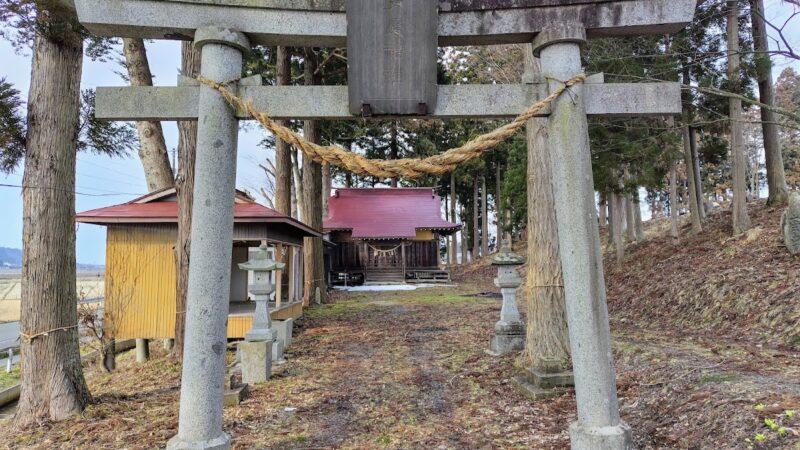
At the entrance to the approach to the shrine is a small stone shrine called Shiratori Shrine. The sacred tree of this Shiratori Shrine is a giant cedar tree called “Ubasugi” (Old Woman Cedar).
Ubasugi is considered the oldest and largest cedar tree in Ichinoseki City, and its age is estimated to be several hundred years old. It stands at the entrance to the shrine grounds, exuding an iconic presence and welcoming visitors. Its majestic appearance is overwhelming, and it can be said to be a living witness to the long history of Haishiwa Shrine.
Tsukimizaka and Tsurugizaka
The approach to Haishiwa Shrine consists of two slopes, known as “Tsukimizaka” (Moon-Viewing Slope) and “Tsurugizaka” (Tsurugi Slope).
Tsukimizaka is a relatively gentle slope, a charming approach surrounded by trees. As its name suggests, it has been cherished as a picturesque path suitable for moon viewing.
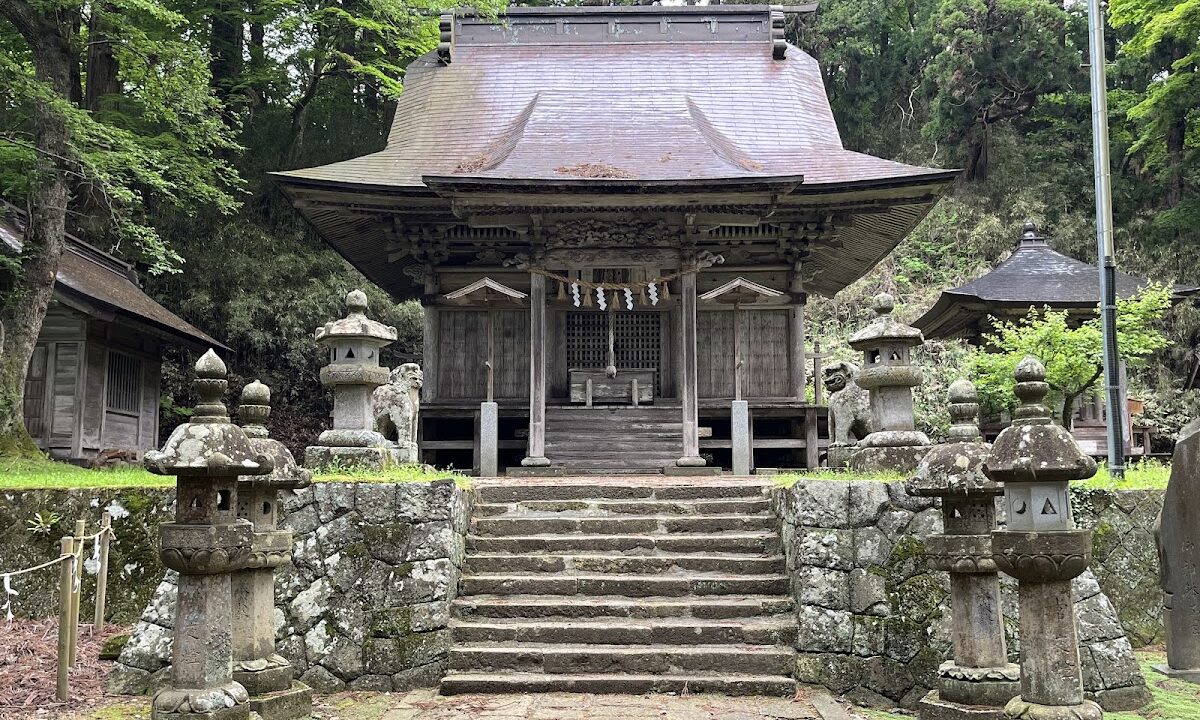
Tsurugizaka is the original approach, a long flight of stone steps, a tranquil space surrounded by magnificent trees. These steps are wide, with giant trees lining both sides, creating a solemn atmosphere befitting an entrance to a sacred area. As you climb the steps, step by step, you can feel a sense of detachment from the hustle and bustle of everyday life, and a purification of the soul.
Ubuyugaike Pond
Along the approach is a pond called “Ubuyugaike Pond.” Legend says that this pond was used for the gods’ first bath in mythological times, and it is considered a sacred water source associated with the belief in safe childbirth.
The shrine still holds pure water, further enhancing the sacred atmosphere of the grounds.
Haishiwa Shrine Main Hall
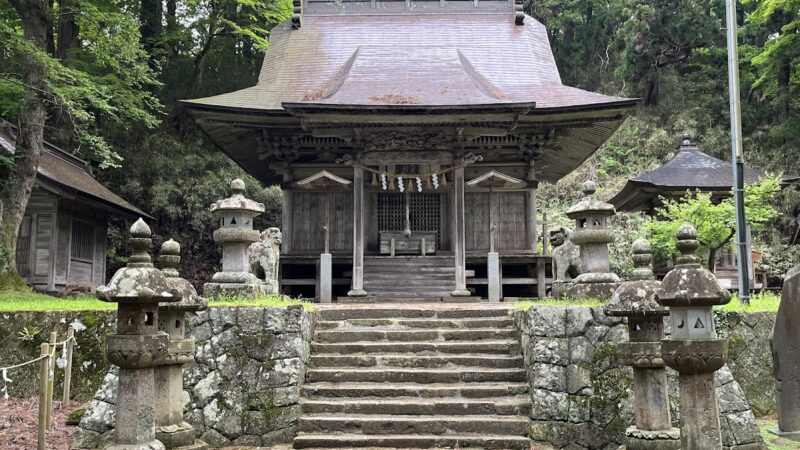
Upon climbing the stone steps, a magnificent worship hall appears before you. The Haishiwa Shrine main hall is designated as a tangible cultural property of Ichinoseki City, preserving a traditional architectural style that has continued since the Edo period.
The main hall is located behind the worship hall and is a majestic structure adorned with intricate carvings. The construction of the shrine involved skilled local craftsmen, representing the pinnacle of architectural technology at the time.
Despite undergoing regular restorations, it has maintained its original appearance and is highly valued as a cultural property.
Married Couple Cedars
In front of the main hall stand two gigantic cedar trees known as the “Married Couple Cedars.” These cedars, like the Old Woman Cedar, are considered among the oldest and largest in Ichinoseki City and are carefully protected as sacred trees symbolizing Haishiwa Shrine.
These two cedar trees, standing close together, are known as “Meoto Sugi” (Married Couple Cedars) and are revered as symbols of matchmaking and marital harmony. Estimated to be over 500 years old, their majestic presence deeply impresses visitors.
Many worshippers take commemorative photos in front of these Meoto Sugi, praying for good fortune in relationships and family harmony.
Cultural Properties Owned by Haishiwa Shrine
Fir Grove (Natural Monument)
Within the grounds of Haishiwa Shrine lies a valuable fir grove. This grove has high academic value and is important for understanding the local natural environment.
Fir trees are evergreen conifers, creating a solemn atmosphere befitting a shrine forest. The fir grove on the shrine grounds has been protected for many years, maintaining its excellent condition and recognizing its value as a natural forest.
Shrine Building (Ichinoseki City Tangible Cultural Property)
As mentioned above, the shrine building of Haishiwa Shrine is designated as a tangible cultural property of Ichinoseki City. It retains strong elements of Edo period architecture and is a valuable structure that conveys the characteristics of shrine architecture from that era.
The carvings on the main hall are particularly magnificent, featuring intricate decorations of dragons, lions, flowers, and birds. These demonstrate the high skill of the craftsmen of the time and enhance its value as a cultural property.
Other Cultural Properties
Numerous stone monuments and stone structures are scattered throughout the shrine grounds, each telling the story of Haishiwa Shrine’s long history. Old votive tablets and offerings are also preserved, providing valuable historical materials for understanding the history of local faith.
Visitor Information
Access
Access by Train
- Approximately 2km northwest from JR Tohoku Main Line “Ichinoseki Station”
- Approximately 25 minutes on foot, approximately 5 minutes by taxi
Access by Car
- Approximately 10 minutes from Tohoku Expressway “Ichinoseki IC”
- Parking available (free)
Visiting Hours
While visiting the shrine grounds is generally free, the shrine office hours are as follows:
- Shrine Office Hours: 9:00 AM – 5:00 PM (approximate)
- Goshuin (Shrine Seal): Available at the shrine office (advance contact recommended as staff may be absent)
About Prayers
Haishiwa Shrine accepts various prayers.
Prayers for Individuals
- Prayer for Safe Childbirth
- First Shrine Visit (Omiyamairi)
- Shichi-Go-San Ceremony
- Exorcism of Misfortune
- Family Safety
- Traffic Safety
Rituals Related to Construction
- Groundbreaking Ceremony
- Ridgepole Raising Ceremony
- New House Ceremony
- Completion Ceremony
If you wish to request a prayer, we recommend contacting us in advance by phone (0191-23-2904) to arrange a date and time.
Annual Events
Haishiwa Shrine holds various festivals throughout the year.
- New Year’s Festival: January 1st
- Annual Grand Festival: September (Please check with the shrine for details)
- Shikinen Grand Festival: Once every few years (Omuroyaki Ritual)
In addition, monthly festivals and seasonal festivals are also held.
Goshuin (Seal) of Haishiwa Shrine
Haishiwa Shrine offers Goshuin (seals). They are available at the shrine office, but since the chief priest may be absent, it is recommended to call ahead to confirm if you wish to receive a Goshuin.
The Goshuin features the calligraphy of “Haishiwa Shrine” and the shrine’s seal, a solemn and dignified seal befitting a Shikinaisha (shrine listed in the Engishiki, an ancient Japanese legal text). Bring your Goshuincho (seal book) with you when you visit.
Nearby Attractions
Ichinoseki City, where Haishiwa Shrine is located, has many other tourist attractions.
- Genbikei Gorge: A gorge designated as a national scenic spot
- Geibikei Gorge: A scenic spot famous for boat rides
- Motsuji Temple: A Jodo garden designated as a World Heritage Site
- Chusonji Temple: A temple representing the golden culture of Hiraizumi
By visiting Haishiwa Shrine, you can enjoy the history and culture of the Ichinoseki and Hiraizumi area.
Points and Manners for Visiting the Shrine
Etiquette for Visiting the Shrine
- Bow before passing through the torii gate.
- Walk along the edge of the path. (The center is the path for the gods.)
- Purify yourself at the water basin.
- Bow twice, clap twice, and bow once in front of the main hall.
Regarding Photography
Photography is generally permitted on the shrine grounds, but please refrain from taking pictures inside the main hall or during Shinto rituals. Also, please be considerate of other visitors.
Regarding Attire
While casual attire is acceptable, please wear clean clothing if you are receiving prayers. Formal attire is especially desirable for formal visits such as prayers for safe childbirth or Shichi-Go-San (a traditional Japanese rite of passage for children).
Summary
Haishiwa Shrine is a representative ancient shrine of Iwate Prefecture with a history of over 1900 years. Haishiwa Shrine boasts numerous attractions, including its status as a shrine listed in the Engishiki (an ancient Japanese legal code), the legend of its founding by Yamato Takeru, its divine blessings for safe childbirth, the unique “Omuro-yaki” ritual, giant trees such as the Meoto-sugi (married couple cedar) and Uba-sugi (old woman cedar), and shrine buildings designated as city cultural properties.
Especially for visitors praying for safe childbirth, fertility, and family safety, Haishiwa Shrine, dedicated to Konohanasakuya-hime, is an ideal place to visit. The tranquil grounds offer a peaceful retreat, and the time spent contemplating ancient beliefs will be a valuable experience for modern people.
When visiting Ichinoseki, be sure to visit Haishiwa Shrine and experience its history and divine blessings. Climbing the long stone steps and spending time in the grounds surrounded by giant trees will surely create lasting memories.