Complete Guide to Toyagasaki Shrine (Hanamaki City, Iwate Prefecture) | History, Goshuin (Shrine Seals), Access, and Highlights Explained in Detail
What is Toyagasaki Shrine?
Toyagasaki Shrine is a historic shrine located in Jōnai, Hanamaki City, Iwate Prefecture, and is revered as the guardian shrine of Hanamaki. Situated on a hill in Toyagasaki overlooking the Kitakami River, on the site of the former third bailey of Hanamaki Castle, it has long been the guardian shrine of the Hienuki-Waga region, attracting the faith of local people.
Even today, it is located in the heart of Hanamaki City and serves as a spiritual center for the citizens of Hanamaki, attracting many visitors for New Year’s prayers, Shichi-Go-San (a traditional rite of passage for children), and various other prayers. It is also known for its deep connection to the literary giant Kenji Miyazawa and the poet Kōtarō Takamura, both from Hanamaki, and has played a culturally significant role.
Deities and Divine Virtues
Toyagasaki Shrine enshrines six deities, each possessing different divine virtues.
Main Deities:
- Ukemochi-no-kami: God of abundant harvests and food
- Ukanomitama-no-mikoto: God of business prosperity and industrial development
- Honda-wake-no-mikoto: God of military success and protection from evil (Emperor Ojin)
Enshrined Deities:
- Amaterasu-Omikami: God of national peace and good fortune
- Omononushi-no-mikoto: God of matchmaking and business prosperity
- Emperor Sutoku: God of learning and waka poetry
These deities are believed to bestow a wide range of blessings, including abundant harvests, business prosperity, family safety, protection from evil and good fortune, and academic success.
History of Toriyazaki Shrine
From Founding to the Kamakura Period
The exact founding date of Toriyazaki Shrine is unknown, but it is believed to have originated from a shrine built on a hill overlooking the Kitakami River in Toriyazaki, dedicated to the protection of the territory, the development of barren land, and the blessing of abundant harvests. Its origins may date back to the Heian period.
The most reliable record is that the shrine building was rebuilt in 1313 (Showa 2), at the end of the Kamakura period, suggesting that it was already an important center of religious worship in the region at that time.
Consolidation and Renaming in the Muromachi Period
In 1536 (Tenbun 5), at the end of the Muromachi period, the Hienuki clan, the lords of Toriyazaki Castle at the time, carried out a major reform by consolidating three shrines located within the castle grounds.
The three shrines that were merged are as follows:
- Toriyazaki Shrine (enshrining Uke Mochi no Kami)
- Inari Shrine (enshrining Ukanomitama no Mikoto)
- Hachiman Shrine (enshrining Homutawake no Mikoto)
This merger resulted in the shrine being renamed “Toriyazaki-za Sanbashira Shrine,” further strengthening its role as the guardian deity of the castle. The Hienuki clan were Sengoku-period daimyo who ruled the Hanamaki region, and it is clear they considered this shrine important as the guardian deity of their castle.
Development during the Edo Period
During the Keicho era (around 1596-1615), Kitashosai, who became the lord of Hanamaki Castle, prayed for victory at this shrine before the outbreak of war and achieved a resounding victory. Grateful for this divine favor, Kitashosai constructed a new shrine building and held a grand festival, inviting people from his territory to take time off work to worship during the annual festival.
Later, as Hanamaki developed as a castle town of the Nanbu clan, Toriyazaki Shrine became the guardian shrine of Hanamaki, attracting fervent devotion from the local residents. It was also revered by successive lords of the Nanbu family, who provided support for the repair of the shrine buildings and for festivals.
After the Meiji Era
At the end of the Meiji era, as part of the modernization of the shrine system, the Hachiman Shrine, Kotohira Shrine, and Shinmei Shrine located in the surrounding town were merged into Toriyazaki Shrine. This resulted in six enshrined deities, and the shrine was renamed “Toriyazaki Shrine,” its current name. Its former rank was that of a village shrine.
From the Meiji to Showa periods, Kenji Miyazawa, a poet from Hanamaki, visited the shrine, and it is believed to have influenced his works. The poet Kotaro Takamura also visited the shrine during his stay in Hanamaki, deepening his connection with it.
Even after the war, it continues to be a spiritual center for the citizens of Hanamaki, attracting tens of thousands of visitors for New Year’s prayers, and remaining a central place of faith in the region.
Highlights of the Shrine Grounds
Enjoji Gate (Hanamaki City Designated Cultural Property)
The most noteworthy structure within the grounds of Toriyazaki Shrine is the Enjoji Gate, a designated cultural property of Hanamaki City. This gate is of extremely high historical value as the only remaining structure from Hanamaki Castle.
The Enjoji Gate was originally one of the gates of Hanamaki Castle, but was relocated to this shrine after the castle’s abandonment following the Meiji Restoration. It is a valuable relic that conveys the robust style of samurai architecture, and as the only structure that allows us to imagine the former appearance of Hanamaki Castle, it attracts many history enthusiasts.
The gate’s structure is in the Yakui-mon style, strongly retaining the architectural style of the mid-Edo period. The detailed decorations and woodworking techniques demonstrate the high skill of the craftsmen of the time, making it an important structure not only as a cultural property but also from an architectural history perspective.
Main Shrine and Worship Hall
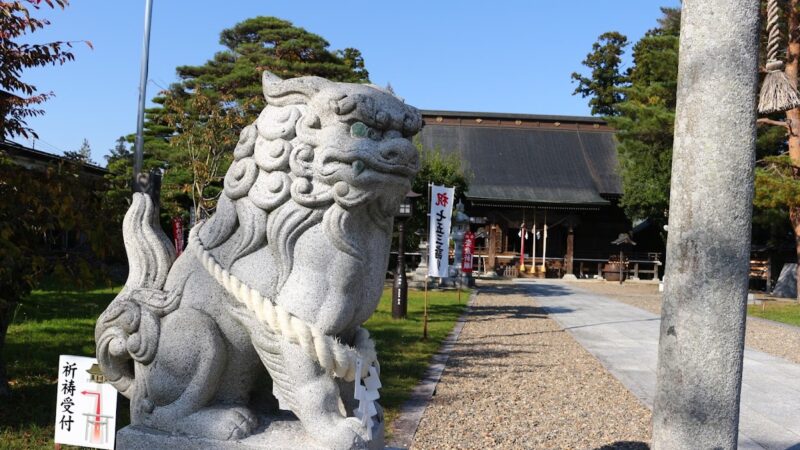
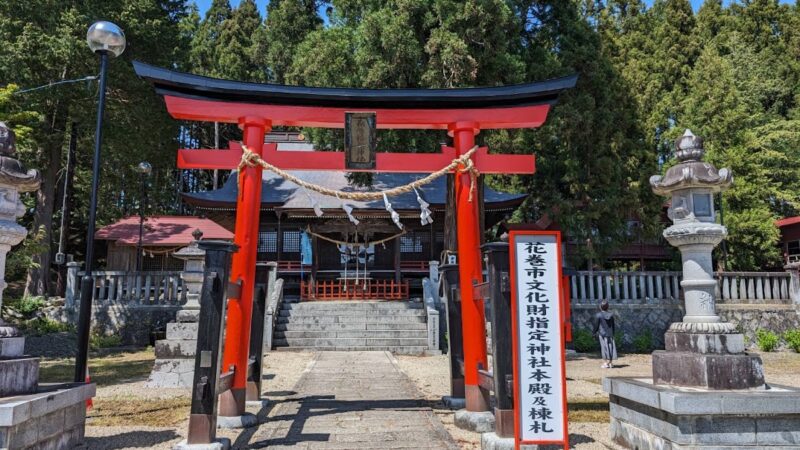
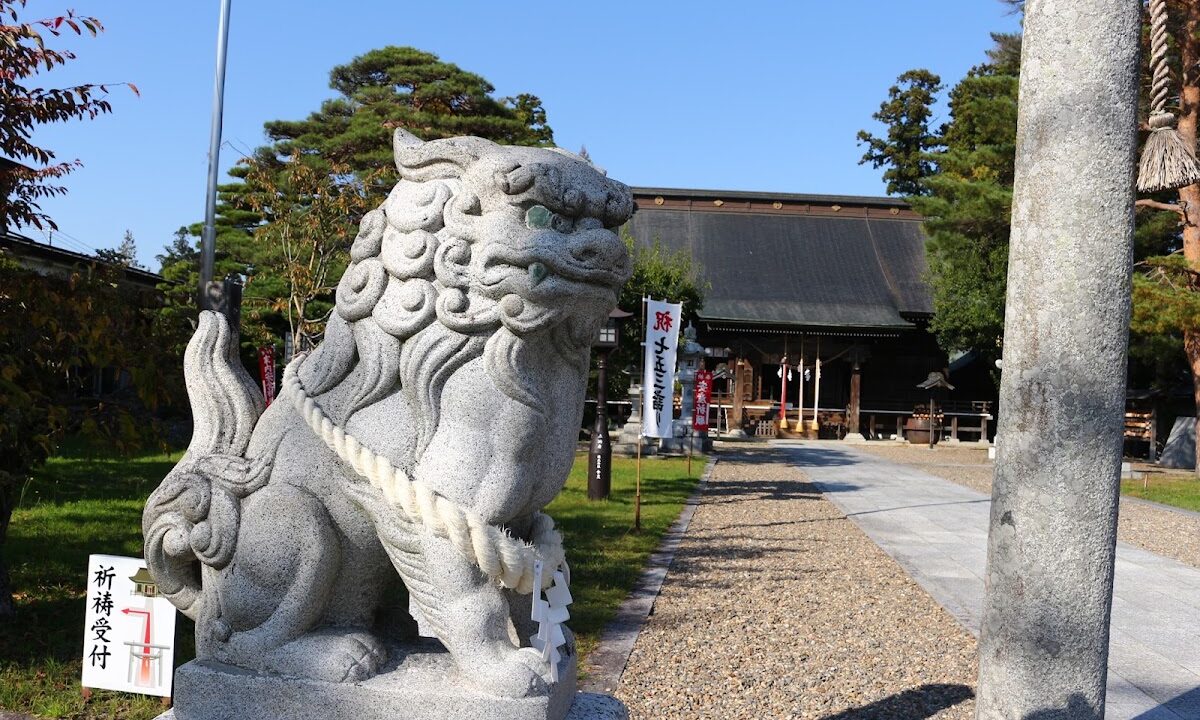
Although the current shrine buildings were constructed in modern times, they maintain the style of traditional shrine architecture while exuding a solemn atmosphere. The worship hall has an open design that warmly welcomes worshippers, while the main shrine stands majestically within a dignified atmosphere.
Around the shrine buildings stand large trees, some estimated to be hundreds of years old, maintaining a tranquil atmosphere befitting a sacred place despite being in an urban area. Especially during the seasons of fresh greenery in spring and vibrant autumn foliage, the shrine grounds are enveloped in the beautiful colors of nature.
Kinsei Shrine (Kinsei-sha)
Kinsei Shrine (Kinsei-sha), enshrined as a subsidiary shrine within the grounds, has recently attracted attention as a power spot for financial luck.
Kinsei Shrine is believed to bestow blessings for prosperity of descendants, business success, and increased financial fortune, and many worshippers visit, particularly those praying for lottery winnings or business prosperity. This shrine, with its unique sacred object, has been revered as an object of folk faith since ancient times.
Those wishing for increased financial luck are advised to visit this subsidiary shrine after praying at the main shrine.
Stone Walls and Remains of Hanamaki Castle
The site where Toriyazaki Shrine is located is the site of the third bailey of Hanamaki Castle, and remnants of the castle still remain within the shrine grounds and surrounding area. Parts of the stone walls and the topography of the baileys can be seen, giving a real sense of its former importance as a military base.
Combining a visit to the shrine with a stroll while reflecting on the history of Hanamaki Castle is a unique way to enjoy this place.
Annual Festivals and Rituals
Hanamaki Festival (Grand Festival)
The most important festival of Toriyazaki Shrine is the Grand Festival, held annually for three days starting on the second Friday of September. This festival, known as the “Hanamaki Festival,” has become Hanamaki City’s largest tourist event and originally began as a festival of the shrine itself.
The origins of the Hanamaki Festival can be traced back to the Keicho era, when Kitamatsu Sai, the lord of Hanamaki Castle, prayed for victory in battle and held a grand festival in gratitude for its success. Since then, it has been a traditional event with a history of over 400 years, passed down through generations of local people.
Festival Highlights:
- Mikoshi Procession: A magnificent procession from the shrine through the city streets.
- Float Parade: Elegant and splendid floats parade through the city.
- Deer Dance: A dedication of the deer dance, a traditional performing art of Iwate Prefecture.
- Kagura: A dedication of ancient and elegant Kagura dances.
During the festival, the entire city of Hanamaki is enveloped in a festive atmosphere, attracting many tourists from within and outside the prefecture.
Annual Events
Various Shinto rituals are performed at Toriyazaki Shrine throughout the year.
- New Year’s Day Festival (January 1st): A festival celebrating the New Year
- First Shrine Visit of the Year (January 1st-3rd): Many citizens visit to pray for the New Year
- Setsubun Festival (around February 3rd): A ritual to ward off evil spirits, including bean-throwing
- Spring Festival (April): A festival celebrating the arrival of spring
- Summer Purification Ceremony (June 30th): A Shinto ritual to purify oneself of sins and impurities accumulated over the past six months
- Autumn Grand Festival (September): Held grandly as the Hanamaki Festival
- Shichi-Go-San Festival (November): A visit to celebrate the growth of children
- Year-End Purification Ceremony (December 31st): A Shinto ritual to purify oneself of sins and impurities accumulated over the past year
Anyone can participate in these Shinto rituals, providing a valuable opportunity to experience traditional Japanese religious culture.
Goshuin (Shrine Seals) and Gifts
About Goshuin
At Toriyazaki Shrine, we offer goshuin as proof of your visit. Goshuin can be obtained at the shrine office from 9:00 AM to 5:00 PM.
The goshuin features the shrine’s name, “Toriyazaki Shrine,” and the words “Hanamaki General Guardian Shrine,” written in ink, and stamped with the shrine’s seal. It is characterized by its simple yet powerful calligraphy, and many people receive it as a memento of their visit.
If you do not have a goshuincho (seal book), we also offer them at our shrine, so this might be a good opportunity to start collecting goshuin.
Gifts
Toriyazaki Shrine offers a variety of gifts.
Amulets:
- Traffic Safety Amulet: Praying for safety in cars and bicycles
- Academic Success Amulet: Wishing for success in exams and academic improvement
- Family Safety Amulet: Praying for the health and peace of the family
- Business Prosperity Amulet: Wishing for the development of the business
- Exorcism Amulet: For protection against misfortune during unlucky years
- Matchmaking Amulet: Wishing for a successful relationship
- Pet Amulet: Praying for the health of pets (popular in recent years)
Other Items Offered:
- Divine Talisman (Amulet to be placed on a household altar)
- Ema (Prayer plaque) (For writing wishes and offering them)
- Omikuji (Fortune slip) (For fortune telling)
- Hama-ya (A lucky charm for the New Year)
- Kumade (A lucky charm for business prosperity)
In recent years, prayers for pet health have become particularly popular, and we also offer special amulets and prayers for pets. Many pet owners visit to pray for the health and longevity of their beloved dogs and cats.
The Relationship Between Kenji Miyazawa and Kotaro Takamura
Kenji Miyazawa and Toriyazaki Shrine
Kenji Miyazawa (1896-1933), the great poet and children’s author born in Hanamaki, spent his entire life in Hanamaki and had a deep connection with our shrine.
Kenji grew up in Hanamaki City from a young age, and Toriyazaki Shrine was a familiar presence. He grew up watching the portable shrines and floats of the Hanamaki Festival, and this experience is said to have influenced his later works. Kenji’s works strongly reflect the climate and folk beliefs of Iwate Prefecture, and it is thought that local places of worship like Toriyazaki Shrine also had a considerable influence on the formation of his spirit.
Hanamaki Agricultural School (now Hanamaki Agricultural High School), where Kenji taught, was also nearby, and it is said that Kenji sometimes visited our shrine during his walks.
Kotaro Takamura and Hanamaki
Sculptor and poet Kotaro Takamura (1883-1956) spent seven years in Hanamaki after the war. Having lost his studio in the Tokyo air raids, Takamura evacuated to Hanamaki at the invitation of Seiroku Miyazawa, the younger brother of Kenji Miyazawa, and lived alone in a mountain hut.
During this time in Hanamaki, Takamura visited Toriyazaki Shrine and deepened his connections with the local people. Touched by Hanamaki’s nature and the warmth of its people, Takamura composed many poems in this place, creating important works in his later years.
Currently, there is a Kotaro Takamura Memorial Museum in Hanamaki City, where you can learn more about Takamura’s relationship with Hanamaki. Visiting it in conjunction with a visit to Toriyazaki Shrine will allow you to experience Hanamaki’s cultural depth even more deeply.
Access and Visiting Information
Basic Information
Location: 7-28 Jonai, Hanamaki City, Iwate Prefecture 025-0076
Phone Number: 0198-22-4839
Shrine Office Hours: 9:00 AM – 5:00 PM
Visiting Hours: The shrine grounds are always open (nighttime visits are possible, but the shrine office is only open during reception hours)
Parking: Available (free), approximately 30 spaces
Official Instagram: @toyagasakijinja (posting the latest information)
Access by Train
From JR Hanamaki Station:
- Approximately 15 minutes on foot (approximately 1.2 km)
- Exit the station and head northeast, passing through Hanamaki city center to the Jonai area
- You can enjoy a stroll through Hanamaki’s shopping street along the way.
If using the Tohoku Shinkansen:
- Get off at Shin-Hanamaki Station and transfer to the Kamaishi Line to Hanamaki Station (approximately 15 minutes).
- 15-minute walk from Hanamaki Station.
Access by Bus
Take an Iwate Kotsu bus from in front of Hanamaki Station and get off at the “Hanamaki City Hall” or “Jonai” bus stop. It’s approximately a 3-minute walk from there. Since bus service is limited, it’s recommended to check the timetable in advance.
Access by Car
From the Tohoku Expressway:
- Exit at Hanamaki IC, approximately 10 minutes.
- Exit at Hanamaki Minami IC, approximately 15 minutes.
Enter “Toriyazaki Shrine” or “7-28 Jonai, Hanamaki City, Iwate Prefecture” into your car navigation system.
Because it is located in the center of Hanamaki city, surrounding roads may be congested during New Year’s visits and the annual festival. Please allow ample time for your visit.
Nearby Tourist Attractions
There are many tourist attractions within walking distance of Toriyazaki Shrine.
- Hanamaki Castle Ruins: Located right next to the shrine, you can visit the castle ruins.
- Miyazawa Kenji Memorial Museum: Approximately 10 minutes by car, you can experience Kenji’s worldview.
- Miyazawa Kenji Ihatov Museum: A center for Kenji research.
- Hanamaki Onsenkyo (Hanamaki Hot Spring Village): Approximately 15 minutes by car, there are several hot spring resorts.
- Takamura Kotaro Memorial Museum: Approximately 20 minutes by car, you can learn about Kotaro’s time in Hanamaki.
- Marukan Building Grand Restaurant: Approximately 10 minutes on foot, famous for its “10-tiered soft serve ice cream.”
By visiting these spots before or after your visit to the shrine, you can experience Hanamaki’s history and culture more deeply.
Manners and Points for Visiting the Shrine
Etiquette for Visiting the Shrine
When visiting Toriyazaki Shrine, please observe the following basic etiquette.
- Bow before passing through the torii gate: This is a courtesy when entering the sacred area.
- Purify your body and mind at the water basin:
- Hold the ladle in your right hand and wash your left hand.
- Switch the ladle to your left hand and wash your right hand.
- Switch the ladle back to your right hand, receive water in your left hand, and rinse your mouth.
- Finally, hold the ladle upright and rinse the handle.
- Worship in front of the main hall:
- Quietly place your offering in the offering box.
- Ring the bell if there is one.
- Perform the two bows, two claps, one bow (bow deeply twice, clap twice, bow deeply once).
- Bow at the torii gate upon leaving: Turn around and bow towards the shrine.
Attire for Worship
Everyday clothes are acceptable, but it is desirable to wear clothing that reflects the sacred nature of the place. Especially if you are receiving a prayer, try to avoid overly casual attire.
Photography
Photography is generally permitted on the shrine grounds, but please note the following:
- Do not take photos in areas where photography is prohibited, such as inside the main shrine.
- Be considerate of other worshippers and avoid causing inconvenience.
- Refrain from taking photos or obtain permission when Shinto rituals are being performed.
- When posting on social media, strive for respectful posts.
Recommended Times to Visit
Hatsumode (January 1st-3rd):
The shrine is bustling with many worshippers praying for the new year. While crowded, visiting in the refreshing atmosphere of the new year is exceptional.
Hanamaki Festival (Second Friday-Sunday of September):
The most spectacular festival period. You can see the portable shrine procession and float parade.
Spring (April-May):
The fresh greenery is beautiful, and you can visit at your leisure in the mild weather.
Autumn (October-November):
The autumn leaves are beautiful, and the shrine is bustling with worshippers celebrating Shichi-Go-San (a traditional Japanese rite of passage for children).
Detailed Information
About Prayers
Toriyazaki Shrine accepts various types of prayers.
Main Prayers:
- Family Safety
- Business Prosperity
- Traffic Safety
- Protection from Evil
- Success in Exams/Academic Achievement
- Safe Childbirth
- First Shrine Visit (Omiyamairi)
- Shichi-Go-San (7-5-3 Festival)
- Pet Health Prayer
- Vehicle Purification
Those wishing to receive prayers should register at the shrine office. Reservations are not strictly necessary, but it is recommended to contact the shrine by phone in advance for groups or special dates/times.
Please inquire at the shrine office regarding the offering fee (prayer fee). Generally, it starts from 5,000 yen.
Accessibility Information
Toriyazaki Shrine is located on a hill overlooking the site of Hanamaki Castle, so there are stairs and slopes within the shrine grounds. For those wishing to visit in a wheelchair, there is a relatively flat route from the parking lot; we recommend contacting the shrine office in advance.
Pets Allowed
As evidenced by the fact that we accept prayers for pet health, pets are welcome at Toyagasaki Shrine. However, please observe the following manners:
- Always keep your pet on a leash
- Always take away your pet’s waste
- Be considerate of other visitors
- Pets are generally not allowed inside buildings (please follow the instructions of the shrine office during prayers)
Contact Information
For inquiries regarding visits, prayers, and festivals, please call the shrine office directly.
Phone: 0198-22-4839
Reception Hours: 9:00 AM – 5:00 PM
The latest information is also posted on our official Instagram account (@toyagasakijinja), so following us is recommended.
Summary
Toriyazaki Shrine, with a history spanning over 700 years, has long been the guardian shrine of Hanamaki, attracting the faith of the local people. Situated on the historical site of Hanamaki Castle, it possesses valuable cultural assets, including the Enjoji Gate, a designated cultural property of Hanamaki City.
It has deep ties to cultural figures such as Kenji Miyazawa and Kotaro Takamura, and is known as the shrine that originated the Hanamaki Festival. While accommodating modern needs, such as the Kinsei Shrine (a power spot for financial luck) and prayers for pet health, it continues to preserve its traditions.
Its convenient location, just a 15-minute walk from Hanamaki Station, is another attractive feature, making it a must-visit spot during Hanamaki sightseeing. When visiting Iwate Prefecture, why not quietly pay your respects at this historic Toriyazaki Shrine and experience the history and culture of Hanamaki?
In the tranquil atmosphere of the shrine grounds, you can feel the breath of ancient faith and gain new insights and inner peace. Toriyazaki Shrine, the guardian shrine of Hanamaki, is a spiritual haven for the people of Hanamaki, warmly welcoming visitors and bestowing divine blessings upon them.