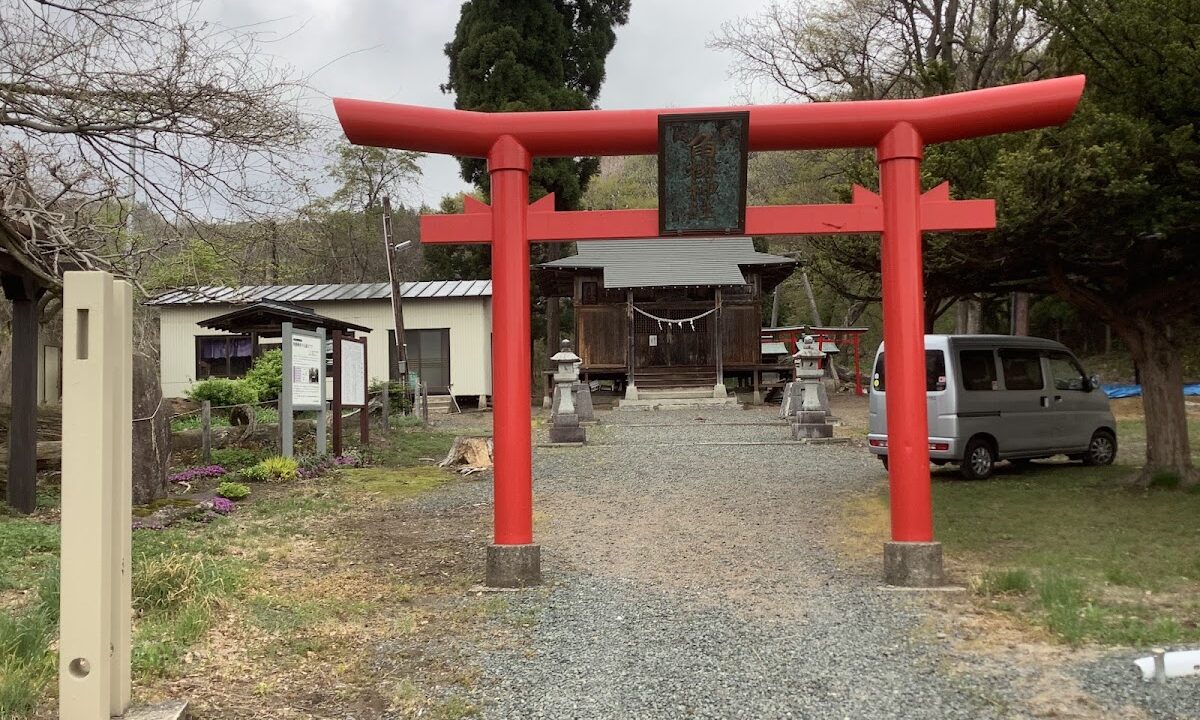
Complete Guide to Tsunokake Shrine (Takizawa City, Iwate Prefecture) | An Ancient Shrine Associated with Sakanoue no Tamuramaro and the Five Dragons Wisteria
Tsunokake Shrine, located in Takizawa City, Iwate Prefecture, is a historical shrine deeply connected to the legend of Sakanoue no Tamuramaro, the Shogun of the early Heian period, and his campaign against the eastern barbarians. Within the shrine grounds is the “Five Dragons Wisteria,” a Takizawa City-designated natural monument estimated to be 200-300 years old, and is beloved by the local community. This article comprehensively introduces information useful for visiting Tsunokake Shrine, including its detailed history, enshrined deities, points of interest within the grounds, and access methods.
Basic Information about Tsunokake Shrine
Shrine Name: Tsunokake Shrine
Location: 34 Yubunezawa, Takizawa City, Iwate Prefecture 020-0173
Former Shrine Rank: Village Shrine
Annual Festival Date: September 9th
Jurisdiction: Iwate Prefectural Shrine Association
Tsunokake Shrine is located in the Yubunezawa district of Takizawa City, at the foot of Mount Iwate, and is a shrine nestled in a quiet natural environment. It is affectionately known as “Tsunokake-sama” by local residents and has been a place of worship for centuries.
Deities Enshrined
Tsunokake Shrine enshrines two deities.
Oyamatsumi-no-Mikoto
Oyamatsumi-no-Mikoto, known as the god of mountains, is an important deity in Japanese mythology who presides over mountains. He has been revered as the guardian deity of industries related to the blessings of the mountains, such as agriculture, forestry, and mining, and as a god of national peace and security. At Kakugake Shrine, due to its location at the foot of Mount Iwate, Oyamatsumi-no-Mikoto is enshrined as the center of mountain worship in this area.
Sakanoue no Tamuramaro
Sakanoue no Tamuramaro, who served as the Seii Taishogun (Commander-in-Chief of the Expeditionary Force against the Barbarians) in the early Heian period and played a key role in pacifying the Tohoku region, is worshipped as a god of war and a pioneer in various parts of Tohoku. At Kakugake Shrine, he is also enshrined as a deity in recognition of his achievements in subduing the Emishi people in this region.
The History and Origins of Kakugake Shrine
Legend of its Founding
The founding of Kakugake Shrine dates back to the 20th year of the Enryaku era (801 AD) during the reign of Emperor Kanmu. According to historical records, when the Shogun Sakanoue no Tamuramaro received an imperial order to subdue the eastern barbarians, he first defeated the brothers Akuro-ō and Akagashira at Takkoku-no-Iwaya (present-day Hiraizumi, Iwate Prefecture).
Afterward, Tamuramaro advanced northward and is said to have slayed Ōtakemaru, an Emishi chieftain who was hiding at the foot of Mount Iwate. It is believed that the Kakugake Shrine originated when Ōyamatsumi-no-Mikoto was enshrined in this location to commemorate this victory and to pray for the protection of the nation.
The Legend of Sakanoue no Tamuramaro and the Development of Tohoku
Sakanoue no Tamuramaro has left behind legends throughout the Tohoku region, and there are many shrines and temples associated with him in Iwate Prefecture. Kakugake Shrine is one such example, and it is believed that Tamuramaro’s eastern expedition was not merely a military action, but also involved the dissemination of agricultural technology and culture.
Later, Tamuramaro himself was enshrined as a god of war and came to be worshipped as a guardian deity of the region.
Origin of the Shrine’s Name
The unusual name “Kakugake” has an interesting origin. According to legend, when the Lord of Tsugaru was riding an ox past the shrine, the ox’s left horn suddenly broke off. It is said that he picked it up and hung it in the shrine, and thus the shrine came to be called “Kakugake Shrine” (Horn-Hanging Shrine).
This legend has been passed down in the region as an episode demonstrating the shrine’s miraculous powers.
Relocation during the Meiji Period
Kakugake Shrine was originally enshrined in a place called Ippongi along the Kazuno Highway. In 1870 (Meiji 3), it was relocated to its current location at 34 Yubunezawa, where it remains today. This relocation is thought to have been part of the shrine system reforms after the Meiji Restoration.
Highlights of the Shrine Grounds
Goryu Wisteria (Takizawa City Designated Natural Monument)
The greatest highlight of Kakugake Shrine is the “Goryu Wisteria” located within the shrine grounds. This wisteria is designated as a Takizawa City Designated Tangible Cultural Property (Natural Monument), and its age is estimated to be approximately 200 to 300 years.
Features:
- Named “Goryu” (Five Dragons) because its five thick trunks intertwine and grow like dragons.
- Despite being an ancient tree, it remains healthy and blooms beautifully every year.
- Blooming season is typically from mid- to late May.
- When in full bloom, the shrine grounds are covered in purple flower clusters, creating a magnificent landscape.
The Goryu Wisteria is carefully protected as a local treasure, and many worshippers and tourists visit during the blooming season. Visiting during the wisteria season is especially recommended.
Shrine Buildings and Grounds
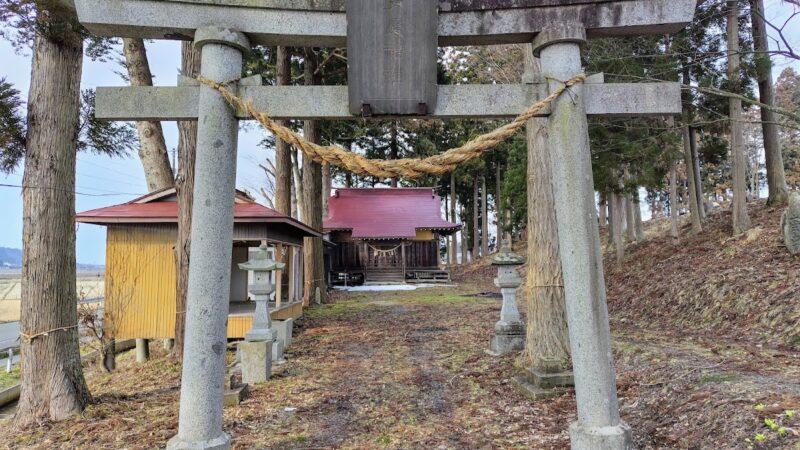
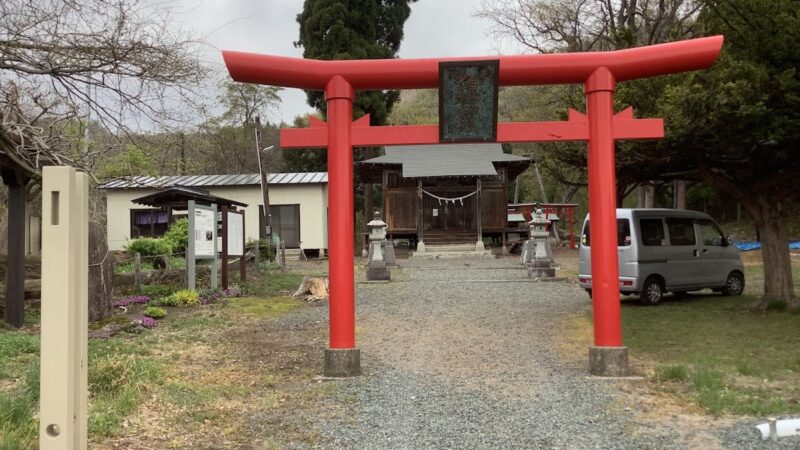
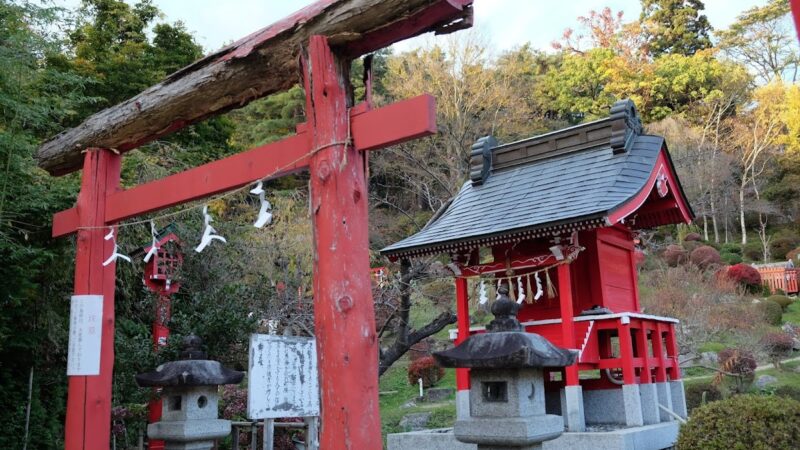
The shrine buildings of Kakugake Shrine harmonize beautifully with the natural environment at the foot of Mount Iwate. The grounds are enveloped in a tranquil atmosphere, conveying the solemnity of a place of ancient worship.
Both the worship hall and the main shrine preserve the traditional architectural style of the region, evoking a sense of historical weight.
Komainu (Guardian Lion-Dogs) and Stone Sculptures
The grounds are dotted with ancient stone sculptures, including guardian lion-dogs and stone monuments, which tell the story of the shrine’s history. These sculptures also reflect the deep faith of the local people.
Annual Events and Festival
Annual Festival (September 9th)
The annual festival of Kakugake Shrine is held every year on September 9th. On this day, local parishioners and devotees gather for a solemn Shinto ritual. It is an important event praying for a bountiful harvest, family safety, and peace in the community.
The annual festival includes Shinto rituals such as the recitation of prayers by Shinto priests and the offering of sacred branches, serving as a place to reaffirm the bonds of the local community.
Other Annual Events
In addition to the annual festival, Kakugake Shrine holds various Shinto rituals throughout the year, including the New Year’s Day Festival and the spring and autumn prayer festivals. For detailed schedules, please contact the Iwate Prefectural Shrine Association or your local parishioner’s representative.
Access Information
Location
Address: 34 Yubunezawa, Takizawa City, Iwate Prefecture 020-0173
Access by Public Transportation
Nearest Station: The nearest station is Takizawa Station on the JR Tohoku Main Line and IGR Iwate Galaxy Railway. However, it is a considerable distance from the station, so we recommend using a bus or taxi.
Nearest Bus Stops:
- Toyama Bus Stop (Iwate Kotsu): Approximately 3 minutes on foot
- Ippongi Bus Stop (Iwate Kenpoku Bus): Approximately 2 minutes on foot
Iwate Kotsu and Iwate Kenpoku Bus routes are available. If using the bus from Morioka Station, take a bus bound for Kazuno Kaido and get off at Toyama or Ippongi bus stop.
Bus Travel Time: Approximately 30-40 minutes from Morioka Station
Access by Car
From Morioka City Center: Approximately 20-30 minutes via National Route 4 and Prefectural Route 219 (Kazuno Kaido)
From Tohoku Expressway: Approximately 15 minutes from Takizawa IC
Parking: There is parking space for visitors on the temple grounds. However, it may be crowded during the wisteria blooming season at Goryu, so please allow ample time for your visit.
Map Information
The exact location of Kakugake Shrine can be confirmed by searching “Kakugake Shrine Takizawa City” on Google Maps or Yahoo! Maps. If using a car navigation system, please enter the address “34 Yubunezawa, Takizawa City, Iwate Prefecture”.
Etiquette and Manners for Visiting a Shrine
Basic Etiquette for Visiting a Shrine
When visiting Kakugake Shrine, please follow the basic etiquette for visiting a shrine.
- Bow before passing through the torii gate: Before entering the shrine grounds, bow before the torii gate.
- How to walk along the approach: The center of the approach is considered the path of the gods, so walk along the sides.
- Purify yourself at the water basin: If there is a water basin, purify your left hand, right hand, and mouth in that order.
- Worship at the main hall: The basic procedure is two bows, two claps, and one bow.
- Bow deeply twice.
- Clap your hands twice at chest height.
- Finally, bow deeply once.
Photography Manners
Photography of the shrine grounds, including the wisteria at Goryu, is generally permitted, but please be considerate of those performing Shinto rituals or other worshippers. Photography inside the shrine buildings may be prohibited, so please be careful.
Nearby Tourist Attractions
Mount Iwate
Mount Iwate, viewed from Kakugake Shrine, is a symbol of Iwate Prefecture, also known as “Southern Fuji.” It offers opportunities for climbing and hiking, and boasts beautiful scenery throughout the seasons. ### Koiwai Farm
Koiwai Farm, one of Japan’s largest private comprehensive farms, is located about 20 minutes by car from Kakugake Shrine. Visitors can enjoy interacting with animals, dining, and participating in various activities on its vast grounds.
Tourist Attractions in Morioka City
Morioka City boasts numerous tourist attractions, including Morioka Castle Ruins Park (Iwate Park), Morioka Hachimangu Shrine, and Ishiwari-zakura Cherry Tree. Visiting these in conjunction with a visit to Kakugake Shrine is highly recommended.
About Takizawa City
Takizawa City is a relatively new city in Iwate Prefecture, having been incorporated from Takizawa Village in 2014. With a population of approximately 55,000, it has developed as a commuter town for Morioka City. Located at the southern foot of Mount Iwate, it is a region where rich natural environments and residential areas harmoniously coexist.
In addition to Kakugake Shrine, the city is dotted with historical shrines and temples, including Onikoshi Sozen Shrine, known for the Chagu-Chagu Umako festival.
Kakugake Shrine and the Iwate Prefectural Association of Shinto Shrines
Kakugake Shrine belongs to the Iwate Prefectural Association of Shinto Shrines and is under the jurisdiction of the Association of Shinto Shrines. It is also featured on the Iwate Prefectural Shinto Youth Association website and is positioned as one of the important shrines in the prefecture.
For detailed information about the shrine and festival schedules, you can contact the Iwate Prefectural Association of Shinto Shrines (3-6-21 Honcho-dori, Morioka City, Iwate Prefecture 020-0015).
Best Season for Visiting
Kakugake Shrine is open for visits throughout the year, but here are some particularly recommended times:
Spring (Mid-to-Late May)
This is the time when the wisteria of Goryu is in full bloom, and the shrine grounds are adorned with purple blossoms. This is the season when the most visitors come. Visiting while enveloped in the sweet scent of wisteria is a special experience.
Autumn (September)
September, when the annual festival is held, is a valuable opportunity to experience local traditional events. Furthermore, visiting the shrine in the refreshing autumn weather is a pleasant experience.
First Shrine Visit of the New Year (January)
The shrine is bustling with local people during the first shrine visit of the new year. Worshippers come to pray for safety and prosperity in the new year.
About Goshuin (Shrine Seals)
Regarding the issuance of Goshuin at Kakugake Shrine, it is recommended to check in advance. As it is a small shrine, there may not be a resident priest. Those wishing to receive a Goshuin should inquire through the Iwate Prefectural Shrine Association or the local parishioners’ representative.
Summary
Kakugake Shrine is a valuable cultural asset in Takizawa City, Iwate Prefecture, deeply connected to the historical event of Sakanoue no Tamuramaro’s conquest of the eastern barbarians. Enshrining Oyamatsumi-no-Mikoto and Sakanoue no Tamuramaro as its deities, this shrine, with a history of over 1200 years, remains a center of local faith and is cherished by the people.
In particular, the Goryu wisteria within the shrine grounds is a magnificent ancient tree, 200 to 300 years old, designated as a natural monument of Takizawa City, and creates a spectacular sight when in bloom. Kakugake Shrine, nestled in a tranquil natural environment, is a place where you can feel the history and offer peaceful prayers.
Please do visit Kakugake Shrine, surrounded by the rich nature at the foot of Mount Iwate. By tracing the footsteps of ancient warriors and experiencing the history of faith rooted in the region, you are sure to make new discoveries. A visit in spring when the Goryu wisteria is in full bloom is especially recommended, but the shrine grounds, which show different expressions in each season, will warmly welcome visitors at any time of year.