Engaku-ji Temple (Kamigyo-ku, Kyoto Prefecture) Complete Guide | The Charm and Access Information of a Historic Shinshu Otani-ha Temple
Engaku-ji Temple, located in Kamigyo-ku, Kyoto City, is a historic temple belonging to the Shinshu Otani-ha sect. While close to famous tourist spots such as Kyoto Gyoen National Garden and Shokoku-ji Temple, this temple maintains a quiet and peaceful atmosphere, making it a beloved place for locals to experience Kyoto’s hidden charms.
This article comprehensively introduces information you should know before visiting Engaku-ji Temple, from its historical background and architectural highlights to access methods and surrounding tourist information.
Basic Information on Engaku-ji Temple
Location and Access
Location: 143 Nishiwakamiya Kitahan-cho, Omiya-dori Nishiura Imamiya Otabi-mae Nishi-iri Shimo, Kamigyo-ku, Kyoto City, Kyoto Prefecture
Engaku-ji Temple is located in a quiet residential area of Kamigyo-ku, Kyoto City, and is easily accessible from major tourist attractions in Kyoto City.
Access from the Nearest Station
From Eizan Electric Railway Demachiyanagi Station:
- Approximately 5 minutes on foot
- The most convenient route is to head northwest after exiting the station.
From Kyoto Municipal Subway Imadegawa Station:
- Approximately 15 minutes on foot
- Access is possible via a route that passes along the north side of Kyoto Gyoen National Garden, allowing for a pleasant stroll.
By Kyoto City Bus:
- Get off at the “Imadegawa Omiya” bus stop, approximately 5 minutes on foot
- From Kyoto Station, you can use city bus routes 9, 59, etc.
Sect and Temple Rank
Sect: Shinshu Otani-ha
The Shinshu Otani-ha is one of the sects of Jodo Shinshu Buddhism, a Buddhist sect founded by Shinran Shonin. Its head temple is Higashi Honganji (Shinshu Honbyo), located in Shimogyo-ku, Kyoto City. Engaku-ji Temple, belonging to this Shinshu Otani-ha, serves as a center of local faith.
History of Engaku-ji Temple
Background of its Founding
While there are various theories regarding the exact founding date of Engaku-ji Temple, it is known to have a long history as a temple of the Shinshu Otani sect. Kamigyo Ward in Kyoto City has long been an area lined with the residences of nobles and samurai, and many temples were built there.
Engaku-ji Temple also developed within this historical area, supporting the faith of the local residents. Based on the Shinshu Otani sect’s teaching of “reliance on the power of others,” it has a history of continuously preaching the compassion of Amida Buddha.
Connection with the Shinshu Otani Sect
The Shinshu Otani sect split into Higashi Hongan-ji and Nishi Hongan-ji in the early Edo period, and developed as a sect with Higashi Hongan-ji as its head temple. Engaku-ji Temple, as a branch temple of Higashi Hongan-ji, played a part in the missionary activities of Shinshu Buddhism within Kyoto City.
The teachings of Shinran Shonin, such as the doctrine of “salvation for the wicked” and “absolute reliance on external power,” were widely accepted as teachings easily understood by ordinary people, and Engaku-ji Temple played a role in spreading these teachings to the community.
Historical Background of Kamigyo Ward, Kyoto City
Kamigyo Ward in Kyoto City is located in the northern part of Heian-kyo (ancient Kyoto) and is the area centered around the Kyoto Imperial Palace. Historically, it was a culturally important area with many residences of court nobles and samurai.
The area around Omiya-dori, where Engaku-ji Temple is located, was once a religiously significant area with many temples and shrines. Even today, historical sites such as Shokoku-ji Temple and Kyoto Gyoen National Garden are nearby, preserving an environment where one can feel the history of Kyoto.
Architecture and Highlights of Engaku-ji Temple
The Beauty of the Temple Gate
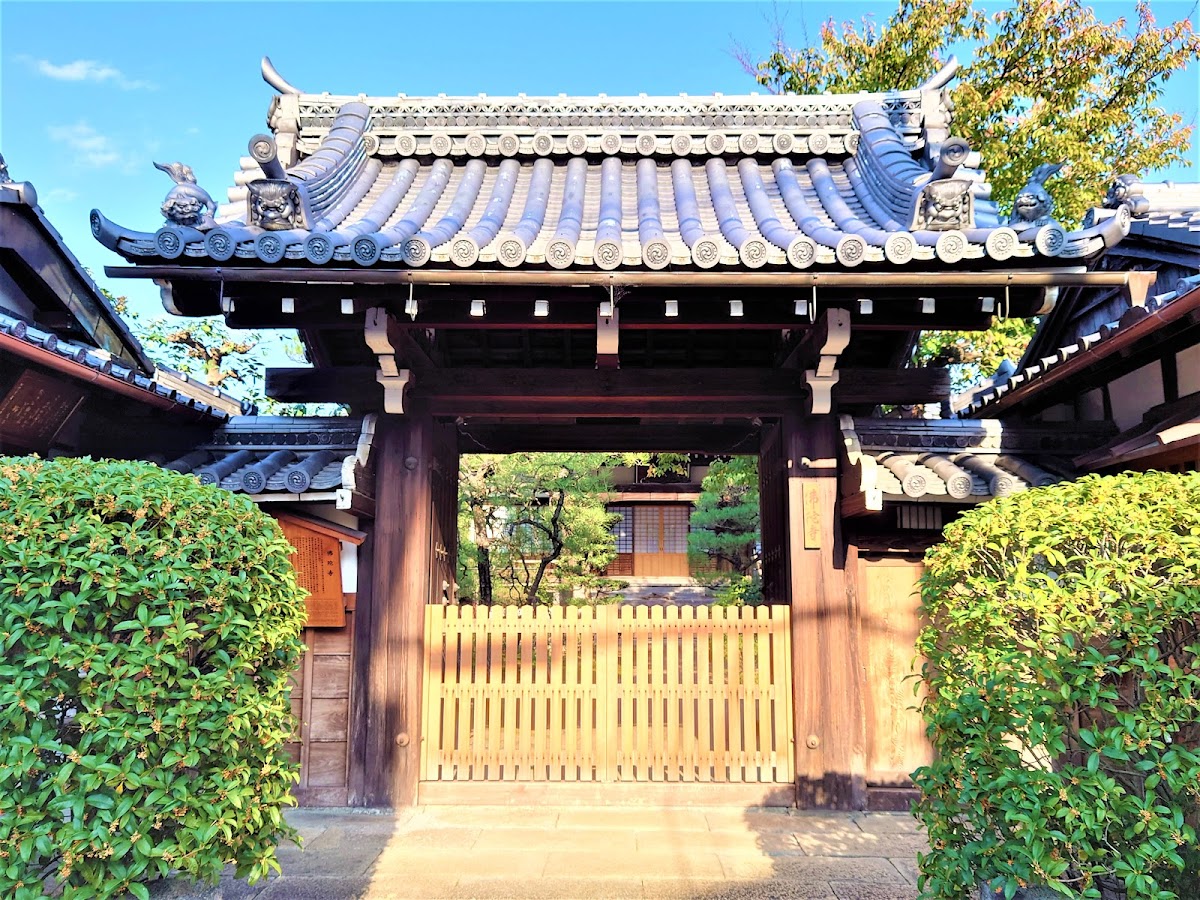
The first thing that catches the eye when visiting Engaku-ji Temple is its beautiful temple gate. The contrast between the wooden framework and the white earthen wall is impressive, presenting a simple yet dignified appearance.
This temple gate reflects the simple and serene style characteristic of Shinshu Buddhist temples, exuding a Zen-like beauty that avoids ostentatious ornamentation. The harmony of white walls and wood embodies the traditional architectural beauty of Kyoto.
Structure of the Main Hall
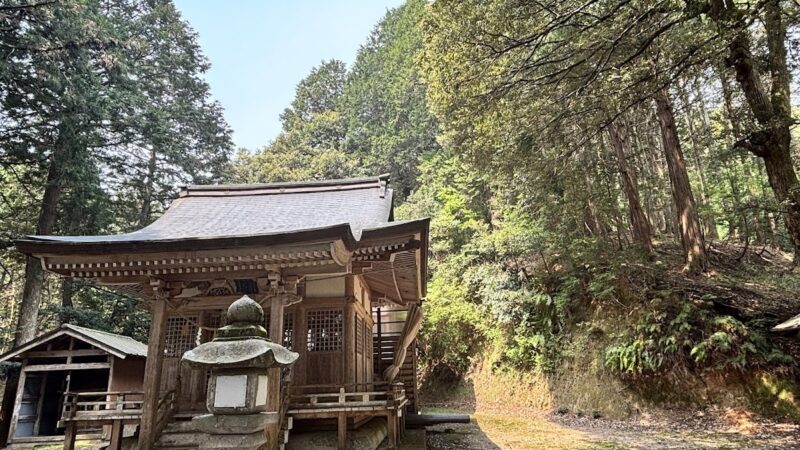
Engaku-ji Temple, a temple of the Shinshu Otani sect, enshrines Amida Buddha as its principal image in its main hall. The interior of the main hall functions as a place where believers gather to listen to sermons and chant the Nembutsu.
A characteristic of Shinshu temples is that, compared to other sects, the distinction between the inner and outer sanctuaries is relatively loose, creating a space that is more welcoming to believers. This can be said to reflect the philosophy of Shinran Shonin’s “equality for all.”
Atmosphere of the Temple Grounds
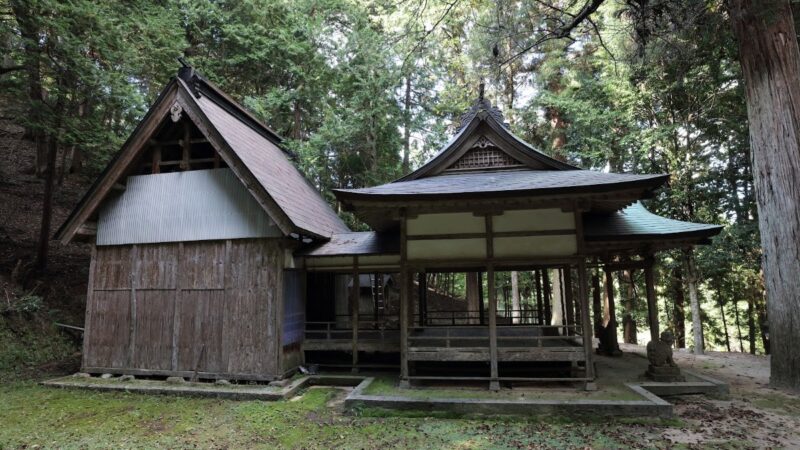
The grounds of Engaku-ji Temple are a quiet space away from the hustle and bustle of Kyoto city. The well-maintained gardens and grounds provide peace of mind to visitors.
The plantings, in particular, allow you to feel the changing seasons, showcasing the beauty of each season: cherry blossoms in spring, lush greenery in summer, vibrant autumn leaves, and snowy winter landscapes.
The Teachings and Practices of the Shinshu Otani School
The Teachings of Shinran Shonin
The foundation of the Shinshu Otani School’s teachings lies in the philosophy of Shinran Shonin (1173-1263). Shinran Shonin preached the doctrine of “absolute salvation through the power of others,” stating that everyone can be saved equally by believing in the original vow of Amida Buddha and chanting the Nembutsu.
This teaching is also cherished at Engaku-ji Temple, and the compassion of Amida Buddha is conveyed to believers through daily services and ceremonies.
Daily Religious Activities
Engaku-ji Temple conducts various religious activities for local parishioners:
- Regular Memorial Services: Monthly memorial services and annual events are held.
- Dharma Talks: Lectures on Buddhist teachings by monks.
- Nembutsu Gatherings: Gatherings where parishioners chant the Nembutsu (Buddhist chant).
- Buddhist Consultation: Consultations regarding funerals and memorial services are provided.
Through these activities, Engaku-ji Temple also plays a central role in the local community.
Tourist Attractions Around Engaku-ji Temple
When visiting Engaku-ji Temple, exploring the surrounding tourist attractions will allow you to gain a deeper understanding of Kyoto’s history and culture.
Kyoto Gyoen National Garden
Distance: Approximately 10 minutes on foot
Kyoto Gyoen National Garden is a vast area developed as a park on the former site of aristocratic residences. Centered around the Kyoto Imperial Palace, it is a place of relaxation for citizens where they can enjoy nature throughout the seasons.
The plum and cherry blossoms in spring and the autumn foliage are especially beautiful, making it perfect for a stroll. Historic buildings are scattered throughout the area, allowing you to experience Kyoto’s history firsthand.
Shokokuji Temple
Distance: Approximately 15 minutes on foot
Shokokuji Temple is the head temple of the Shokokuji branch of the Rinzai school of Zen Buddhism, a prestigious Zen temple founded by Ashikaga Yoshimitsu, the third shogun of the Muromachi shogunate. Kinkakuji (Golden Pavilion) and Ginkakuji (Silver Pavilion) are also sub-temples of Shokokuji, and it is counted as one of the Five Great Zen Temples of Kyoto.
The “Crying Dragon” painted on the ceiling of the main hall is a must-see; clapping your hands creates an acoustic effect that makes it sound like the dragon is roaring.
Doshisha University Imadegawa Campus
Distance: Approximately 12 minutes on foot
Doshisha University’s Imadegawa Campus features a group of beautiful brick buildings constructed during the Meiji period, designated as Important Cultural Properties. The campus is open to the public, allowing visitors to appreciate the beauty of modern architecture.
Kamigoryo Shrine
Distance: Approximately 10 minutes on foot
Kamigoryo Shrine, known as the starting point of the Ōnin War, is an indispensable shrine when discussing the history of Kyoto. The grounds are quiet, and it is cherished as the guardian deity of the region.
Points to Note When Visiting Engaku-ji Temple
Visiting Hours and Admission Fee
Engaku-ji Temple is primarily a temple for believers and differs from typical tourist temples. Therefore, please note the following:
- Visiting Hours: There are no specific visiting hours, but it is advisable to visit during reasonable hours (daytime).
- Admission Fee: Generally, admission is free, but please be quiet and respectful when entering the temple grounds.
- Photography: Photography is permitted, but please refrain from taking pictures inside the main hall or during religious ceremonies.
Manners and Precautions
When visiting a temple, please observe the following manners:
- Be Quiet: Avoid loud conversations and noise.
- Dress Code: Avoid overly revealing clothing and dress appropriately.
- Smoking and Eating: Refrain from smoking and eating on the temple grounds.
- Permission: If you plan to conduct special photography or interviews, please contact the temple in advance and obtain permission.
- During Services: If a service or ceremony is taking place, please be considerate and avoid disturbing it.
Best Time to Visit
Engaku-ji Temple is open year-round, but the best times to visit are:
- Spring (March-May): The cherry blossoms and fresh greenery are beautiful, and the weather is mild.
- Autumn (October-November): The autumn leaves are at their peak, making it the best season for sightseeing in Kyoto.
- Weekdays: Fewer tourists, allowing for a peaceful visit.
Temple Culture in Kamigyo Ward, Kyoto City
Characteristics of Temples in Kamigyo Ward
Kamigyo Ward in Kyoto City is home to many temples, including Engaku-ji Temple. The temples in this area have the following characteristics:
- Historical Significance: Many temples have a long history dating back to Heian-kyo (Kyoto).
- Diverse Sects: Temples of various sects, such as Shinshu, Rinzai, and Soto, coexist.
- Community-Oriented: Rather than being tourist temples, they play a strong role as places of worship for local residents.
- Cultural Value: Many temples possess cultural assets such as architecture, gardens, and works of art.
Role of Shinshu Temples
Temples like Engaku-ji Temple, a Shinshu Otani sect temple, play an important role in Kyoto’s religious culture:
- Center of Faith: A place of spiritual support for local believers.
- Community Center: A place for community interaction through memorial services and events.
- Place of Education: A place to learn Buddhist teachings.
- Cultural Inheritance: The inheritance of traditional Buddhist culture and rituals.
Detailed Access to Engaku-ji Temple
Access by Public Transportation
From Kyoto Station:
- By Subway: From Kyoto Station, take the Karasuma Subway Line to Imadegawa Station (approximately 9 minutes), then walk for approximately 15 minutes.
- By Bus: From Kyoto Station Bus Terminal, take City Bus Route 9 or 59 and get off at “Imadegawa Omiya,” then walk for approximately 5 minutes (total travel time approximately 30 minutes).
From Shijo Kawaramachi:
- Take City Bus Route 59 and get off at “Imadegawa Omiya,” then walk for approximately 5 minutes (total travel time approximately 20 minutes).
From Eizan Electric Railway Demachiyanagi Station:
- A 5-minute walk is the most convenient route.
Access by Car
Engaku-ji Temple likely does not have its own parking lot, so please note the following if you are visiting by car:
- Nearby Coin Parking: There are several coin parking lots in the surrounding area.
- Parking around Kyoto Gyoen: There are also parking lots around Kyoto Gyoen, but they are crowded during tourist season.
- Public Transportation Recommended: Due to congested roads and limited parking in Kyoto City, the use of public transportation is recommended.
Map and Location Information
Engaku-ji Temple is located along Omiya-dori Street in Kamigyo-ku, Kyoto City. The following landmarks may be helpful:
- North: Towards Imamiya Shrine
- South: Towards Kyoto Gyoen National Garden
- East: Towards Kamo River and Demachiyanagi
- West: Towards Kitano Tenmangu Shrine
Searching for “Engaku-ji Temple, Kamigyo-ku, Kyoto City” in your smartphone’s map app will provide accurate location information and navigation.
Experiences and Learning at Engaku-ji Temple
Experiencing the Teachings of Shin Buddhism
Visiting Engaku-ji Temple offers an opportunity to experience the teachings of the Shinshu Otani sect. Shinran Shonin’s “Theory of Salvation for the Evil” is a groundbreaking idea in Buddhist history, stating that “evil people,” who cannot attain enlightenment through their own efforts, are the very objects of Amida Buddha’s original vow.
This teaching acknowledges human weakness and limitations, yet demonstrates that there is still a path to salvation, making it a message of profound meaning even for modern people.
Understanding Kyoto’s Temple Culture
Visiting community-oriented temples like Engaku-ji Temple allows you to understand a different aspect of Kyoto’s temple culture compared to famous tourist temples.
While tourist temples are places to “see,” these temples are places to “believe” and “pray,” supporting the daily religious lives of the people of Kyoto. Understanding this difference deepens your understanding of Kyoto’s religious culture.
Self-Reflection in Silence
Engaku-ji Temple’s tranquil grounds are an excellent place to step away from the hustle and bustle of everyday life and reflect on oneself. Following the spirit of “listening to the Dharma” (listening to the Buddha’s teachings), a Shinshu Buddhist principle, you can sit quietly and have time to confront yourself.
Historical Connections of Engaku-ji Temple and Kyoto
Relationship with the Kyoto Imperial Palace
Kamigyo Ward, where Engaku-ji Temple is located, is close to the Kyoto Imperial Palace and has historically had deep ties with the imperial court and nobility. Shinshu Buddhism was a sect widely accepted by samurai and commoners alike, but in Kyoto, it also had followers among the court nobility and aristocracy, and Engaku-ji Temple developed within this historical context.
The Ōnin War and Kamigyo Ward
Kamigyo Ward in Kyoto City was a major battlefield during the Ōnin War (1467-1477). Many temples and buildings were destroyed in this conflict, but many were rebuilt during the subsequent reconstruction.
The exact date of construction of Engaku-ji Temple’s current building is unknown, but it is one of the temples that has continuously supported local faith amidst these historical changes in Kyoto.
Modern Kyoto and Shinshu Temples
After the Meiji Restoration, Kyoto temporarily declined due to the relocation of the capital to Tokyo, but later regained its vitality through the development of traditional industries and educational institutions. Higashi Hongan-ji Temple, the head temple of the Shinshu Ōtani sect, also played an important role during this period.
Branch temples like Engaku-ji Temple have served as spiritual pillars for local residents, supporting people as they navigated the turbulent modern era. ## Visitor Feedback and Reviews
The following are some comments from people who have actually visited Engaku-ji Temple:
- Quiet and Peaceful Atmosphere: “I visited it along with Kyoto Gyoen National Garden and Shokoku-ji Temple, but there were few tourists and it was quiet, allowing me to worship at my own pace.”
- Beautiful Architecture: “The contrast between the wooden frame of the main gate and the white walls was beautiful, and it was perfect for taking pictures.”
- Easy Access: “Its location, just a 5-minute walk from Demachiyanagi Station, made it easy to visit.”
- A Temple Rooted in the Community: “Unlike tourist temples, I felt it had the atmosphere of a place of worship for the local people.”
These reviews convey the unique charm of Engaku-ji Temple.
Model Itinerary for Visiting Engaku-ji Temple
Here is a model half-day sightseeing course in Kamigyo Ward, Kyoto City, centered around Engaku-ji Temple:
Morning Course (Duration: Approx. 3 hours)
- Arrive at Demachiyanagi Station (9:00)
- Visit Engaku-ji Temple (9:10-9:40)
- Admiration of the main gate
- Quiet time in the main hall
- Walk (9:40-9:50)
- Stroll through Kyoto Gyoen National Garden (9:50-11:00)
- View the exterior of the Imperial Palace
- Admiration of plum and cherry blossoms (depending on the season)
- Walk (11:00-11:15)
- Visit Shokoku-ji Temple (11:15-12:00)
- Experience the “Singing Dragon” in the main hall
- Garden appreciation
Afternoon Course (Duration: Approx. 2 hours)
- Doshisha University Imadegawa Campus (13:00-13:40)
- Visit the Important Cultural Property buildings
- Walking (13:40-13:50)
- Visit Kamigoryo Shrine (13:50-14:30)
- Visit sites related to the Ōnin War
- Break at a nearby cafe (14:30-15:00)
This course allows you to efficiently visit major historical spots in Kamigyo Ward, Kyoto City, starting from Engaku-ji Temple.
Summary
Engaku-ji Temple (Kamigyo Ward, Kyoto City, Kyoto Prefecture) is a historic temple belonging to the Shinshu Ōtani sect. Despite its convenient location near Kyoto Gyoen National Garden and Shōkoku-ji Temple, it maintains a quiet and peaceful atmosphere, making it a valuable place to visit.
While it lacks the glamour of a tourist temple, it is a place of deep-rooted faith and an important site for understanding Kyoto’s temple culture, making it well worth a visit.
Engaku-ji Temple (Kamigyo Ward, Kyoto City, Kyoto Prefecture) is a historic temple belonging to the Shinshu Ōtani sect. It is conveniently located near Kyoto Gyoen National Garden and Shōkoku-ji Temple, yet maintains a quiet and tranquil atmosphere.
While it lacks the glamour of a tourist temple, it is a place of deep-rooted faith and an important site for understanding Kyoto’s temple culture, making it a worthwhile place to visit. With its convenient location just a 5-minute walk from Demachiyanagi Station on the Eizan Electric Railway, the beautiful architecture of its main gate, and the immersive environment for experiencing the teachings of Shin Buddhism, Engaku-ji Temple is perfect for those seeking to discover a new side of Kyoto.
When visiting Kyoto, why not explore not only famous tourist spots but also community-oriented temples like Engaku-ji? There, you’ll find a true side of Kyoto that you won’t find in guidebooks.
We hope your visit to Engaku-ji will be a memorable experience.