Jigenji Temple (Kamigyo Ward, Kyoto Prefecture) Complete Guide | History, Highlights, and Access Information
Jigenji Temple, located along Izumi-dori Street in the Nishijin district of Kamigyo Ward, Kyoto City, is a Soto Zen Buddhist temple associated with the Sengoku period warlord, Sasa Narimasa. Founded in 1588, this temple boasts a history of over 400 years and is also known as the burial place of many literary figures and artists, quietly watching over Kyoto’s history.
Basic Information about Jigenji Temple
Mountain Name: Fukujusan
Sect: Soto Zen
Principal Image: Seated statue of Sho Kannon Bodhisattva
Founded: Tensho 16 (1588)
Founder: Daiun Eizui
Founder: Gakuseiin (daughter of Sasa Narimasa)
Location: 358 Nanabancho, Higashi-iri, Shichihonmatsu, Izumidori, Kamigyo-ku, Kyoto City, Kyoto Prefecture
Telephone: 075-841-1658
Visiting Hours: Normally closed to the public (exterior viewing only)
Parking: None
History of Jigenji Temple
The Founding of Jigenji Temple and its Connection to Sassa Narimasa
The founding of Jigenji Temple is deeply intertwined with the tragic end of Sassa Narimasa, a samurai who was active from the Sengoku period to the Azuchi-Momoyama period.
Sassa Narimasa was a samurai who served Oda Nobunaga and Toyotomi Hideyoshi, and was active as a retainer of Shibata Katsuie. He became the lord of Higo Province (present-day Kumamoto Prefecture), but was held responsible for the Higo provincial uprising and, on May 14, 1588 (Tensho 16), was ordered by Toyotomi Hideyoshi to commit seppuku in Osaka.
Narimasa’s daughter became the wife of Takatsukasa Nobufusa and took the name Gakushōin. Mourning her father’s untimely death, Gakushōin founded Jigenji Temple to pray for his soul, with the high-ranking Sōtō Zen priest Daiun Eizui as its founding abbot. Initially called “Jigen-an,” it was built south of Ishiya-no-zushi in Nishijin, at the location now known as “Jigen-an Tsuji.”
The Mystery of Daiun Eizui and the Founder
Historical evidence suggests that Daiun Eizui, considered the founder, was actually deceased at the time of Jigen-ji Temple’s founding. Therefore, it is believed that his spirit was used to symbolically represent the founder. The actual founder was Honshuku Sogen, a younger brother of Narimasa, who played a central role in the temple’s management.
This practice of “designating a deceased person as the founder” was not uncommon in temple founding at the time, and was a method used to enhance the temple’s status by leveraging the prestige of a high-ranking priest. Daiun Eizui was known as a renowned priest of the Soto Zen sect, and it is presumed that the intention was to establish the religious authority of Jigen-ji Temple by naming it after him.
Changes in Temple Location
Jigen-ji Temple has been relocated several times since its founding.
- Tensho 16 (1588): Founded south of Nishijin Ishiya-zushi (Jigen-an Tsuji)
- Subsequently: Moved several times
- Kanbun 3 (1663): Moved to the current location (Izumi-dori Shichihonmatsu Higashi-iri)
The place name “Jigen-an-cho” remains in present-day Kamigyo Ward, a valuable historical trace indicating the former site of Jigen-ji Temple. Since its relocation in Kanbun 3, the temple has continued to uphold its traditions at its current location for approximately 360 years.
The place name Nanaban-cho originates from the site of the samurai district of Jurakudai, built by Toyotomi Hideyoshi during the Momoyama period. The surrounding area is home to temples of various sects and is also known as “Teramachi” (temple town).
Highlights of Jigenji Temple
Features of the Main Hall Architecture
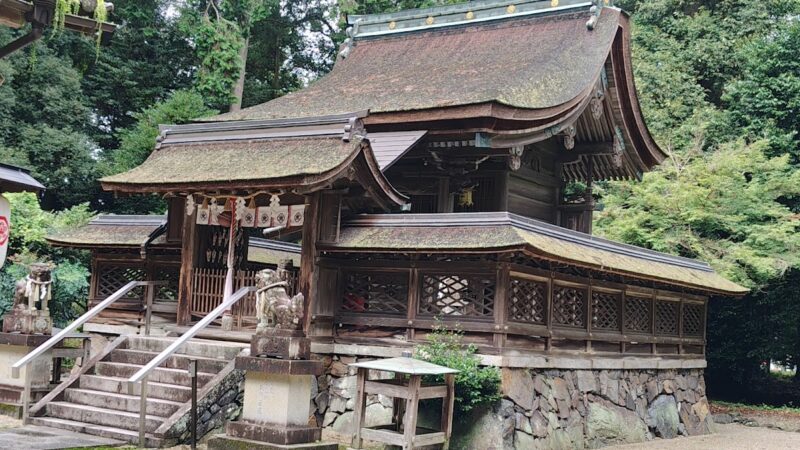
The main hall of Jigenji Temple, rebuilt in 1937 (Showa 12), is a magnificent building employing the representative architectural style of Soto Zen temples.
Its simple yet dignified appearance, characteristic of Zen temples, is visible from Izumi-dori Street. The main hall’s roof is a hip-and-gable roof, and its straight, powerful lines, characteristic of Zen architecture, are striking.
While the interior of the main hall is usually closed to the public, its high status can be felt even from its exterior. Despite being rebuilt in the early Showa period, it is a building of architectural historical value, faithfully adhering to the traditional style of Zen architecture.
Principal Image: Seated Statue of Kannon Bodhisattva
The principal image of Jigenji Temple is a seated statue of Kannon Bodhisattva. There is a legend that this statue was carved from the same wood as the principal image of Kiyomizu-dera Temple, and it has attracted worshippers as a highly revered Buddhist statue.
Kannon Bodhisattva is a symbol of compassion, and the temple’s name, “Jigen,” is thought to originate from the “compassionate gaze” of Kannon Bodhisattva. It is presumed that there was a profound meaning behind Gakuseiin’s decision to enshrine the compassionate Kannon Bodhisattva as the principal image in the temple she built to commemorate her father, Narimasa.
The Grave of Kanzawa Toko
Jigenji Temple houses the grave of Kanzawa Toko (1710-1795), a literary figure of the mid-Edo period.
Kanzawa Toko was a literary figure who served as a Yoriki (police officer) in the Kyoto Magistrate’s Office while devoting himself to writing. His representative work, “Okinagusa,” is known as a collection of essays recording the customs and anecdotes of Kyoto during the Edo period, and is a valuable historical document for understanding Kyoto at that time.
Toko was well-versed in Confucianism and Chinese poetry and prose, and was active in Kyoto’s cultural salons. The fact that this tomb is located at Jigenji Temple indicates that the temple had deep ties with literati and artists. The tombstone stands quietly in a corner of the temple grounds, conveying a glimpse of Kyoto’s culture during the Edo period to visitors.
The Tomb of Yamamoto Baiitsu
Another important burial site at Jigenji Temple is that of Yamamoto Baiitsu (1783-1856), a painter from the late Edo period.
Yamamoto Baiitsu was a Nanga painter born in Nagoya who worked in Kyoto. Known as a master of literati painting, he left behind outstanding works in landscape and flower-and-bird painting. Baiitsu’s style was elegant and dignified, and was highly regarded by the literati of his time.
The presence of the tombs of two cultural figures, Kanzawa Tokuchi and Yamamoto Baiitsu, at Jigenji Temple indicates that this temple functioned not only as a family temple but also as a cultural center of Kyoto.
Atmosphere of the Temple Grounds
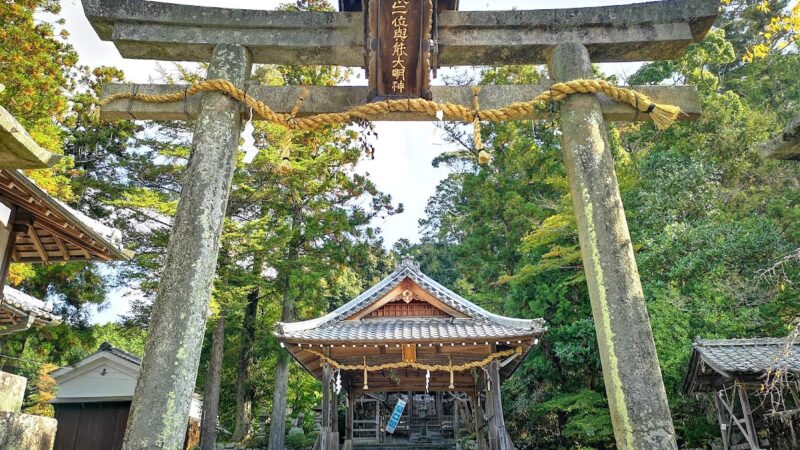
Despite being located in the residential area of Nishijin, Jigenji Temple is enveloped in a tranquil atmosphere. While not large in scale, the well-maintained grounds possess a simple yet refined beauty characteristic of a Zen temple.
Upon passing through the main gate, the main hall comes into view, with the priests’ quarters and cemetery positioned to the left and right. Seasonal flowers and plants are planted throughout the grounds, displaying different expressions throughout the seasons. The quiet beauty is particularly striking during the fresh greenery of spring and the vibrant autumn foliage.
Jigenji Temple as one of Kamigyo Ward’s 100 Historic Sites
Jigenji Temple has been selected as one of “Kamigyo Ward’s 100 Historic Sites.” This selection was made by Kamigyo Ward, Kyoto City, to commemorate important historical heritage sites within the ward, recognizing them as important historical sites that convey the history and culture of the region.
Kamigyo Ward, centered around the Kyoto Imperial Palace, is an area where numerous temples, shrines, and historical buildings are concentrated. The reasons why Jigenji Temple was selected as one of Japan’s 100 Historic Sites are its historical connection to the Sengoku period warlord Sasa Narimasa, its cultural value as the burial place of literary figures and artists, and its religious significance as a center of local faith for over 400 years.
Nishijin District and Jigenji Temple
The Nishijin district, where Jigenji Temple is located, is world-renowned as the production center of Nishijin-ori, a traditional Kyoto textile.
History of Nishijin
The name Nishijin originates from the fact that Yamana Sozen, the commander-in-chief of the Western Army during the Onin War (1467-1477), established his headquarters here. After the Onin War, during the reconstruction of Kyoto, which had been devastated by war, textile artisans gathered in this area, and it developed into a production center for high-quality silk textiles.
Jigenji Temple was founded in 1588 (Tensho 16), a time when Toyotomi Hideyoshi was promoting urban redevelopment in Kyoto. Hideyoshi built Jurakudai Palace and arranged samurai residences and temples around it. The place name “Nanabancho” (Seventh Street) around Jigenji Temple also originates from this samurai district of Jurakudai Palace.
Character as a Temple Town
The area around Jigenji Temple is also known as “Teramachi” (Temple Town), and many temples are concentrated there. This is a result of the urban planning of Kyoto by Toyotomi Hideyoshi and Tokugawa Ieyasu. By concentrating temples in a specific area, the intention was to create a defensive base and to centralize religious authority.
Even today, temples of various sects are scattered around Izumidori and Kamitachiuridori, forming a unique landscape. Among them, Jigenji Temple, as a representative temple of the Soto Zen sect, plays a central role in the region’s faith.
Access Information
Access by Public Transportation
Using City Buses
- Nearest bus stop: “Senbon Izumi” (approx. 5-minute walk)
- From Kyoto Station: Approximately 30 minutes by City Bus routes 206 or 50
- From Shijo Kawaramachi: Approximately 25 minutes by City Bus route 10
- Nearest bus stop: “Nanahonmatsu Izumi” (approx. 3-minute walk)
- Use City Bus routes 201 or 202
Using Trains
- Get off at “Enmachi Station” on the JR Sagano Line, approximately 15-minute walk
- Get off at “Nijojo-mae Station” on the Kyoto Municipal Subway Tozai Line, approximately 20-minute walk or transfer to a city bus
Access by Car
Jigenji Temple does not have its own parking lot. If you are coming by car, please use the nearby coin parking lots.
Access from Major Roads
- Approximately 30 minutes from the Kyoto Minami Interchange on the Meishin Expressway
- Approximately 20 minutes by car from Kyoto Station
- Immediately after turning east from Shichihonmatsu Street onto Izumi Street
Nearby Parking
- Several coin-operated parking lots along Shichihonmatsu Street
- Coin-operated parking lots along Senbon Street
- *Please be careful when driving in the Nishijin area, as many roads are narrow.
Notes for Visitors
Jigenji Temple is usually closed to the public. If you wish to visit the interior of the main hall or the cemetery, we recommend contacting us by phone in advance. You are free to visit from the outside, but please be considerate of the neighbors as the temple is located in a residential area.
Nearby Attractions
Nijo Castle (Approximately 15 minutes on foot, approximately 5 minutes by car)
Nijo Castle, a World Heritage Site, is the base of Kyoto built by Tokugawa Ieyasu. It is also known as the stage for the Taisei Hokan (restoration of imperial rule), and its highlights include the National Treasure Ninomaru Palace and its beautiful gardens. The recommended route is to head southeast from Jigenji Temple.
Kitano Tenmangu Shrine (approx. 20-minute walk)
This is the head shrine of all Tenmangu shrines nationwide, dedicated to Sugawara no Michizane, the god of learning. It’s also famous for its plum blossoms, and is bustling with visitors on the 25th of each month.
Seimei Shrine (approx. 15-minute walk)
This shrine is dedicated to Abe no Seimei, an Onmyoji (diviner) from the Heian period. It has recently become popular as a power spot.
Nishijin Textile Center (approx. 10-minute walk)
This facility allows you to learn about the history and production process of Nishijin weaving. You can also enjoy demonstrations, kimono rentals, and shopping.
Points to consider when visiting Jigenji Temple
Best time to visit
Jigenji Temple is open year-round, but the following times are particularly recommended:
Spring (late March to May)
The fresh greenery is beautiful, and Kyoto as a whole enters its peak tourist season. While it gets crowded during cherry blossom season, the area around Jigenji Temple is relatively quiet.
Autumn (October-November)
This is the best season for sightseeing in Kyoto, with its vibrant autumn foliage. The grounds of Jigenji Temple are enveloped in the colors of autumn.
Winter (December-February)
With fewer tourists, you can visit the temple in peace. The temple grounds are especially beautiful on snowy days.
Estimated Time Required
If you only visit from the outside, it takes about 15-20 minutes. Combining this with a stroll around Nishijin in the surrounding area will make for a 1-2 hour course.
Photography
Photography is permitted within the temple grounds, but photography is prohibited inside the main hall. Also, it is considered good manners to refrain from photographing the cemetery. As the temple is located in a residential area, please be considerate of the privacy of the surrounding residents.
Clothing and Items to Bring
No special attire is required, but appropriate and modest clothing for visiting a temple is desirable. Don’t forget a parasol or hat in summer, and warm clothing in winter. We recommend wearing comfortable shoes when visiting.
Cultural Significance of Jigenji Temple
Jigenji Temple holds a significant position in Kyoto’s cultural history, not merely as a family temple.
A Temple that Conveys the Memory of a Sengoku Warlord
This is a valuable historical site that conveys the tragic end of the Sengoku warlord Sasa Narimasa and the filial piety of his daughter towards her father. As one of the many warlords who perished during Toyotomi Hideyoshi’s unification of Japan, Narimasa’s story symbolizes the light and shadow of history.
Center of Literary Culture
The presence of graves of Edo period cultural figures such as Kanzawa Tokuchi and Yamamoto Baiitsu suggests that Jigenji Temple was also a place of exchange for literary figures. Zen temples have historically functioned as cultural salons, and it is believed that Jigenji Temple inherited this tradition.
Center of Local Faith
For over 400 years, Jigenji Temple has supported the faith of the people of the Nishijin area, functioning as a spiritual pillar of the local community. Even today, the temple continues to preserve its traditions while cherishing its ties with the local community.
Summary
Jigenji Temple in Kamigyo Ward, Kyoto City, is a Soto Zen Buddhist temple founded by the daughter of Sasa Narimasa, a samurai warrior of the Sengoku period. Since its founding in 1588, it has moved several times before settling in its current location in 1663, and has continued to uphold its religious traditions for over 360 years.
It boasts numerous attractions, including the principal image, a seated statue of the Holy Kannon Bodhisattva, the main hall rebuilt in 1937, and the graves of Edo period literary figures such as Kanzawa Tokuchi and painter Yamamoto Baiitsu. It has also been selected as one of the “100 Historic Sites of Kamigyo Ward,” recognizing it as an important historical heritage site of the region.
Located in the Nishijin district, known as a production center for Nishijin textiles, it is surrounded by other representative Kyoto tourist spots such as Nijo Castle, Kitano Tenmangu Shrine, and Seimei Shrine. Although this temple is usually closed to the public, visitors are free to view its exterior, allowing them to experience Kyoto’s history and culture in its tranquil atmosphere.
When sightseeing in Kyoto, why not visit not only the major tourist spots but also smaller, historical temples like Jigenji Temple? There, you’ll find a deeper charm of Kyoto that you won’t find in guidebooks.