Suika Tenmangu Shrine (Kyoto Prefecture) Complete Guide | A Thorough Explanation of the History, Blessings, and Cherry Blossom Viewing Spots of Japan’s First Tenmangu Shrine
Located along Horikawa Street in Kamigyo Ward, Kyoto City, Suika Tenmangu Shrine is a beloved local shrine known as “Suika no Tenjin-san.” Founded in 923 AD, it boasts a history of over a thousand years as Japan’s first Tenmangu shrine and a guardian deity against floods and fires. Despite its small grounds, it is a hidden gem for cherry blossom viewing in Kyoto, attracting attention from those in the know.
This article provides detailed information you should know before visiting, from the historical background of Suika Tenmangu Shrine to its highlights, blessings, and access methods.
History and Origin of Suika Tenmangu Shrine
Founded in the First Year of the Enchō Era (923)
Suika Tenmangu Shrine was founded on June 25th, the first year of the Enchō Era (923), by imperial decree of Emperor Daigo. After the death of Sugawara no Michizane in Dazaifu, Kyoto experienced a series of thunderstorms and fires, leading to widespread belief that these were the curse of Michizane’s vengeful spirit. Therefore, Emperor Daigo issued an imperial command to Son’i, a high-ranking priest of Enryaku-ji Temple, to enshrine the spirit of Sugawara no Michizane as a guardian deity against floods and fires. This marked the beginning of the shrine.
Positioning as Japan’s First Tenmangu Shrine
Suika Tenmangu Shrine claims to be “Japan’s first Tenmangu Shrine.” It holds this title because it was founded approximately 24 years earlier than Kitano Tenmangu Shrine (founded in 947), making it the first Tenmangu shrine dedicated to Sugawara no Michizane. The enshrined deity is Sugawara no Michizane, who has been worshipped not only as the god of learning but also as a god who protects against floods and fires.
History of Relocation Due to Horikawa Street Expansion
Suika Tenmangu Shrine was originally located in Kamitenjin-cho, Kamigyo-ku, a short distance from its current location. However, in 1952, as part of the post-war Kyoto city development plan, it was relocated to its current location in Ogi-machi due to the expansion of Horikawa Street. The new site is said to be the former site of Hiden-in, established by Emperor Koko during the Heian period, and is a place with historical significance.
Even now, more than 70 years after the relocation, it remains affectionately known as “Suika no Tenjin-san” by the local people, and daily visits to the shrine continue unabated.
Benefits and Divine Virtues of Suika Tenmangu Shrine
Guardian Deity for Protection Against Floods and Fires
The most distinctive benefit of Suika Tenmangu Shrine, as its name suggests, is “protection against floods and fires.” According to the legend of the founding of the shrine, while on his way to pray at the Imperial Palace, he was unable to cross the flooded Kamo River. He offered a sacred sword and prayed, and the water split in two. Sugawara no Michizane then ascended to heaven from a rock, and the thunderstorm subsided.
Because of this legend, the shrine has long been revered by the people of Kyoto as a deity that protects against disasters such as floods and fires. It is particularly revered by restaurant owners, chefs, and firefighters, with many visiting to pray for business prosperity and safety.
Academic Achievement and Passing Exams
The enshrined deity, Sugawara no Michizane, is known nationwide as the “god of learning.” Many students and exam candidates visit Suika Tenmangu Shrine seeking blessings for academic success, passing exams, and passing qualification tests. Despite being a small shrine, it is a familiar and beloved deity of learning for local students.
Other Diverse Blessings
Within the grounds of Suika Tenmangu Shrine, there are various stones and subsidiary shrines offering different blessings.
- Success Stone (Ascension Stone): A stone believed to be effective for prayers for career advancement and job hunting.
- Golden Dragon Water: Sacred water said to be effective for eye diseases.
- Egg Stone: A stone believed to grant blessings for safe childbirth.
Due to these diverse blessings, Suika Tenmangu Shrine has become a place that receives the various wishes of the local people.
Highlights of the Shrine Grounds
Ascension Stone (Success Stone)
The most noteworthy feature within the shrine grounds is the “Ascension Stone” (Tōten-seki). This stone is also known as the “Success Stone” and derives its name from the legend that Sugawara no Michizane ascended to heaven from it.
In the aforementioned legend of the monk Son’i, it is said that when the surface of the swollen Kamo River parted, Sugawara no Michizane ascended to heaven from atop this stone. It is believed that stroking this stone while praying for career advancement or job success will grant wishes, making it a popular spot for businessmen and job-seeking students.
Kinryusui (Golden Dragon Water)
Within the temple grounds, sacred water called “Kinryusui” (Golden Dragon Water) springs forth. This water is believed to be effective for eye diseases and has been cherished by locals since ancient times. Even today, worshippers can be seen drawing this water to take home.
Kinryusui springs from the “Kinryusui-sha” (Golden Dragon Water Pavilion), which enshrines Kinryu Okami (Golden Dragon God), and is also revered as a water deity. It can be said to symbolize the “water” blessings of Suika Tenmangu Shrine.
Tamagoishi (Egg Stone – Stone for Safe Childbirth)
Within the temple grounds is a rounded stone called “Tamagoishi” (Egg Stone), which is believed to grant blessings for safe childbirth. Pregnant women have a custom of stroking this stone to pray for a safe delivery, and it is deeply revered by local women.
Subsidiary Shrines
Despite its small grounds, Suika Tenmangu Shrine houses several subsidiary shrines.
- Egg Shrine: A shrine with an unusual name, believed to grant blessings for conception and safe childbirth.
- Golden Dragon King: Dedicated to a dragon god believed to grant blessings for financial fortune and business prosperity.
These subsidiary shrines reflect the history of Suika Tenmangu Shrine’s acceptance of diverse beliefs from the local community.
Two Weeping Cherry Trees | A Hidden Gem for Cherry Blossoms in Kyoto
A Stunning Spring Scenery | Magnificent Weeping Cherry Blossoms
Suika Tenmangu Shrine has recently gained attention as a hidden gem for cherry blossoms in Kyoto. Two large weeping cherry trees are planted within the small grounds, creating a breathtaking spectacle when in full bloom, dyeing the entire grounds in a delicate pink hue.
Weeping cherry blossoms bloom slightly later than regular Somei Yoshino cherry blossoms, with the best viewing period typically being from late March to early April. Because it’s a small shrine, it’s not as crowded as famous cherry blossom viewing spots, making it a charming place to enjoy the blossoms at a leisurely pace.
Nighttime Cherry Blossom Illumination
During the cherry blossom season, Suika Tenmangu Shrine sometimes holds nighttime illuminations (the status varies from year to year). The weeping cherry blossoms illuminated by the lights create a magical atmosphere different from that of the daytime, making it a hidden gem for viewing cherry blossoms at night, beloved by locals.
Charm as a Photography Spot
The composition of a large weeping cherry tree within a small shrine grounds makes it a perfect location for photos. Taking pictures of the cherry blossoms with the shrine building in the background results in picturesque Kyoto-style images. Furthermore, because it’s not crowded, you can take your time to find the perfect photo spot.
Many beautiful photos are posted on social media such as Instagram with hashtags like “#SuikaTenmangu” and “#SuikaTenmanguCherryBlossoms,” and its recognition as a hidden cherry blossom spot is growing.
Goshuin (Shrine Seal) Information
Features of the Goshuin
Suika Tenmangu Shrine offers goshuin. The goshuin features the calligraphy and red seal of “Suika Tenmangu,” creating a simple yet powerful impression. As a valuable goshuin that reflects the history of Japan’s first Tenmangu shrine, it is popular among goshuin collectors.
About Obtaining Goshuin
Goshuin can be obtained at the shrine office. However, as it is a small shrine, the office is not always open. To ensure you receive a goshuin, it is recommended to call ahead or visit in the morning.
The offering fee is approximately 300 to 500 yen. You can bring your own goshuin book or receive a pre-printed goshuin.
Recommended Information for Visiting
Etiquette and Manners for Visiting
Although Suika Tenmangu Shrine is a small shrine, please observe the proper etiquette for visiting.
- Bow before passing through the torii gate.
- Cleanse your hands and mouth at the water basin.
- Bow twice, clap twice, and bow once in front of the main hall.
- Visit the stones and subsidiary shrines within the grounds.
- Bow again at the torii gate when leaving.
Located in a quiet residential area, please be mindful of loud conversations and noise.
Annual Events
At Suika Tenmangu Shrine, the annual festival is held on February 25th, the anniversary of the death of Sugawara no Michizane. A Shinto ritual is also held on June 25th, the anniversary of the shrine’s founding. On these days, more visitors come than usual, creating a special atmosphere.
Nearby Tourist Attractions
Several tourist attractions are within walking distance of Suika Tenmangu Shrine.
- Kamigoryo Shrine: Approximately 5 minutes on foot. A shrine known as the birthplace of the Onin War.
- Shokokuji Temple: Approximately 15 minutes on foot. Rinzai Zen Shokokuji School’s Head Temple
- Kyoto Gyoen: Approximately 20 minutes on foot. Enjoy the changing seasons in this vast park.
Starting from Suika Tenmangu Shrine, you can enjoy a historical stroll through Kyoto.
Suitable Time for Visiting
Suika Tenmangu Shrine is open to the public 24 hours a day. However, if you wish to receive a Goshuin (shrine stamp) or prayers at the shrine office, the best time is between 9:00 AM and 5:00 PM.
During cherry blossom season, the early morning hours are relatively less crowded, allowing for a leisurely viewing of the blossoms. From evening to night, you can enjoy the illuminated cherry blossoms (only in years when this is implemented).
Access Information
Basic Information
Address: 722-10 Ogimachi, Horikawa-dori, Kamigoryomae-agaru, Kamigyo-ku, Kyoto City, Kyoto Prefecture
Phone Number: 075-451-5057
Visiting Hours: Grounds are open 24 hours
Admission Fee: Free
Parking: None (Use nearby coin parking)
Access by Train
Using the Kyoto Municipal Subway Karasuma Line
- Get off at Kuramaguchi Station, approximately 10 minutes on foot from Exit 2
- Get off at Imadegawa Station, approximately 15 minutes on foot
From Kuramaguchi Station, head north on Karasuma-dori, then west on Kamigoryomae-dori. The shrine is located near the intersection with Horikawa-dori.
Access by Bus
Using Kyoto City Bus
- From Kyoto Station, take bus route 9 (bound for Nishigamo Bus Depot) for approximately 30 minutes and get off at “Tenjin Park-mae” bus stop.
- From Shijo Kawaramachi, take bus route 59 for approximately 25 minutes and get off at “Tenjin Park-mae” bus stop.
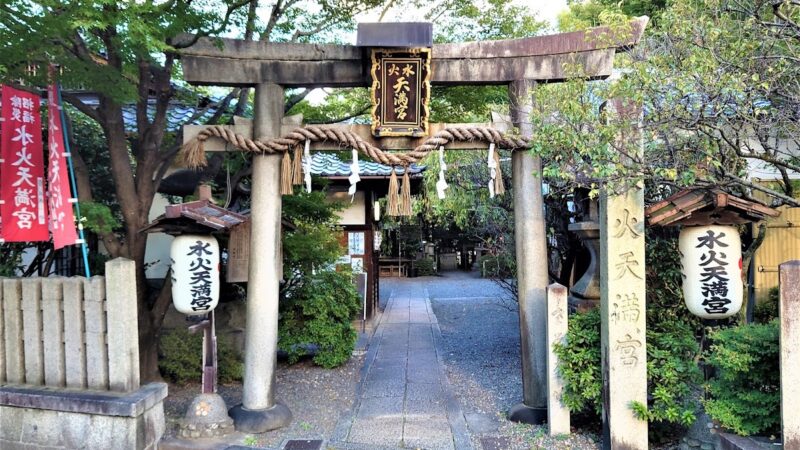
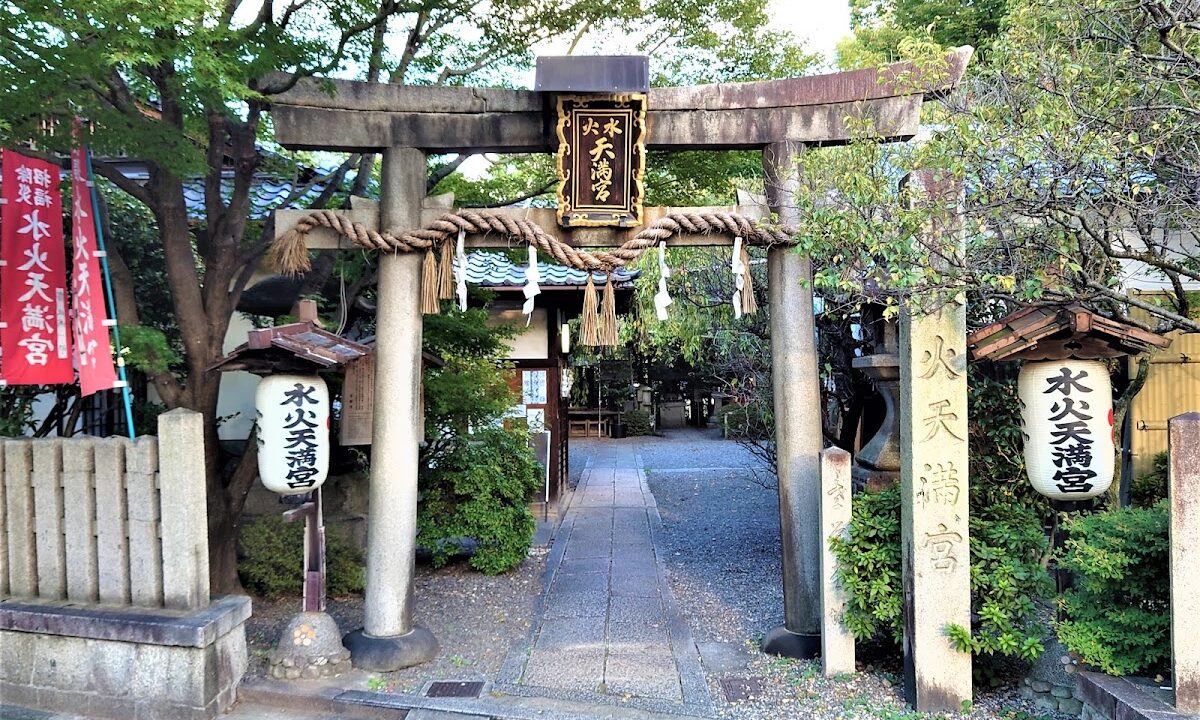
The “Tenjin Park-mae” bus stop is directly in front of Suika Tenmangu Shrine; you will see the torii gate immediately after getting off the bus.
Access by Car and Parking Information
Suika Tenmangu Shrine does not have its own parking lot. If you are visiting by car, you will need to use a nearby coin-operated parking lot. There are several coin-operated parking lots along Horikawa Street and in the surrounding residential area, but the number of spaces is limited, so we recommend using public transportation.
Especially during the cherry blossom season, the surrounding roads can be congested, so access by train or bus is more convenient.
Travel Time from Kyoto Station
- City Bus: Approximately 30 minutes (using Route 9)
- Subway + Walk: Approximately 25 minutes (approximately 15 minutes to Kuramaguchi Station on the Karasuma Line + 10 minutes on foot)
- Taxi: Approximately 15-20 minutes (may vary depending on traffic conditions)
Points to Note When Visiting Suika Tenmangu Shrine
Understand that it is a small shrine
Suika Tenmangu Shrine is a historical shrine, but its grounds are very compact. Those expecting a large shrine may be surprised by its size. However, despite its small size, it offers plenty to see, and its charm lies in the quiet and peaceful atmosphere in which visitors can pray.
Consideration for its location in a residential area
Suika Tenmangu Shrine is located in a quiet residential area. When visiting, please be considerate of the nearby residents and pray quietly. Especially when visiting early in the morning or late at night, please be mindful of the volume of your voice.
Seasonal Highlights
While Suika Tenmangu Shrine is most famous during cherry blossom season, it has its own unique charm in other seasons as well.
- Spring (late March to early April): Weeping cherry blossoms in full bloom
- Summer: Beautiful fresh greenery and a cool atmosphere
- Autumn: While there are fewer autumn leaves, it offers a peaceful place to visit
- Winter: The snow-covered grounds are beautiful (during snowfall)
This shrine is worth visiting throughout the year.
Summary | The Charms of Suika Tenmangu Shrine
Suika Tenmangu Shrine is Japan’s first Tenmangu shrine, boasting a long history dating back to its founding in 923 AD. Despite its small grounds, it offers diverse blessings, including protection from water and fire, academic success, and career advancement, and is affectionately known as “Suika no Tenjin-san” by locals.
In particular, the weeping cherry blossoms in spring have recently attracted attention as a hidden gem for cherry blossom viewing in Kyoto, making it a valuable place to enjoy the beautiful blossoms while avoiding crowds. The shrine grounds are dotted with interesting sights such as the Ascension Stone (Sacred Stone), the Golden Dragon Spring, and the Egg Stone, and the Goshuin (shrine stamp) is also popular.
Its excellent accessibility is also a major draw, being about a 10-minute walk from Kuramaguchi Station on the Kyoto Municipal Subway and right next to the “Tenjin Park” bus stop. When sightseeing in Kyoto, be sure to visit Suika Tenmangu Shrine and experience the tranquil atmosphere of Japan’s first Tenmangu shrine, which boasts a history of over a thousand years.
You’re sure to discover the charm of a shrine beloved by locals, a different kind of charm from the famous tourist spots.