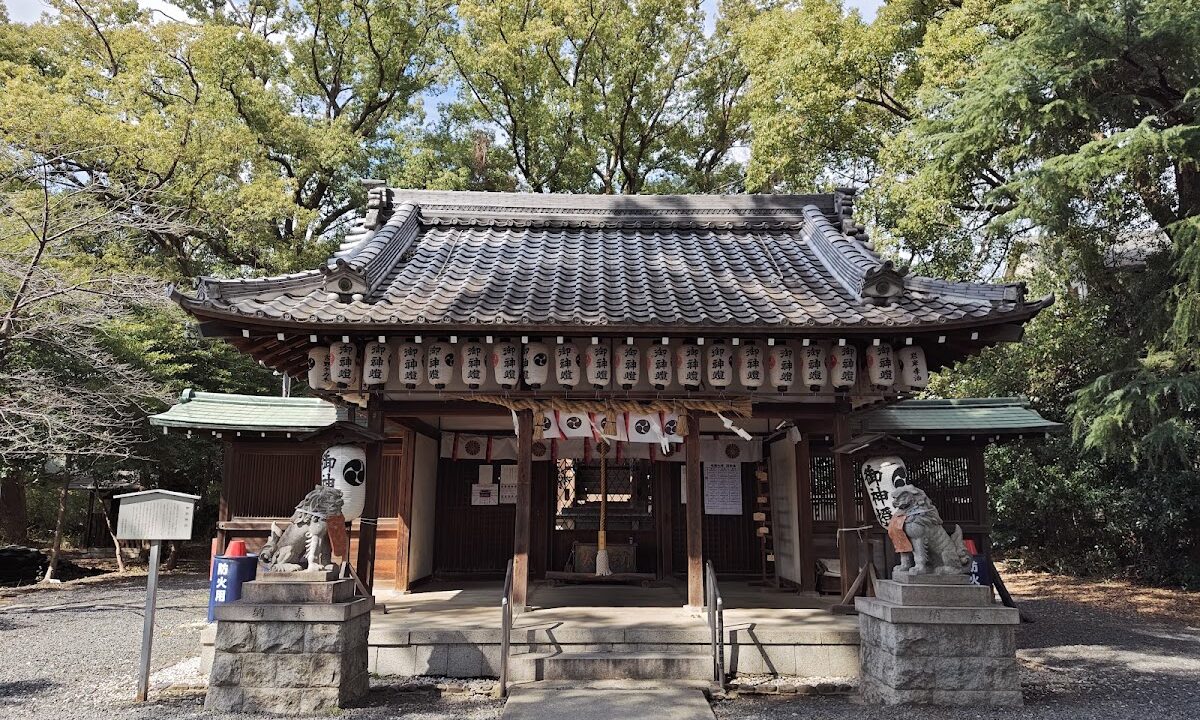
Complete Guide to Kōtari Shrine (Nagaokakyo City, Kyoto Prefecture) | From Goshuin (Shrine Seals) and Access to History and Worship as the God of Feet
Kōtari Shrine, located in Higashi-Kōtari, Nagaokakyo City, Kyoto Prefecture, is a shrine with a long history, listed in the “Engishiki Jinmyōchō” (a list of shrines compiled in the early Heian period). Its name, “Kōtari,” means “divine foot,” and in recent years it has gained reverence from soccer players and sports enthusiasts as the “god of feet.” This article provides a detailed introduction to Kōtari Shrine, including its history, enshrined deities, goshuin (shrine seals), access methods, and surrounding area information.
What is Kōtari Shrine? | A History Inherited as a Shikinaisha (Shrine Listed in the Engishiki)
Kōtari Shrine is located at 2-5 Higashi-Kōtari, Nagaokakyo City, Kyoto Prefecture, and is a Shikinaisha (minor shrine) listed in the “Engishiki Jinmyōchō” (a list of shrines compiled in the early Heian period). The shrine is listed as “Kōdani Shrine” (神足神社) as one of the nineteen shrines in the Engishiki (ancient Japanese legal code) located in Otokuni District, indicating its long and distinguished history recognized by the imperial court since ancient times.
Its former rank was a village shrine, and it was revered by the local people as the tutelary deity of the former Kōdani Village. Currently, it is a shrine under the jurisdiction of Nagaoka Tenmangu Shrine, and the chief priest of Nagaoka Tenmangu Shrine performs the rituals.
Origin of the Place Name Kōdani
The unusual place name “Kōdani” (神足) is deeply connected to the origin of the shrine’s name. This area was formerly called “Tamura,” but it is said that the name “Kōdani” originated from a legend that a god descended here during the reign of Emperor Kanmu. JR Nagaokakyo Station was also formerly called “Kōdani Station” (神足駅). Although it was renamed Nagaokakyo Station in 1997, the place name “Kōdani” remains.
Deity Enshrined | Amanokamitachi-no-Mikoto or Prince Toneri?
There are several theories regarding the deity enshrined at Kanzaki Shrine, and the truth is that it remains undetermined. The two main theories are as follows:
Amanokamitachi-no-Mikoto Theory
This theory identifies the enshrined deity as “Amanokamitachi-no-Mikoto,” as recorded in the *Sendai Kuji Hongi*. The *Sendai Kuji Hongi* mentions Amanokamitachi-no-Mikoto as the ancestor of the Kuga no Atae clan of Yamashiro Province, suggesting a connection to the ancient powerful clans of this region.
Prince Toneri Theory
Another strong theory identifies the enshrined deity as Prince Toneri, a son of Emperor Tenmu. Prince Toneri is known as a scholar and member of the imperial family who participated in the compilation of the *Nihon Shoki*, and he made significant contributions to the culture of the Nara period.
Neither theory is based on reliable historical sources, and the enshrined deity of Kanzaki Shrine remains shrouded in mystery. This ambiguity also contributes to the mystique unique to ancient shrines.
Founding and History | Emperor Kanmu’s Dream and the Legend of the Divine Descent
The exact founding date of Kanzaki Shrine is unclear, but since it was already designated a national shrine in the first year of the Saikō era (854 AD) during the reign of Emperor Montoku, its founding is certain to have predate that time. It is likely that it was founded sometime between the Nara period and the early Heian period.
Emperor Kanmu’s Dream Story
The most interesting legend concerning the history of Kanzaki Shrine involves Emperor Kanmu. In the third year of the Enryaku era (784 AD), Emperor Kanmu moved the capital from Heijō-kyō to Nagaoka-kyō. It is said that at that time, Emperor Kanmu had a dream in which a god descended from heaven into a pond in Tamura (present-day Kanzaki) and prevented evil spirits from attacking the palace from the south.
Emperor Kanmu’s Dream Story
It is said that, in gratitude for the divine protection, the Emperor founded or rebuilt a shrine in the land of Kanzaki, and since then, the area has been called “Kanzaki.” The deep connection between the Kanzaki Shrine and the historically significant project of relocating the capital to Nagaoka-kyo speaks to the shrine’s high status.
Relationship with the Kanzaki Clan
According to one theory, Kanzaki Mitsumaru, the ancestor of the Kanzaki family, moved to Nagaoka with Emperor Kanmu when the capital was relocated to Nagaoka-kyo and played a key role in the founding of the shrine. From the Kamakura period onward, the Kanzaki clan held power as local warriors, and the Kanzaki Shrine was also worshipped as the clan’s tutelary deity. As the guardian deity of Kanzaki Village, it has continued to watch over the lives of the local people.
Relocation during the Meiji Period
Originally, the Kanzaki Shrine was located west of its current location. However, during the Meiji era, with the construction of the Tokaido Main Line (the current JR Kyoto Line), it was relocated to its current location in Higashi-Kanzaki 2-chome. Amidst the wave of modernization brought about by the development of railways, the shrine was also forced to relocate.
Highlights of the Shrine Grounds | A Quiet and Intimate Space
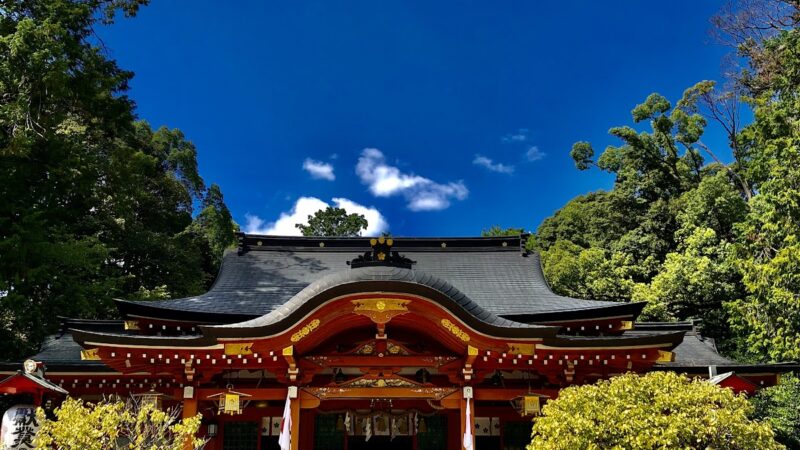
The grounds of Kanzaki Shrine are not vast, but they are a calm space enveloped in a serene atmosphere. The quiet shrine, nestled in a residential area, exudes the dignity characteristic of an ancient shrine.
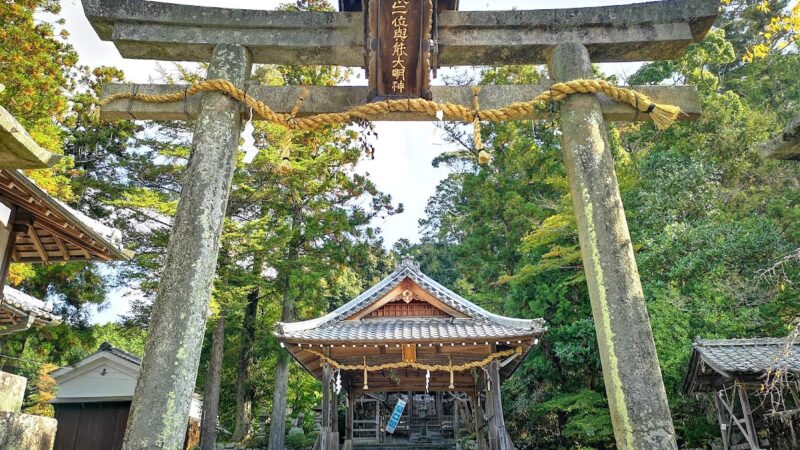
Torii Gate and Approach
A torii gate stands at the entrance to the shrine, and from there, a short approach leads to the main hall. Stepping away from the hustle and bustle of the city, you enter a different world. The quiet grounds, surrounded by trees, welcome visitors.
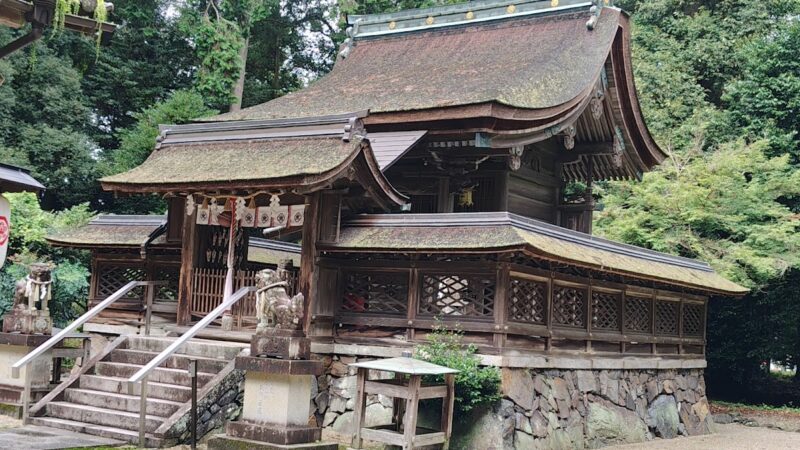
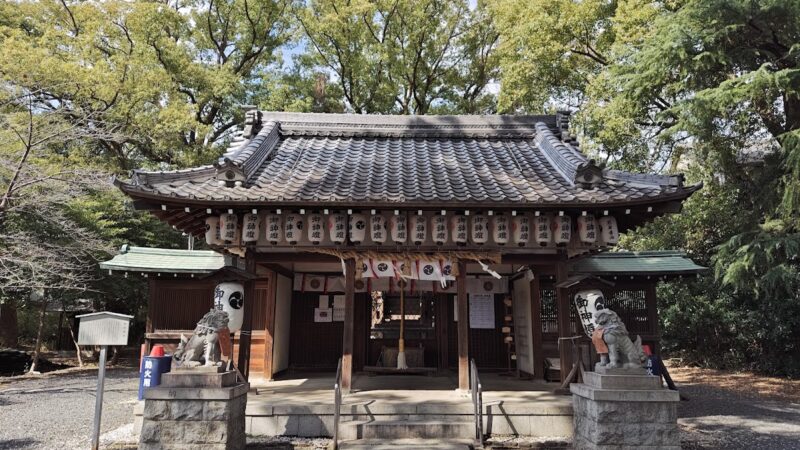
Worship Hall and Main Hall
The worship hall, though simple, is carefully maintained, and the main hall sits behind it. The main hall is in a style that appears to be Kasuga-zukuri, and its appearance evokes a sense of history. Once a year, on the first Sunday of October, during the Autumn Festival (Opening of the Doors), the doors, which are usually closed, are opened.
Sacred Lanterns and Subsidiary Shrines
Sacred lanterns stand within the shrine grounds, illuminating the area at night. Small subsidiary shrines are also enshrined, reflecting the deep faith of the local community.
Worship as the God of Feet | Visited by Soccer Players
Because the name of Kanzaki Shrine includes the characters for “God’s Feet,” it has recently gained attention as the “God of Feet.” Many people, including soccer players and other athletes, runners, and elderly people praying for healthy legs and feet, visit the shrine to pray for improved foot health and performance.
Benefits Related to Feet
- Healthy Feet and Lower Back: Healing and prevention of foot and lower back illnesses and injuries
- Improved Sports Performance: Improvement of skills in sports such as soccer and track and field
- Prayer for Strong Legs: Safety on long-distance walks, prayer for completing marathons
- Traffic Safety: Safety underfoot, accident prevention
Although this belief originated from the shrine’s name, the many prayers of worshippers have strengthened Kanzaki Shrine’s character as a “god of feet.”
Annual Events and Festivals
Kanzaki Shrine holds several festivals throughout the year.
Spring Grand Festival (May 3rd)
This festival celebrates the arrival of spring, and parishioners and local residents gather in the refreshing May weather.
Annual Festival (June 5th)
The most important festival of Kanzaki Shrine, the Annual Festival, is held on June 5th. Gratitude is offered to the enshrined deity, and prayers are offered for the prosperity and peace of the region.
Autumn Festival & Opening of the Shrine Doors (First Sunday of October)
The Autumn Festival, a celebration of gratitude for the autumn harvest, includes the annual “Opening of the Shrine Doors.” The doors of the main shrine, normally closed, are opened, offering a rare opportunity to directly pay respects to the deity.
Goshuin (Shrine Seal) Information
Goshuin (shrine seals) for Kanzaki Shrine can be obtained at the shrine office of Nagaoka Tenmangu Shrine, which is managed by the same shrine. Since there are no permanent priests stationed at Kanzaki Shrine, those wishing to obtain a goshuin must visit Nagaoka Tenmangu Shrine.
Where to Obtain Goshuin (Shrine Seals)
- Location: Nagaoka Tenmangu Shrine Office
- Address: 2-15-13 Tenjin, Nagaokakyo City, Kyoto Prefecture
- Hours: 9:00 AM – 5:00 PM (approx.)
- Donation: Approximately 300-500 yen (subject to change)
Nagaoka Tenmangu Shrine is about a 15-minute walk from Kanzaki Shrine, so we recommend visiting both shrines together.
About Goshuincho (Shrine Seal Books)
While we haven’t confirmed a unique goshuincho at Kanzaki Shrine, Nagaoka Tenmangu Shrine offers its own original goshuincho. Obtaining a Nagaoka Tenmangu goshuincho as a souvenir of your Kyoto shrine visit would be a good idea.
Access | Within Walking Distance of JR Nagaokakyo Station
Kanzaki Shrine is easily accessible from Kyoto city center, and is only about 15 minutes from Kyoto Station using the JR Kyoto Line.
Access by Train
Using the JR Kyoto Line
- Nearest Station: JR Kyoto Line “Nagaokakyo Station”
- From Kyoto Station: Approximately 12-15 minutes by JR Kyoto Line Special Rapid or Rapid train
- From Osaka Station: Approximately 30 minutes by JR Kyoto Line Special Rapid train
- From Station to Shrine: Approximately 8 minutes on foot southeast (approx. 600m)
Exit the east exit of Nagaokakyo Station and head southeast. Walking through the residential area, you will see the torii gate of Kanzaki Shrine.
Using the Hankyu Kyoto Line
- Nearest Station: Hankyu Kyoto Line “Nagaoka Tenjin Station”
- From Station to Shrine: Approximately 20 minutes on foot (approx. 1.5km)
If using the Hankyu Line, head east from Nagaoka Tenjin Station. It’s a bit of a distance, but you can visit Nagaoka Tenmangu Shrine along the way.
Access by Car
- Meishin Expressway: Approximately 15 minutes from Kyoto Minami IC
- Parking: There is no dedicated parking lot at Kanzaki Shrine. We recommend using nearby coin-operated parking lots or parking at Nagaoka Tenmangu Shrine’s parking lot (paid) and walking from there.
Address and Map
Address: 2-5 Higashi-Kanzaki, Nagaokakyo City, Kyoto Prefecture 617-0833
Nearby Attractions | Historical Walks in Nagaokakyo City
If you visit Kanzaki Shrine, be sure to also explore the surrounding historical spots. Nagaokakyo City is dotted with remnants of Nagaokakyo, the capital before Heian-kyo, and historical temples and shrines.
Nagaoka Tenmangu Shrine (Approximately 15 minutes on foot)
Nagaoka Tenmangu Shrine, which enshrines Sugawara no Michizane, the god of learning, is also a shrine managed by Kanzaki Shrine. The beautiful Hachijo Pond and vermilion bridge are impressive, and cherry blossoms bloom in spring, while Kirishima azaleas are in full bloom in early summer. You can also get a Goshuin (temple stamp) here, so be sure to visit.
Shoryuji Castle Park (approx. 10-minute walk)
Southwest of Kanzaki Shrine lies Shoryuji Castle Park, built on the site of the Sengoku period Shoryuji Castle. It is known as the castle where Hosokawa Fujitaka (Yusai) served as lord, and where Tama (Gracia), daughter of Akechi Mitsuhide, married Hosokawa Tadaoki. The main keep, earthworks, and moats have been restored, making it a must-see spot for history buffs.
Otokuni-ji Temple (approx. 10-minute drive)
This ancient temple of the Shingon-shu Buzan sect is famous for its peonies. It is also known as a temple where Kobo Daishi Kukai served as abbot, allowing visitors to experience the history of the Nagaoka-kyo period.
Komyoji Temple (approximately 15 minutes by car)
This is the head temple of the Seizan Jodo sect and one of Kyoto’s most popular spots for viewing autumn foliage. The approach to the temple, known as the “Maple Leaf Path,” becomes a tunnel of autumn leaves in the fall, attracting many tourists.
Manners and Precautions for Visiting the Temple
Basic Etiquette for Visiting the Temple
- Bow before passing through the torii gate: Bow before entering the sacred area.
- Walk along the edge of the path: The center of the path is considered the path of the gods, so walk along the edge.
- Purify yourself at the water basin: If there is a water basin, purify your left hand, then your right hand, then your mouth.
- Etiquette at the main hall: The basic ritual is two bows, two claps, and one bow.
Precautions
- Worship quietly: This shrine is located in a residential area, so please be considerate and avoid shouting or making noise. – Photography: Photography is generally permitted within the shrine grounds, but there are areas where photography is prohibited, such as inside the main hall.
- Goshuin (Shrine Seal): Goshuin are not issued at Kanzaki Shrine. Please obtain them at Nagaoka Tenmangu Shrine.
The Charm of Kanzaki Shrine | An Ancient Shrine in Silence
Unlike the flashy tourist temples and shrines, Kanzaki Shrine is a small, quietly situated shrine. However, it possesses a multifaceted charm, including its long history as a Shikinaisha (a shrine listed in the Engishiki, an ancient Japanese legal text), legends related to Emperor Kanmu, and the modern faith of it as the “god of feet.”
Taking time to quietly pray, away from the hustle and bustle of the city, allows you to forget the busyness of everyday life. When you visit Nagaokakyo City, be sure to visit Kanzaki Shrine and immerse yourself in this place of prayer that has continued since ancient times. It is a shrine open to everyone: those who pray for foot health, those interested in history, and those who appreciate quiet shrines.
Summary | Points to Note When Visiting Kanzaki Shrine
- Shikinaisha: An ancient shrine listed in the Engishiki Jinmyocho (a list of shrines compiled in the Heian period), and one of the nineteen shrines in Otokuni.
- Deity Enshrined: There are theories that it is either Tenjin Tachibana-no-Mikoto or Prince Toneri, but the deity remains unknown.
- History: Legends related to Emperor Kanmu’s dream and the relocation of the capital to Nagaoka-kyo.
- God of Feet: Worshipped as the “God of Feet” due to its name, and visited by athletes.
- Goshuin (Shrine Seal): Available at the Nagaoka Tenmangu Shrine office.
- Access: Approximately 8 minutes on foot from JR Nagaokakyo Station.
- Surroundings: Numerous historical spots such as Nagaoka Tenmangu Shrine and Shoryuji Castle Park.
Kanzaki Shrine is not a large-scale tourist shrine, but it has the charm of a hidden gem where you can pray in peace. Please visit as part of a historical walk in Nagaokakyo City, or to pray for the health of your feet. Enjoy a peaceful moment at Kanzaki Shrine, where prayers from ancient times still live on.