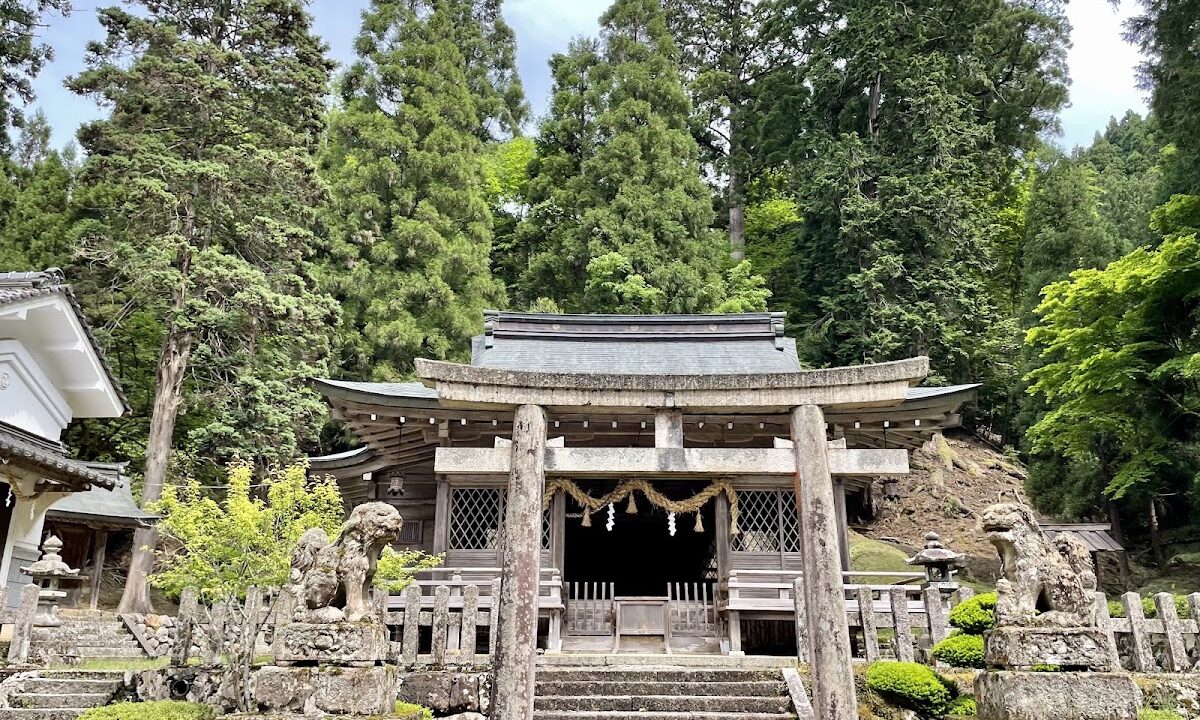
Muroodani Shrine (Ayabe City, Kyoto Prefecture) Complete Guide | History, Deities, and Access Information
Muroodani Shrine, located in Gotsugo-cho, Ayabe City, Kyoto Prefecture, is a shrine that has been revered by the local people since ancient times as the main shrine for 11 villages (hamlets) in the upper reaches of the Kaminbayashi River. With a history of over 700 years, including a ridge beam inscription dating back to the second year of the Showa era (1313), this guide provides detailed information on the shrine’s history, architecture, festivals, and visitor information.
Basic Information about Muroodani Shrine
Shrine Name: Muroodani Shrine
Location: 109 Terauchi, Itsugai-cho, Ayabe City, Kyoto Prefecture 623-1123
Jurisdiction: Kyoto Prefectural Shrine Association
Corporate Number: 1130005010724
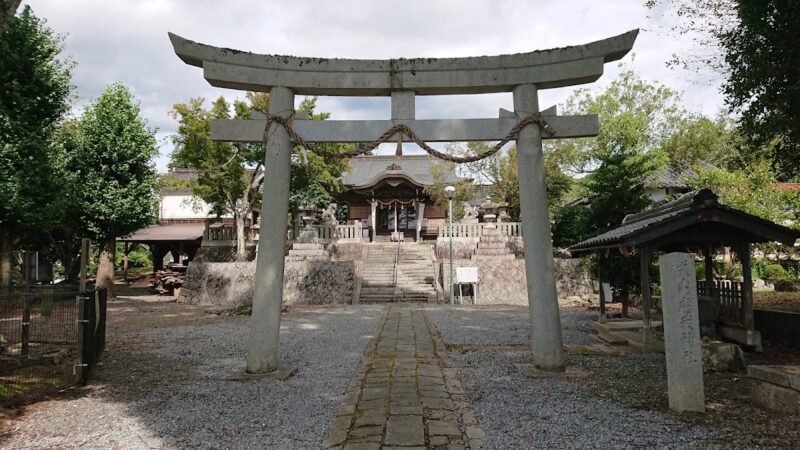
Muroodani Shrine is located in the mountainous area of Ayabe City, in the upper reaches of the Kaminbayashi River. As the place name Itsugai-cho suggests, it once functioned as a central place of worship in a region where several settlements merged.
History and Origins of Muroodani Shrine
A Place of Worship from Ancient Times
The exact founding date of Muroodani Shrine is unclear, but the Kaminbayashi River basin has been a region where people have lived since ancient times, and it is believed that the shrine was established against a backdrop of nature worship and agricultural worship.
Reconstruction in Shōwa 2 (1313)
The oldest record currently confirmed is a ridge beam inscription indicating a reconstruction in Shōwa 2 (1313). This period falls at the end of the Kamakura period, indicating that Murooya Shrine was already functioning as an important religious facility in this region. The record of “reconstruction” suggests that a shrine building existed even before that time.
Reconstruction in An’ei 8 (1779) and the Current Shrine Building
Approximately 460 years after the reconstruction in Shōwa 2, in An’ei 8 (1779), during the mid-Edo period, the current shrine building was reconstructed. This period saw improvements in agricultural technology, leading to increased regional economic power and allowing for investment in shrine architecture.
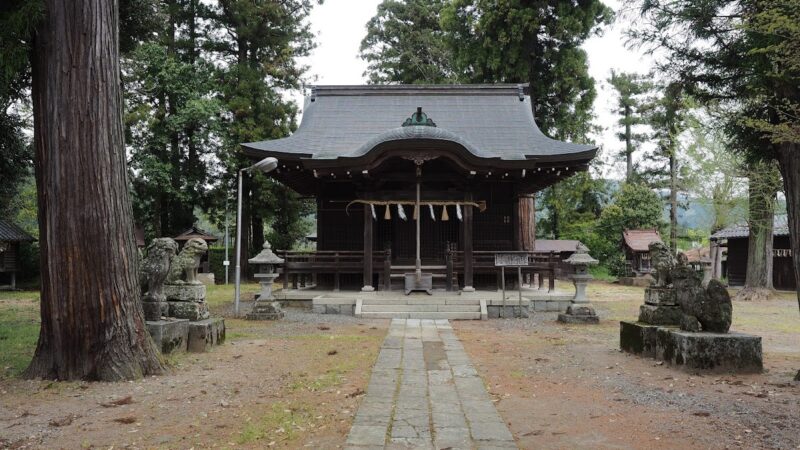
The current shrine building measures four bays in width and three and a half bays in length, a magnificent structure befitting the main shrine of the region. A beam span of four bays corresponds to a building depth of approximately 7.2 meters, and a girder span of three and a half bays corresponds to a building width of approximately 6.3 meters, indicating that it is a considerably large shrine for a mountainous area.
As the main shrine of 11 villages in the upper reaches of the Kamibayashi River
The most important characteristic of Murooya Shrine is that it is the main shrine of 11 villages (hamlets) in the upper reaches of the Kamibayashi River. A main shrine refers to a central shrine that oversees multiple settlements or regions.
The Kamibayashi River basin was once divided into 11 settlements (hamlets), each with its own small shrine or tutelary deity. However, Murooya Shrine was positioned as the shrine that protected all of these settlements. It is thought that during major annual festivals, people from all 11 villages gathered, and it also functioned as a place to reaffirm regional unity.
Deities and Beliefs
Regarding the deities enshrined at Murooya Shrine, given its nature as a regional main shrine, it is possible that multiple deities are enshrined there. Generally, the following deities are often enshrined at such shrines:
- Ōyamatsumi-no-kami: The god of mountains, protecting mountain villages
- Ōkuninushi-no-mikoto: God of land development and agriculture
- Susanoo-no-mikoto: God of protection against misfortune and disaster
- Inari-no-kami: God of abundant harvests and business prosperity
For the people engaged in agriculture and forestry in the Kaminbayashi River basin, faith in these deities was an important part of their lives.
Characteristics of the Shrine Architecture
Architectural Style of the Mid-Edo Period
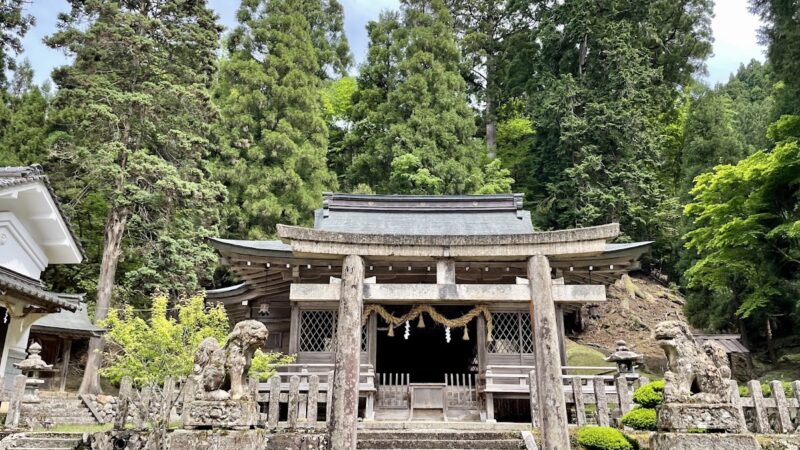
The current shrine building, rebuilt in 1779 (An’ei 8), strongly retains the characteristics of shrine architecture from the mid-Edo period. The scale of the shrine, with its four bays in width and three and a half bays in length, reflects the economic power and deep faith of the region at the time.
Architectural Structure
Four Bays: The distance between columns in the depth direction of the building is four bays (approximately 7.2 meters).
Three and a Half Bays: The distance between columns in the width direction of the building is three and a half bays (approximately 6.3 meters).
This scale is exceptionally large for a shrine in a mountainous area, and the entire shrine complex, including the worship hall and main sanctuary, boasts an impressive structure. Traditional wooden construction techniques were employed, demonstrating the high skill level of the local carpenters.
Preservation of the Ridgepole Inscription
The fact that a ridgepole inscription from the second year of Shōwa (1313) has been preserved indicates that the shrine has carefully preserved historical records. Ridgepole inscriptions are not only architectural records but also valuable historical materials that provide insight into the religious practices and social conditions of that era.
Annual Events and Festivals
Grand Festival
The Grand Festival of Murooya Shrine is an important event where people from the 11 villages in the Kaminbayashi River basin gather together. The festival dates are based on local traditions, and may include a portable shrine procession and ceremonial Kagura dance.
Spring and Autumn Festivals
For those engaged in agriculture, the spring harvest prayer festival and the autumn harvest thanksgiving festival are particularly important events. In spring, a festival is held to pray for a bountiful harvest, and in autumn, a festival is held to give thanks for the year’s harvest.
Monthly Festivals
Regular monthly festivals are also held, praying for the safety and prosperity of the region.
History of Ayabe City and the Kaminbayashi River Basin
Overview of Ayabe City
Ayabe City is located in the central northern part of Kyoto Prefecture and is blessed with the rich natural environment of the Yura River system. Agriculture and forestry have flourished in this area since ancient times, and the Kaminbayashi River basin, in particular, has been known as a source of high-quality timber.
Characteristics of the Kaminbayashi River Basin
The Kaminbayashi River is a tributary of the Yura River and a clear stream flowing through the mountainous area of Ayabe City. Eleven settlements (hamlets) are scattered throughout this basin, each with its own unique history and culture, yet all connected by the Muroodani Shrine.
History of Itsua-cho
The name Itsua-cho is thought to originate from the “merging of five ports (harbors/ferry crossings).” It is a place name that reflects the era when water transport on the Kaminbayashi River was thriving, indicating that this region was a key transportation hub.
Visiting Information and Access
Location
109 Terauchi, Gotsugocho, Ayabe City, Kyoto Prefecture 623-1123
Access Methods
Access by Car:
- Approximately 20 minutes from the Ayabe IC on the Kyoto Jukan Expressway
- From National Route 27, take prefectural and municipal roads to the Kaminbayashi River basin
- It is recommended to check in advance whether parking is available.
Access by Public Transportation:
- Get off at Ayabe Station on the JR Sanin Main Line
- Take a bus or taxi from Ayabe Station
- Due to its mountainous location, public transportation is limited.
Precautions When Visiting
- Due to its mountainous location, be aware of snow and ice in winter.
- It is recommended to check the opening hours of the shrine office in advance.
- As it is a rich natural environment, insect repellent is recommended.
- Mobile phone reception may be unstable.
Nearby Attractions
Other Shrines and Temples in Ayabe City
Besides Muroodani Shrine, Ayabe City has many other historical shrines and temples. When visiting, it’s a good idea to also explore the surrounding temples and shrines.
Nature of the Kamibayashi River
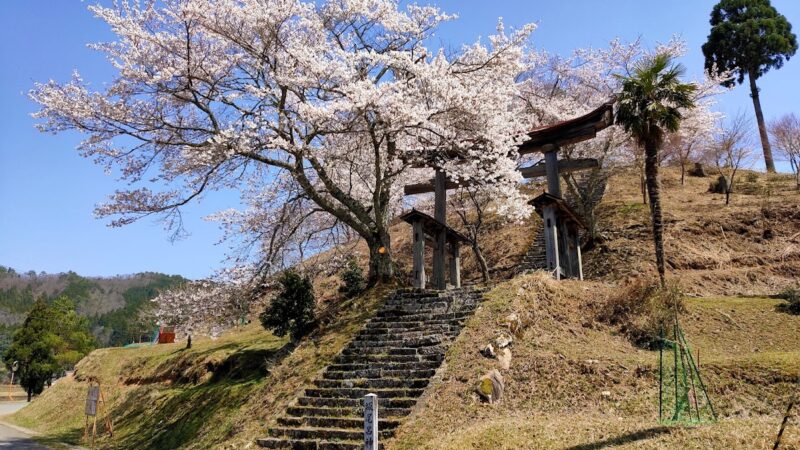
The Kamibayashi River basin is blessed with abundant nature, allowing visitors to enjoy beautiful scenery throughout the seasons. The scenery is especially beautiful during the fresh green season and the autumn foliage season.
Local Products of Ayabe City
Ayabe City is a region rich in agricultural and forestry products. Purchasing local specialties on your way back from your visit is recommended.
Kyoto Prefectural Shrine Association and Muroodani Shrine
Muroodani Shrine is one of the shrines belonging to the Kyoto Prefectural Shrine Association. The Kyoto Prefectural Shrine Association has 21 branches and encompasses approximately 1,570 shrines within the prefecture. Among them, Muroodani Shrine holds an important position as the regional head shrine.
The Kyoto Prefectural Association of Shinto Shrines supports the maintenance and management of each shrine, the continuation of festivals, and the training of Shinto priests. Murootani Shrine is a member of this organization, striving to preserve traditional beliefs and culture.
The Role of Murootani Shrine in the Local Community
Center of Faith
Murootani Shrine, as the main shrine for 11 villages in the Kaminbayashi River basin, has served as a spiritual anchor for local residents. It functions as a place for life-changing rituals such as the first shrine visit for a newborn, Shichi-Go-San (a traditional rite of passage for children), and exorcism, as well as a place to pray for the safety and prosperity of the community.
Core of the Local Community
Through festivals and annual events, it plays an important role as a place where local residents gather and interact. Even in modern times, shrines remain a core for maintaining the cohesion of local communities.
Preservation of History and Culture
With a history of over 700 years, Murootani Shrine plays a crucial role in passing on the history and culture of the region to future generations. This shrine possesses significant cultural value, including the preservation of historical documents such as building plaques and the continuation of traditional festivals.
The Future and Challenges of Murooya Shrine
Depopulation and Shrine Maintenance
Like many mountainous regions in Japan, the Kaminbayashi River basin is experiencing population decline and aging. While the cooperation of local residents is essential for the maintenance of the shrine and the continuation of festivals, securing successors remains a challenge.
Preservation of Historical Buildings
The shrine building, rebuilt in 1779, is now over 240 years old. Maintaining wooden architecture requires regular repairs, and proper preservation while maintaining its cultural value is crucial.
Transmission of Faith
In modern society, many shrines face the challenge of how to pass on traditional beliefs to future generations. Murooya Shrine, as part of the region’s history and culture, is expected to re-recognize its value and work towards its transmission.
Summary
Murootani Shrine, located in Gotsugo-cho, Ayabe City, Kyoto Prefecture, is a shrine with a history of over 700 years, serving as the main shrine for 11 villages in the Kaminbayashi River basin. A ridge beam inscription from 1313 remains, and the shrine boasts a magnificent building rebuilt in 1779, measuring four bays in width and three and a half bays in length.
Despite its mountainous location, it has played a vital role as a center of local faith and a core of the community. It is a shrine where you can feel history and tradition in a quiet environment surrounded by abundant nature.
When visiting Ayabe City, we highly recommend visiting Murootani Shrine to experience the region’s history and culture. It will be a valuable opportunity to escape the hustle and bustle of the city, find peace in tranquility, and reflect on traditional Japanese faith.
During your visit, you can also enjoy the beauty of the clear waters of the Kaminbayashi River and the surrounding mountains, realizing that this region has long been a place of life and worship for people. Murooya Shrine is a valuable site that conveys the relationship between Japanese local communities and Shinto beliefs, and it is hoped that it will continue to be carefully preserved.