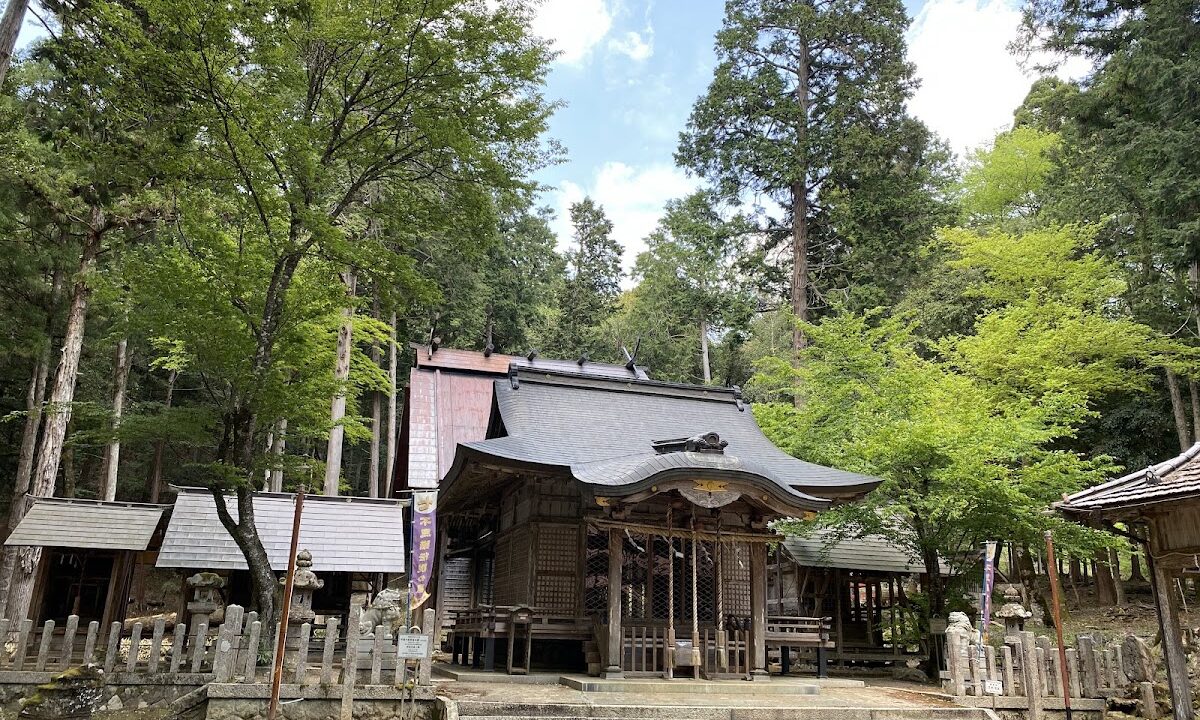
Asusuki Shrine (Ayabe City, Kyoto Prefecture): The Complete Picture of the Shikinaisha Shrine and the Kanegamine Faith of Shiga-go
Located in Higashitani, Kanekawachi-cho, deep in the mountainous region of Ayabe City, Kyoto Prefecture, Asusuki Shrine is a shrine that has attracted worshippers since ancient times as a Shikinaisha shrine of Ikaruga District, Tanba Province. While the exact date of its founding is unknown, there is a clear record that it was moved to its current location in 713 AD (Wado 6), and it has a history deeply intertwined with the mountain worship of Kanegamine, which rises behind it.
This article will provide a detailed explanation of the history of Asusuki Shrine, its enshrined deities, the highlights of its grounds, and its unique rituals such as the Myoga Festival and the Oyumi Shinto ritual.
History and Origins of Asusuki Shrine
History of Founding and Relocation
The exact date of Asusuki Shrine’s founding is unknown, but according to shrine tradition, it was originally located on Kanegamine, which is behind or to the west of the shrine. Mount Kanegamine has been revered as a sacred mountain since ancient times and has been an object of mountain worship.
Records show that in 713 AD (Wado 6), the shrine was relocated to its current location in Higashitani, Kanekawachi-cho. This relocation represents a shift from mountaintop rituals to rituals at the village shrine, and can be considered an important event illustrating the evolution of shrine worship in ancient times.
Status as a Shikinaisha Shrine
Asusuki Shrine is a Shikinaisha shrine listed in the Engishiki Jinmyocho (a list of shrines compiled in the Heian period) as “Asuuki Shrine, Ikaruga-gun, Tanba Province.” The Engishiki Jinmyocho is a list of official shrines under the Ritsuryo system, completed in 927 AD (Encho 5), and its inclusion signifies that the shrine was a prestigious shrine recognized by the imperial court since ancient times.
While several spellings exist, such as “Asusuki Shrine,” “Asusuki Shrine,” and “Asusuki Shrine,” they all refer to the same shrine. Currently, “Asusuki Shrine” is the most commonly used spelling.
Regional Characteristics of Shiga-go and Kanekouchi
The area including Kanekouchi-cho, where Asusuki Shrine is located, was formerly known as “Shiga-go.” This Shiga-go is home to a series of plant-related legends known as the “Seven Wonders,” demonstrating the region’s unique character.
It’s also noteworthy that the name of the settlement, “Kanekouchi,” the shrine’s alternative name, “Kanemiya Daimyojin,” and the mountain behind it, “Kanegatake,” all contain the character for “gold.” This may suggest a connection to ancient mineral resources or metalworking.
Former Shrine Rank and Modern History
In the modern shrine ranking system of the Meiji era, Asusuki Shrine was ranked as a Gosha (village shrine). Gosha was a higher rank than a Murasha (village shrine), indicating its important role as a center of faith in the region.
The current main hall was rebuilt in 1721 (Kyoho 6) and is designated as a Kyoto Prefecture Registered Cultural Property. Furthermore, the subsidiary shrine, Okawa Shrine, is registered as a Kyoto Prefecture Registered Cultural Property along with Asusuki Shrine, recognizing its historical and cultural value.
Deities and Beliefs
Main Deities
The deities enshrined at Asusuki Shrine are the following four:
Amenominakanushi-no-kami Considered the first god to appear in the Kojiki, and one of the three creation gods who appeared in Takamagahara at the time of the creation of heaven and earth. Worshipped as the fundamental god who governs the center of the universe.
Kamimusubi-no-kami One of the three creation gods, believed to possess the mystical power to generate and nurture all things. A god symbolizing vitality and creativity.
Takamimusubi-no-kami One of the three creation gods, who played an important role in the descent of the heavenly grandchild. Also highly regarded as the ancestral god of the Imperial family.
Michinushi-no-Muchi-no-Kami
Generally, this is considered a collective term for the three Sumiyoshi deities (Sokotsutsuo-no-Mikoto, Nakatsutsuo-no-Mikoto, and Omotsutsuo-no-Mikoto), and they are worshipped as guardians of safe voyages and transportation.
The combination of these enshrined deities is said to represent a comprehensive divine virtue encompassing everything from the origin of the universe to the creation of all things and the protection of human society.
Connection to the Mononobe Clan
There is a theory that the influence of the Mononobe clan remains strong in the Shiga-go area. The Mononobe clan was one of the powerful clans in ancient Japan, overseeing military affairs and religious rituals. The mountain name Kanegamine and place names related to metal may suggest the Mononobe clan’s involvement in the development of mineral resources and the production of metal tools.
The composition of the deities enshrined at Asusuki Shrine has also been pointed out as being related to the beliefs of the Mononobe clan, making it an important shrine for understanding the Mononobe clan’s sphere of influence in ancient Tanba.
Highlights of the Shrine Grounds
Shrine Entrance and Approach
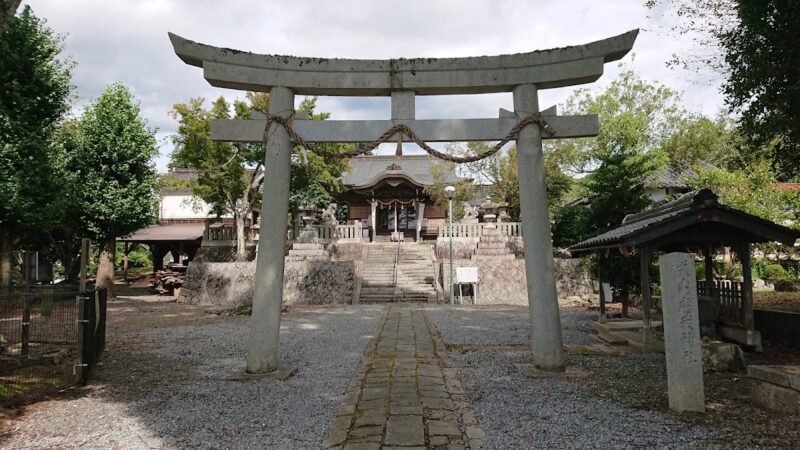
Located in a mountainous area approximately 20km north of Ayabe Station, Asusuki Shrine is reached by passing through the village of Kanekouchi. A torii gate stands at the entrance, from which the approach leads to the shrine grounds.
The approach is surrounded by the natural beauty of the mountains, allowing for a tranquil atmosphere during worship. The surrounding lush forest conveys the sacredness of this ancient sacred site.
Main Hall and Shrine Buildings
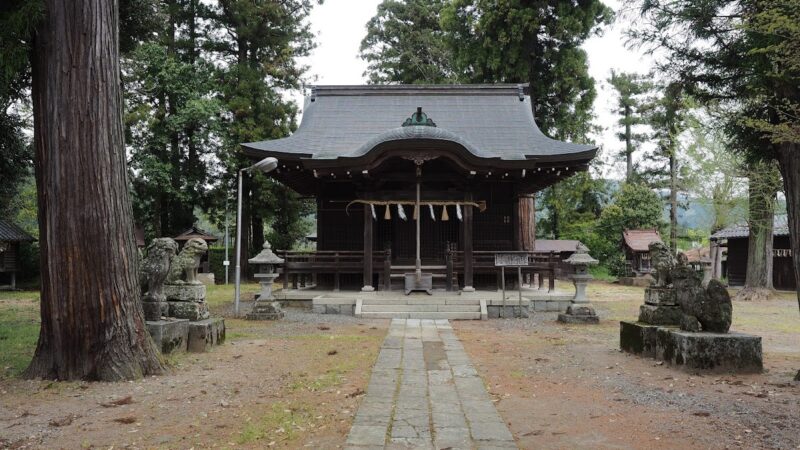
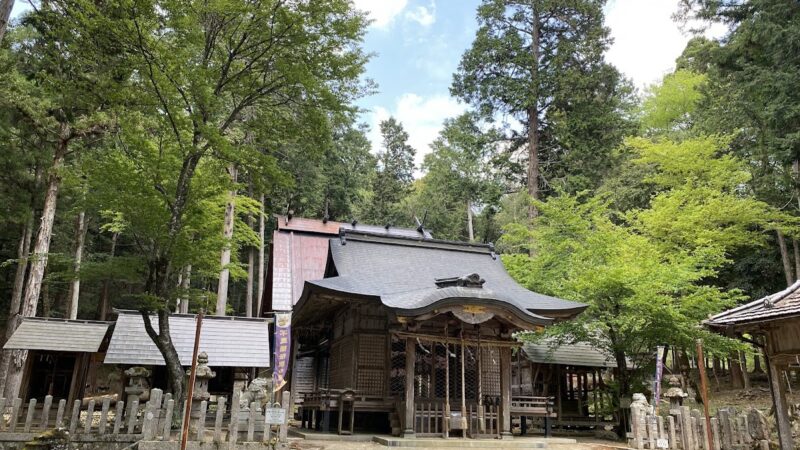
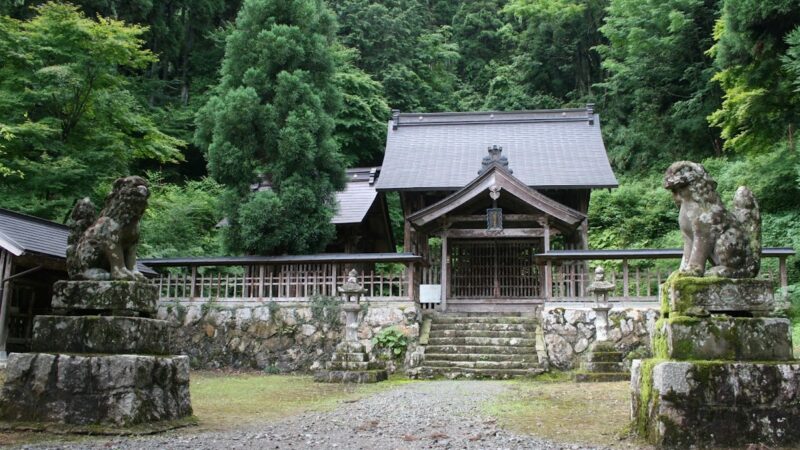
The current main hall was rebuilt in 1721 (Kyoho 6) and exhibits characteristics of shrine architecture from the mid-Edo period. It is designated as a Kyoto Prefecture Registered Cultural Property, recognizing its historical and architectural value.
The shrine buildings follow the traditional style of the Tanba region, exhibiting a simple yet dignified appearance. The details of the main hall showcase the craftsmanship of the time, and the carvings and decorations are worth paying attention to.
Subsidiary Shrine: Okawa Shrine
Within the shrine grounds lies the Okawa Shrine, a subsidiary shrine. Both the Okawa Shrine and the Asusuki Shrine are registered as Kyoto Prefecture Cultural Properties, and together they form a historical landscape.
While some details regarding the deity and history of the Okawa Shrine remain unclear, it is possible that it has characteristics related to local water deity worship or agricultural deity worship.
Worship of Kanegamine Mountain
Looking back from the shrine grounds, one can see the silhouette of Kanegamine Mountain. This sacred mountain, where a shrine is said to have once stood, still holds significant meaning as the origin of the faith of Asusuki Shrine.
Worshipping Kanegamine Mountain, an object of mountain worship, evokes ancient forms of ritual, and it is highly recommended to look at the mountains behind the shrine during your visit.
Unique Shinto Rituals and Festivals
Myoga Festival
The most distinctive ritual at Asusuki Shrine is the Myoga Festival, held annually on February 3rd. This festival is a unique ritual originating from the “Myoga Divination,” one of the seven mysteries of Shiga-go.
Contents of the Myoga Festival
At the Myoga Festival, the year’s fortune is predicted based on the myoga (Japanese ginger) offered before the gods. While myoga is naturally a summer plant, in this ritual, myoga is prepared in winter using a special method, and the year’s abundance or scarcity is judged based on its growth and shape.
While plant-based divination is found throughout Japan, the use of myoga is rare, making this an important folk event that demonstrates the uniqueness of Shiga-go.
Connection to the Seven Mysteries of Shiga-go
In addition to legends concerning myoga, Shiga-go has many other mysterious legends related to various plants. These demonstrate forms of belief deeply intertwined with the local natural environment, suggesting that Asusuki Shrine has played a central role in this.
The Great Bow Ritual
Another important ritual at Asusuki Shrine is the Great Bow Ritual. This ritual is a unique festival that has been passed down since the late Muromachi period and is designated as a Kyoto Prefecture Intangible Folk Cultural Property.
Characteristics of the Great Bow Ritual
In the Great Bow Ritual, a ceremony is performed in which a large bow is shot from the ritual hall. This archery is not merely a demonstration of martial arts, but is positioned as a sacred act to ward off evil spirits and pray for a bountiful harvest and peace in the region.
While rituals using bows exist throughout Japan, the Great Bow Ritual at Asusuki Shrine has a history of being passed down for several hundred years and is an important cultural asset that forms the identity of the region.
Background of the Tradition
Considering the historical context of the late Muromachi period, the time when this ritual was established was also a period of turmoil during the Sengoku period (Warring States period). In an era of constant armed conflict, the incorporation of the bow as a weapon into Shinto rituals is thought to have symbolized prayers for peace and safety.
Access and Visiting Information for Asusuki Shrine
Location
Address: 1 Higashitani, Kanekouchi-cho, Ayabe City, Kyoto Prefecture
Asusuki Shrine is located in a mountainous area away from the center of Ayabe City, offering a peaceful environment for worship.
Access Methods
Using Public Transportation
The nearest station is Ayabe Station on the JR Sanin Main Line and Maizuru Line, but the shrine is approximately 20km from the station, making public transportation difficult. Taking a taxi is the most practical option.
Using a Car
Visiting by private car or rental car is the most convenient. From Ayabe city center, take national or prefectural roads towards Kanekouchi-cho. Since the roads pass through mountainous areas, caution is needed regarding snow and ice during winter.
If using a car navigation system, it is recommended to search for “Asusuki Shrine” or its address.
Points to Note When Visiting
- As it is located in a mountainous area, be aware of changes in weather.
- In winter, there is a possibility of snowfall, so prepare appropriate equipment and vehicle.
- The shrine grounds are in a rich natural environment, so consider taking precautions against insects.
- The shrine office may not always be staffed, so it is recommended to check in advance if you wish to receive a Goshuin (shrine stamp).
Nearby Attractions
Ayabe City has many other historical shrines and temples. When visiting Asusuki Shrine, visiting other historical sites in Shiga-go and cultural properties in Ayabe city will allow you to gain a deeper understanding of the region’s history and culture.
Value as a Cultural Property
Registered Cultural Property of Kyoto Prefecture
The main hall of Asusuki Shrine and its subsidiary shrine, Okawa Shrine, are registered as registered cultural properties of Kyoto Prefecture. This is a system in which Kyoto Prefecture registers buildings based on its Cultural Properties Protection Ordinance, signifying recognition as important structures that convey the history and culture of the region.
The main hall, rebuilt in 1721 (Kyoho 6), is a valuable historical structure that still conveys the characteristics of shrine architecture from the mid-Edo period. The fact that a building with over 300 years of history is preserved in such good condition is a testament to the faith and preservation efforts of the local people.
Kyoto Prefecture Designated Intangible Folk Cultural Property
The Oyumi Shinto ritual is designated as a Kyoto Prefecture Designated Intangible Folk Cultural Property. This ritual, which has been passed down since the late Muromachi period, is an important cultural heritage that embodies the history and traditions of the region.
Protecting intangible folk cultural properties requires not only keeping records but also actively continuing to perform the ritual. At Asusuki Shrine, this precious ritual is still performed without interruption thanks to the cooperation of the local people.
Relationship between Asusuki Shrine and other shrines with the same name
Asusuki Shrine in Izumo
In fact, there were many shrines in the Izumo region with the names “Asusuki” and “Ajisuki.” The *Izumo no Kuni Fudoki* (a regional gazetteer of Izumo Province) lists 39 Asusuki Shrines, and 11 are listed in the *Engishiki Jinmyocho* (a list of shrines compiled in the Heian period).
Many of the Asusuki Shrines in Izumo enshrine Ajisukitakahikone-no-kami, a child deity of Okuninushi-no-kami. This deity appears in the *Kojiki* and *Nihon Shoki* and is considered to have characteristics of an agricultural god and a thunder god.
Differences from the Asusuki Shrine in Kyoto
The Asusuki Shrine in Ayabe City, Kyoto Prefecture, has a different enshrined deity than the Asusuki Shrines in Izumo. The Asusuki Shrine in Ayabe enshrines the three creation deities, with Amenominakanushi-no-kami as the principal deity, and Michinushi-no-kami, but does not enshrine Ajisukitakahikone-no-kami of Izumo.
This difference indicates that, despite sharing the same shrine name “Asusuki,” each shrine was established within an independent religious sphere. The similarity of shrine names is an interesting subject of research, as it reveals ancient shrine naming customs and traces of cultural exchange between regions.
Meaning of the Shrine Name
There are various theories regarding the origin of the shrine names “Asusuki” and “Asuki,” and no definitive interpretation has been reached. Further research is needed regarding the meaning of the sound “Asuki” and the reasons for the choice of kanji characters.
Positioning as a Shikinaisha in the Tanba Region
Shrine Group in Ikaruga District, Tanba Province
Several other Shikinaisha existed in Ikaruga District, Tanba Province, where the Asusuki Shrine is located. The Engishiki Jinmyocho (a list of shrines compiled in the Heian period) lists 71 shrines in Tanba Province, several of which are located in Ikaruga District.
These shrines served as centers of faith in ancient Tanba and were spiritual pillars of the local community. Asusuki Shrine is one such shrine, attracting the faith of the Shiga region.
History of Tanba and Shrine Beliefs
Tanba Province developed as an important region close to the Kinai region (central Japan) from ancient times. Due to its proximity to Kyoto, it had deep ties with the imperial court, and many clans expanded into the area and promoted development.
In terms of shrine beliefs, Tanba underwent unique development. Various forms of belief, such as mountain worship, agricultural deity worship, and clan deity worship, merged to form a unique regional shrine culture. Asusuki Shrine plays a vital role in this, occupying an important position when considering the religious history of Tanba.
Asusuki Shrine in the Modern Era
Relationship with the Local Community
Even in modern times, Asusuki Shrine functions as the spiritual center of the local community, including Kanekouchi Town. In mountainous areas experiencing depopulation, shrines play a crucial role in maintaining the region’s identity.
Traditional events such as the Myoga Festival and the Oyumi Shinto Ritual provide opportunities for local people to gather and reaffirm their bonds. Through these rituals, cultural heritage is passed down through generations.
Efforts to Protect Cultural Properties
Continued efforts are necessary to protect the main shrine building and the subsidiary Okawa Shrine, both registered cultural properties of Kyoto Prefecture, and the Oyumi Shinto Ritual, a designated intangible folk cultural property of Kyoto Prefecture.
Regular repairs are essential for the maintenance of the buildings. Furthermore, the cultivation of personnel with the necessary skills and knowledge is crucial for the continuation of the rituals, which are intangible folk cultural properties. Local people and the government are working together to pass on these valuable cultural properties to future generations.
Potential as a Tourist Resource
Asusuki Shrine may not be easily accessible by public transport, but this is precisely what gives it its charm as a tranquil environment for worship. Its historical status as a Shikinaisha (a shrine listed in the Engishiki), unique rituals, and beautiful natural surroundings give it high potential as a tourist resource.
In recent years, there has been an increase in travelers interested in history and culture who deliberately seek out shrines in hard-to-reach locations. Little-known ancient shrines like Asusuki Shrine have the potential to become attractive destinations for such inquisitive visitors.
Summary
Located in Kanekouchi-cho, Ayabe City, Kyoto Prefecture, Asusuki Shrine is a Shikinaisha of Tanba Province, Ikaruga District, with a history of over 1300 years since its relocation in 713 AD. Established against the backdrop of mountain worship on Mount Kanegamine, it has served as a center of faith in Shiga-go as a prestigious shrine enshrining the Three Deities of Creation and Michinushi-no-Kami.
The main shrine, rebuilt in 1721, is designated as a registered cultural property of Kyoto Prefecture, and the Ooyumi Shinto ritual, which has been passed down since the late Muromachi period, is protected as a Kyoto Prefecture-designated intangible folk cultural property. Furthermore, the Myoga Festival, held on February 3rd, is known as a unique ritual linked to the seven mysteries of Shiga-go.
Nestled in a quiet mountainous environment, Asusuki Shrine is a precious place that conveys ancient beliefs and traditions to the present day. Although it is a difficult place to visit, the sacred atmosphere that has been preserved precisely because of this, and the value of the cultural assets protected by the local people, make it well worth the trip.
The history and culture of Tanba, the fusion of mountain worship and shrine worship, and its role as a spiritual pillar of the local community—Asusuki Shrine embodies all of these, and will continue to convey the importance of history and tradition to many people for years to come.