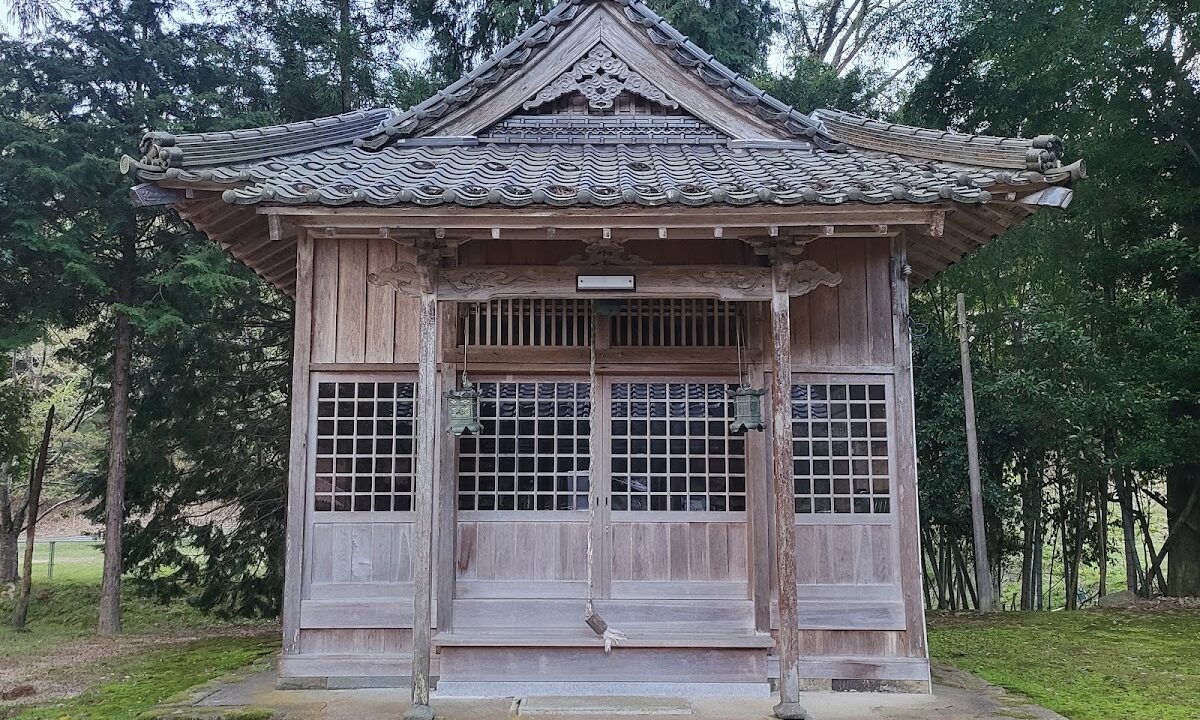
Complete Guide to Muraoka Shrine (Kyotango City, Kyoto Prefecture) | History, Deities, and Access Information
Muraoka Shrine, located in Okumaji, Kumihama-cho, Kyotango City, Kyoto Prefecture, is a historically significant shrine listed in the Engishiki Jinmyocho (a list of shrines compiled in the Heian period). Written as “村岳” but pronounced “Muraoka,” this shrine is cherished by the local community as a valuable place that preserves the history of Kumano District in Tango Province.
This article provides comprehensive information useful for those considering a visit to Muraoka Shrine, including its history, enshrined deities, highlights within the grounds, and detailed access information.
Basic Information on Muraoka Shrine
Location
Address: 201 Okumaji, Kumihama-cho, Kyotango City, Kyoto Prefecture 629-3414
Muraoka Shrine is located in Kumihama-cho, Kyotango City, in the northernmost part of Kyoto Prefecture, facing the Sea of Japan. Located in the quiet village of Okumaji along the Kumitani River, surrounded by abundant nature, this shrine is situated in a tranquil setting.
Shrine Rank and Classification
- Shikinaisha: Muradake Shrine, Kumano District, Tango Province (listed in the Engishiki Jinmyocho)
- Former Shrine Rank: Village Shrine
- Association of Shinto Shrines: Affiliation
The Engishiki Jinmyocho is a list of all official shrines throughout Japan compiled in the mid-Heian period (927 AD). Shrines listed here hold a special status as “Shikinaisha.” Muradake Shrine, as a Shikinaisha in Kumano District, Tango Province, is a venerable shrine with a history of over a thousand years.
Deities and Divine Virtues
Main Deity: Omoikane-no-kami
The main deity of Muradake Shrine is Omoikane-no-kami. Omoikane-no-kami is known in Japanese mythology as the god of wisdom and prudence. He appears in the Kojiki and Nihon Shoki as the god of wisdom who devised a plan to open the cave when Amaterasu Omikami hid there.
The divine virtues of Omoikane-no-Kami are as follows:
- Wisdom and Academic Achievement: The power to solve difficult problems with superior wisdom
- Business Prosperity: Business success through accurate judgment
- Good Fortune and Prosperity: Bringing good fortune through correct choices
- Protection from Evil: Wisdom to prevent disasters before they occur
Deities Enshrined Together
Along with the main deity, the following two deities are enshrined together:
Ukanomitama-no-Mikoto
- God of abundant harvests and food
- Divine virtues of business prosperity and family safety
Takemikazuchi-no-Mikoto
- God known as a god of war and thunder
- Divine virtues of good fortune in competitions, protection from evil, and good luck
The enshrinement of these three deities gives the shrine multifaceted divine virtues of wisdom, abundant harvests, and military fortune. ## History and Origins of Muradake Shrine
Founding and Ancient History
The exact founding date of Muradake Shrine is unknown, but it is listed in the Engishiki Jinmyocho (compiled in 927) as “Muratake Shrine, Kumano District, Tango Province,” indicating that it already existed at least in the early Heian period and was a prestigious shrine recognized by the imperial court.
Kumano District in Tango Province is the area centered around present-day Kumihama-cho, Kyotango City, and flourished as a key point for trade along the Sea of Japan since ancient times. Muradake Shrine has been revered as the tutelary deity of this region, attracting the faith of the local people.
Deep Relationship with Kamiya Tachigu Shrine
An essential aspect of discussing Muradake Shrine is its relationship with Kamiya Tachigu Shrine (Kamiya Shrine), which is also located in Kumihama-cho.
According to local tradition, a retainer of the deity of Kamiya Tachigu Shrine selected the site for Muradake Shrine, indicating a deep connection between the two shrines. Furthermore, Kamiya Tachimiya Shrine has a giant rock called “Ken-iwa” (Sword Rock), and a legend remains that a god hid there.
This relationship indicates that Muradake Shrine held an important position in the shrine network of Kumihama Town’s 1st district.
Development since the Modern Era
In the Meiji era’s shrine ranking system, Muradake Shrine was ranked as a village shrine. A village shrine, under the system at the time, was positioned as the guardian shrine of a village.
Even after the Showa era, it continued to attract worshippers as the local tutelary deity, and is still carefully preserved by local residents, mainly in the Okumaji district.
Highlights of the Shrine Grounds
Torii Gate and Approach
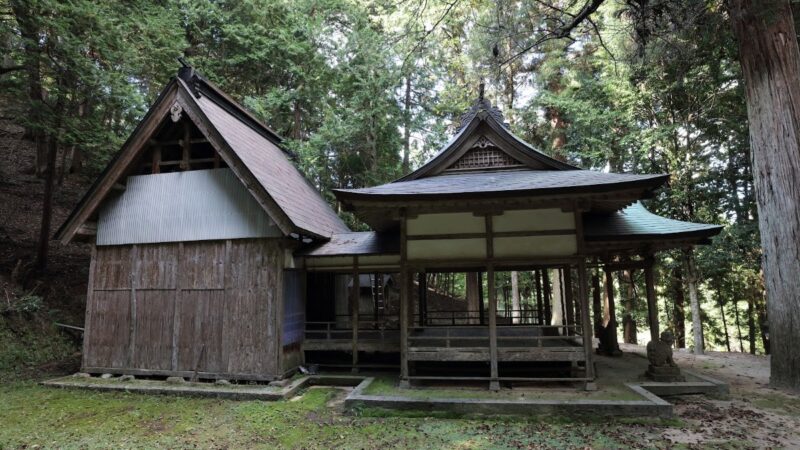
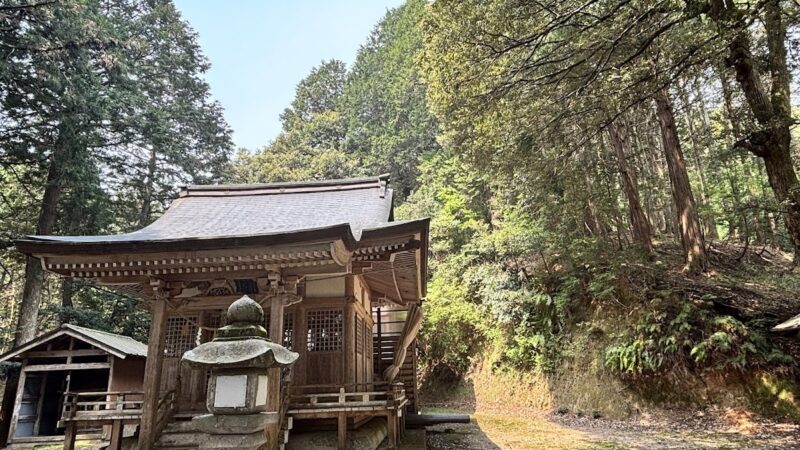
The grounds of Muradake Shrine are nestled in a quiet village. Passing through the torii gate, a well-maintained approach leads to the shrine building. The grounds, harmonizing with the surrounding nature, give visitors a peaceful atmosphere.
Dance Hall (Worship Hall)
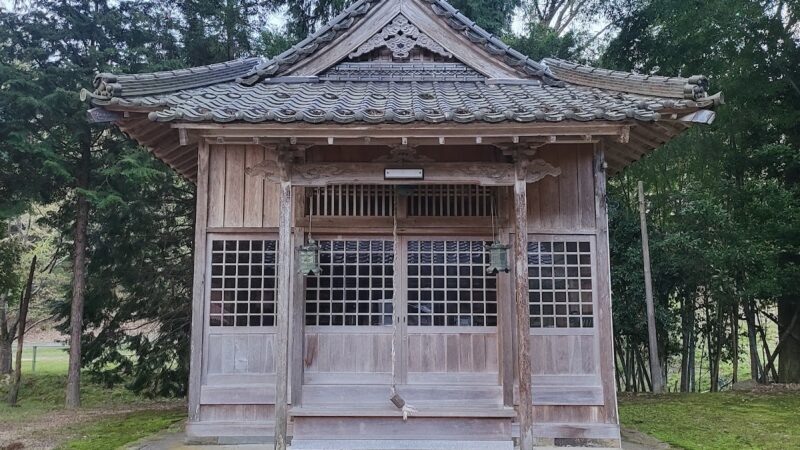
As you proceed along the approach, a building that appears to be a dance hall comes into view. This building is an important facility used during Shinto rituals and festivals, and serves as the center of local faith.
Main Shrine
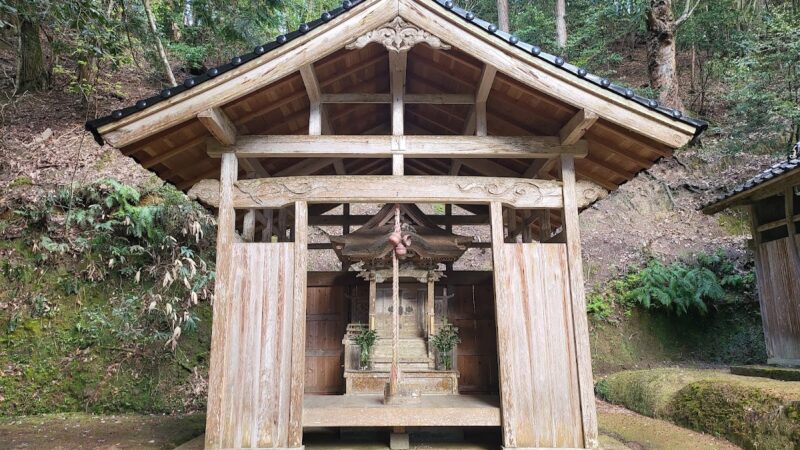
The main shrine is dedicated to Omoikane-no-kami as the principal deity. It possesses an architectural style unique to the Tango region and is a valuable structure that tells the history of the area.
Stone Structures on the Shrine Grounds
Within the shrine grounds, there are interesting stone structures that indicate a connection to Kamiya Tachimiya Shrine. Particularly noteworthy is a stone called “the stone cut at Tachimiya Shrine,” which is preserved as an artifact that tells of a deep connection with Kamiya Tachimiya Shrine.
Radish Customs
Muratake Shrine has unique customs related to radishes. This is an interesting example of the connection between local folk beliefs and shrine beliefs, and reflects the cultural characteristics of the Tango region.
Annual Events and Festivals
Muratake Shrine holds various Shinto rituals throughout the year. The autumn grand festival, in particular, is an important event where local people gather.
The local community’s parishioners’ organization is responsible for the maintenance and management of the shrine and the operation of festivals, ensuring that traditional forms of worship are still alive today.
Access Information
Nearest Station and Line
Access by Train
- Nearest Station: Kumihama Station, Kyoto Tango Railway Miyazu Line (formerly Kitakinki Tango Railway Miyazu Line)
- Distance from Station: Approximately 2km south
- Travel Time: Approximately 25-30 minutes on foot, approximately 5 minutes by car
The Kyoto Tango Railway Miyazu Line is a local line running through the Tango region in northern Kyoto Prefecture. Kumihama Station is the central station of Kumihama Town, and there is a tourist information center and bicycle rental service near the station.
Nearest Bus Stop and Line
Access by Bus
There are bus routes operating within Kumihama Town, but the number of services is limited, so it is necessary to check the timetable in advance. The nearest bus stop is located within the Okumaji area, but we recommend checking the public transportation information provided by Kyotango City before using it.
Access by Car
Route from Major Roads
- From Kyoto City: Approximately 2 hours 30 minutes via the Kyoto Jukan Expressway and San’in Kinki Expressway
- From Osaka City: Approximately 3 hours via the Chugoku Expressway and Maizuru Wakasa Expressway
- Nearest Interchange: Approximately 30 minutes from Kyotango Omiya IC (San’in Kinki Expressway)
Car Navigation Settings
- Address: 201 Okumaji, Kumihama-cho, Kyotango City, Kyoto Prefecture
- Landmark: East from the intersection with the Kitakinki Tango Railway Miyazu Line along the Kumitani River
Parking: There is parking space for visitors on the temple grounds (limited number of spaces)
Points to Note When Visiting
- Visiting Hours: Temple grounds are open freely (please check the hours of the temple office)
- Goshuin (Temple Stamp): Advance contact is recommended
- Restrooms: Please check the availability of restrooms on the temple grounds
- Barrier-Free Access: There may be steps or uneven terrain.
Nearby Tourist Attractions
Kamiya Tachimiya Shrine (Kamiya Shrine)
A Shikinaisha (shrine listed in the Engishiki) with deep ties to Muradake Shrine. This shrine is fascinating for its legend of the sword-shaped rock and its unique form of worship. Visiting both Muradake Shrine and Kamiya Tachimiya Shrine will give you a comprehensive understanding of the shrine worship in Kumihama Town.
Kumihama Bay
Kumihama Bay, the largest lagoon in Kyoto Prefecture, is known for its scenic beauty. It is also famous for oyster farming, and you can enjoy fresh oysters in winter.
Kotenkyo
A sandbar separating Kumihama Bay from the Sea of Japan, this beautiful coastline stretches for approximately 6 km. It is a popular swimming beach in summer.
Kabutoyama Observatory
An observatory offering panoramic views of Kumihama Bay. A spectacular spot overlooking both Kumihama Bay and the Sea of Japan.
Manners and Etiquette for Visiting Shrines
Basic Shrine Visiting Etiquette
- Bow Before the Torii Gate: Bow before entering the shrine grounds.
- Watering Rituals: If there is a watering basin, cleanse your left hand, right hand, and mouth in that order.
- Worship Rituals: The basic ritual is two bows, two claps, and one bow (two bows, two claps, one bow).
- Etiquette on the Shrine Grounds: Worship quietly and be mindful that this is a sacred place.
Photography
Photography is generally permitted on the shrine grounds, but consideration is needed inside the main hall and during Shinto rituals. Remember that this is a place of worship for the local people, and visit with respect.
Pilgrimage to Shikinaisha Shrines in Tango Province
Muratake Shrine is one of the Shikinaisha shrines in Kumano District, Tango Province. Many Shikinaisha shrines are scattered around Kyotango City, and visiting them allows you to gain a deeper understanding of the history and culture of ancient Tango.
Major Shrines Listed in the Engishiki (Engishiki Jinmyocho) in Kumihama Town
- Kamiya Shrine (Kamiya Tachimiya)
- Kaifu Shrine
- Kojinja Shrine
Visiting these shrines will give you a comprehensive view of the ancient beliefs of Tango Province.
Shrine Culture in Northern Kyoto Prefecture
Many people think of famous shrines in Kyoto City when they think of Kyoto, but the Tango region in northern Kyoto Prefecture has many shrines with their own unique history and culture.
Shrines like Muradake Shrine, which are listed in the Engishiki Jinmyocho, quietly continue to preserve local beliefs and are valuable examples of Kyoto’s diversity. The Tango region, facing the Sea of Japan, reflects maritime beliefs and ancient trade culture in its shrine worship.
Precautions When Visiting Shrines
Seasonal Considerations
- Winter (December-March): Kyotango City is designated as a heavy snowfall area, and there is snow in winter. When visiting the shrine, please pay attention to cold weather precautions and appropriate footwear.
- Summer (July-August): The area is humid and muggy, typical of the Sea of Japan coast. Don’t forget to take precautions against heatstroke.
- Spring/Autumn: These are relatively pleasant seasons for visiting, but please be aware of changes in the weather.
Notes on Transportation Access
Kumihama Town has limited public transportation, so if you are visiting by train or bus, it is recommended to check the timetable in advance and plan your trip with plenty of time to spare. Consider using a rental car or bicycle.
The Charm of Muradake Shrine
The greatest charm of Muradake Shrine lies in its simple atmosphere, unspoiled by commercialization, despite being a Shikinaisha (a shrine listed in the Engishiki, an ancient Japanese legal text) with over a thousand years of history. It remains unchanged as a place of worship carefully preserved by the local people.
As a shrine dedicated to Omoikane-no-kami, the god of wisdom, there is a belief that visiting the shrine when facing a crossroads in life or when faced with important decisions will bring peace of mind and enable sound judgment.
Furthermore, this shrine possesses elements of folkloric interest, such as its relationship with Kamiya Tachigu Shrine and the unique customs passed down in the region.
Summary
Muratake Shrine (Kumihama-cho, Kyotango City, Kyoto Prefecture) is a venerable shrine with a history of over a thousand years, listed in the Engishiki Jinmyocho (a list of shrines compiled in the Heian period) as a Shikinaisha (a shrine listed in the Engishiki) in Kumano District, Tango Province. It enshrines Omoikane-no-kami, the god of wisdom, as its main deity, and is believed to bestow blessings for academic success, business prosperity, and good fortune.
Located in the Okumaji district, approximately 2km south of Kumihama Station on the Kyoto Tango Railway Miyazu Line, it continues to uphold local faith in a tranquil environment. With its deep connection to Kamiya Tachigu Shrine and unique local customs, it is a valuable shrine that conveys the history and culture of the Tango region.
When visiting northern Kyoto Prefecture, be sure to visit Muratake Shrine and experience the ancient shrine culture of Tango. In the tranquil grounds, far removed from the hustle and bustle of the city, you can spend a special time guided by the god of wisdom.